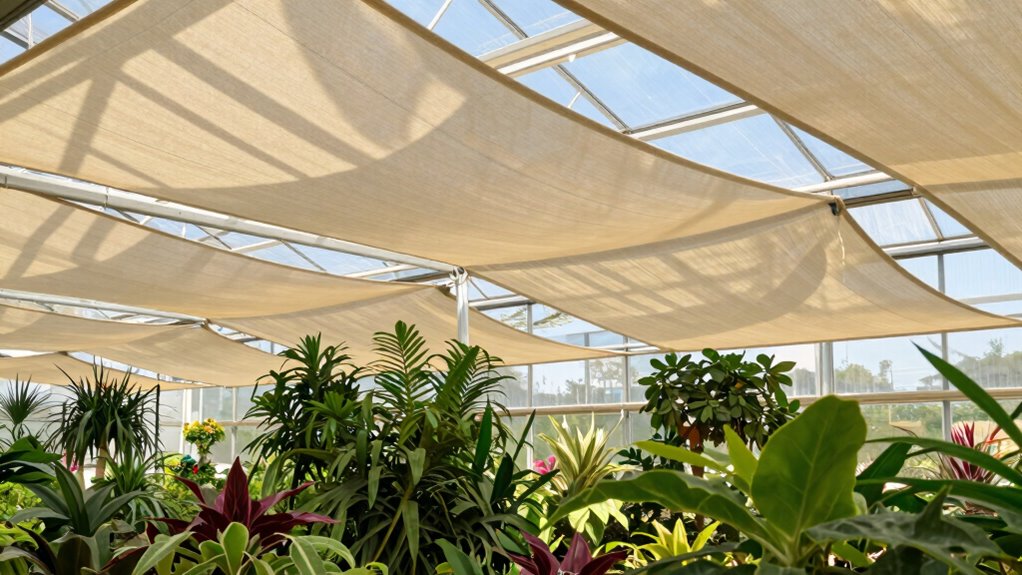
To lower heat without harming plant growth, you should use custom shade strategies like adjustable shade cloths or sails that block intense afternoon sun while still letting in enough light. Proper placement, shading density, and material choice are key to balancing temperature reduction with healthy growth. Selecting weather-resistant and breathable materials helps improve airflow and keeps plants vibrant. If you continue exploring, you’ll find more tips to optimize your shade setup for sustainable, productive farming.

Get garden gear delivered free with Prime
- Fast, free delivery on millions of items
- Prime Video, Amazon Music and more included
- Member-only deals all year
Key Takeaways
- Use adjustable or movable shading panels to control light and heat during different growth stages.
- Select diffuse or reflective shade materials to reduce heat while maintaining essential light for photosynthesis.
- Properly position shade structures to block intense afternoon sun, allowing morning light for optimal growth.
- Balance shade density to lower temperature without overly restricting light, supporting healthy crop development.
- Regularly monitor plant health and adjust shading strategies based on environmental conditions and crop needs.
adjustable shade cloth for plants
As an affiliate, we earn on qualifying purchases.
As an affiliate, we earn on qualifying purchases.
Why Reducing Heat Stress Matters for Your Crops
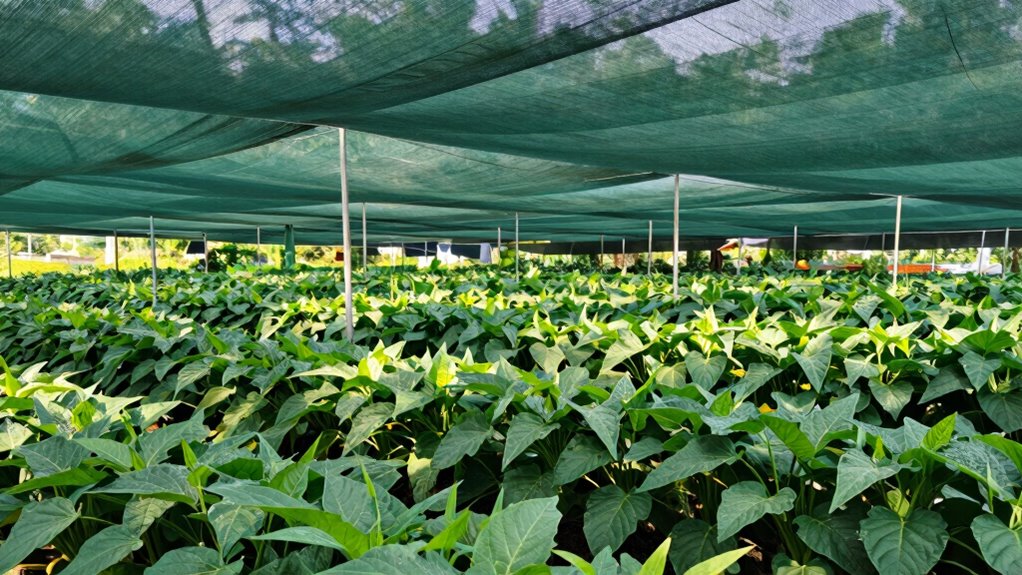
Heat stress can considerably reduce crop yields and quality, making it a critical issue for farmers. When temperatures soar, your crops may suffer from dehydration, wilting, and accelerated aging, which can compromise harvests. Implementing shade customization helps you tailor protection to meet specific crop needs, reducing heat exposure without hindering growth. Understanding crop compatibility is essential—some plants tolerate shade better than others, so selecting appropriate shading solutions ensures maximum results. Proper shading minimizes water loss and prevents heat damage, maintaining plant health and productivity. Additionally, power distribution for AV racks can be utilized to power automated shading systems, ensuring consistent protection during peak heat times. Ignoring heat stress risks can lead to significant losses, but with targeted shade strategies, you protect your crops effectively. The right approach enhances resilience, preserves quality, and boosts your overall yield potential. shade customization plays a crucial role in optimizing crop environments and ensuring successful harvests. Incorporating indoor air quality solutions like humidity control can further help manage microclimates, reducing overall plant stress during extreme weather conditions. Recognizing the importance of natural light in crop health can also guide you in designing shading solutions that balance protection with essential light exposure. Proper management of microclimates is vital to maintaining ideal growing conditions under changing weather patterns.
Understanding Your Shade Strategy: The Basics
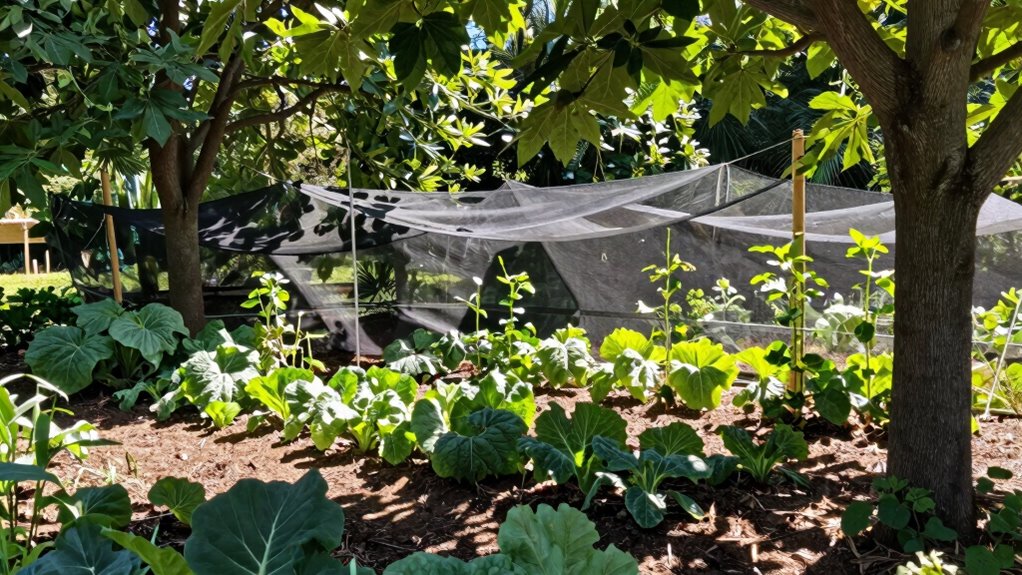
To effectively protect your crops from excessive heat, understanding the basics of your shade strategy is key. Shade customization allows you to tailor shading solutions based on your crop variety’s specific needs, ensuring optimal growth conditions. Different crops have varying light and temperature tolerances, so selecting the right shade level is essential. For instance, leafy greens may require lighter shading, while fruiting plants might need more coverage. By understanding your crop’s unique requirements, you can decide where to place shade structures and how much coverage to provide. Employing shade adjustment techniques can help optimize light levels throughout different growth stages. This approach can be complemented by temperature treatments like cold-sensing and vibration therapy to further support crop resilience. Incorporating climate adaptation strategies can also enhance the sustainability of your shading practices, ensuring long-term crop health. Additionally, considering pollution impact and sustainable fabric choices in your shade structures can reduce environmental footprint. Understanding the cultural heritage of native plant species can also inform more sustainable shading practices. A well-planned shade strategy enhances crop health, yields, and resilience to climate stress.
Choosing the Best Shade Materials for Your Farm
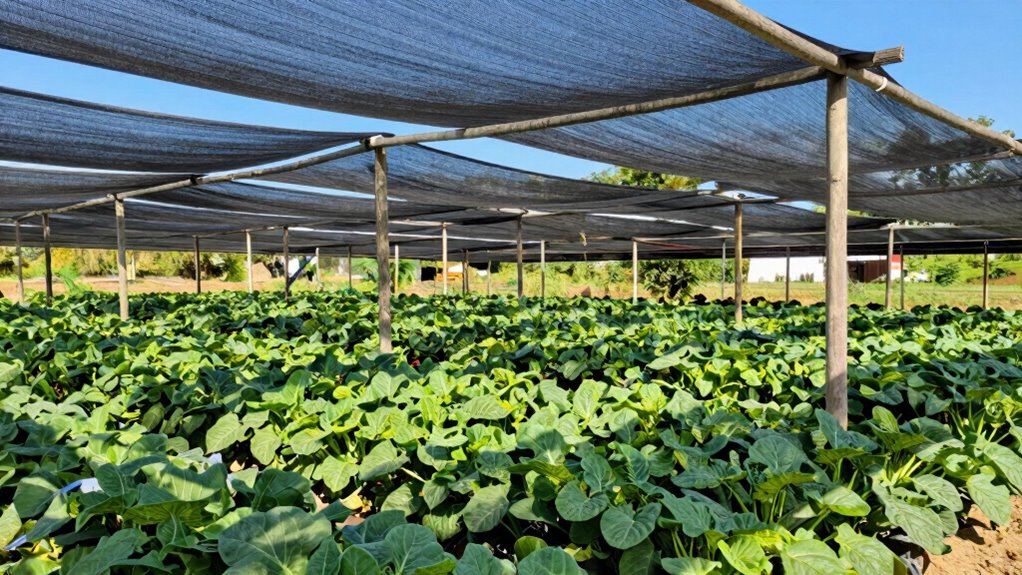
When selecting shade materials for your farm, you need to ensure how durable and long-lasting they are to withstand weather conditions. You also want materials that effectively diffuse sunlight, reducing heat without blocking essential light. Making the right choice ensures your shade structure remains effective and reliable over time. Incorporating device and network security measures can help protect your infrastructure from hacking attempts that could compromise your shading systems. Additionally, considering the early detection of structural wear or damage can extend the lifespan of your shade structures. Understanding the materials’ properties can further optimize your shading strategy for both durability and light diffusion. Utilizing knowledge about material properties can help you select shade fabrics that balance durability with optimal light diffusion, ensuring long-term effectiveness. Moreover, understanding the weather resilience of materials can help in choosing options that withstand changing climate conditions.
Material Durability and Longevity
Choosing the right shade materials for your farm is essential because durability directly affects their longevity and overall effectiveness. Material innovation has led to stronger, more resilient options that withstand weather and UV exposure. To guarantee your shade structure endures, look for products that have undergone rigorous durability testing. Incorporating visual and auditory cues into the selection process can also help in assessing material quality and performance over time. Additionally, selecting materials that support sustainable practices in backyard design can contribute to a more eco-friendly and resilient setup.
Light Diffusion Effectiveness
Selecting shade materials with effective light diffusion is crucial because it directly influences how evenly sunlight is distributed beneath the canopy. Proper light diffusion ensures your crops receive consistent light penetration, promoting uniform growth and preventing hotspots. Shade density plays a key role; too dense, and it blocks essential light, hindering photosynthesis. Too sparse, and it allows excessive direct sunlight, risking heat stress. Materials like woven fabrics or diffusing films scatter sunlight, reducing harsh shadows and creating a softer, more uniform light environment. When choosing shade materials, prioritize those that balance shade density with high light diffusion. This way, you maximize the benefits of shading—lower heat stress—without sacrificing the light your plants need for maximum growth. Additionally, selecting appropriate shade materials that are designed for optimal light diffusion can help ensure your solar system’s safety and efficiency while protecting your crops. Proper selection can also contribute to energy efficiency, helping you reduce cooling costs and improve overall farm productivity. Understanding the history of pinball machines can also inspire innovative design choices for your shading setup, combining tradition with modern technology for optimal results. Incorporating advanced materials that are engineered for light diffusion can further enhance the effectiveness of your shading system, ensuring a healthy balance between cooling and growth. Using innovative shading solutions can also enhance the durability and longevity of your setup, making it a sustainable investment.
Factors That Make Shade Structures Successful
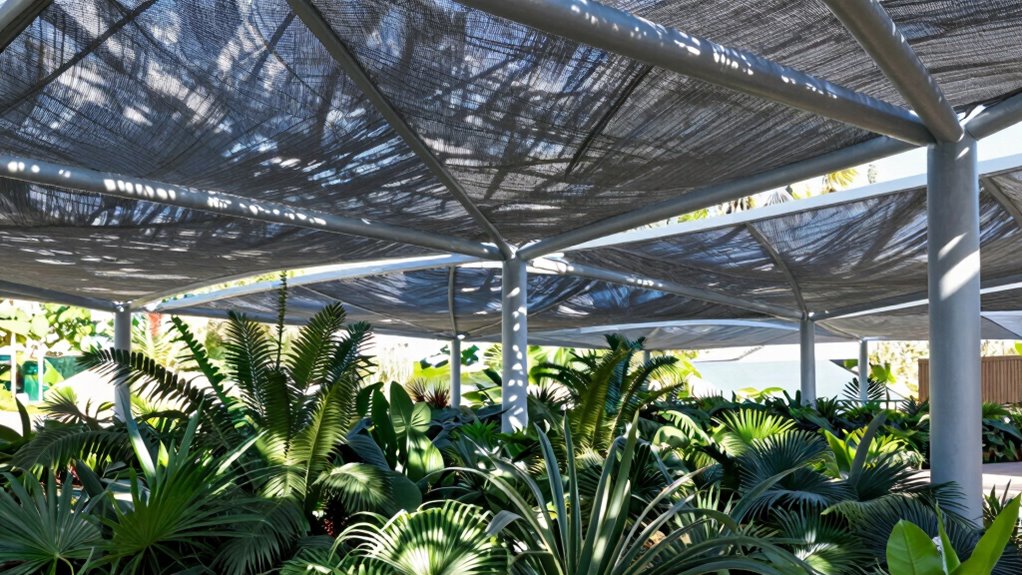
Successful shade structures rely on several key factors that guarantee effective heat reduction and durability. The shade design must balance sunlight diffusion with airflow to prevent overheating and guarantee longevity. You should consider the crop variety, as different plants have unique shading needs to thrive without stress. Proper installation and material choice also play critical roles in durability and performance. Incorporating appropriate ventilation techniques can further enhance airflow and prevent heat buildup, ensuring optimal conditions for plant growth. Additionally, selecting materials with sustainable and weather-resistant properties can improve the lifespan of the shade structures and support overarching sustainability goals. Ensuring the use of climate-adapted materials can help structures withstand changing weather patterns and extend their functional lifespan.
Optimizing Light and Shade for Healthy Plant Growth
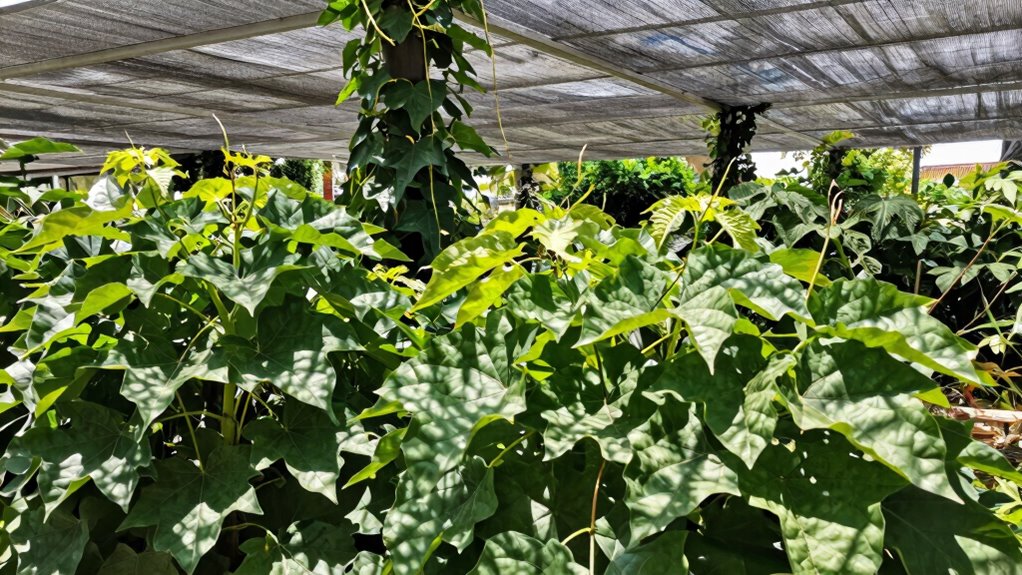
You need to find the right balance between sunlight and shade to keep your plants healthy. Using shade structures effectively can prevent overheating and promote steady growth. By optimizing this balance, you guarantee your plants get enough light without the stress of excessive heat.
Balancing Sunlight and Shade
Balancing sunlight and shade is essential for ensuring healthy plant growth, as plants need the right amount of both to thrive. Proper sunlight regulation and shade customization help prevent stress and promote ideal development. You can achieve this by adjusting shade levels based on plant needs, ensuring they receive enough light without overheating. Remember, too much shade can hinder growth, while too little can cause heat stress. To fine-tune your approach, consider these strategies:
- Use adjustable shade coverings to control exposure
- Monitor plant responses and adjust shade levels accordingly
- Position shade to block intense afternoon sun while allowing morning light
Using Shade Structures Effectively
Using shade structures effectively requires strategic placement and design to maximize their benefits for plant health. Consider positioning them where they provide ideal coverage without blocking essential sunlight. Choose color options that blend well with your landscape and enhance aesthetic appeal, such as neutral tones or natural hues. A well-designed structure can filter sunlight, reducing heat while ensuring plants still receive enough light for growth. Use adjustable shades or movable panels to tailor shade levels seasonally.
| Shade Type | Benefits |
|---|---|
| Light-colored fabric | Reflects heat, adds aesthetic appeal |
| Dark-colored fabric | Absorbs heat, offers deeper shade |
| Fixed structures | Consistent protection |
| Movable panels | Flexible shading options |
Installing and Caring for Your Shade Cover
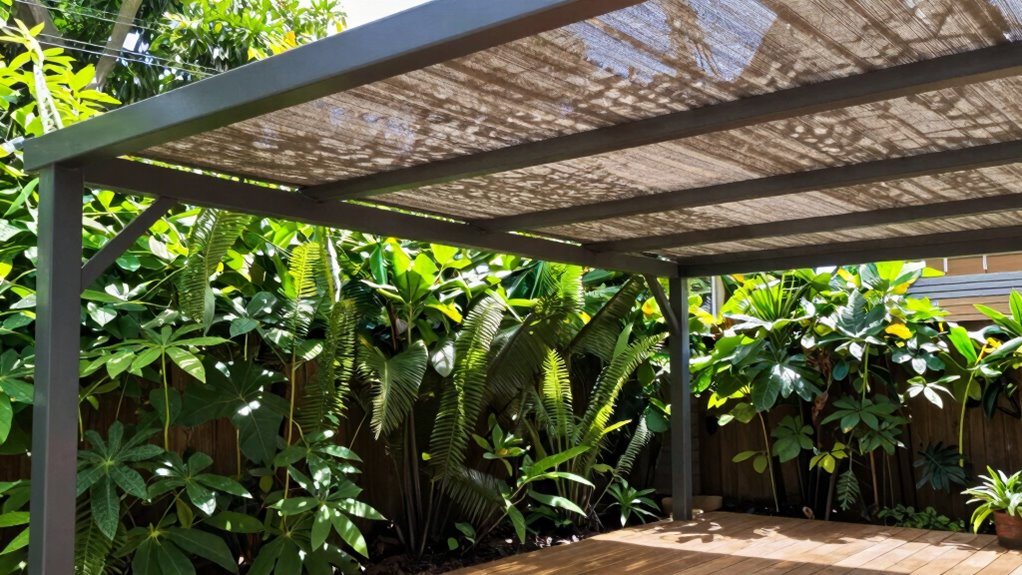
Proper installation and ongoing care are essential to guarantee your shade cover effectively reduces heat and lasts for years. When doing your shade installation, make certain the structure is secure and properly anchored to withstand weather conditions. Regular shade maintenance keeps the fabric in good condition, preventing tears and mold. To maximize lifespan, inspect your shade cover monthly and clean it as needed. Remember these key points:
- Check for loose fittings and tighten them promptly
- Remove debris and dirt to prevent deterioration
- Repair small tears immediately to avoid larger damage
Comparing Shade Material Options: Pros and Cons
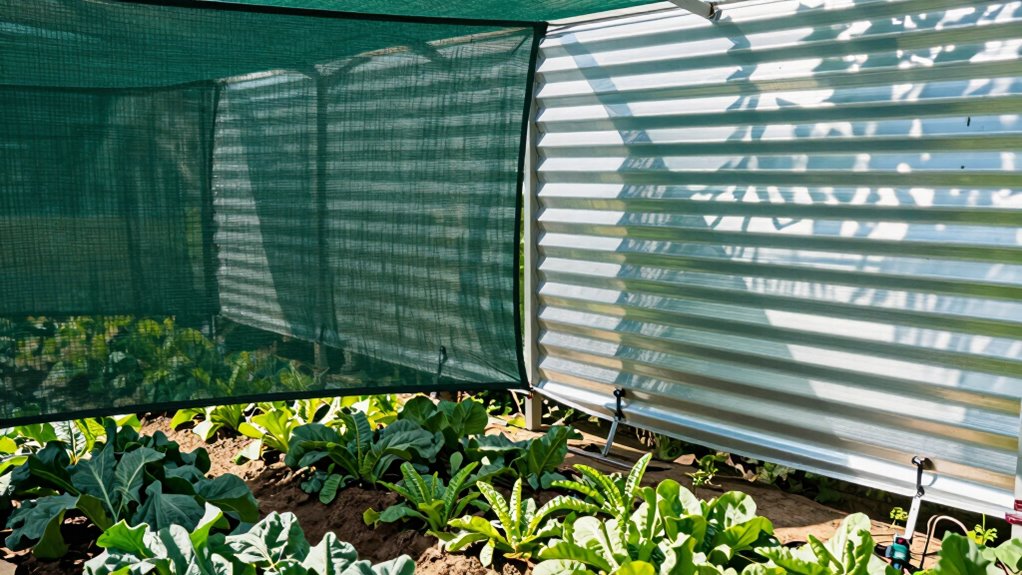
Choosing the right shade material is key to maximizing heat reduction and ensuring durability. Shade cloths come in various types, such as woven, knitted, and reflective fabrics, each offering different benefits. Woven shade cloths provide excellent UV protection and are durable, but they may limit airflow. Knitted options offer better breathability, reducing heat buildup, though they might offer slightly less UV protection. Reflective fabrics bounce sunlight, lowering temperatures effectively, but they tend to be more expensive. When comparing these options, consider your climate and plant needs. UV protection is essential to shield plants from harmful rays while maintaining light quality. Ultimately, selecting a shade material balances heat reduction, UV protection, longevity, and cost, helping you create a ideal shade strategy.
Monitoring Plant Health Under Shade Conditions
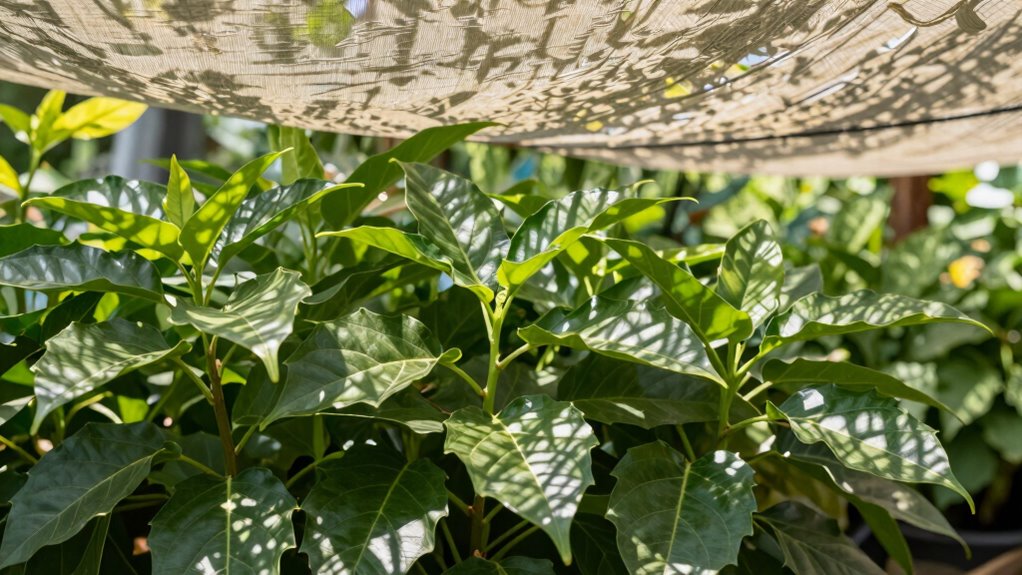
Monitoring plant health under shade conditions is essential because shading can considerably alter how plants grow and respond to their environment. When practicing shade adaptation, you’ll need to observe how plants adjust their foliage protection strategies to prevent damage and maximize growth. Regularly check for signs of stress, such as yellowing leaves, wilting, or uneven growth. Pay attention to:
Monitoring shade-grown plants helps detect stress signs and optimize growth for healthier, resilient foliage.
- Changes in leaf color or texture
- Unusual spotting or pest presence
- Stunted or elongated growth patterns
These indicators help you determine if your shading setup supports healthy development or needs adjustments. Keeping a close eye ensures that your plants maintain excellent health, even under reduced light. Effective monitoring allows you to fine-tune shading techniques and support long-term plant resilience.
Benefits of Using Shade Strategies in Sustainable Farming
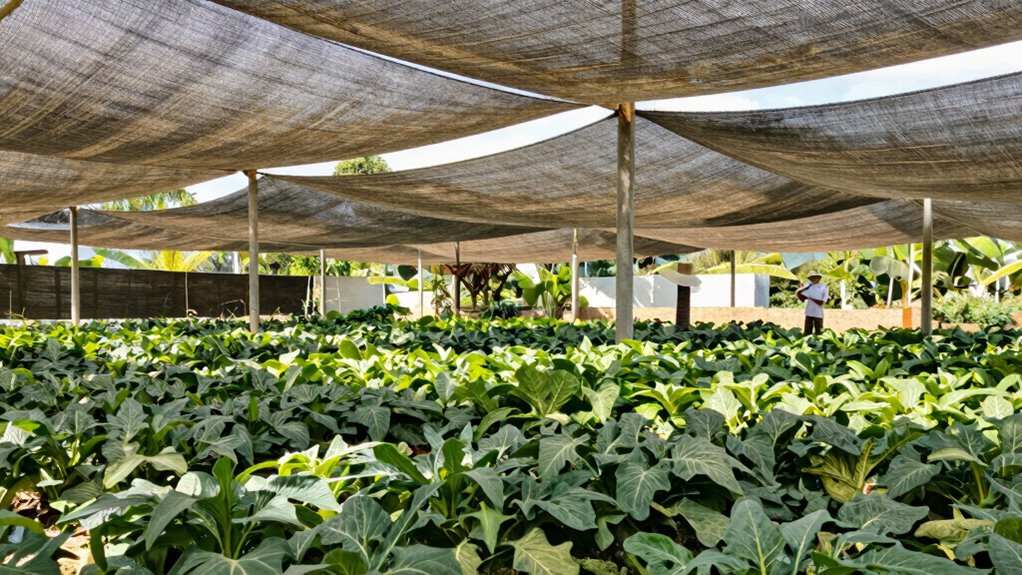
Using shade strategies in your farm can make your crops more resilient to heat stress and changing weather patterns. It also helps you use water more efficiently, reducing waste and conserving resources. Plus, shading minimizes your environmental footprint, supporting sustainable and eco-friendly farming practices.
Improved Crop Resilience
Implementing shade strategies can considerably boost crop resilience by protecting plants from extreme heat and sunlight stress. This creates a stable environment, allowing crops to better withstand weather fluctuations and reduce damage. Shade also encourages crop diversification, enabling you to grow a wider variety of plants that can thrive together, reducing the risk of total loss. It supports pest management by making conditions less favorable for pests and diseases, lowering the need for chemical controls.
You’ll notice benefits such as:
- Reduced plant stress and improved growth rates
- Increased resilience to drought and temperature extremes
- Enhanced ability to diversify crops, improving overall farm stability
Enhanced Water Efficiency
Shade strategies substantially boost water efficiency in sustainable farming by reducing evaporation from soil and plant surfaces. By tailoring shade customization, you can maximize crop microclimates, ensuring plants receive just the right amount of shade to minimize water loss while maintaining growth. This approach helps conserve water resources and lowers irrigation needs. Adjusting shade levels can also protect crops from excessive heat, further reducing stress and water demand.
| Benefit | Description |
|---|---|
| Reduced evaporation | Less water lost from soil and plants |
| Custom shade levels | Adapt shade to crop needs for maximum efficiency |
| Improved crop microclimates | Create ideal conditions for water retention |
| Lower irrigation requirements | Save water and energy |
| Enhanced sustainability | Support eco-friendly farming practices |
Reduced Environmental Impact
By reducing water consumption through tailored shade strategies, sustainable farming minimizes the environmental footprint associated with resource extraction and energy use. Shade sustainability plays a key role in lowering the need for energy-intensive cooling systems and irrigation. This approach offers clear environmental benefits by decreasing greenhouse gas emissions and conserving natural resources. When you implement effective shade strategies, you support healthier ecosystems and reduce soil erosion. Key advantages include:
- Lower energy consumption for climate control
- Reduced greenhouse gas emissions
- Preservation of local biodiversity
These benefits demonstrate how shade strategies contribute to a more sustainable agricultural system. By prioritizing shade sustainability, you help ensure farming practices that are environmentally responsible while maintaining productivity and growth.
Next Steps: Incorporating Shade Strategies Into Your Farm Plan
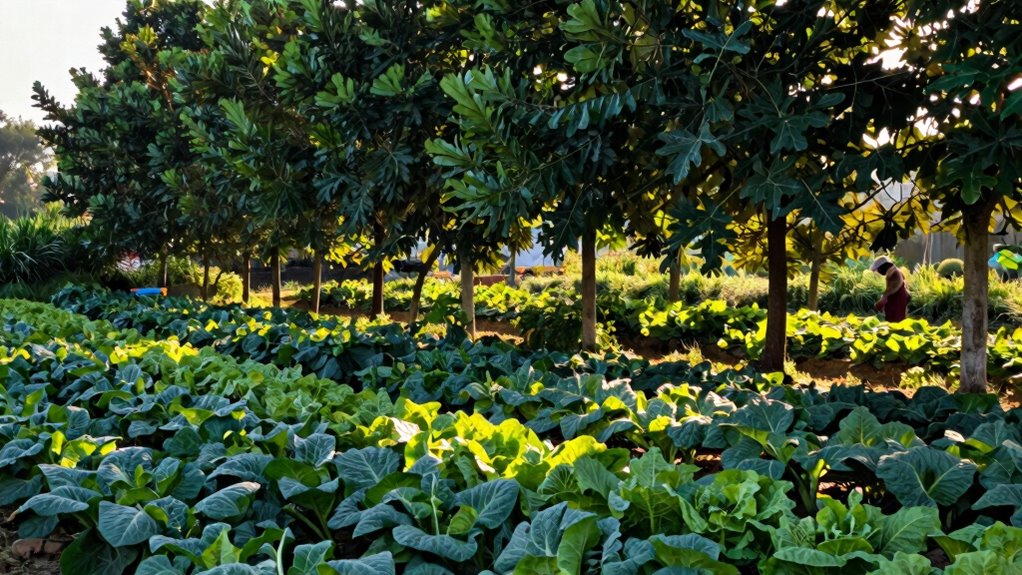
To effectively incorporate shade strategies into your farm plan, you need to start by evaluating your specific crop needs and local climate conditions. Understanding shade adaptation is essential for selecting the right crop shading methods that promote growth without excess heat. Consider how much shade your crops require at different growth stages and how it affects airflow and sunlight. Use this table to guide your planning:
| Crop Type | Shade Needs | Best Shading Method |
|---|---|---|
| Leafy Greens | Moderate | Shade cloth, trees |
| Tomatoes | High | Netting, shade sails |
| Root Crops | Low | Minimal shading |
| Fruits | Variable | Adjustable shading |
Adjust your strategy based on crop-specific needs and climate variability to optimize productivity and heat management.
Frequently Asked Questions
How Does Shade Impact Crop Water Requirements?
Shade reduces your crop’s water requirements by lowering evaporation rates and creating a more favorable microclimate. By providing cover, you decrease direct sunlight exposure, which minimizes water loss from soil and plants. This microclimate modification means your crops stay cooler and need less frequent watering, ultimately conserving water. Implementing shading techniques helps optimize water use efficiency, supporting healthier growth while reducing your irrigation needs and promoting sustainable farming practices.
Can Shade Strategies Be Used for All Crop Types?
Yes, shade strategies can be used for most crop types, but you need to ensure shade adaptability and crop compatibility. Some crops tolerate shade better than others, so understanding each plant’s specific needs helps you implement effective shading. By selecting appropriate shading techniques, you can protect sensitive crops from excessive heat, improve water efficiency, and promote healthy growth without compromising yield. Tailoring shade strategies guarantees ideal results across diverse crop varieties.
What Are the Long-Term Cost Benefits of Shade Structures?
Imagine your crops thriving under a customized shade canopy that lasts for years. These structures offer long-term cost benefits by reducing energy expenses, protecting plants from heat stress, and minimizing water use. Shade customization guarantees ideal growth conditions, boosting harvests. Over time, this cost efficiency adds up, turning initial investments into sustainable savings, making your farm more resilient and profitable in the long run.
How Does Shade Influence Pest and Disease Management?
Shade plays a vital role in pest suppression and disease mitigation by creating a cooler, less stressful environment for your plants. It reduces the appeal of crops to certain pests and limits conditions that promote disease spread, such as excessive humidity and heat. By incorporating shade, you help prevent pest infestations and fungal infections, leading to healthier plants, fewer chemical treatments, and ultimately better yields.
Are There Seasonal Considerations for Implementing Shade Strategies?
You should consider seasonal timing and shade adaptability when implementing shade strategies. In hot summer months, providing ample shade helps lower heat stress, but as seasons change, modify your shading to prevent overheating or insufficient protection. Planning based on seasonal variations ensures your plants adapt smoothly, avoiding stress or growth delays. By aligning shade deployment with seasonal shifts, you optimize plant health and productivity year-round.
Conclusion
By implementing the right shade strategies, you can keep your crops cool without sacrificing growth. It’s all about finding that sweet spot where your plants thrive and stress drops. Remember, a well-planned shade setup can make all the difference—turning the tide in your favor. So, don’t put all your eggs in one basket; instead, adapt and embrace these tactics to nurture healthier, more resilient crops. Your farm’s future depends on it.
Fall yard work Picks
leaf blowers
As an affiliate, we earn on qualifying purchases.