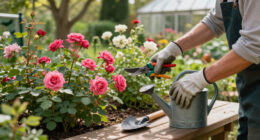
To pair your greenhouse with rain barrels, solar power, and food storage, start by installing rain barrels near gutters for efficient water collection and connect them to your irrigation system. Add solar panels to power fans, lights, and small appliances, and store excess energy in batteries. Incorporate organized food storage areas for preserving your harvest year-round. Proper system integration, layout, and monitoring optimize efficiency and sustainability. Keep going to discover how to make these systems work seamlessly together.
Key Takeaways
- Position rain barrels near gutters and greenhouses for efficient water collection and easy access for irrigation.
- Install solar panels with optimal sunlight exposure to power greenhouse systems, pumps, and food storage appliances.
- Integrate rainwater harvesting with irrigation systems, using stored water to reduce dependence on external sources.
- Use solar energy to operate climate control, ventilation, and pest management systems within the greenhouse.
- Design food storage zones with environmental controls, leveraging renewable energy to preserve harvested crops effectively.

BILAL 2 Set 3/4 Inch Rain Barrel Spigot Kit with Bulkhead Fitting, 2 Set
- Universal Fit for Faucets and Hoses: Compatible with standard faucets and hoses
- Complete Kit with Necessary Components: Includes spigots, fittings, adapters, washer, and tape
- Easy Installation Requirements: Requires drill, saw, and wrench for setup
As an affiliate, we earn on qualifying purchases.
As an affiliate, we earn on qualifying purchases.
Why a Greenhouse Boosts Sustainable Gardening
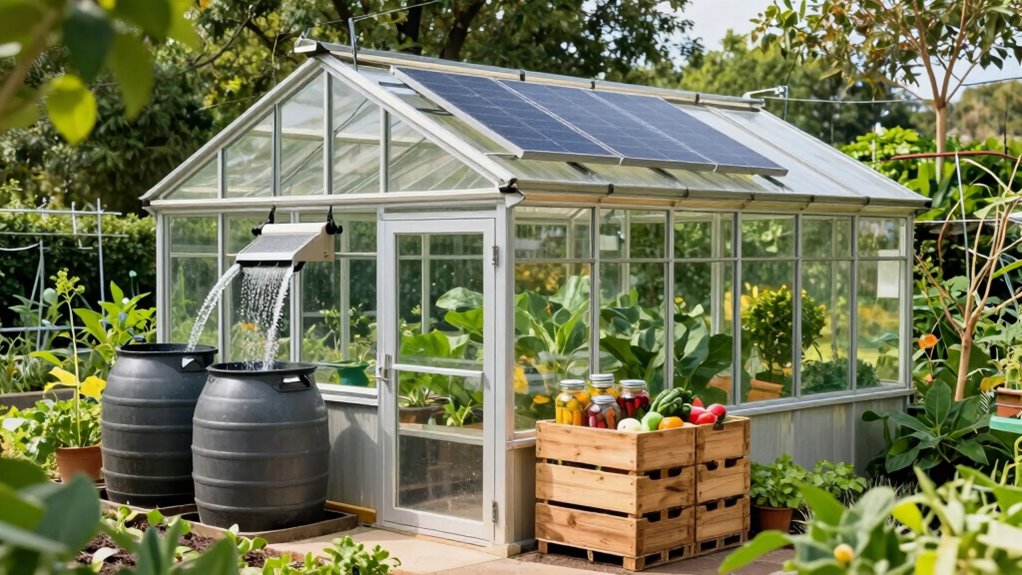
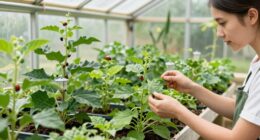
A greenhouse considerably enhances your sustainable gardening efforts by creating a controlled environment that extends your growing season and reduces reliance on external resources. With a greenhouse, you can better maintain plant health by regulating temperature, humidity, and light, which helps prevent diseases and promotes vigorous growth. It also simplifies pest control, as you can keep out unwanted insects and pests more effectively than in open gardens. This controlled setting minimizes the need for chemical pesticides, supporting a more eco-friendly approach. Additionally, a greenhouse allows you to grow a wider variety of crops year-round, making your food system more resilient. Incorporating air systems such as exhaust fans and vents can further optimize airflow and climate control within your greenhouse. Proper ventilation, in particular, is crucial for maintaining healthy plants and preventing issues like mold or overheating. Overall, it’s a smart investment that promotes healthier plants, reduces chemical use, and boosts your sustainable gardening practices.
How to Install Rain Barrels for Water Efficiency
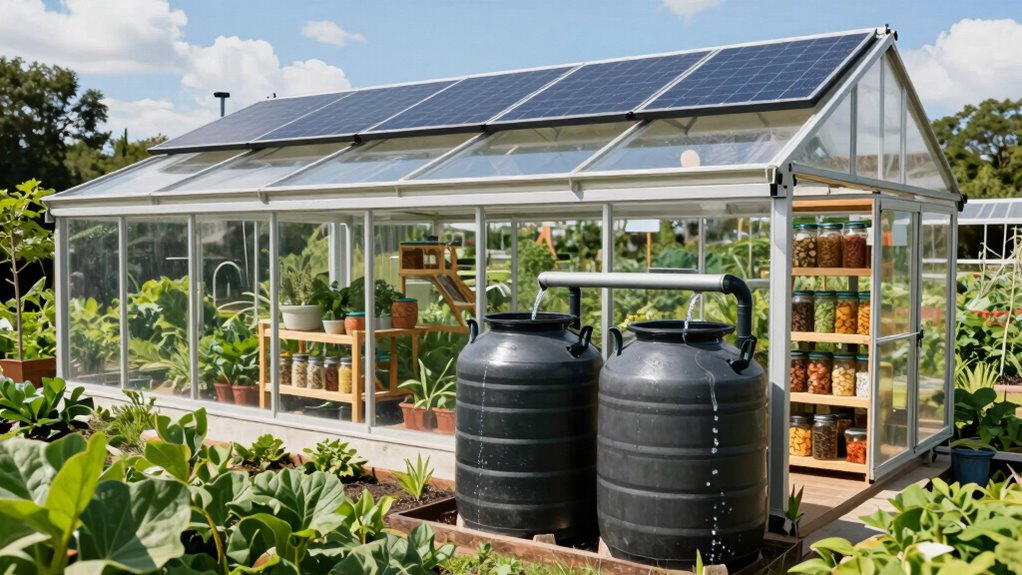
- Positioned under a clean gutter downspout, unobstructed.
- Elevated on a stable platform for better water pressure.
- Connected with a flexible hose or spigot for easy access.
- Outfitted with a screen to keep debris and insects out.
- Incorporating water conservation techniques ensures your rain barrel system remains efficient and environmentally friendly.
- Additionally, integrating natural landscaping around your setup can help reduce runoff and improve water collection efficiency.
- To optimize your system’s performance, consider installing a comparative advantage to power water pumps more effectively and sustainably.
How Solar Power Can Reduce Your Greenhouse Costs

Harnessing solar power can substantially cut your greenhouse’s energy costs by providing a renewable and reliable energy source. By installing solar panels, you improve solar efficiency, ensuring you get the most energy output from your system. This increased efficiency translates into significant energy savings over time, reducing your reliance on grid electricity. Solar power can run fans, lighting, and small appliances, lowering your operational costs. Additionally, as technology advances, solar panels become more affordable and efficient, maximizing your savings. Using solar energy not only cuts costs but also promotes eco-friendly practices. With consistent sunlight, you can maintain ideal greenhouse conditions while minimizing your environmental footprint. Incorporating renewable energy sources into your setup can further enhance sustainability and decrease long-term expenses. Proper solar system placement ensures safety and maximizes energy production, making your investment even more effective. Additionally, integrating portable power solutions can help you manage energy use more flexibly and reliably during cloudy days or when off-grid. Research into advanced energy storage options can also help you optimize energy use and ensure a steady power supply. To optimize your overall energy strategy, consider consulting with solar energy professionals who can tailor solutions to your specific greenhouse needs. Overall, integrating solar power is a smart investment toward making your greenhouse more cost-effective and sustainable.
How to Store and Preserve Food for Year-Round Harvests
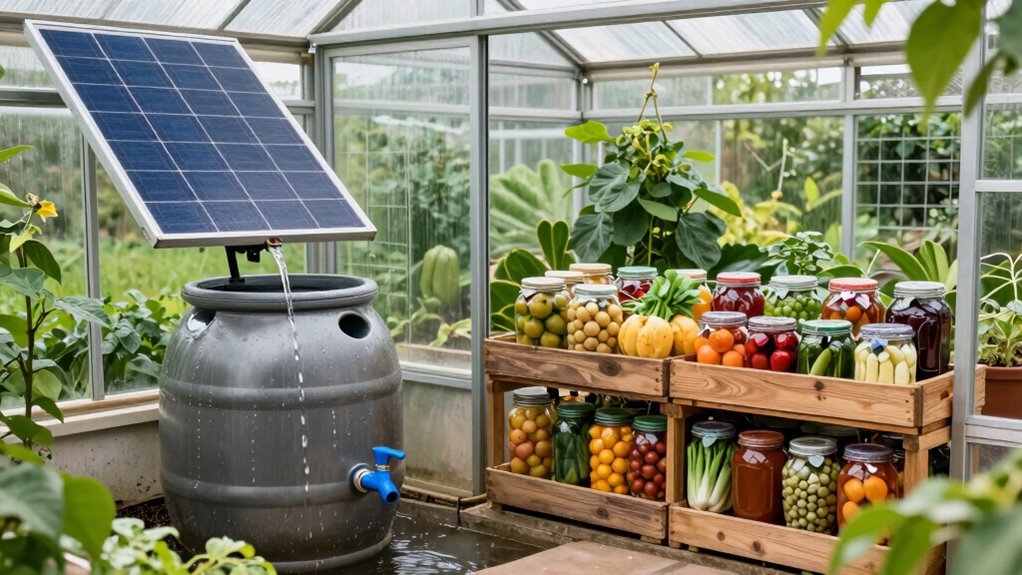
Once you’ve invested in solar power to cut costs and increase sustainability, the next step is ensuring your harvest doesn’t go to waste. To store and preserve food for year-round harvests, focus on techniques like:
- Canning: Seal fruits and vegetables in jars for long-term storage.
- Freezing: Preserve seasonal produce in airtight containers.
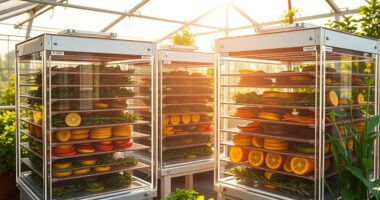
- Dehydrating: Remove moisture to make dried fruits and herbs.
- Root Cellaring: Store hardy crops in a cool, dark space, rotating crops to prevent pest issues. Incorporating project management support can help organize and optimize your preservation process effectively.
- Employing digital content formats can also help you learn new preservation techniques and track your harvests effectively.
- Implement crop rotation to reduce pest infestations and maintain soil health. Regular pest control keeps stored food safe, ensuring your harvest remains fresh and edible throughout the year. Additionally, understanding holistic SEO approaches can help you access resources and communities focused on sustainable food storage and homesteading.
How to Integrate Rainwater, Solar, and Food Storage Systems

Integrating rainwater harvesting, solar energy integration, and food storage systems creates a sustainable and efficient homestead. You can collect rainwater using barrels linked to your roof, providing a renewable water source for your greenhouse and garden needs. Pair this with solar power to run pumps, filters, and small appliances, reducing reliance on the grid. Solar energy integration ensures your systems work seamlessly, with excess power stored in batteries for cloudy days or nighttime use. When combining these systems, position your rain barrels near your greenhouse for easy water access, and install solar panels where they receive maximum sunlight. This integrated approach minimizes waste, lowers costs, and boosts your self-sufficiency, creating a resilient homestead that works in harmony with nature. Additionally, understanding the importance of color accuracy and contrast ratio in projectors can help you ensure your data and system controls are protected as you manage your sustainable setup. Proper planning of system compatibility is crucial to ensure all components work efficiently together and avoid future technical issues. Recognizing cabling solutions and their role in system reliability can further enhance your setup’s durability and ease of maintenance. Incorporating system verification methods ensures that each component functions correctly within your integrated setup, preventing potential failures and optimizing performance.
What to Consider When Combining These Sustainable Systems
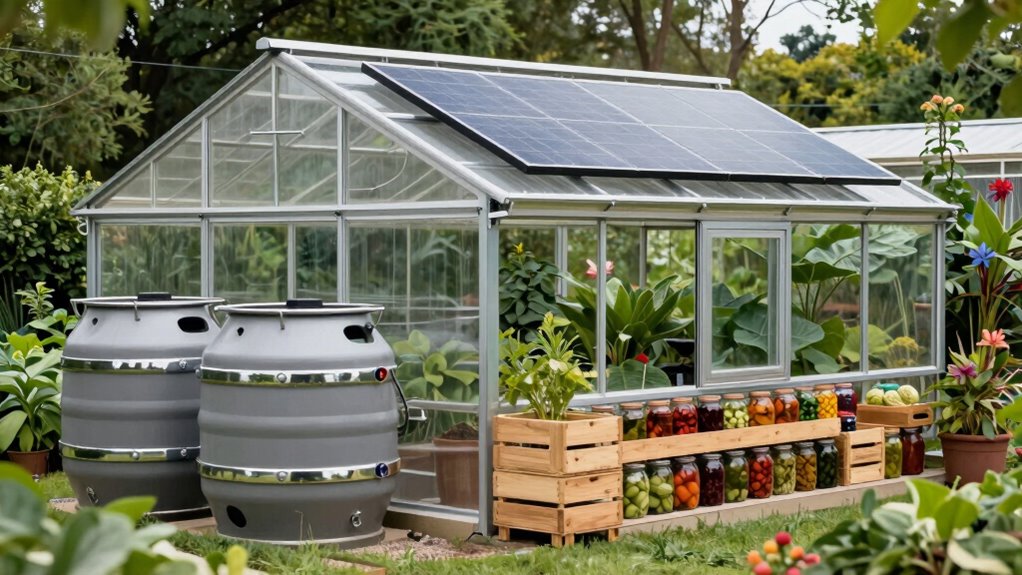
When combining these systems, you need to guarantee they work well together without causing conflicts. Think about how much space each system requires and plan your layout accordingly. Also, consider the durability and maintenance needs to keep everything running smoothly over time. Incorporating AI-driven planning tools can help optimize your layout and ensure seamless integration of all components.
Compatibility of Systems
Before combining a greenhouse with rain barrels, solar power, and food storage, it’s essential to assess how well these systems work together. You need to confirm system compatibility and smooth technical integration to avoid issues down the line. Visualize:
- Water flow channels linking rain barrels to irrigation, preventing leaks.
- Electrical wiring seamlessly connecting solar panels to batteries, avoiding overloading.
- Storage units positioned conveniently for easy access without disrupting other systems.
- Control systems that synchronize climate, irrigation, and power management efficiently.
Additionally, understanding passive voice detection can help ensure your instructions and system descriptions remain clear and direct. Being aware of system compatibility is crucial for effective integration, reducing potential conflicts between components. Recognizing system interdependence can help optimize overall performance and ensure all components work harmoniously. Incorporating system monitoring can further enhance efficiency by providing real-time feedback and early detection of issues. Ensuring proper system calibration can help maintain optimal operation across all interconnected systems.
Space and Layout Planning
Effective space and layout planning are essential to guaranteeing your sustainable systems function smoothly together. You should consider vertical stacking to maximize limited space, placing rain barrels or solar equipment above storage areas or near the greenhouse for easy access. Interior organization helps keep systems efficient; designate specific zones for water collection, energy generation, and food storage to prevent congestion. When planning your layout, think about sunlight exposure for solar panels and airflow around the greenhouse. Position rain barrels where they’ll catch the most rain without blocking pathways. Efficiently arranging these elements ensures each system supports the others, reducing clutter and improving accessibility. Clear planning upfront saves space, enhances functionality, and makes maintenance easier, setting a solid foundation for your sustainable setup.
Maintenance and Durability
Have you considered how combining rain barrels, solar power, and food storage impacts their longevity and maintenance needs? Proper upkeep guarantees systems work efficiently and last longer. Here are key considerations:
- Regularly clean rain barrels to prevent algae and debris, supporting soil health when used for irrigation.
- Inspect solar panels for dust or damage, guaranteeing peak energy output and reliable food storage conditions.
- Monitor pest control around food storage and greenhouse structures to prevent infestations that could harm crops or damage equipment.
- Check plumbing connections and seals to avoid leaks that could compromise soil health or system durability.
Troubleshooting Common Issues in Your Greenhouse Systems
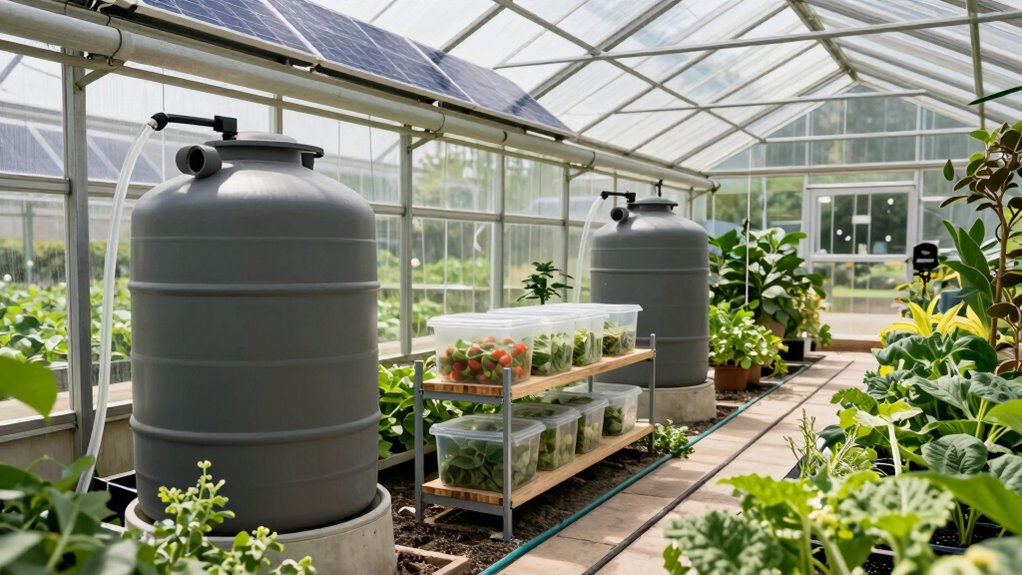
Greenhouse systems can sometimes face issues that disrupt your gardening efforts, but many problems have straightforward solutions. If pests become a problem, focus on pest management by inspecting plants regularly and using natural barriers or organic treatments. Proper ventilation optimization is key to preventing mold and overheating, so verify vents and fans are working efficiently. Poor airflow can also lead to stagnant air, encouraging pests and diseases. Check for blocked vents or malfunctioning fans, and open windows during warm days to improve circulation. If humidity levels are too high, use dehumidifiers or adjust ventilation to reduce moisture. Regularly monitor your greenhouse’s environment to catch issues early, and keep pests and humidity in check to maintain a healthy, productive space.
Frequently Asked Questions
How Much Initial Investment Is Needed for These Systems?
You’ll need an initial investment of around $2,000 to $5,000 for these systems, depending on your greenhouse size and chosen equipment. Conduct a cost analysis to understand upfront costs versus long-term financial benefits, like savings on water, energy, and food expenses. While it might seem steep initially, the savings and sustainability benefits make it a worthwhile investment for eco-conscious gardeners seeking independence.
Are There Any Legal Regulations for Installing Rain Barrels and Solar Panels?
You need to check local zoning laws and legal permits before installing rain barrels and solar panels. Many areas require permits for these systems, especially if they’re large or connected to the grid. Zoning laws might restrict the size or placement of rain barrels and solar panels on your property. Contact your local building department or city hall to guarantee you follow all regulations and avoid fines or installation issues.
How Do I Maintain and Clean These Integrated Systems?
To maintain and clean these integrated systems, regularly inspect your rain barrels, solar panels, and food storage for debris and dirt buildup. Follow specific cleaning protocols: rinse rain barrels with a hose, gently clean solar panels with a soft cloth and mild soap, and check food storage for pests or spoilage. System maintenance is key to ensuring efficiency; schedule routine checks and address issues promptly to keep everything functioning smoothly.
Can These Systems Be Expanded Over Time?
Think of your system as a living organism—designed to grow with your needs. Yes, these systems can be expanded over time. When considering scalability, focus on long-term expansion by planning for additional rain barrels, solar panels, or storage units. Keep flexibility in mind, and you’ll create a sustainable setup that adapts as your gardening and energy needs evolve, ensuring your eco-friendly oasis flourishes for years to come.
What Are the Best Plant Types for Sustainable Greenhouse Gardening?
You should focus on plant selection that thrives in greenhouse conditions, like herbs, leafy greens, tomatoes, and peppers. These plants grow quickly and are easy to manage with good growing techniques. Opt for compact or vertical varieties to maximize space. Choose hardy, adaptable plants that can handle fluctuations in temperature and humidity, ensuring a sustainable greenhouse garden that produces fresh food year-round.
Conclusion
By integrating rain barrels, solar power, and food storage into your greenhouse, you create a resilient, eco-friendly gardening system. While some might worry it’s complex or costly, start small and expand gradually—you’ll find the long-term savings and sustainability benefits far outweigh initial efforts. With patience and planning, you’ll enjoy fresh harvests year-round, reduce your environmental footprint, and gain independence from traditional utilities, making your greenhouse a true model of sustainable living.