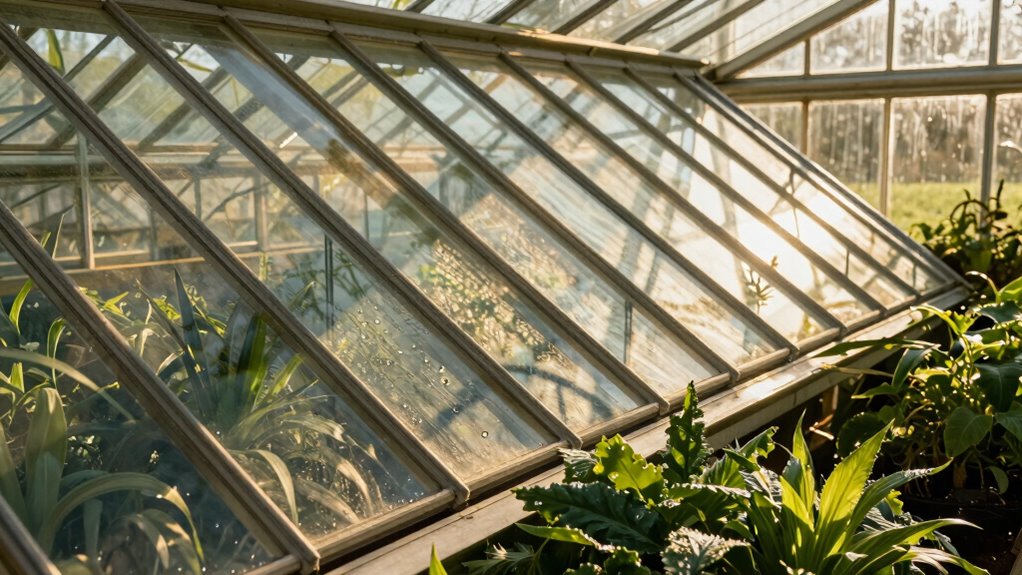

Adjusting your greenhouse roof angle markedly impacts how much sunlight your plants get, influencing their growth and health. A proper tilt improves energy capture and guarantees plants receive adequate light year-round, even in winter. It also affects structural stability, helping your greenhouse withstand weather conditions like snow and rain. Additionally, the right roof pitch enhances airflow and temperature control, creating a healthier environment. Keep in mind, optimizing your design can boost your greenhouse’s efficiency—find out more below.
Key Takeaways
- The roof angle determines how much sunlight plants receive, influencing growth and health.
- Proper pitch maximizes solar energy capture throughout the year, reducing artificial lighting needs.
- It affects structural stability and weather resistance, preventing damage from snow or rain.
- The angle impacts ventilation and airflow, helping control temperature and humidity for healthier plants.
- Seasonal adjustments to the roof pitch optimize light exposure and greenhouse efficiency over time.
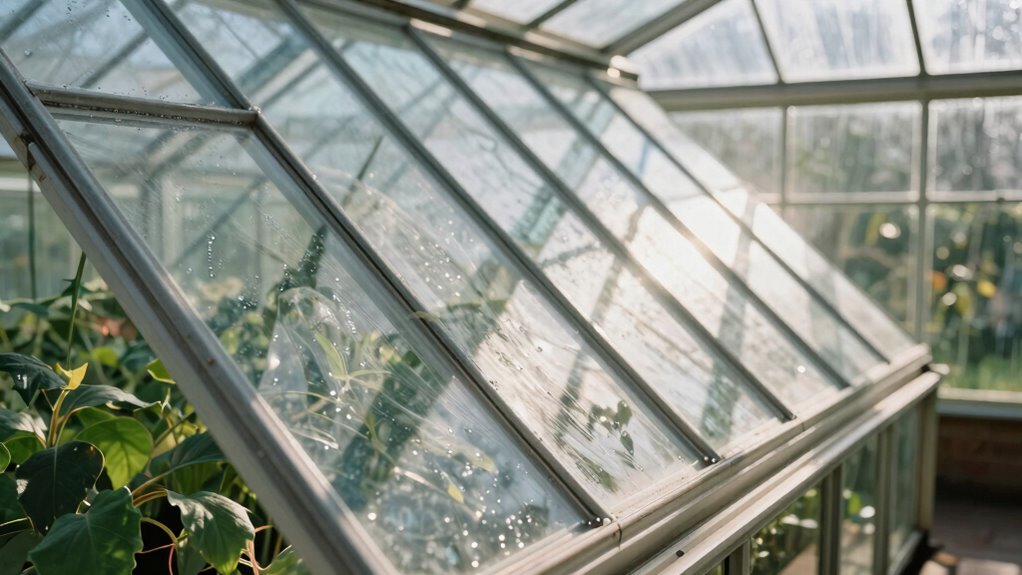
Choosing the right greenhouse roof angle is essential for maximizing your home grower’s success. The angle you select influences how much sunlight your plants receive, affecting their growth rate and overall health. A well-optimized roof pitch ensures your greenhouse captures the maximum amount of solar energy throughout the year, which is critical for consistent plant development. When you consider solar optimization, you’re effectively making your greenhouse more efficient. A properly tilted roof directs sunlight where it’s needed most, especially during the winter months when the sun sits lower in the sky. This means your plants get adequate light exposure without the need for additional artificial lighting, saving you energy and costs.
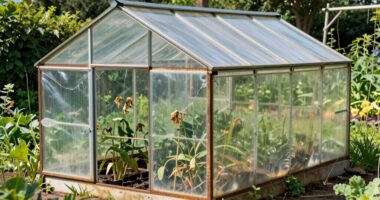
However, focusing solely on solar optimization without considering structural stability can lead to problems. The roof angle also impacts the durability of your greenhouse. If the angle is too steep, it may withstand heavy snow loads better, preventing damage during winter storms. Conversely, a shallower angle might result in water pooling or snow accumulation, which can compromise the structure over time. You need a balance—an angle that maximizes sunlight absorption while maintaining strength against weather elements. Proper design and construction will ensure your greenhouse remains stable, no matter what Mother Nature throws its way. Additionally, incorporating structural integrity considerations during planning can help prevent costly repairs in the future. Recognizing how weather resilience factors into your design can further safeguard your investment.
Adjusting the roof angle isn’t just about sunlight and stability; it also affects ventilation and airflow. An ideal pitch allows hot air to rise and escape efficiently, helping regulate temperature and humidity inside your greenhouse. Better airflow reduces the risk of mold and disease, creating a healthier environment for your plants. When you choose an appropriate roof angle, you’re also making it easier to install ventilation systems or shading devices, further enhancing your greenhouse’s climate control. This interconnected approach ensures your plants grow in a controlled, stable environment, leading to better yields and healthier crops. Understanding the solar position throughout the year can help you optimize your greenhouse design for maximum efficiency.

1 Pack Patio Roof Riser Adjustable & Anchored Angle Pergola Roof Riser Heavy Duty Stainless Steel Roof Mount Brackets Support for 4×4/4×6 Lumber (Patent Pending)
- Material: High-quality stainless steel with powder coating
- Corrosion Resistance: Excellent corrosion resistance for durability
- Adjustable Angle: 0° to 55° adjustable for various pitches
As an affiliate, we earn on qualifying purchases.
As an affiliate, we earn on qualifying purchases.
Frequently Asked Questions
How Does Roof Angle Affect Snow Accumulation on a Greenhouse?
You’ll notice that a steeper roof angle promotes snow shedding, preventing heavy snow buildup that could compromise roof stability. When snow slides off easily, it reduces the risk of collapse or damage during winter storms. Conversely, a gentler slope tends to trap snow, increasing weight and stressing your greenhouse. So, choosing the right roof angle helps guarantee your structure stays stable and safe throughout the snowy season.
Can Adjustable Roof Angles Benefit Year-Round Gardening?
Adjustable roof angles act like a gardener’s secret weapon, helping you optimize ventilation efficiency and light penetration year-round. By tweaking the angle, you can control airflow and maximize sunlight during different seasons, making your greenhouse more adaptable. This flexibility means healthier plants, fewer pests, and better yields no matter the weather. With a simple adjustment, you turn your greenhouse into a versatile environment that nurtures growth through every season.
Does Roof Angle Influence Pest Entry or Exit?
Yes, your roof angle can influence pest entry and exit by affecting pest migration and ventilation efficiency. A steeper roof may reduce pest entry points, making it harder for insects to invade. Conversely, it can improve airflow, helping pests exit more easily and reducing humidity that attracts them. You can optimize your greenhouse design by adjusting the roof angle to balance pest management with proper ventilation, protecting your plants effectively.
How Does Roof Angle Impact Internal Temperature Regulation?
Think of your greenhouse roof angle as a dance partner guiding airflow. A steeper angle boosts ventilation efficiency, letting hot air rise and escape, keeping temperatures steady. It also enhances structural stability, resisting wind and snow stress. With the right angle, you create a natural cooling system that balances internal temperatures, protecting your plants and ensuring a comfortable, stable environment that promotes healthy growth all year round.
Is There an Optimal Roof Angle for Specific Plant Types?
Yes, the ideal roof angle depends on your plant types. For taller plants, a steeper angle maximizes light penetration and reduces shading, promoting healthy growth. Shorter plants benefit from gentler angles, which improve light exposure at lower levels. Adjusting the roof angle helps manage plant height and enhances light penetration, ensuring your specific plants get the right amount of sunlight for maximum growth and yield.
Conclusion
Don’t let doubts hold you back from optimizing your greenhouse. Adjusting the roof angle might seem like a small detail, but it can make a huge difference in your plant health and yield. Imagine watching your garden thrive, feeling proud of your setup, and knowing you’ve taken every step to give your plants the best shot. With a little effort and the right angle, you can turn your greenhouse into a flourishing oasis—don’t settle for less than your garden’s full potential.