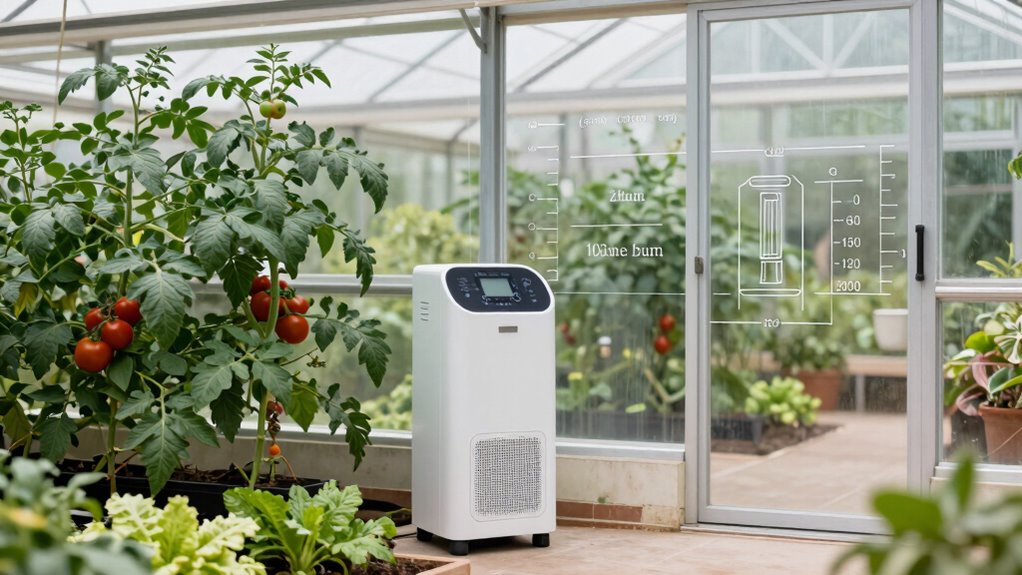

To match heater output to your greenhouse size accurately, start by measuring the square footage and ceiling height. Use these measurements along with your climate’s coldest temperatures to determine the needed BTU or wattage—larger or colder spaces need more heat. Consider insulation quality and ventilation, as these affect heating needs. Overestimating slightly is safer than underestimating. Keep monitoring and adjusting to optimize performance; more details will guide you even better.

Get garden gear delivered free with Prime
- Fast, free delivery on millions of items
- Prime Video, Amazon Music and more included
- Member-only deals all year
Key Takeaways
- Measure and record the greenhouse’s square footage, ceiling height, and insulation quality for accurate capacity calculations.
- Use online calculators or consult specialists to determine precise heater wattage based on local climate conditions.
- Evaluate ventilation efficiency, as good airflow reduces the need for higher heater output.
- Consider regional weather patterns, especially coldest night temperatures, to select an appropriate heater size.
- Regularly monitor indoor temperature and adjust heater settings to ensure consistent warmth without overcapacity.
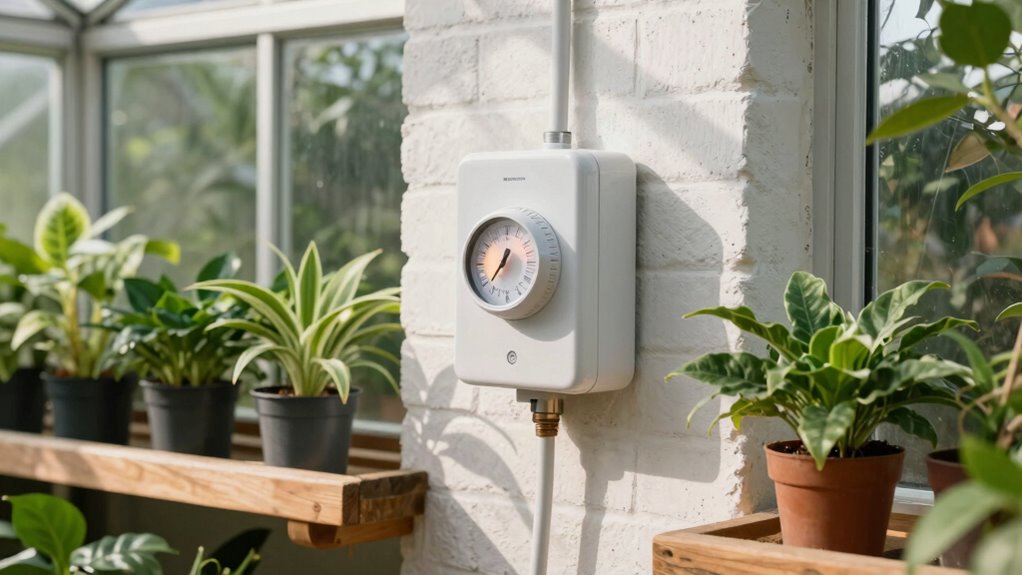
Matching Heater Output to Greenhouse Size is essential to maintaining ideal growing conditions. If your heater is too powerful, you risk overheating and wasting energy; if it’s too weak, your plants may struggle to stay warm enough, especially during colder months. To avoid this, you need to accurately match your heater’s capacity to the size of your greenhouse. The key factors influencing this are ventilation efficiency and insulation quality. Good ventilation efficiency helps regulate temperature by exchanging warm air with cooler outside air, preventing temperature spikes or drops. High-quality insulation minimizes heat loss, meaning you won’t need as much heating power to maintain consistent temperatures.
Start by measuring your greenhouse’s square footage and ceiling height. These dimensions give you a baseline for calculating the necessary heating capacity. However, don’t just rely on simple area calculations. Ventilation efficiency plays a significant role. If your greenhouse has excellent natural airflow or an efficient ventilation system, heat will circulate more effectively, reducing the need for a higher heater output. Conversely, poor ventilation means heat can stagnate or escape, requiring a slightly more powerful heater to compensate. Take note of how well your greenhouse retains heat—insulation quality is vital here. If your structure has double-glazed panels or insulated walls, it retains heat better, so you’ll need less heating power. Poor insulation, on the other hand, demands a higher heater output to make up for heat loss.
Next, consider the climate in your region. If you’re in an area with harsh winters, your heater needs to be capable of delivering sustained warmth even during the coldest nights. Use online calculators or consult with greenhouse heating specialists to determine the BTU (British Thermal Unit) or wattage needed based on your specific conditions. Remember, it’s better to slightly overestimate than underestimate, as you can always adjust the thermostat. Additionally, understanding the insulation quality of your greenhouse can help optimize your heating needs. Conducting regular climate condition monitoring can further ensure your heating system remains correctly matched as seasons change, helping you adapt to fluctuating weather patterns. Regularly assessing thermal performance can also reveal areas where insulation improvements could reduce energy costs. Being aware of climate variations can help you better plan for seasonal heating adjustments, ensuring consistent plant health year-round.
greenhouse heater BTU calculator
As an affiliate, we earn on qualifying purchases.
As an affiliate, we earn on qualifying purchases.
Frequently Asked Questions
How Do External Weather Conditions Affect Heater Sizing?
External climate and wind influence markedly affect heater sizing because colder weather increases heating needs, and high winds can cause heat loss. You should consider these factors when choosing a heater, as strong winds and external temperature drops require more output to maintain a stable greenhouse environment. Adjusting for external climate conditions guarantees your heater can efficiently keep the desired temperature without over or under-heating.
What Role Do Plants’ Heat Requirements Play?
Plants’ heat requirements are vital because different species and growth stages demand varying temperatures. You need to take into account plant heat tolerance to avoid stress or damage. During early growth stages, seedlings need more consistent warmth, while mature plants might tolerate slightly cooler conditions. By understanding these factors, you can tailor your heater output, ensuring ideal growth without excess energy use or risking plant health.
How Often Should I Recalibrate My Heating System?
You should recalibrate your heating system at least once a year, or more often if you notice temperature inconsistencies or after major repairs. Regular heater maintenance helps guarantee accurate calibration frequency, preventing overheating or underheating. Keep an eye on your greenhouse’s climate, and schedule calibration checks accordingly to maintain ideal conditions for your plants. Consistent calibration improves energy efficiency and promotes healthy plant growth.
Can Insulation Impact Heater Size Decisions?
Yes, insulation markedly impacts heater size decisions. Better insulation effectiveness means your greenhouse retains heat more efficiently, allowing you to choose a smaller heater. Wall material plays a vital role; well-insulated walls made of materials like double-pane or insulated panels reduce heat loss. When insulation is effective, you can avoid oversized heating systems, saving energy and costs. Always assess your greenhouse’s insulation quality before selecting the appropriate heater size.
Are There Safety Considerations for Heater Installation?
While it’s essential to guarantee safe heater safety, you should carefully follow installation guidelines to prevent potential hazards. Proper placement, secure mounting, and adequate ventilation are key. Always check for clearance from combustible materials and avoid overloading electrical circuits. Consulting a professional can help you adhere to safety standards, ensuring your greenhouse remains a safe environment. Prioritize safety considerations during heater installation to keep your space warm and secure.
Conclusion
By carefully matching your heater’s output to your greenhouse size, you guarantee a cozy haven where plants thrive without wasting energy. Think of your heating system as the heartbeat of your greenhouse—too strong, and it’s overwhelming; too weak, and it’s a struggle. When tuned just right, your greenhouse becomes a symphony of warmth and growth, where every element plays in harmony. With this balance, you cultivate not just plants, but a thriving oasis of life.
Halloween Picks
halloween
As an affiliate, we earn on qualifying purchases.