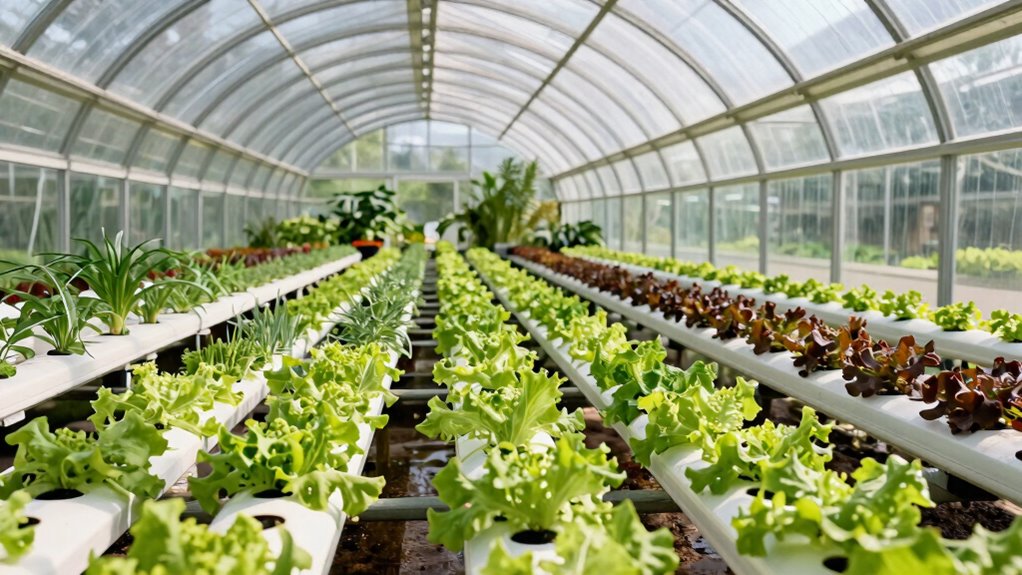

Your greenhouse shape primarily determines which hydroponic system works best. Narrow or elongated structures suit drip or flood-and-drain systems, allowing direct nutrient delivery and easy pH management. Open, spacious greenhouses are ideal for deep water culture or NFT systems, promoting rapid growth with consistent pH control. Complex layouts benefit from modular systems like aeroponics, offering flexibility and precise monitoring. Understanding your greenhouse’s shape helps you choose the right setup—keep exploring to learn more about optimizing your hydroponic environment.
Key Takeaways
- Narrow or elongated greenhouses are well-suited for drip or flood-and-drain systems for targeted nutrient delivery.
- Open, spacious greenhouses favor deep water culture and NFT systems for maximizing space and rapid growth.
- Irregular or complex shapes benefit from modular, flexible systems like aeroponics for adaptable root management.
- Proper pH control is essential across all system types, regardless of greenhouse shape, to ensure nutrient uptake.
- System choice should consider greenhouse layout, crop needs, and ease of management for optimal results.
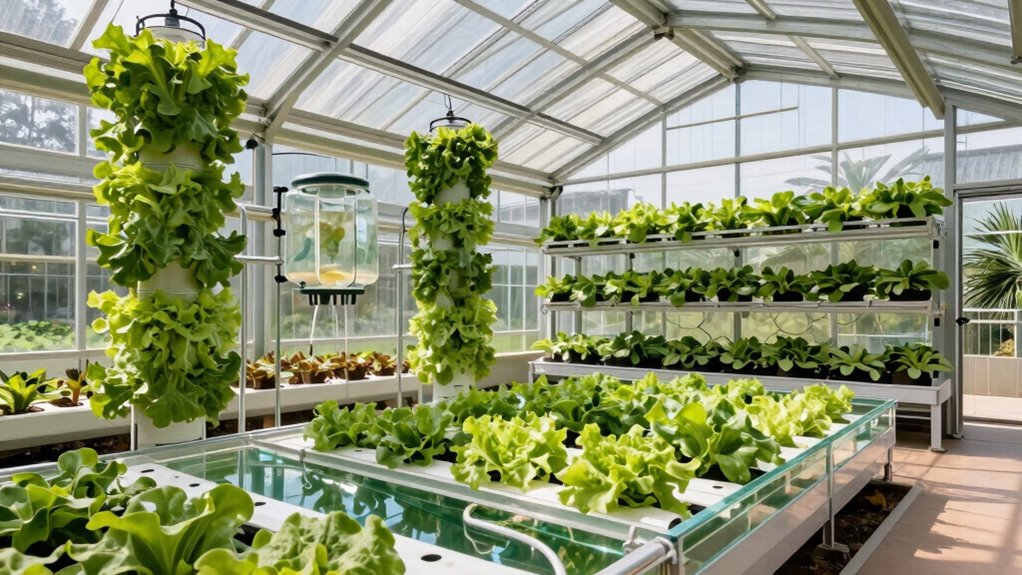
Choosing the right hydroponic system is essential for successful plant growth and maximizing your yield. The shape of your greenhouse plays a significant role in determining which system will work best for you. Different setups have unique advantages, especially when it comes to managing nutrient solutions and pH levels. Your goal should be to select a system that aligns with your space, your crop type, and your ability to monitor and adjust conditions.
If your greenhouse has a narrow or elongated shape, a drip or flood-and-drain system might be ideal. These systems allow you to deliver nutrient solutions directly to the roots efficiently, making pH management straightforward. Since you can control the timing and amount of nutrient delivery, you’ll find it easier to maintain the optimal pH range, which is crucial for nutrient uptake. Proper pH management ensures your plants absorb nutrients effectively, preventing deficiencies or toxicities. Drip systems are flexible and can be adapted to different plant types, but they require regular monitoring to adjust nutrient solutions and pH levels as plants grow.
For more open, spacious greenhouses, deep water culture or NFT (nutrient film technique) systems could be better choices. These systems are designed to maximize space and promote rapid growth. In deep water culture, roots are suspended in a nutrient-rich, aerated solution, making nutrient delivery, including pH adjustments, consistent and easy to control. Similarly, NFT systems rely on a thin film of nutrient solution flowing over the roots, which means you need to keep a close eye on nutrient concentrations and pH levels to prevent imbalances that could stress your plants. Maintaining proper pH management is critical in these systems to ensure optimal nutrient uptake. Additionally, understanding hydroponic system types can help you choose the most suitable setup based on your greenhouse layout.
If your greenhouse has irregular or complex shapes, or if you prefer a modular approach, aeroponics can offer flexibility. With aeroponics, roots hang in the air and are misted with nutrient solutions. This system allows for precise pH management and easy adjustments since you can control nutrient delivery with high accuracy. However, aeroponics requires more technical setup and constant vigilance to ensure nutrient solutions remain balanced and the pH stays within optimal ranges. Implementing advanced monitoring technology can significantly support maintaining optimal conditions in aeroponics systems. This technology can also help optimize nutrient delivery efficiency, which is especially beneficial in complex layouts. Moreover, technological advancements in hydroponics can support more efficient and reliable aeroponic systems, especially in challenging layouts.
In all cases, regardless of your greenhouse shape, maintaining proper pH management and supplying the right nutrient solutions are critical. The choice of system should support your ability to monitor and adjust these parameters easily. Your greenhouse’s shape influences how efficiently you can deliver nutrients and control pH, ultimately affecting plant health and yield. Pick a system that fits your space and your capacity to manage nutrient solutions, and you’ll set yourself up for successful, bountiful harvests.
hydroponic drip system for greenhouse
As an affiliate, we earn on qualifying purchases.
As an affiliate, we earn on qualifying purchases.
Frequently Asked Questions
How Does Greenhouse Climate Affect Hydroponic System Selection?
Greenhouse climate considerably influences your hydroponic system choice because climate control impacts system compatibility. If your greenhouse has high humidity or temperature fluctuations, you’ll need a system that manages these conditions effectively, like aeroponics or NFT systems that promote better airflow and drainage. Conversely, a stable climate allows for simpler setups. By understanding your climate, you can select a hydroponic system that optimizes growth and minimizes issues.
What Is the Cost Difference Between Hydroponic Systems?
Imagine each dollar as a seed you plant; the cost difference between hydroponic systems varies widely. Basic setups with simple nutrient solutions are more affordable but less scalable, while advanced systems with sophisticated nutrient delivery can cost considerably more upfront. Your choice impacts system scalability, affecting long-term growth potential. Consider your budget and future plans, knowing that investing in scalable systems might require higher initial costs but offers greater expansion opportunities.
Can Multiple Hydroponic Systems Be Combined?
Yes, you can combine multiple hydroponic systems, but you need to guarantee system compatibility for smooth nutrient delivery. Mixing systems like NFT and deep water culture requires careful planning to prevent issues with nutrient flow and pH balance. Proper integration allows you to optimize space and crop variety, but always test compatibility first to maintain consistent nutrient delivery and avoid system clashes that could harm your plants.
How Much Maintenance Do Different Systems Require?
Different hydroponic systems require varying maintenance levels. You’ll need to regularly monitor nutrients to guarantee plants get the right balance, which involves frequent nutrient monitoring. Additionally, pest management is vital; some systems are more vulnerable to pests, so you must stay vigilant. Drip systems may need more frequent cleaning, while NFT systems require consistent flow checks. Overall, staying on top of nutrient monitoring and pest management will keep your plants healthy.
Which Hydroponic System Is Best for Beginners?
As a beginner in urban farming, the NFT (Nutrient Film Technique) system is your best choice. It’s simple to set up, requires minimal maintenance, and promotes vertical integration, making efficient use of limited space. NFT systems allow you to grow a variety of crops quickly and effectively. With proper monitoring, you’ll enjoy consistent results, gaining confidence to expand your hydroponic farming skills while maximizing your urban farm’s productivity.
Conclusion
Choosing the right hydroponic system tailored to your greenhouse shape isn’t just about practicality—it’s about creating a seamless harmony that nurtures your plants and fuels your passion. When you find that perfect fit, your garden becomes a symphony of growth, whispering promises of abundance. Remember, the right system isn’t just a choice; it’s an invitation to a thriving, vibrant green space where your dreams take root and flourish effortlessly.