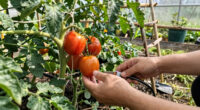
Succession planting helps you harvest crops continuously all year by staggering plantings and using your space efficiently. It reduces downtime, keeps pests and diseases in check, and maintains soil health through crop rotation. By choosing quick-growing crops and planning your schedule carefully, you’ll maximize productivity and guarantee a steady harvest. If you want to master these techniques and keep your greenhouse productive year-round, there’s plenty more to discover that can make a big difference.

Get garden gear delivered free with Prime
- Fast, free delivery on millions of items
- Prime Video, Amazon Music and more included
- Member-only deals all year
Key Takeaways
- It ensures continuous harvests by staggering planting times throughout the year.
- It maximizes greenhouse space and resource use with overlapping crop cycles.
- It disrupts pest and disease cycles, reducing infestations and crop losses.
- It maintains soil fertility through crop rotation and organic amendments.
- It allows quick-growing crops to be replanted, ensuring year-round productivity.
greenhouse succession planting kits
As an affiliate, we earn on qualifying purchases.
As an affiliate, we earn on qualifying purchases.
Why You Need Succession Planting for a Year-Round Greenhouse

Maintaining a continuous harvest in your greenhouse requires more than just planting once; it demands a strategic approach known as succession planting. By staggering plantings, you guarantee a steady supply of crops throughout the year. This method also supports effective crop rotation, which helps prevent soil depletion and reduces the risk of disease buildup. Additionally, succession planting bolsters pest management by interrupting pest life cycles, making it harder for pests to establish themselves. When you plan your plantings carefully, you minimize downtime and maximize productivity. Proper planter selection can also influence the success of your succession planting schedule, ensuring optimal conditions for each crop. Incorporating crop scheduling into your planning process allows for better coordination and resource management. This proactive approach keeps your greenhouse thriving, ensuring that you always have fresh produce ready for harvest. Implementing succession planting is essential for maintaining a healthy, productive, and sustainable greenhouse environment year-round. Using greenhouse planning can help optimize your planting schedule and improve your overall harvest success. Additionally, understanding the importance of soil health can contribute significantly to successful succession planting practices. Regularly monitoring soil nutrients can further enhance your crop rotation strategies, leading to healthier plants and higher yields.
What Is Succession Planting and How Does It Work?
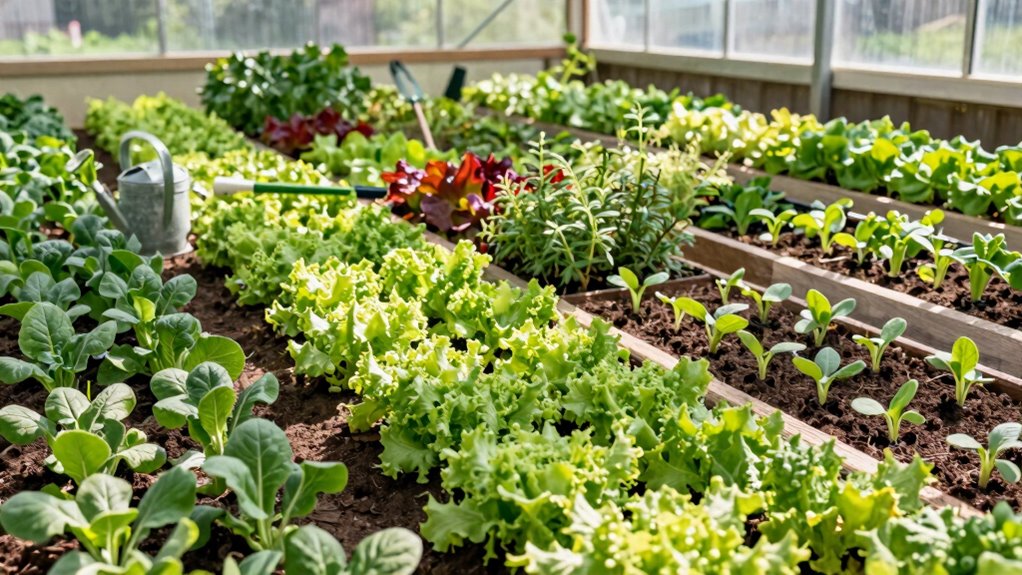
Succession planting is a strategic method that involves scheduling multiple rounds of planting within a single growing season to guarantee a continuous harvest. It helps maximize your greenhouse space and crop yield. By staggering plantings, you can assure fresh produce throughout the year while managing pests effectively. Incorporating crop rotation prevents soil depletion and disrupts pest cycles, reducing infestations. Here’s how it works:
| Stage | Focus |
|---|---|
| Early | Plant quick-maturing crops for rapid harvests |
| Mid | Rotate crops to avoid soil exhaustion |
| Late | Prepare for slower-growing or storage crops |
| Ongoing | Monitor pests and adjust planting schedules |
This systematic approach keeps your greenhouse productive, healthy, and pest-free.
Choosing the Best Crops for Continuous Growth

Choosing the right crops is essential for successful continuous growth in your greenhouse, especially when practicing succession planting. Select fast-growing, adaptable crops like leafy greens, radishes, and herbs that mature quickly and can be replanted often. Incorporate crop rotation to maintain soil health and reduce disease buildup, which keeps pests at bay naturally. Some crops are more pest-resistant, helping you minimize pest management efforts. Avoid planting the same species repeatedly in the same spot to prevent soil depletion and pest issues. Instead, alternate crop families to keep your greenhouse productive year-round. Using mammography guidelines to assess the health risks of certain crops can help inform your planting choices and ensure safety. By carefully selecting crops suited for rapid succession and implementing crop rotation, you’ll create a sustainable system that ensures a steady harvest and reduces pest problems.
How to Plan Your Succession Planting Schedule
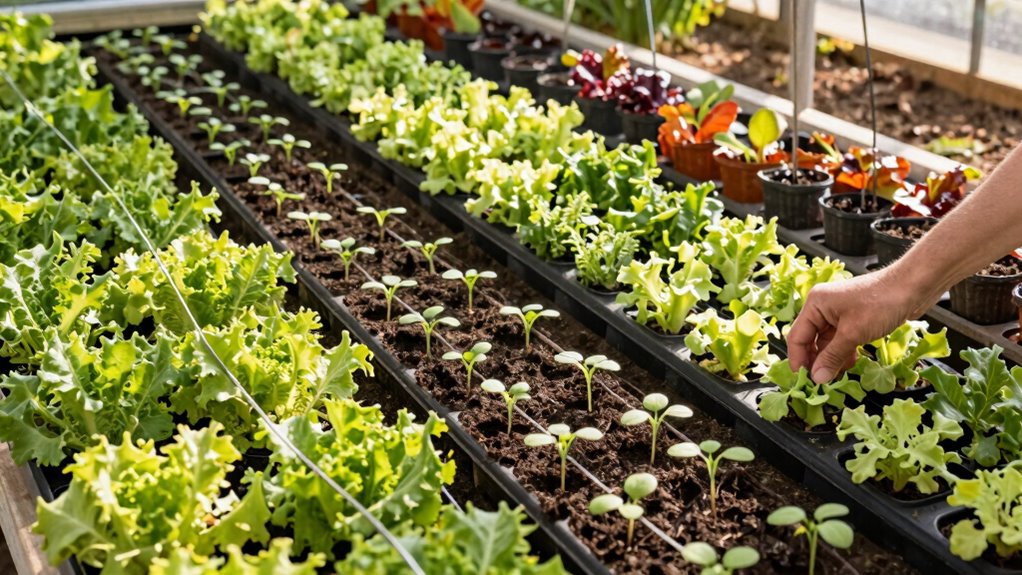
Planning your succession planting schedule begins with understanding the growth cycles of your chosen crops and identifying the ideal planting and harvesting windows. This guarantees you can stagger plantings for a continuous harvest. Incorporate crop rotation to prevent soil exhaustion and reduce pest build-up, which is essential for healthy, productive plants. Map out your planting calendar to space out sowing dates, considering each crop’s maturity time. Regularly monitor pest activity so you can adjust your schedule or implement pest management strategies early. By aligning your plantings with these cycles and practices, you’ll maximize greenhouse efficiency and harvest consistency. Proper planning minimizes downtime and pest issues, keeping your greenhouse productive year-round. Additionally, selecting halal-friendly ingredients ensures your crops meet dietary requirements and appeal to a broader audience. Incorporating filter sizing/flow considerations can help optimize water use and reduce potential issues related to water quality, contributing to healthier plants and more efficient resource management. Being aware of growth cycle management techniques can further enhance your success in maintaining continuous harvests, and understanding pest management strategies is crucial for preventing infestations before they impact your crops.
Maximize Space by Staggering Your Plantings
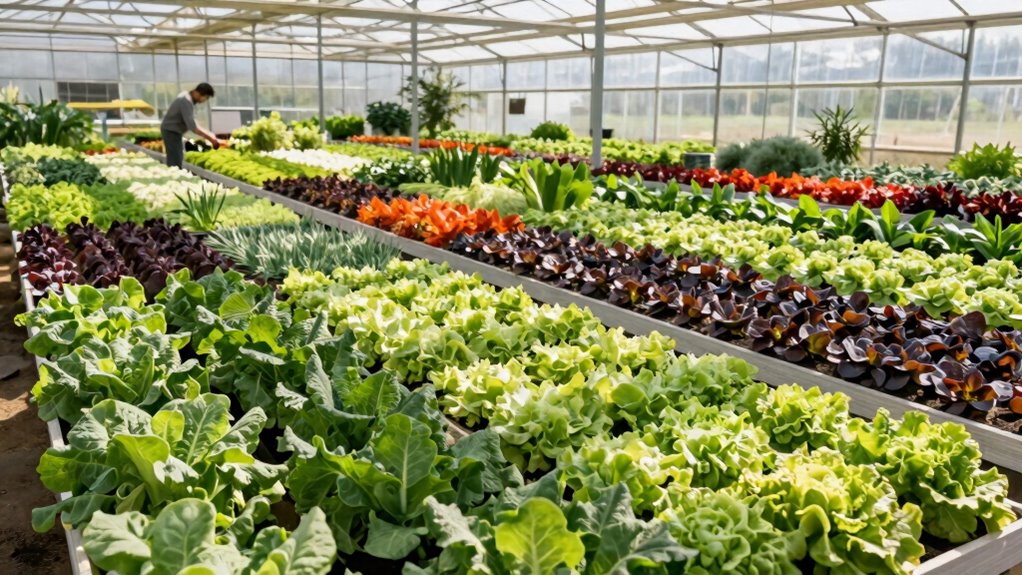
By staggering your plantings, you can make better use of available space and keep your harvests coming longer. Plant new crops at different times to extend your harvest period and maximize your greenhouse’s productivity. This strategy guarantees you get the most from every square foot throughout the season. Incorporating color accuracy into your planting schedule can also foster a more successful and sustainable growing environment. Additionally, careful planning of your planting schedule can help prevent pest infestations and promote healthier plants.
Stagger Planting Times
Staggering planting times allows you to make the most of your greenhouse space by spreading out harvests over a longer period. This technique helps with crop rotation, preventing soil depletion, and reduces pest buildup by disrupting pest cycles. By planting at different intervals, you can continually harvest fresh produce, maximizing productivity. Additionally, it allows you to manage pests more effectively, as infestations are less likely to spread quickly across staggered crops. Using crop rotation practices can further enhance soil health and yield. Use the table below to plan your planting schedule:
| Planting Time | Harvest Period |
|---|---|
| Week 1 | Weeks 1-3 |
| Week 3 | Weeks 3-6 |
| Week 5 | Weeks 6-8 |
| Week 7 | Weeks 8-10 |
This approach guarantees a steady supply while supporting healthy crop rotation and pest management.
Extend Harvest Period
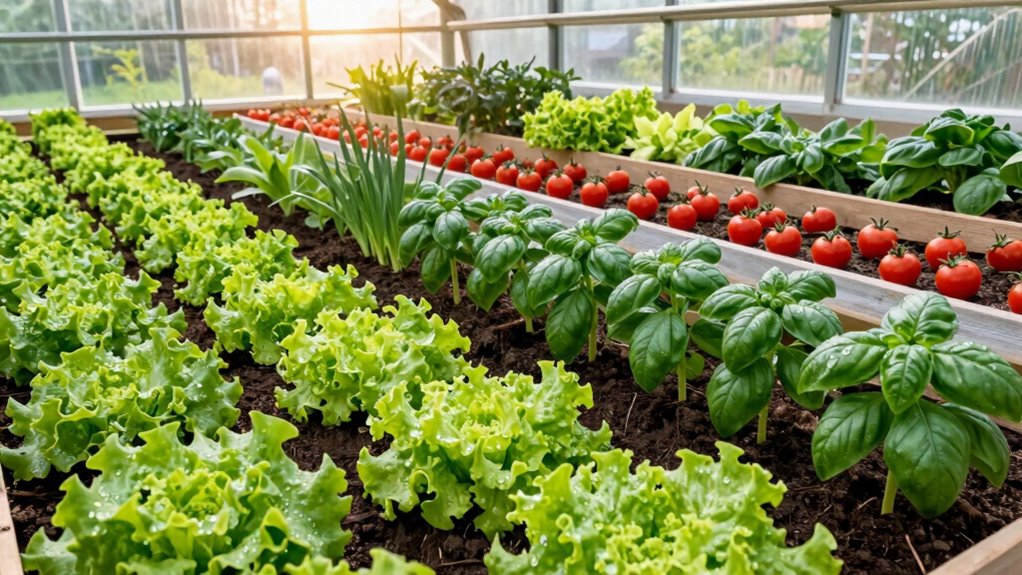
Extending your harvest period allows you to make the most of your greenhouse space and guarantee a continuous supply of fresh produce. To do this effectively, stagger your plantings so crops mature at different times, ensuring a steady harvest. Incorporate companion planting; pairing plants like basil with tomatoes can naturally deter pests, reducing the need for chemical controls. This strategy also helps manage pests by disrupting their life cycles and reducing infestations. By carefully timing your plantings, you prevent overcrowding and create a more resilient ecosystem within your greenhouse. This approach not only maximizes space but also enhances pest management, leading to healthier plants and a longer harvesting season. Consistent planning keeps your greenhouse productive year-round.
Maintaining Soil Fertility Throughout the Year
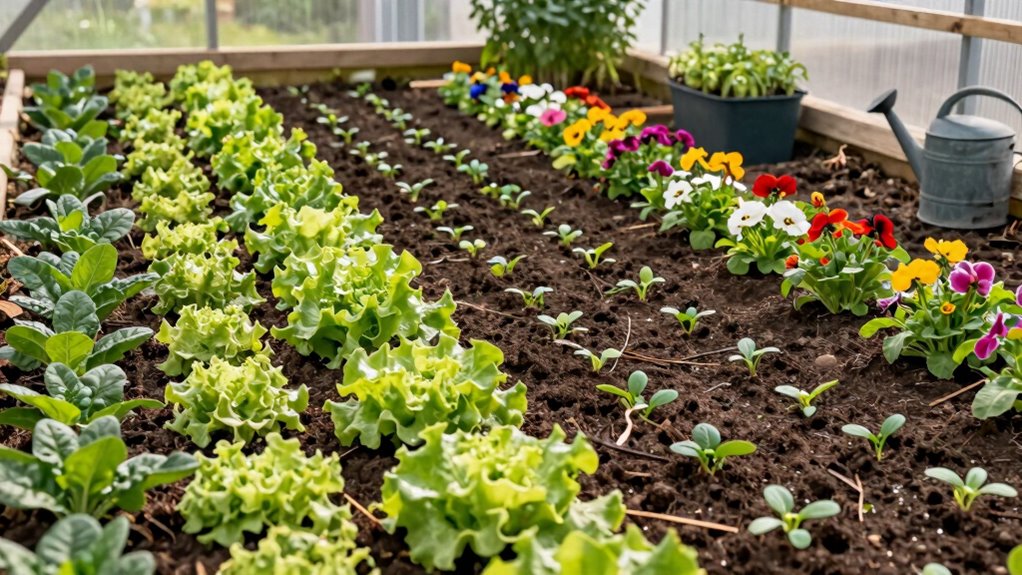
Maintaining soil fertility throughout the year is essential for successful greenhouse harvests. A healthy soil microbiome supports nutrient cycling and plant health, making your crops more resilient. To keep soil fertile, regularly add organic amendments like compost, manure, or cover crops, which enrich the soil naturally. These amendments boost microbial activity and improve soil structure. Monitoring soil nutrients and pH levels helps you make timely adjustments, preventing deficiencies. Incorporating crop rotation minimizes disease buildup and keeps the soil balanced. Consistent organic matter additions sustain fertility, ensuring your plants thrive year-round. Additionally, employing vetted soil treatment methods can further enhance microbial diversity and overall soil vitality. Using Suprem fabric in greenhouses can also improve climate regulation and plant comfort, supporting healthier growth environments.
Troubleshooting Common Succession Planting Challenges
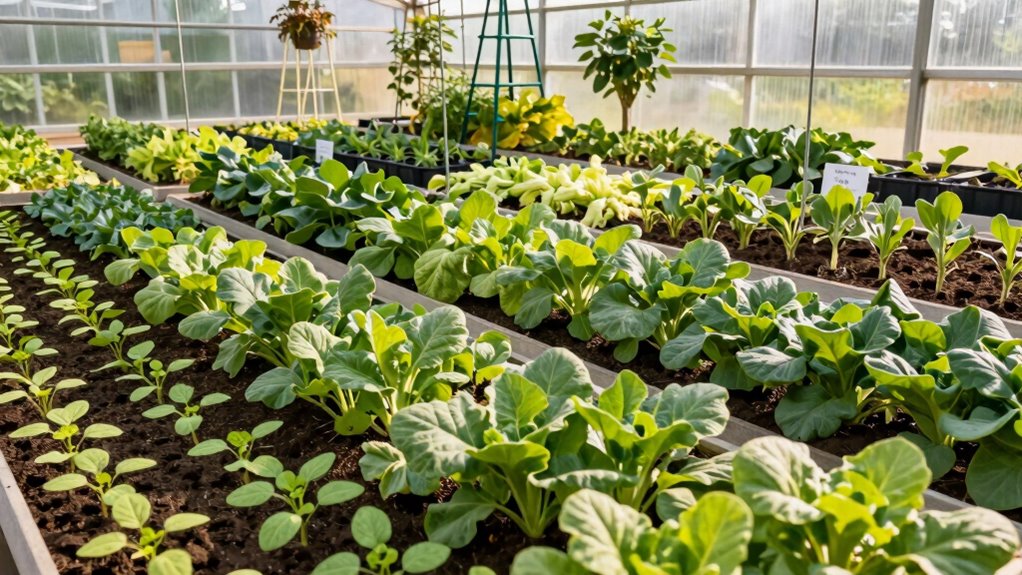
Even with careful planning, succession planting can present unexpected challenges that disrupt your harvest schedule. Soil testing helps identify nutrient imbalances or deficiencies that might hinder plant growth, so regularly check your soil’s health and amend it as needed. Pests can also become a problem, especially if they spread quickly and threaten new plantings. Implement proactive pest management strategies, such as physical barriers or natural controls, to minimize damage. Overcrowding or poor timing can cause crop failure or stunted growth, so monitor your planting intervals closely. If you notice slow germination or poor growth, reassess your soil and pest control methods first. Proper watering techniques are essential to prevent water stress and promote healthy development. Incorporating cookie management practices can also help optimize your greenhouse environment by ensuring consistent conditions and reducing disruptions. Adjusting your approach promptly guarantees your succession planting remains on track and your greenhouse stays productive year-round.
Tools and Tips to Simplify Your Succession Planning
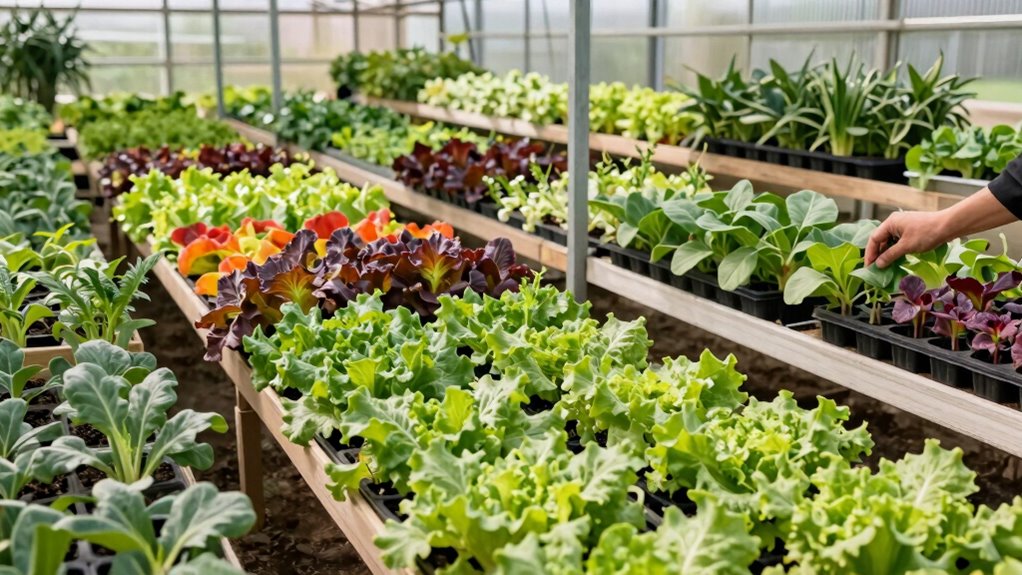
Are you looking for ways to make your succession planting easier and more efficient? Using simple tools and practical tips can streamline your planning process. Start by creating a detailed planting schedule that accounts for crop cycles and harvest times. Incorporate companion planting strategies to maximize space, improve pest management, and naturally boost plant health. Keep a planting calendar to track sowing and harvesting dates, preventing gaps or overlaps. Use garden planners or apps to visualize your layout and plan for crop rotation. Additionally, regularly monitor pest activity and plan for timely interventions to avoid infestations. These approaches help you stay organized, reduce workload, and ensure continuous harvests all year round.
Extra Benefits of Succession Planting Beyond Year-Round Harvests
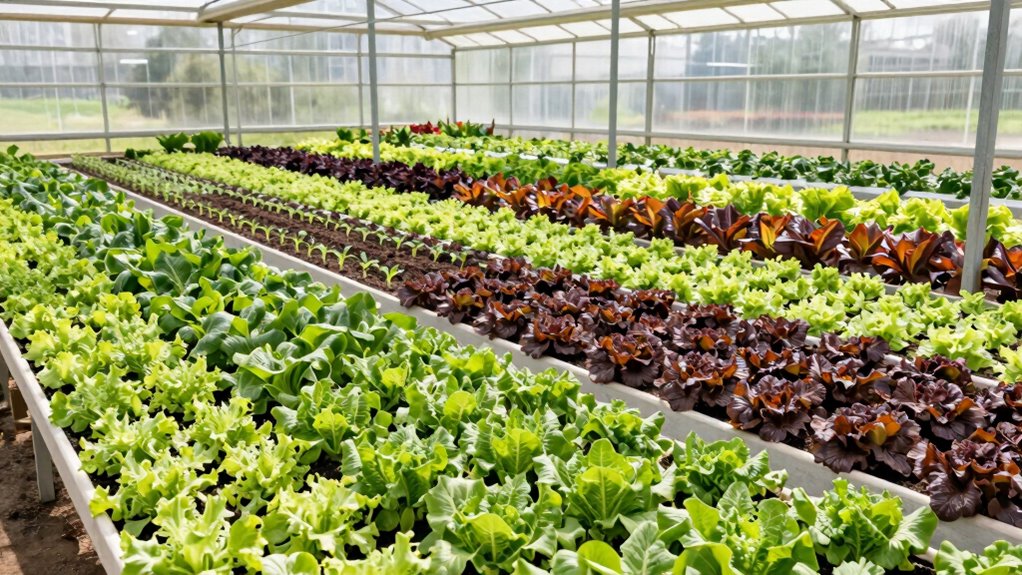
While planning for continuous harvests is the main goal of succession planting, it also offers several other valuable advantages. One key benefit is improved companion planting, which allows you to space out crops strategically, fostering beneficial relationships and optimizing space. This can lead to healthier plants and better yields overall. Additionally, succession planting enhances pest management by reducing the chances of pest buildup, as continuous planting disrupts pests’ life cycles and minimizes their impact. By staggering crops, you create a dynamic ecosystem within your greenhouse, making it harder for pests to establish a foothold. Incorporating integrated pest management strategies alongside succession planting further strengthens your defenses against pests. Understanding crop rotation principles can also help prevent soil depletion and disease buildup, contributing to a healthier growing environment. These extra benefits help you maintain a healthier, more productive greenhouse environment beyond just ensuring year-round harvests.
Getting Started: Tips for Beginners to Succeed

To get started with succession planting, you should plan your planting schedule carefully to guarantee continuous harvests. Begin with easy crops like lettuce or radishes that grow quickly and are forgiving for beginners. This approach helps you build confidence and understand your greenhouse’s rhythm before trying more complex plants. Incorporating deep product research can also help you select the best tools and supplies to support your planting efforts.
Plan Your Planting Schedule
Creating a detailed planting schedule is essential for successful succession planting in your greenhouse. It helps you maximize space, maintain soil health, and prevent pest problems. Planning ahead guarantees continuous harvests and efficient use of resources. Consider crop growth times, harvest windows, and rotation needs to keep your schedule on track. Incorporate soil rotation to reduce soil-borne diseases and nutrient depletion, and plan pest control measures proactively. Keep track of planting dates, germination times, and harvest targets to avoid gaps in production. Use a calendar or spreadsheet to visualize your plan, adjusting as needed based on crop performance. A well-organized schedule keeps you ahead of pests and soil issues, making your greenhouse more productive and sustainable.
- Schedule planting and harvest dates carefully
- Rotate crops to maintain soil health
- Plan pest control strategies in advance
Start With Easy Crops
Starting with easy crops is a smart way to build confidence and gain practical experience in greenhouse gardening. Choose resilient plants like lettuce, radishes, or herbs that thrive with straightforward planting techniques. These crops grow quickly, allowing you to see results and learn from your process. Focus on proper crop rotation to prevent soil depletion and reduce pests, which is essential for long-term success. Keep your planting techniques simple at first—use shallow seed drills, consistent watering, and proper spacing. As you gain experience, you can experiment with more complex crops. Starting with manageable plants helps you develop a routine and understand your greenhouse environment, setting a strong foundation for future success in succession planting.
Frequently Asked Questions
How Do I Adapt Succession Planting for Different Climate Zones?
You adapt succession planting for different climate zones by adjusting planting schedules based on local growing seasons and temperatures. Incorporate crop rotation to prevent soil depletion and keep soil fertility high, ensuring healthy plants. In cooler zones, extend growing periods with cold frames or heaters, while warmer zones can have shorter intervals between plantings. Always monitor weather patterns and modify your succession plan accordingly to optimize harvests year-round.
What Are the Common Pests Affecting Succession Crops in Greenhouses?
You’ll often face pests like aphids, whiteflies, and spider mites in succession crops. To protect your plants, choose pest-resistant varieties and implement biological control methods, like releasing beneficial insects such as ladybugs or predatory mites. Regular monitoring helps catch infestations early. Combining pest-resistant varieties with biological control creates an effective, eco-friendly approach that keeps your greenhouse thriving all year round.
How Does Lighting Influence Succession Planting Success?
Lighting influences succession planting success like a conductor guiding an orchestra, making sure each crop hits its perfect note. By optimizing lighting, you extend daylight hours, which helps regulate crop timing and accelerates growth. Proper lighting optimization ensures crops grow uniformly, reducing gaps in your harvest schedule. When you fine-tune light exposure, you create a consistent environment that supports continuous planting, maximizing your greenhouse’s productivity year-round.
Can Succession Planting Improve Overall Greenhouse Pest Management?
Succession planting can improve your greenhouse pest management by promoting crop rotation, which reduces pest buildup and disrupts their life cycles. As you plan new plantings, regularly monitor pests to catch issues early. This proactive approach keeps pests under control, minimizes chemical use, and maintains healthy, productive crops throughout the year, ensuring your greenhouse stays pest-free and efficient.
What Are the Costs Associated With Implementing Succession Planting Strategies?
Implementing succession planting involves costs like additional seeds, labor, and potentially upgraded infrastructure, but it can boost your yield consistency. You should consider investment considerations such as flexible scheduling and resource allocation to optimize cost management. While upfront expenses might seem high, the increased productivity and extended harvest periods can lead to long-term savings and higher profits, making succession planting a worthwhile strategy for sustainable greenhouse operations.
Conclusion
By embracing succession planting, you’ll turn your greenhouse into an endless feast, much like the mythical Phoenix rising anew. With careful planning and patience, you’ll enjoy fresh harvests year-round, transforming your space into a perpetual bounty. Remember, every crop planted with purpose is a step toward mastery—so start now, and watch your greenhouse flourish beyond your wildest dreams. Your garden’s next chapter begins today—are you ready to write it?
Evergreen bestsellers Picks
bestsellers
As an affiliate, we earn on qualifying purchases.