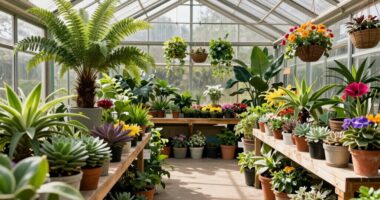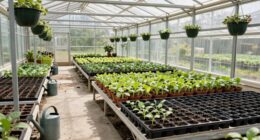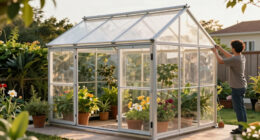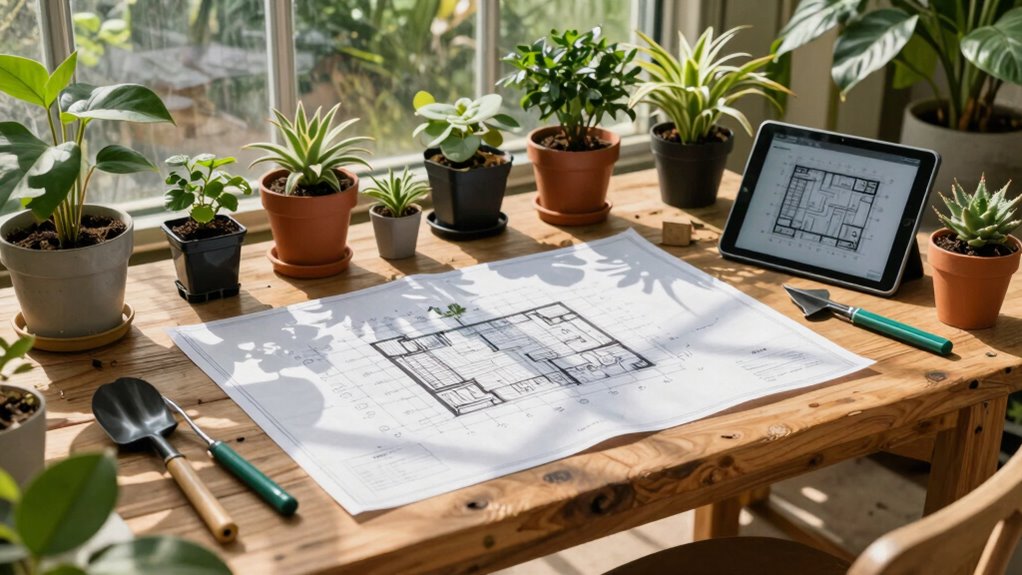
Adopting a strategic planning habit guarantees your greenhouse purchases are smarter and more effective. By considering your space, sunlight, temperature, and plant compatibility, you prevent impulse buys and reduce waste. Setting a clear budget and researching deals help manage costs, while regularly reviewing plant performance keeps you adaptable. This proactive approach boosts plant health, maximizes space, and enhances your gardening success. Keep exploring to discover more tips for making every purchase work harder for your greenhouse.
Key Takeaways
- Develop a detailed shopping list based on thorough plant and equipment research.
- Set a clear budget to prioritize essential purchases and avoid impulse buying.
- Assess environmental conditions to select compatible, environment-specific plants.
- Schedule regular reviews to track plant health, growth, and seasonal adjustments.
- Plan purchases around sales and bulk deals to maximize cost efficiency.
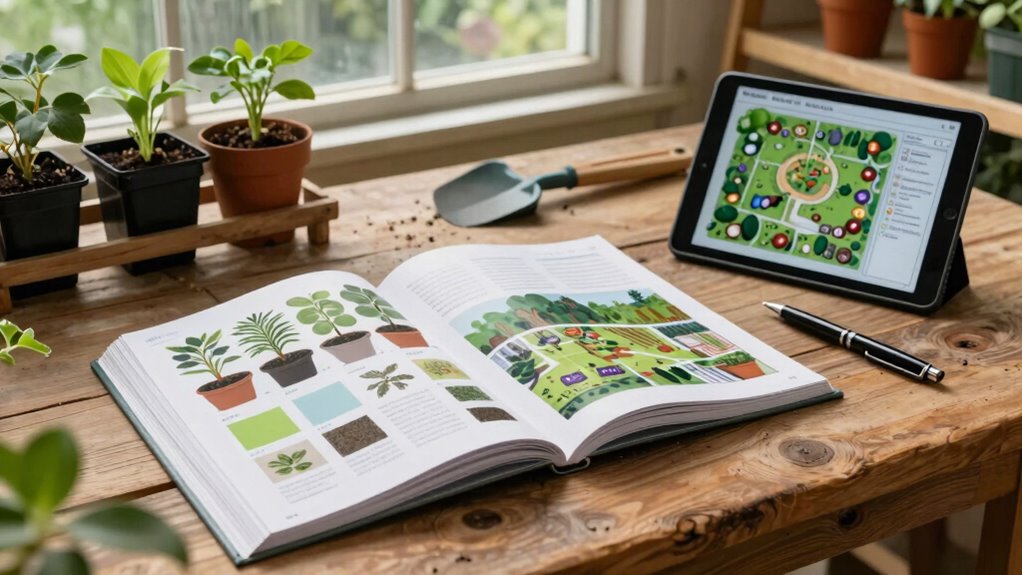
Establishing a planning habit can considerably improve your greenhouse purchasing decisions. When you take the time to plan ahead, you’re more likely to select plants that thrive in your environment and fit within your financial limits. This approach helps prevent impulsive buys and ensures your greenhouse remains productive and manageable. One of the key aspects of planning is thoughtful plant selection. You need to think about factors like sunlight, temperature, and space to choose plants that will flourish together. Instead of rushing into a purchase based on attractive labels or trends, evaluate your specific conditions and select plants accordingly. This not only boosts your success rate but also reduces waste and disappointment. By planning what to grow, you can also create a cohesive layout that maximizes space and light, making maintenance easier and more efficient. Incorporating scientific principles into your planning can further optimize plant health and growth outcomes. Additionally, understanding environmental factors can help you tailor your choices more effectively. Regularly reviewing your gardening practices can help you adapt your plan based on seasonal changes and plant performance, leading to continual improvement. Building this habit also encourages you to consider soil health and how it impacts plant growth, leading to healthier, more resilient plants. Recognizing the importance of plant compatibility can help you select species that coexist harmoniously, reducing pests and disease issues.
Budget management is equally critical when you develop a consistent planning habit. Without a clear budget, you risk overspending on plants, supplies, or equipment, which can quickly lead to financial strain. When you plan your purchases, you set realistic limits and prioritize essential items first. This disciplined approach helps you avoid unnecessary expenses on decorative or non-essential plants and accessories. Furthermore, planning allows you to research prices and look for deals or alternatives that fit your budget. Instead of making impulsive, high-cost purchases, you can compare options, wait for sales, or buy in bulk, stretching your dollar further. Creating a detailed shopping list based on your plan ensures you stick to your financial goals, reducing the chances of overspending and ensuring you’re making the most of your investment.
Developing a regular planning routine also encourages you to keep track of your greenhouse’s needs and progress. Over time, you’ll learn which plants perform well and which don’t, refining your choices with each season. Planning also helps you schedule purchases efficiently, so you’re not rushing to buy everything at once or missing critical supplies early in the season. When you approach your greenhouse setup with a clear plan, you foster a sense of control and confidence. This proactive mindset keeps your focus on sustainable growth, balancing plant selection with budget management. As a result, your greenhouse becomes a more enjoyable, productive space where you can experiment and learn without unnecessary stress. Ultimately, cultivating a strong planning habit ensures your greenhouse investments deliver better results and give you greater satisfaction in your gardening efforts.
As an affiliate, we earn on qualifying purchases.
Frequently Asked Questions
How Often Should I Review My Greenhouse Planning Process?
You should review your greenhouse planning process every few months, especially your garden layout and lighting strategies. Regular reviews help you identify what’s working and what needs adjustment, ensuring ideal plant growth. As seasons change, reassess your lighting and space utilization to maximize efficiency. Staying proactive with these reviews keeps your greenhouse productive and aligned with your gardening goals, making each purchase and setup more successful over time.
What Are Common Mistakes to Avoid During Planning?
Don’t let design mistakes or poor material choices sabotage your greenhouse. You might think a fancy blueprint or trendy materials will do, but neglecting practical factors like climate suitability and durability can backfire. Avoid rushing decisions, and don’t overlook expert advice or reviews. Remember, even in a world full of smartphones and space travel, thoughtful planning still beats impulse choices. Careful planning guarantees your greenhouse thrives, not just survives.
How Can I Customize My Plan for Different Plant Types?
To customize your plan for different plant types, focus on plant-specific needs such as light, temperature, and humidity. Use customization tips like adjusting watering schedules and choosing appropriate containers. Group plants with similar requirements together to optimize conditions. Remember, tailoring your plan guarantees each plant thrives, so regularly review and modify your setup based on plant growth and changing needs. This approach keeps your greenhouse healthy and productive.
What Budget Considerations Should I Keep in Mind?
You should start with a thorough cost analysis to avoid overspending, then focus on space optimization to maximize the greenhouse’s potential. While budgets can seem limiting, strategic planning helps you allocate funds efficiently, ensuring quality and functionality. Keep in mind that investing in durable materials and proper ventilation might increase initial costs but save money long-term through reduced maintenance. Balancing your budget with these factors guarantees a successful, sustainable greenhouse setup.
How Does Climate Impact Greenhouse Planning Decisions?
Climate greatly influences your greenhouse planning decisions through climate adaptation and environmental factors. You should consider temperature extremes, humidity, and sunlight levels to choose appropriate materials and ventilation systems. Local weather patterns affect insulation needs and watering schedules. By analyzing these environmental factors, you can design a greenhouse that withstands your specific climate, ensuring healthier plants and better yields. Planning with climate in mind helps optimize your greenhouse’s performance year-round.
Conclusion
By adopting this planning habit, you’re setting yourself up for success, much like a seasoned gardener tending to a thriving greenhouse. Picture yourself as the captain steering a steady ship through calm waters—each thoughtful decision guiding you toward a lush, fruitful harvest. Embrace this habit, and you’ll find your greenhouse purchases flourish, transforming your space into a vibrant oasis. With each careful step, you’re cultivating not just plants, but confidence and mastery in your gardening journey.