
Smart greenhouses focus on better timing because precise climate control allows you to optimize crop growth, resource use, and profitability. By monitoring environmental conditions in real-time, you can make instant adjustments to keep plants at their best, regardless of weather changes. This synchronized approach helps you maximize yields, improve crop quality, and reduce waste. When you understand how timing impacts every stage of growth, you’ll see how technology makes agriculture more efficient and sustainable—more secrets await beyond this.
Key Takeaways
- Smart greenhouses optimize crop growth by precisely timing environmental adjustments to match plant developmental stages.
- Data-driven scheduling ensures planting, watering, and harvesting occur at the most advantageous times.
- Real-time climate control maintains ideal conditions, preventing stress and maximizing yield quality.
- Synchronizing crop cycles with environmental cues improves predictability and profitability.
- Enhanced timing reduces resource waste and supports sustainable, efficient agricultural practices.

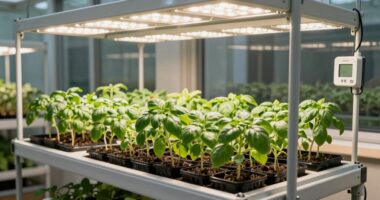
Smart greenhouses are revolutionizing agriculture by optimizing plant growth through precise climate control and data-driven decisions. At the heart of this innovation is the ability to manage environmental factors like temperature, humidity, light, and airflow more accurately than ever before. When you harness these capabilities, you’re not just creating a better environment for your plants—you’re also mastering the art of timing. Superior timing is essential in agriculture, and smart greenhouses excel at delivering it through sophisticated crop scheduling. By knowing exactly when to plant, water, and harvest, you can maximize yields and reduce waste.
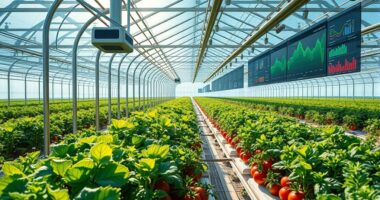
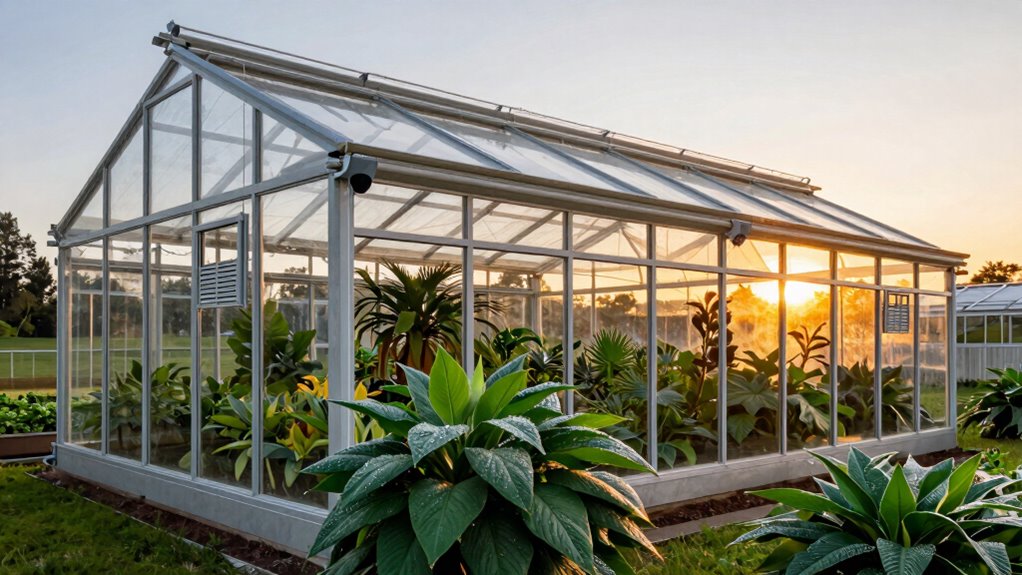
Smart greenhouses optimize growth through precise climate control and data-driven crop scheduling for better yields and reduced waste
Climate control in smart greenhouses is more than just adjusting a thermostat. It involves continuous monitoring of environmental conditions and real-time modifications to keep everything within ideal ranges for specific crops. This precision allows you to extend growing seasons, even in less-than-ideal weather, because you’re controlling the environment rather than being at its mercy. When you get climate control right, you ensure that your crops grow at the right pace, which directly impacts their quality and productivity. This kind of control also helps prevent the stress that plants experience when exposed to sudden temperature fluctuations or humidity spikes, leading to healthier, more resilient crops. Additionally, the ability to manage environmental factors effectively helps optimize resource use and reduce environmental impact, contributing to more sustainable practices. Incorporating advanced environmental monitoring tools further enhances your capacity to fine-tune conditions precisely. Leveraging real-time data allows for even more responsive adjustments, making your climate management more effective.
Crop scheduling is another critical piece that smart greenhouses manage with impressive accuracy. Instead of relying on traditional calendars or guesswork, you use data to determine the best times for planting, watering, and harvesting. This involves analyzing growth patterns, environmental conditions, and market demand to optimize your workflow. With smart sensors and automation, you can adjust your crop schedule dynamically, responding to changing conditions or new insights quickly. This flexibility means you don’t waste time or resources on unnecessary interventions, and you can plan harvests to match market windows, ensuring fresher produce and better prices. Furthermore, integrating advanced data analytics into crop scheduling enhances decision-making and helps anticipate environmental changes more effectively.
Ultimately, the core advantage of smart greenhouses isn’t just the technology—they’re about better timing. You’re able to synchronize your crop lifecycle stages with the most favorable conditions, thanks to precise climate control and smart crop scheduling. This synergy allows you to produce higher yields, improve crop quality, and operate more efficiently. The real power lies in your ability to anticipate and respond to environmental cues, making your greenhouse a finely tuned machine aligned with nature’s rhythms. Better timing through smart greenhouses isn’t just a convenience; it’s a fundamental shift toward more sustainable, profitable, and predictable agriculture.
smart greenhouse climate control system
As an affiliate, we earn on qualifying purchases.
As an affiliate, we earn on qualifying purchases.
Frequently Asked Questions
How Do Smart Greenhouses Adjust to Unpredictable Weather Changes?
Smart greenhouses adjust to unpredictable weather by using sensors and automation to monitor conditions in real-time. You get alerts about potential plant disease risks or pest control issues, enabling quick responses. Ventilation, shading, and heating are automatically optimized to prevent damage. This precise control helps maintain ideal growing conditions, reducing stress on plants and minimizing problems caused by unexpected weather, ultimately boosting crop health and yields.
What Technologies Are Used to Optimize Timing in Greenhouses?
You use sensors and automated systems to optimize timing in greenhouses. For example, soil moisture sensors detect when plants need watering, preventing over or under-irrigation. This timely watering not only conserves water but also reduces pest problems by maintaining healthy plant conditions. Smart climate control systems analyze weather forecasts and adjust ventilation and shading, ensuring ideal growing conditions. These technologies work together to improve crop yields and resource efficiency seamlessly.
Can Smart Greenhouses Operate Independently Without Human Intervention?
Smart greenhouses can operate independently, but automation challenges and energy management issues remain. You might face difficulties with system integration or unpredictable weather affecting sensors. While automation reduces the need for constant human oversight, you still need to monitor energy use to prevent waste and guarantee ideal growth conditions. Properly addressing these challenges helps your smart greenhouse function efficiently, maximizing crop yields while minimizing operational costs.
How Does Timing Impact Crop Nutritional Value in Greenhouses?
Timing directly impacts crop nutritional value in greenhouses by optimizing crop maturity. When you precisely control harvest times, you guarantee crops reach peak nutritional enhancement, preserving vitamins and minerals. Proper timing prevents over-maturation, which can reduce nutrient levels, and under-maturation, which might leave crops less nutritious. Smart greenhouse systems help you monitor and adjust conditions, ensuring your crops develop fully at the right time for maximum nutritional benefits.
What Are the Cost Benefits of Better Timing in Greenhouses?
Sure, better timing in greenhouses saves you money—who knew? You’ll see reduced water bills thanks to water conservation, as you only use water when plants truly need it. Pest management becomes easier, cutting down on chemical costs and crop losses. All these savings mean better profit margins, proving that perfect timing isn’t just for comedy — it’s a smart, cost-effective strategy that keeps your greenhouses thriving without breaking the bank.
Conclusion
So, remember, a smart greenhouse isn’t just about high-tech gadgets; it’s about mastering the art of perfect timing. Like a conductor guiding an orchestra, these systems synchronize every move, ensuring your plants thrive at just the right moment. Don’t let opportunity slip away. Embrace the power of better timing, and watch your crops flourish with precision and ease. After all, in gardening, as in life, timing truly is everything.