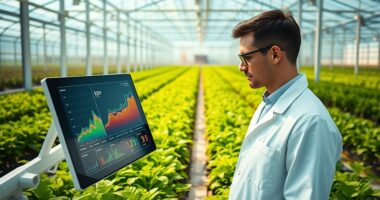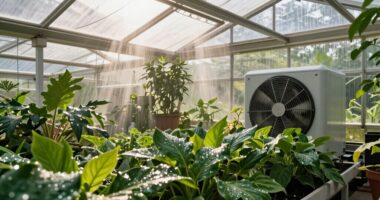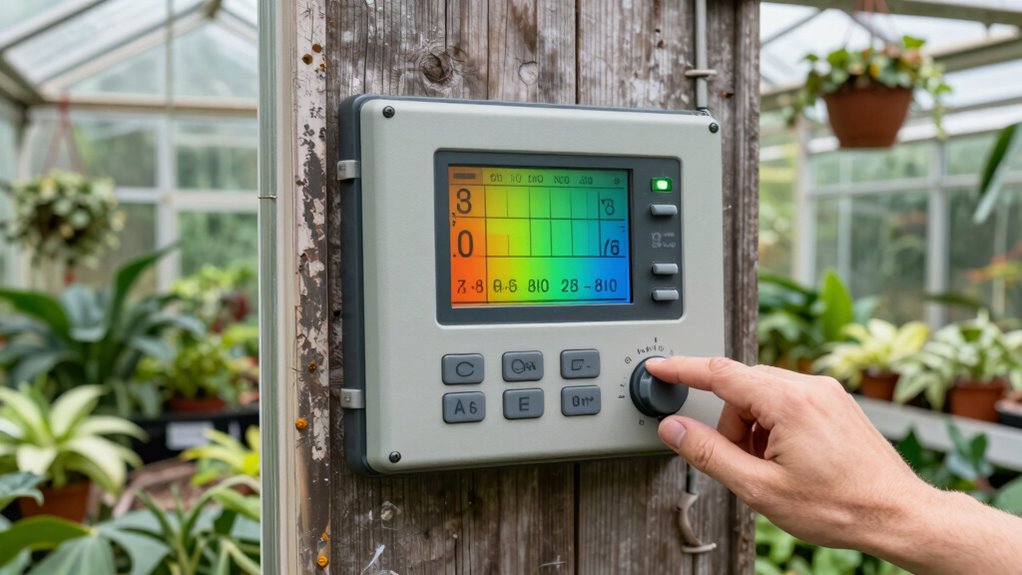
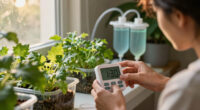
Your greenhouse controller’s real job in a backyard setup is to keep your plants happy by automatically monitoring and adjusting environmental conditions. It tracks temperature, humidity, and light to prevent stress and promote healthy growth. By activating fans, heaters, or misting systems when needed, it creates a stable environment without your constant effort. If you want to understand how it works and how to optimize it, keep exploring what makes these systems so effective.

Get garden gear delivered free with Prime
- Fast, free delivery on millions of items
- Prime Video, Amazon Music and more included
- Member-only deals all year
Key Takeaways
- Automates climate regulation to maintain optimal temperature and humidity for healthy plant growth.
- Continuously monitors environmental conditions using sensors for real-time data.
- Adjusts fans, heaters, and misting systems automatically to prevent stress and issues like mold.
- Logs environmental data to identify patterns and improve greenhouse conditions over time.
- Reduces manual effort, ensuring consistent, ideal growing conditions with minimal intervention.
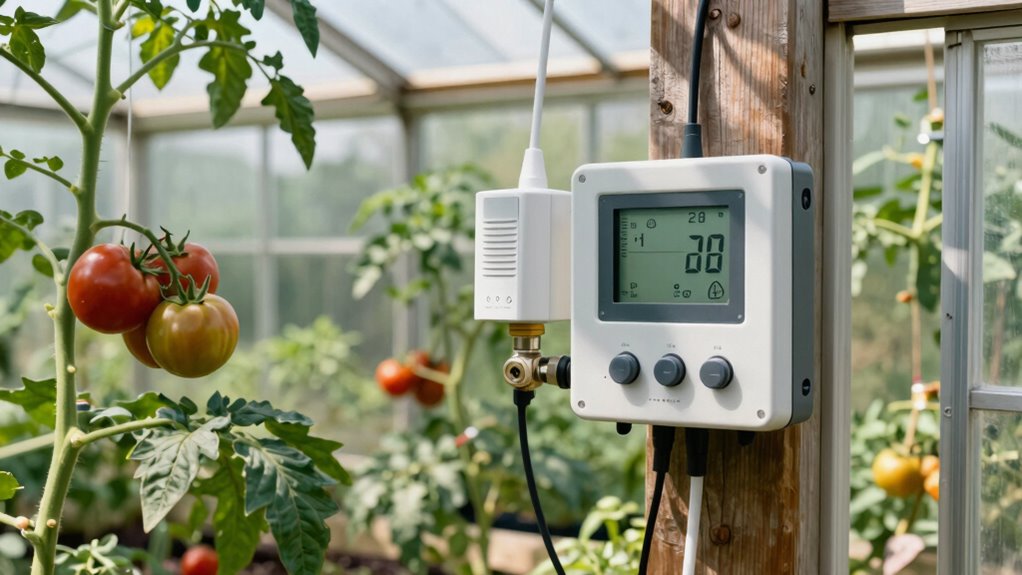
Have you ever wondered how modern greenhouses maintain ideal conditions for plants? If you’re running a backyard setup, a greenhouse controller is your secret weapon. It’s not just about flipping a switch; it’s about creating a stable environment where your plants can thrive. The core of its job revolves around climate regulation and data monitoring. When you set up a greenhouse, you’re fundamentally creating a mini-ecosystem. Without proper control, temperature swings, humidity fluctuations, and inconsistent light can stress your plants or even cause disease. That’s where a greenhouse controller steps in, automating adjustments to keep everything in balance.
A greenhouse controller creates a stable, thriving environment by automating climate regulation and data monitoring.
Climate regulation is the controller’s main task. It continuously monitors temperature and humidity levels inside your greenhouse. If it detects the temperature rising too high during a sunny afternoon, it can activate fans, ventilation windows, or shade cloths to cool things down. Conversely, if it’s too cold at night, the controller can turn on heaters or heat mats. Humidity levels are just as critical; too much moisture fosters mold and fungus, while too little can cause plant stress. The controller adjusts misting systems, vents, or dehumidifiers to maintain suitable humidity levels, ensuring your plants stay healthy. Additionally, modern greenhouse controllers often integrate sensor technology to provide precise and reliable data for better decision-making. Incorporating data-driven insights helps optimize environmental settings and improve plant health over time. Employing automation not only enhances plant growth but also reduces manual effort, making gardening more efficient.
Data monitoring is equally crucial. Your greenhouse controller constantly collects information from sensors placed throughout your setup. It logs temperature, humidity, light intensity, and even soil moisture levels. This data isn’t just for real-time adjustments; it helps you understand patterns over time. By reviewing this data, you can identify trends, troubleshoot issues, and optimize your setup. For example, if you notice consistent temperature drops at night, you can take steps to improve insulation or set a backup heater. Data monitoring makes your greenhouse more efficient and less labor-intensive, giving you peace of mind that conditions are just right. Understanding environmental data allows for more informed decisions, ensuring optimal plant growth.
As an affiliate, we earn on qualifying purchases.
Frequently Asked Questions
How Much Does a Greenhouse Controller Typically Cost?
Greenhouse controllers usually cost between $200 and $1,000, depending on features. Your cost comparison depends on pricing factors like automation level, sensor integration, and brand reputation. If you want basic control for temperature and humidity, expect to pay on the lower end. For advanced automation with remote access and data logging, be prepared for higher prices. Consider your specific needs to find the best value within your budget.
Can a Greenhouse Controller Be Used for Outdoor Gardens?
Yes, a greenhouse controller can be used for outdoor gardens, thanks to its outdoor compatibility and garden versatility. While many think it’s only for enclosed spaces, modern controllers are weather-resistant and adaptable, allowing you to monitor and automate watering, temperature, and humidity outside. This makes them a smart addition to your outdoor garden, helping you maintain ideal conditions and grow healthier plants effortlessly.
What Brands Are Most Reliable for Greenhouse Controllers?
When choosing reliable greenhouse controllers, brands like Autogrow, Argus Controls, and Inkbird stand out. They excel in plant monitoring and automated watering, ensuring your plants get consistent care. These brands offer user-friendly interfaces and durable hardware, making them ideal for backyard setups. With their advanced features, you can automate watering schedules and monitor environmental conditions, giving you peace of mind and healthier plants.
Is Technical Knowledge Required to Install a Greenhouse Controller?
You don’t need to be a tech expert to install a greenhouse controller; most models are user-friendly. In fact, about 70% of users find installation straightforward. While basic understanding of wiring and setup helps, many controllers come with step-by-step instructions, making installation manageable for beginners. Just follow the installation requirements carefully, and your user expertise will grow as you familiarize yourself with your system.
How Energy-Efficient Are Modern Greenhouse Controllers?
Modern greenhouse controllers are highly energy-efficient, helping you achieve significant energy savings by automating climate regulation. They precisely monitor and adjust temperature, humidity, and lighting, reducing unnecessary energy use. Automation benefits include consistent environmental conditions, less manual effort, and optimized resource consumption. By integrating smart sensors and timers, you can lower your energy bills while maintaining ideal plant growth conditions, making your backyard greenhouse both eco-friendly and cost-effective.
Conclusion
As the greenhouse controller quietly guides your plants through each season, it becomes the steady heartbeat of your backyard oasis. Like a gentle lighthouse in a foggy night, it guarantees your garden’s health and harmony, illuminating the way for growth and abundance. With your controller at the helm, you’re not just tending plants—you’re nurturing a thriving sanctuary where nature’s potential blossoms under your watchful eye. Your garden’s future is bright, guided by your steadfast, unseen hand.
Fall Picks
fall essentials
As an affiliate, we earn on qualifying purchases.