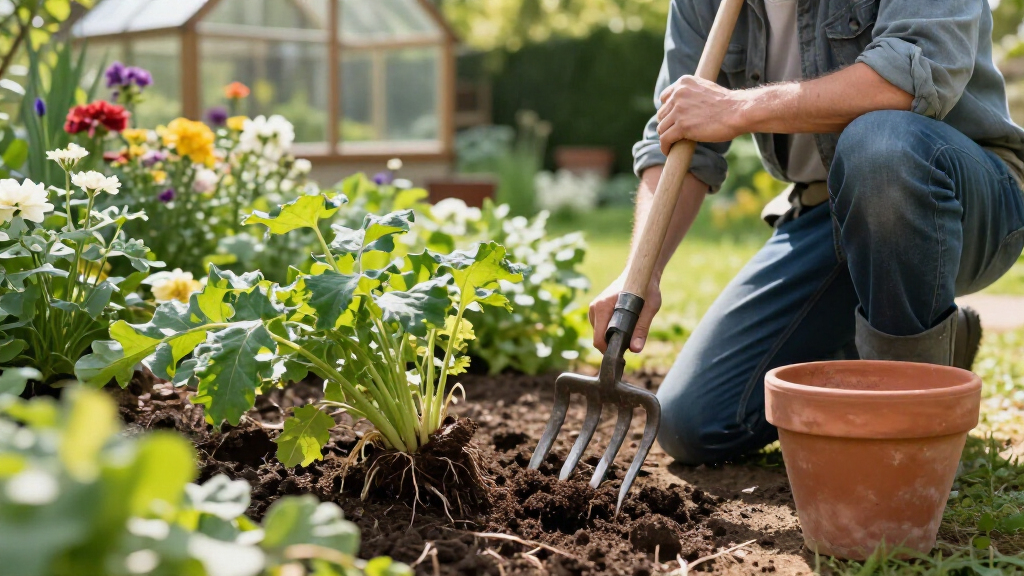
The best garden tools for dividing perennials balance cutting power with enough leverage to lift a root clump without excessive strain. I’d choose the Root Slayer Perennial Garden Shovel as the best overall option for its focused design for working through established roots, while the Kent & Stowe Stainless Steel Perennial Spade suits gardeners who want a traditional spade, and the DeWit Perennial Fork is a better fit for loosening clumps in heavier soil. The main tradeoff is between a long-handled tool’s leverage and a compact knife’s precision and easy storage. Read on for how the 13 options differ and which style best matches your plants, soil, and strength.

Get garden gear delivered free with Prime
- Fast, free delivery on millions of items
- Prime Video, Amazon Music and more included
- Member-only deals all year
Complete the kit


Key Takeaways
- The Root Slayer Perennial Garden Shovel is the strongest all-around fit for gardeners who want a dedicated, long-handled tool to tackle rooted clumps rather than a multipurpose knife.
- Spades and forks serve different jobs: the Kent & Stowe and Berry&Bird spades suit slicing and lifting, while the DeWit fork and spork focus on loosening roots with less risk of forcing a flat blade through dense soil.
- Hori hori knives offer control, not the leverage of a full-size tool. Their blades can help with small divisions and detailed root work, but they are a poor substitute for a spade when lifting large clumps.
- Several knife choices overlap in purpose. Blade shape, handle feel, depth markings, sheath, and edge design matter more than owning multiple similar hori hori tools.
- Tool scale should match the plant and task: a compact knife may be enough for small, shallow-rooted perennials, while established clumps call for a long-handled spade, fork, or spork.
| Root Slayer 23311 Perennial Garden Shovel with Fiberglass Shaft |  | Best for Root-Cutting in Tight Beds | Brand: Root Slayer | Model: 23311 | Blade material: Powder-coated carbon steel | VIEW LATEST PRICE | See Our Full Breakdown |
| Kent & Stowe Stainless Steel Perennial Spade |  | Best for Kneeling Work | Brand: Kent & Stowe | Item type: Spade | Model number: 70100546 | VIEW LATEST PRICE | See Our Full Breakdown |
| Hori Hori Garden Knife with Sheath, 7-Inch Stainless Steel Blade |  | Best Multipurpose Hand Tool | Manufacturer: GRAND WAY | Model: GK-002GW | Blade length: 7 inches | VIEW LATEST PRICE | See Our Full Breakdown |
| Hori Hori Garden Knife with 7-Inch Dual-Edge Stainless Steel Blade |  | Best for Controlled, Measured Cuts | Manufacturer: Jawanfu | Model number: JH2412 | Blade material: Stainless steel | VIEW LATEST PRICE | See Our Full Breakdown |
| Berry&Bird Perennial Spade with Stainless Steel Blade and Wooden Handle |  | Best Compact Spade | Brand: Berry&Bird | Length: 21.6 inches | Weight: 1.23 pounds (0.56 kg) | VIEW LATEST PRICE | See Our Full Breakdown |
| DeWit Perennial Fork with Short T-Handle |  | Best for Tight Spaces | Model: No. 3094 | Dimensions: 24 x 4.25 x 1.25 inches | Weight: 1.46 pounds | VIEW LATEST PRICE | See Our Full Breakdown |
| Nisaku NJP650 Hori Hori Stainless Steel Weeding Knife, 7.25-Inch Blade |  | Best for Precise Root Cutting | Model: NJP650 | Blade material: Stainless steel | Blade length: 7.25 inches | VIEW LATEST PRICE | See Our Full Breakdown |
| Kanzuro Hori Hori Garden Knife with Stainless Steel Blade, Depth Markings, Wooden Handle, and Sheath |  | Best for Multi-Task Garden Work | Manufacturer: KANZURO | Model: KT-HORI-BLK | Blade material: Stainless steel | VIEW LATEST PRICE | See Our Full Breakdown |
| Fiskars Big Grip Garden Knife and Multi-Purpose Planting Tool |  | Best for a Comfortable Grip | Model: Big Grip Garden Knife | Head material: Rust-resistant steel | Blade edges: Sharpened and serrated | VIEW LATEST PRICE | See Our Full Breakdown |
| DeWit Perennial Spork Garden Tool with T-Handle |  | Best for Splitting Large Perennials | Model: 31-0815 | Dimensions: 25 x 2.5 x 6 inches | Weight: 1.35 pounds | VIEW LATEST PRICE | See Our Full Breakdown |
| PERWIN Hori Hori Garden Knife with Sheath, 7-Inch Stainless Steel Blade and Wood Handle |  | Best for Root Cutting and Depth Checks | Brand: PERWIN | Blade material: Stainless steel | Blade length: 7 inches | VIEW LATEST PRICE | See Our Full Breakdown |
| Keyfit Tools Spartan Serrated Garden Knife |  | Best for Sawing Through Fibrous Roots | Brand: Keyfit Tools | Blade material: Stainless steel | Blade length: 8 inches | VIEW LATEST PRICE | See Our Full Breakdown |
| Fiskars Hori Hori Garden Knife with Sheath |  | Best for Comfortable, Multi-Task Dividing | Brand: Fiskars | Model: Hori Hori Garden Knife | Blade material: Corrosion-resistant stainless steel | VIEW LATEST PRICE | See Our Full Breakdown |
| garden tools for dividing perennial | Blade material | Model | Handle material | Weight |
|---|---|---|---|---|
| Root Slayer 23311 Perennial Ga | Powder-coated carbon steel | 23311 | — | 3.5 pounds |
| Kent & Stowe Stainless Steel P | — | — | Ash wood | — |
| Hori Hori Garden Knife with Sh | Stainless steel | GK-002GW | — | 1.01 pounds |
| Hori Hori Garden Knife with 7- | Stainless steel | — | — | — |
| Berry&Bird Perennial Spade wit | Stainless steel | — | Ash wood | 1.23 pounds (0.56 kg) |
| DeWit Perennial Fork with Shor | — | No. 3094 | Ash hardwood | 1.46 pounds |
| Nisaku NJP650 Hori Hori Stainl | Stainless steel | NJP650 | Wood | 10 oz (300 g) |
| Kanzuro Hori Hori Garden Knife | Stainless steel | KT-HORI-BLK | Wood | 13.1 ounces |
| Fiskars Big Grip Garden Knife | — | Big Grip Garden Knife | — | — |
| DeWit Perennial Spork Garden T | Tempered Swedish boron steel | 31-0815 | European ash hardwood | 1.35 pounds |
| PERWIN Hori Hori Garden Knife | Stainless steel | — | Walnut wood | — |
| Keyfit Tools Spartan Serrated | Stainless steel | — | Rubber | — |
| Fiskars Hori Hori Garden Knife | Corrosion-resistant stainless steel | Hori Hori Garden Knife | — | — |
More Details on Our Top Picks
Root Slayer 23311 Perennial Garden Shovel with Fiberglass Shaft
For dividing established perennials in crowded borders, I’d choose the Root Slayer 23311 over a compact knife such as the GRAND WAY Hori Hori when the roots are thick or the soil is packed. Its 9-inch serrated carbon-steel blade and inverted V-shaped tip are designed to bite through roots while the shovel shape gives more leverage than a hand knife. The compact format is easier to position around neighboring plants than a full-size spade, and the O-handle offers a controlled grip for pushing and prying. The tradeoff is its 3.5-pound weight and smaller blade: it is a focused tool for targeted divisions, not a fast choice for turning a large bed. I’d pick the Kent & Stowe spade instead for a lighter, kneeling-friendly tool.
Pros:- Serrated, V-shaped tip is designed to cut through roots and compact soil.
- Compact blade offers more control around nearby plants than a full-size shovel.
- Ergonomic O-handle supports grip and leverage when pushing or prying.
- Fiberglass shaft and powder-coated carbon steel blade provide sturdy construction.
Cons:- The smaller blade is less efficient for large clumps or extensive digging.
- At 3.5 pounds, it is heavier than the hand knives in this roundup.
Best for: Gardeners dividing established plants in tight borders who need a compact shovel blade to work through roots and firm soil.
Not ideal for: Anyone splitting many large clumps across an open bed; its smaller blade and 3.5-pound weight are less suited to broad, repeated digging.
- Brand:Root Slayer
- Model:23311
- Blade material:Powder-coated carbon steel
- Blade length:9 inches
- Shaft material:Fiberglass
- Handle:Ergonomic O-handle
- Dimensions:44.88 x 9.88 x 5.51 inches
- Weight:3.5 pounds
- Warranty:Lifetime
Our verdict“Choose the Root Slayer if you need shovel-like leverage for root-bound plants in confined beds and can accept a compact, relatively heavy blade.”
Kent & Stowe Stainless Steel Perennial Spade
The Kent & Stowe Perennial Spade suits gardeners who divide plants from a kneeling position and want more blade leverage than a hand knife provides. Its 54 cm midi length is a middle ground between a short-handled perennial tool and a full-size spade, while the pointed stainless steel head is shaped to slice roots and open small planting holes. Compared with the Berry&Bird Perennial Spade, it is longer, which may give some buyers a more comfortable reach; the Berry&Bird is lighter according to its listed specs and has a defined T-shaped grip. This spade’s tradeoff is upkeep: the head should be stored dry and kept away from fertilisers and other chemicals to limit corrosion. I’d choose a hori hori knife instead for fine, close-in work around small divisions.
Pros:- Pointed stainless steel head is designed to slice roots during division.
- Midi length provides more reach than a short-handled perennial spade.
- Ash wood handle supports leverage while working from a kneeling position.
- Can also dig small planting holes after divisions are separated.
Cons:- Requires dry storage and care around fertilisers and other chemicals.
- Its spade form is less precise than a hori hori knife for tight spaces between neighboring plants.
Best for: Gardeners who often kneel to split medium-sized perennials and want a pointed spade head with more reach than a short-handled tool.
Not ideal for: People seeking a low-maintenance tool for damp storage or frequent contact with fertilisers and garden chemicals.
- Brand:Kent & Stowe
- Item type:Spade
- Model number:70100546
- Head material:Stainless steel
- Handle material:Ash wood
- Length:54 cm
- Color:Ash/silver
- Number of items:1
Our verdict“Pick this spade for kneeling division work when you want a longer reach than a hand tool, provided you can store and maintain it carefully.”
Hori Hori Garden Knife with Sheath, 7-Inch Stainless Steel Blade
I’d place the GRAND WAY Hori Hori in the hand-tool slot for gardeners who want one blade for dividing small perennials and handling nearby planting and weeding. Its straight and serrated edges offer different ways to cut roots, while the curved seven-inch blade can dig into soil more readily than a flat knife. The rubber-coated handle is designed to stay secure in muddy conditions, and the included sheath helps with storage. Compared with the Jawanfu Hori Hori, this model has no listed depth markings or hand guard, so it is the simpler option rather than the more feature-packed one. It also cannot match the leverage of the Root Slayer when a mature clump has dense, thick roots. Choose it for small-scale divisions and general garden tasks, not heavy prying.
Pros:- Straight and serrated edges support slicing and sawing through roots.
- Curved blade can dig as well as cut, making it useful for small divisions.
- Rubber-coated handle is designed for a secure grip in wet or muddy conditions.
- Sheath is included for blade storage.
Cons:- Short hand-tool format offers less leverage than the Root Slayer shovel for tough clumps.
- No hand guard or depth markings are listed, unlike the Jawanfu Hori Hori.
Best for: Gardeners who divide smaller perennials and want a single hand tool for root cutting, planting, and weeding in varied conditions.
Not ideal for: People splitting large, densely rooted clumps who need a long shaft or a hand guard and depth markings.
- Manufacturer:GRAND WAY
- Model:GK-002GW
- Blade length:7 inches
- Blade material:Stainless steel
- Blade features:Straight and serrated edges; full tang
- Handle:Ergonomic plastic with rubber coating
- Included:Sheath
- Dimensions:13.58 x 3.74 x 1.77 inches
- Weight:1.01 pounds
Our verdict“Choose the GRAND WAY knife for smaller divisions and everyday garden jobs, but reach for a spade when roots call for more leverage.”
Hori Hori Garden Knife with 7-Inch Dual-Edge Stainless Steel Blade
When division work involves both root cutting and setting new plants at a consistent depth, the Jawanfu Hori Hori offers more control cues than the simpler GRAND WAY Hori Hori. Its 4 mm full-tang blade has straight and serrated edges, while inch and millimeter markings make it easier to gauge planting depth after separating a clump. A non-slip handle, hand guard, and belt-loop sheath add handling and storage features that are not listed for the GRAND WAY model. Those additions do not turn a hand knife into a spade, though: the Jawanfu still gives less leverage than the Kent & Stowe Perennial Spade for splitting a large, tough crown. At 1.04 pounds, it may also feel weighty during prolonged hand work. I’d choose it for controlled, smaller divisions rather than long sessions of heavy digging.
Pros:- Full-tang, 4 mm stainless steel blade is designed for digging and prying.
- Straight and serrated edges handle different root-cutting tasks.
- Inch and millimeter markings help gauge planting depth.
- Non-slip handle, hand guard, and belt-loop sheath support controlled handling and storage.
Cons:- At 1.04 pounds, it may feel heavy during extended hand-tool work.
- Provides less leverage on large clumps than the Kent & Stowe spade.
- Product information provides no blade warranty details.
Best for: Gardeners who divide smaller plants and value depth measurements, a hand guard, and a sheath for controlled work and storage.
Not ideal for: Anyone who needs a long-handled tool for large root masses or prefers a lightweight knife for extended use.
- Manufacturer:Jawanfu
- Model number:JH2412
- Blade material:Stainless steel
- Blade thickness:4 mm
- Blade length:7 inches
- Blade type:Dual-edge, straight and serrated
- Handle:Soft, non-slip TRP
- Included accessory:Sheath with belt loop
- Item weight:1.04 pounds
Our verdict“Choose the Jawanfu for measured, controlled work on smaller divisions, but opt for a spade when root mass and leverage matter more.”
Berry&Bird Perennial Spade with Stainless Steel Blade and Wooden Handle
The Berry&Bird Perennial Spade is the compact spade choice for raised beds and borders where a hand knife feels too small but a longer shovel is awkward. At 21.6 inches and 1.23 pounds, it is notably shorter and lighter on paper than the Kent & Stowe Perennial Spade, making it easier to carry between close planting areas. Its pointed stainless steel blade is intended to cut roots, and the contoured ash wood T-grip gives the hand a defined place to guide the tool. That short reach has a clear cost: some gardeners will need to kneel, and it provides less reach than the Kent & Stowe. Compared with the Root Slayer, it is much lighter by listed weight but lacks the described serrated V-shaped tip for compact soil. I’d choose it for manageable clumps in smaller beds, not tough, deep-rooted plants.
Pros:- Short, 21.6-inch format suits raised beds and tight borders.
- Pointed stainless steel blade is designed to cut roots.
- Contoured ash wood T-grip supports hand control and wrist movement.
- Stainless steel blade is described as rust- and corrosion-resistant.
Cons:- Short handle may require kneeling for some tasks.
- Offers less reach than the Kent & Stowe Perennial Spade.
- No serrated blade feature is listed for cutting through compact soil.
Best for: Gardeners working in raised beds or narrow borders who want a light, short spade for dividing manageable perennial clumps.
Not ideal for: Gardeners who need to dig from a standing position or tackle deep, densely rooted plants that call for more reach and leverage.
- Brand:Berry&Bird
- Length:21.6 inches
- Weight:1.23 pounds (0.56 kg)
- Blade material:Stainless steel
- Handle material:Ash wood
- Grip type:Contoured T-shaped grip
- Pack quantity:1
- Warranty:2 years
Our verdict“Choose this compact spade for lighter division work in raised beds and borders if kneeling is acceptable and maximum reach is not a priority.”
DeWit Perennial Fork with Short T-Handle
The short T-handle and compact fork head make this a strong choice for dividing perennials in raised beds, containers, and crowded borders. Its forged, tempered boron steel head is suited to loosening soil around a root clump before separating it, while the ash handle gives you a sturdy grip for close work. Compared with the DeWit Perennial Spork, this fork is the more flexible pick for general loosening and bulb separation; the spork is more specialized for slicing through soil and splitting larger plants. The tradeoff is reach: at 24 inches, this tool is less suited to jobs where you want to work standing upright or need leverage in compacted ground. Its lifetime guarantee adds reassurance, but it does not change that short-handle limitation.
Pros:- Compact size suits raised beds, containers, and crowded planting areas
- Fork design handles soil loosening, plant division, and bulb separation
- Forged, tempered boron steel head paired with an ash hardwood handle
- Lifetime guarantee
Cons:- Short handle offers less reach than a long-handled spade
- Fork design is less suited than a cutting tool to slicing through dense root masses
Best for: Gardeners dividing perennials in raised beds, containers, or narrow borders who want a compact fork for loosening roots
Not ideal for: Gardeners who need a long reach or extra leverage for large, deeply rooted clumps in firm ground
- Model:No. 3094
- Dimensions:24 x 4.25 x 1.25 inches
- Weight:1.46 pounds
- Head material:Forged, tempered boron steel
- Handle material:Ash hardwood
- Package quantity:1
- Warranty:Lifetime guarantee
Our verdict“Choose this compact fork for close work in confined beds; pick the DeWit Perennial Spork if cutting through larger root clumps is the priority.”
Nisaku NJP650 Hori Hori Stainless Steel Weeding Knife, 7.25-Inch Blade
For dividing smaller perennials or trimming roots while lifting a plant, the Nisaku offers two useful blade edges: a plain side for controlled cuts and a serrated side for tougher roots. Its 7.25-inch stainless steel blade also has inch markings, which help when setting a division at a consistent depth or replanting at the right level. Compared with the Fiskars Big Grip Garden Knife, the Nisaku has a wooden handle and a longer specified blade, while the Fiskars adds a forked tip and an oversized Softgrip handle for root removal and comfort. This is a hand tool, not a substitute for a spade when a mature clump needs substantial leverage. The wood handle and hand-wash-only care also call for more attention than a low-maintenance tool.
Pros:- Plain and serrated edges handle different root-cutting tasks
- Blade markings help guide digging and planting depth
- Wooden handle provides a direct, controlled grip
- Includes a faux leather sheath
Cons:- Hand wash only, requiring care after muddy or sap-heavy work
- Knife format provides less leverage than a spade or fork for large root balls
- Wood handle may need more upkeep than a molded grip
Best for: Gardeners dividing smaller plants or making controlled root cuts who prefer a traditional wooden-handled knife
Not ideal for: Anyone tackling large, dense perennial clumps that need leverage, or gardeners who want a tool that can be left unwashed after use
- Model:NJP650
- Blade material:Stainless steel
- Blade length:7.25 inches
- Blade edges:Plain and serrated
- Handle material:Wood
- Handle length:5.25 inches
- Weight:10 oz (300 g)
- Included accessory:Faux leather sheath
- Warranty:2 years
Our verdict“Pick the Nisaku for precise root trimming and small divisions, but choose a spade or fork for large, tightly packed crowns.”
Kanzuro Hori Hori Garden Knife with Stainless Steel Blade, Depth Markings, Wooden Handle, and Sheath
The Kanzuro combines digging, cutting, and planting-depth markings in one hori hori, making it useful when dividing a plant involves more than one quick root cut. Its straight and serrated edges can help with different root textures, while the sheath protects the blade between jobs. Compared with the Nisaku NJP650, it shares the dual-edge and depth-marking approach but is listed at 13.1 ounces, so it may feel heavier during longer sessions. The wooden handle gives it a traditional feel, though it calls for care and may not suit buyers seeking a low-maintenance grip. Like other garden knives, it is better for smaller clumps and detail work than for levering apart a large, established perennial; the DeWit Perennial Fork is a better fit when loosening soil is the main task.
Pros:- Straight and serrated edges cover digging and root-cutting tasks
- Depth markings help with consistent planting and transplanting
- Sheath protects the blade during storage and carrying
- Can handle weeding, planting, and transplanting beyond division work
Cons:- Listed weight of 13.1 ounces may feel tiring during extended use
- Wooden handle requires care to maintain
- Offers less leverage than a fork or spade for mature root clumps
Best for: Gardeners who want one sheathed hand tool for dividing small perennials, cutting roots, and replanting at a marked depth
Not ideal for: Gardeners dividing large, deeply rooted clumps or anyone who prefers a lighter tool for prolonged work
- Manufacturer:KANZURO
- Model:KT-HORI-BLK
- Blade material:Stainless steel
- Blade edges:Straight and serrated
- Handle material:Wood
- Depth markings:Yes
- Dimensions:13 x 3 x 1.5 inches
- Weight:13.1 ounces
- Included accessory:Synthetic leather sheath
Our verdict“Choose the Kanzuro for varied small-scale garden tasks in one sheathed knife, not for splitting large perennial crowns.”
Fiskars Big Grip Garden Knife and Multi-Purpose Planting Tool
The Fiskars is the most grip-focused option here: its oversized Softgrip handle is designed for control during digging, weeding, and root removal, while the forked tip can help tease roots from soil as you lift a small division. Sharpened and serrated edges add cutting options, and the rust-resistant steel head suits regular garden work. Compared with the Nisaku NJP650, this model trades a specified blade length and depth markings for a larger grip and forked tip; that makes it appealing to gardeners who prioritize handling over measured planting depth. The product data does not give dimensions or weight, so buyers cannot judge its size as easily. It is still a hand knife, not a replacement for the DeWit Perennial Fork when a clump needs more leverage.
Pros:- Oversized Softgrip handle supports a controlled hold
- Sharpened and serrated edges suit digging and root cutting
- Forked tip helps remove roots and loosen smaller divisions
- Rust-resistant steel head and full lifetime warranty
Cons:- Hand-tool format provides limited leverage on large, dense root balls
- Product data does not specify blade length or tool weight
- No sheath is listed among the included components
Best for: Gardeners who prefer an oversized, cushioned grip for hand-scale digging and separating smaller roots
Not ideal for: Gardeners who need a long-handled tool for large perennial clumps or want blade-length and weight details before choosing
- Model:Big Grip Garden Knife
- Head material:Rust-resistant steel
- Blade edges:Sharpened and serrated
- Tip:Forked
- Handle:Oversized Softgrip handle with hang hole
- Recommended uses:Gardening, digging, weeding, planting, and transplanting
- Included components:Garden knife
- Warranty:Full lifetime warranty
Our verdict“Choose the Fiskars for a comfort-focused grip and small-scale root work; opt for the DeWit fork when leverage matters more.”
DeWit Perennial Spork Garden Tool with T-Handle
The DeWit Perennial Spork earns its place for gardeners who want a compact tool specifically suited to splitting large perennials in confined spaces. Its hand-forged tempered Swedish boron steel blade has slots that add flexibility as it works through soil, while the cutting edge helps separate a crown rather than only loosen the surrounding earth. Compared with the DeWit Perennial Fork, the spork is more directed toward cutting and splitting; the fork is the more versatile choice for loosening soil and separating bulbs. At 25 inches long, it stays manageable in tight beds, but it will not offer the reach of a long-handled spade. Its specialized shape also makes it less suited to general-purpose digging than a conventional fork. The lifetime guarantee supports a long-term tool choice, not a universal one.
Pros:- Hand-forged, tempered Swedish boron steel blade
- Slots provide flexibility while working through soil
- Compact design suits confined spaces and perennial splitting
- Lifetime guarantee
Cons:- Specialized shape is less suited to general-purpose digging
- Shorter reach than a long-handled perennial spade
- Narrow 2.5-inch dimension may not suit buyers wanting a broad soil-lifting head
Best for: Gardeners who regularly split established perennial clumps in narrow beds and want a dedicated cutting-and-digging tool
Not ideal for: Buyers seeking one general-purpose digging tool or needing extra reach for work across large, open beds
- Model:31-0815
- Dimensions:25 x 2.5 x 6 inches
- Weight:1.35 pounds
- Blade material:Tempered Swedish boron steel
- Blade design:Slotted blade with cutting edge
- Handle material:European ash hardwood
- Warranty:Lifetime guarantee
Our verdict“Choose the spork for regular crown-splitting in tight beds; choose the DeWit Perennial Fork for broader loosening and bulb work.”
PERWIN Hori Hori Garden Knife with Sheath, 7-Inch Stainless Steel Blade and Wood Handle
The PERWIN Hori Hori is a flexible choice for dividing smaller or moderately rooted perennials: its 7-inch blade combines a sharp edge with serrations, giving you options for slicing roots and sawing through tougher fibers. Soil-depth markings also help when lifting and replanting divisions at a consistent depth. Compared with the Fiskars Hori Hori, which adds a forked tip and SoftGrip handle, this model emphasizes a full-tang walnut handle and a familiar pointed digging profile. That wooden grip may appeal to gardeners who prefer a firm, traditional handle, while its hand-wash-only care is less convenient than a tool that can be rinsed and put away. It is still a knife rather than a substitute for a spade: for large, dense clumps, a longer-handled perennial tool offers more leverage.
Pros:- Sharp and serrated edges suit different root-cutting tasks
- Full-tang construction supports the walnut handle
- Depth markings help guide planting and replanting
- Protective sheath has a belt loop for carrying
Cons:- Hand-wash-only care adds cleanup work
- A handheld 7-inch blade offers less leverage than a perennial spade on dense clumps
Best for: Gardeners dividing small-to-medium perennials who want one handheld tool for root cutting, planting, and checking soil depth.
Not ideal for: Anyone tackling large, tightly packed root balls or looking for a low-maintenance tool that can go in a dishwasher.
- Brand:PERWIN
- Blade material:Stainless steel
- Blade length:7 inches
- Item length:12.1 inches
- Handle material:Walnut wood
- Blade edges:Sharp and serrated
- Construction:Full tang with riveted handle
- Included component:Sheath with belt loop
Our verdict“Choose the PERWIN if you want a traditionally handled knife for smaller divisions and root work, not a lever for splitting large clumps.”
Keyfit Tools Spartan Serrated Garden Knife
For gardeners whose divisions have stubborn, fibrous roots, the Keyfit Tools Spartan puts its emphasis on cutting: the 8-inch, double-sided serrated blade can engage in either direction, which may help when working through a root mass with short sawing strokes. Its 4-ounce weight keeps it easy to carry, and the rubber handle is designed to resist rotting, unlike the PERWIN’s walnut grip, which calls for more careful cleaning. The tradeoff is a more specialized edge: it is well suited to sawing and cutting back plants, but the supplied details do not list depth markings or a smooth edge for slicing. Its round point also differs from the more pointed digging profiles of the PERWIN and many hori hori knives. Choose it for root-cutting focus rather than an all-purpose measuring and planting tool.
Pros:- Double-sided serrations can cut on forward and backward strokes
- Eight-inch blade provides more cutting length than the PERWIN’s 7-inch blade
- Rubber handle is designed to resist rotting
- Four-ounce weight is easy to carry between beds
Cons:- Serrated-only edge is less suited to clean slicing and depth measurement
- Round point is less tailored to pointed digging than the PERWIN’s curved blade
- A knife still provides less leverage than a long-handled spade for large clumps
Best for: Gardeners who often divide fibrous-rooted perennials and prefer a lightweight, two-way serrated blade with a rot-resistant rubber handle.
Not ideal for: Buyers who want soil-depth markings, a pointed tip for precise digging, or a blade with both smooth and serrated edges.
- Brand:Keyfit Tools
- Blade material:Stainless steel
- Blade length:8 inches
- Blade edge:Double-sided serrated
- Handle material:Rubber
- Handle length:5 inches
- Point style:Round point
- Item weight:4 ounces
- Included component:Sheath
Our verdict“Pick the Spartan when sawing through fibrous roots matters more than depth marking or versatile digging.”
Fiskars Hori Hori Garden Knife with Sheath
The Fiskars Hori Hori earns its place for gardeners who want a division knife that also handles transplanting, weeding, and planting. Its precision-ground and serrated edges give it more range than the Keyfit Spartan’s serrated-only blade, while the forked tip adds a feature neither that knife nor the PERWIN lists. A SoftGrip handle may suit longer sessions better than the PERWIN’s walnut handle, though the available specifications do not give blade length or weight, making direct size comparisons difficult. The included sheath with belt loop supports carrying and storage, and English and metric depth measurements help with consistent planting. This remains a handheld tool, so the Root Slayer perennial shovel is a better fit when a bulky clump needs more leverage than a knife can provide.
Pros:- Precision-ground and serrated edges support both slicing and sawing
- Forked tip adds a feature not listed for the PERWIN or Keyfit Spartan
- SoftGrip handle is suited to extended handheld tasks
- Sheath with belt loop and English and metric depth measurements aid carrying and planting
Cons:- Blade length and item weight are not provided in the supplied specifications
- A handheld knife offers less leverage than the Root Slayer perennial shovel on dense clumps
Best for: Gardeners who divide smaller clumps and want one comfortable handheld tool for splitting, transplanting, and routine bed work.
Not ideal for: People splitting large, woody root balls who need long-handle leverage, or buyers who require a specified blade length before choosing.
- Brand:Fiskars
- Model:Hori Hori Garden Knife
- Blade material:Corrosion-resistant stainless steel
- Blade features:Precision-ground edge, serrated edge, and forked tip
- Handle:SoftGrip
- Recommended uses:Weeding, planting, digging, splitting, and transplanting
- Included components:Sheath with belt loop
- Warranty:Full lifetime warranty
- Model number:340130-1001
Our verdict“Choose the Fiskars for a comfortable, feature-rich knife that can divide smaller clumps and handle a wide range of planting tasks.”
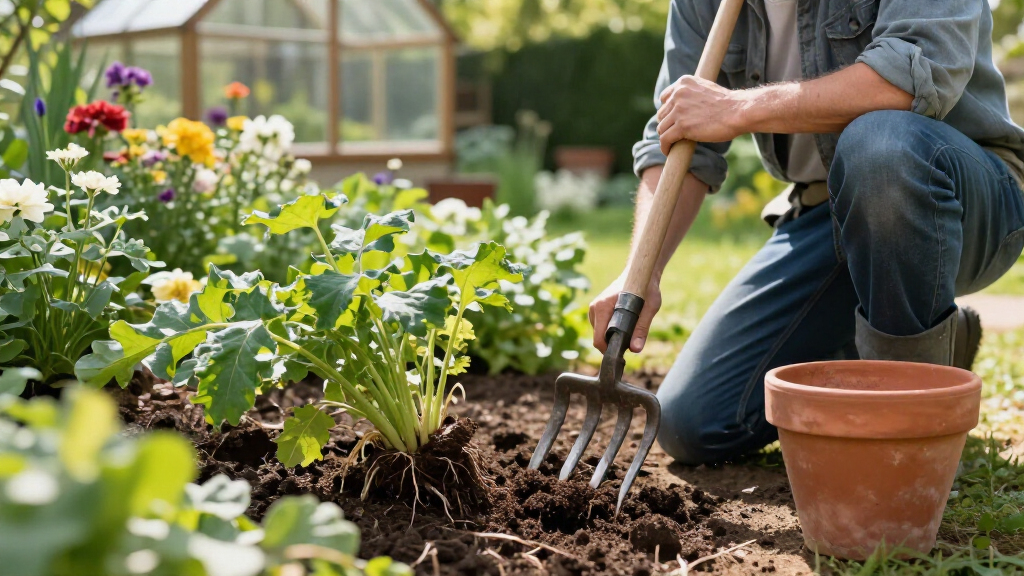
How We Picked
I ranked these tools by how well their design matches the physical work of dividing perennials: cutting or loosening roots, getting beneath a clump, and providing enough control or leverage for the job. I gave more weight to purpose-built spades, forks, and sporks for gardeners facing established plants, while judging knives on their usefulness for smaller divisions and precise root work. Blade material, handle design, reach, and protective storage also informed the comparison because they affect upkeep, comfort, and practical use.
The ranking reflects differences in task fit, not a claim that one style suits every garden. A long handle can reduce the need to work close to the soil but takes more storage space; a hand knife offers precision but less leverage. I also considered overlap among the several hori hori models, giving each a distinct use case rather than treating similar blade formats as interchangeable winners.
| garden tools for dividing perennial | Blade material | Handle material |
|---|---|---|
| Root Slayer 23311 Perennial Ga | Powder-coated carbon steel | — |
| Kent & Stowe Stainless Steel P | — | Ash wood |
| Hori Hori Garden Knife with Sh | Stainless steel | — |
| Hori Hori Garden Knife with 7- | Stainless steel | — |
| Berry&Bird Perennial Spade wit | Stainless steel | Ash wood |
| DeWit Perennial Fork with Shor | — | Ash hardwood |
| Nisaku NJP650 Hori Hori Stainl | Stainless steel | Wood |
| Kanzuro Hori Hori Garden Knife | Stainless steel | Wood |
| Fiskars Big Grip Garden Knife | — | — |
| DeWit Perennial Spork Garden T | Tempered Swedish boron steel | European ash hardwood |
| PERWIN Hori Hori Garden Knife | Stainless steel | Walnut wood |
| Keyfit Tools Spartan Serrated | Stainless steel | Rubber |
| Fiskars Hori Hori Garden Knife | Corrosion-resistant stainless steel | — |
Factors to Consider When Choosing Best Garden Tools For Dividing Perennials
Before choosing, match the tool to the work you actually do: breaking apart mature clumps is different from separating a small division or teasing roots around a crowded bed. These broader points can help narrow the field before you compare individual models.
Match the Tool to Root Mass and Plant Size
Start with the size and density of the clumps you divide most often. A broad, established root mass usually calls for a long-handled tool that can reach below the crown and give you leverage as you lift. Small or recently planted perennials may need only careful cuts and a hand tool, where a large spade can feel blunt and awkward. A common mistake is buying a compact knife because it is easy to store, then expecting it to split woody or tightly packed roots. If your garden has both small and mature plants, choose the larger tool for the hard work and treat a knife as a supporting tool, not a replacement.
Choose Between a Spade, Fork, Spork, and Knife
A spade is suited to cutting into soil and making a defined slice through a clump, while a fork works by loosening and lifting around roots. A spork combines fork-like tines with a more blade-like profile, which can be useful when you need to pry and separate rather than simply cut. Hand knives prioritize close control and can help with small divisions or careful work near neighboring plants. Soil and root type affect the choice: dense, compacted ground may resist a narrow hand blade, while delicate roots may benefit from loosening before any cut. Avoid choosing by tool name alone; consider whether your usual task is slicing, prying, or teasing roots apart.
Account for Soil Conditions
Soil that is moist but workable is generally easier to cut and lift than ground that is baked hard or saturated. A heavier, long-handled tool can provide useful force in firm soil, but forcing it into very dry ground can strain the user and stress the tool. In wet soil, roots and soil may cling to blades and tines, making cleanup and maintenance more important. Gardeners with rocky beds should also think about control: striking stones with a narrow edge can make a cut unpredictable. If your soil varies across the garden, pick for the toughest area you regularly work, then use lighter techniques in softer beds.
Balance Leverage, Reach, and Storage
Long handles let you work farther from the ground and apply force through your arms and body, but they need more storage room and can be cumbersome among closely spaced plants. Short handles and knives are easier to carry, store, and position in a crowded bed, though they require more work close to the soil. Handle shape matters as much as length: a grip should let you hold the tool securely when pushing, twisting, or lifting. If wrist, back, or grip comfort affects your gardening, think about the posture each tool encourages rather than focusing only on blade size. A tool that stays accessible and feels manageable is more useful than a powerful one you avoid using.
Think About Edges, Maintenance, and Safe Storage
Stainless steel can simplify rust care, but it does not make a tool maintenance-free; soil should still be removed and the blade dried after use. Serrated or dual-edge blades can help with cutting tasks, yet they may need a different sharpening approach from a plain edge. Tines should be checked for bending, and handles should be kept clean and inspected for looseness or damage. A sheath is especially useful for a pointed hand knife that travels between beds or lives in a shed with other tools. Before buying a knife, check that its storage method works for your routine, since a sharp blade left loose is both harder to protect and less safe to retrieve.
Pay for the Right Capability, Not Extra Features
Spend more only when the added construction or design solves a recurring problem in your garden. A dedicated long-handled tool may be a better investment than several hand knives if you divide large clumps every season. On the other hand, occasional small divisions may not justify a bulky specialist tool, especially if a multipurpose garden knife already covers other tasks. Features such as depth markings, a sheath, or a particular handle material are helpful only when they match how you work and store tools. Compare the tool’s main job, expected upkeep, and comfort before treating a longer feature list as better value.
Frequently Asked Questions
Can a hori hori knife divide a large, established perennial?
It can help make controlled cuts in a smaller clump, but a hand knife provides far less leverage than a full-size spade, fork, or spork. Large, dense root masses may demand repeated effort and put your hands close to the soil and roots. Loosening the clump with a fork before making smaller divisions can reduce the force needed. If mature plants are your regular task, choose a long-handled tool as your primary divider and keep the knife for detail work. The knives in this roundup are best viewed as precision tools, not universal substitutes for digging tools.
Should I choose a perennial spade or a perennial fork?
Choose a spade when you want to cut into the soil or make a direct slice through roots. A fork is a stronger match when your priority is loosening soil around the clump and lifting it with less reliance on a flat blade. Root structure and soil firmness both affect the result, so neither style wins in every bed. If your plants have dense roots and the ground is firm, leverage and blade strength matter; if preserving more root structure is the priority, loosening first may help. The DeWit fork and the spades in this list represent distinct approaches rather than interchangeable versions of one tool.
Is a dual-edge or serrated garden knife better for cutting roots?
Edge design can help a hand knife make controlled cuts, but it does not solve the main limitation of a knife: limited reach and leverage. Serrations may suit sawing through fibrous roots, while a plain or dual-edge profile may feel more direct for other cuts. The better choice depends on the roots you encounter and how much control you want, not on the number of cutting edges alone. For thick or woody root masses, use an appropriately sized digging tool rather than relying on a hand blade. Also account for the care needed to keep a specialized edge in usable condition.
Do I need a separate tool for dividing and planting perennials?
Not always. A multipurpose planting knife can handle small divisions, root inspection, and planting tasks if your garden work is light and occasional. Dedicated spades, forks, or sporks make more sense when dividing mature clumps is a frequent job, since they offer reach and leverage that hand tools cannot match. Buying one tool for every task can add clutter without making the work easier. Start with the hardest task you do regularly, then add a hand tool only if you need more precision for smaller plants or crowded beds. This approach keeps your kit focused on actual garden needs.
What should I prioritize if hand or back strength is a concern?
Look at the posture, grip, and leverage a tool allows, not just its weight. A long handle may reduce bending and give you more leverage, but a heavy tool can be tiring to maneuver or lift. A short knife is lighter and easier to position, yet it asks you to work close to the ground and apply force with your hand and wrist. If possible, compare handle shape and total tool length with the way you garden, and choose a tool you can control safely. Dividing plants when the soil is workable and loosening roots before cutting can also reduce the force the job demands.
Conclusion
For most gardeners who regularly divide established plants, I’d start with the Root Slayer Perennial Garden Shovel as the best overall pick because it is purpose-built for root work and offers long-tool leverage. The DeWit Perennial Fork is my best value choice for gardeners who prefer loosening and lifting, while the Kent & Stowe Stainless Steel Perennial Spade is the best premium-style option for those seeking a traditional dedicated spade. Beginners with small plants or crowded beds may find a hori hori knife easier to control, though it should not be their only tool for large clumps. For compact, precise tasks, compare the Kanzuro, Nisaku, and other knife options by handle, edge, markings, and sheath; for larger root masses, choose a spade, fork, or spork instead. Match the tool to your most demanding regular task, and the choice becomes much clearer.
Halloween Picks
halloween
As an affiliate, we earn on qualifying purchases.