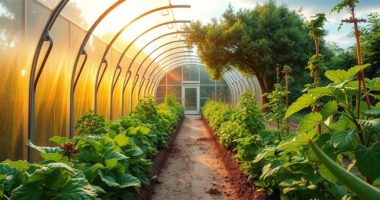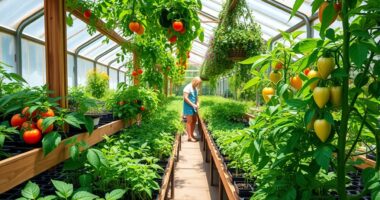

To make your greenhouse a lower-input part of your lifestyle, focus on sustainable practices like composting kitchen scraps and garden waste to boost soil health naturally. Use natural pest management methods and support biodiversity to reduce chemical reliance. Collect rainwater and employ water-saving techniques like drip irrigation, while mulching helps conserve moisture. Keep maintenance simple with minimal resources, and soon you’ll foster a resilient, eco-friendly gardening space—there’s more to discover to truly maximize its benefits.

Get garden gear delivered free with Prime
- Fast, free delivery on millions of items
- Prime Video, Amazon Music and more included
- Member-only deals all year
Key Takeaways
- Incorporate composting and natural soil amendments to reduce reliance on synthetic fertilizers.
- Use water-efficient methods like rainwater harvesting and drip irrigation to conserve resources.
- Employ integrated pest management techniques to minimize chemical pesticide use.
- Focus on simple, low-resource maintenance practices to sustain greenhouse productivity.
- Promote biodiversity and ecological balance to naturally regulate pests and improve soil health.
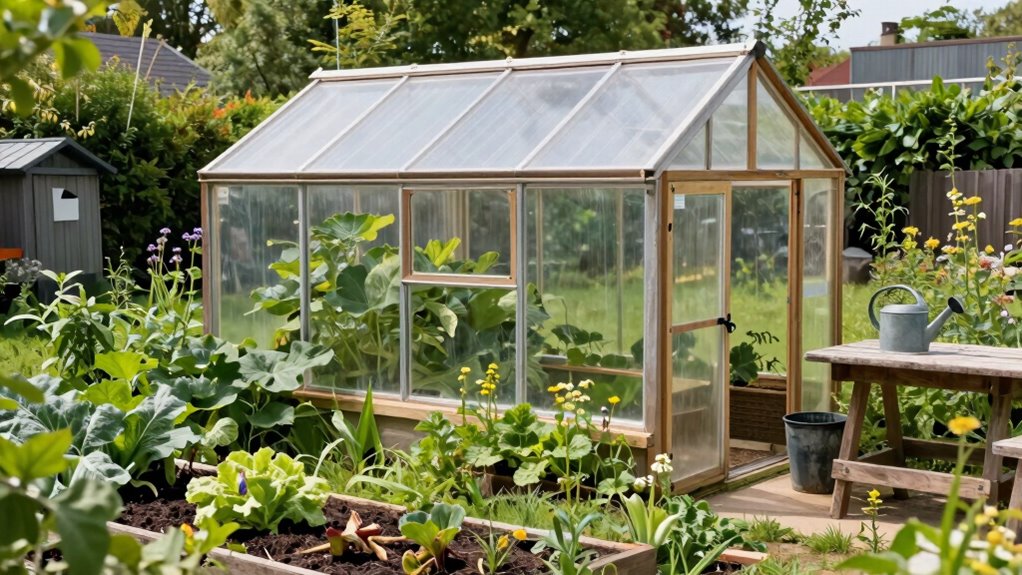
Creating a greenhouse that fits into a lower-input lifestyle is entirely achievable with simple strategies and thoughtful planning. You don’t need to pour endless resources into high-tech systems or costly equipment. Instead, focus on sustainable practices that maximize efficiency while minimizing effort and expense. Composting techniques are a great place to start. By establishing a compost bin or pile near your greenhouse, you turn kitchen scraps and garden waste into nutrient-rich soil amendments. This not only reduces waste but also supplies your plants with organic fertilizer, decreasing the need for external inputs. You can keep it simple by layering green and brown materials, turning the compost periodically, and monitoring moisture levels. This process enriches your soil naturally, promoting healthy plant growth without chemical fertilizers. Incorporating soil health practices like composting can significantly enhance the vitality of your plants and soil over time. Regularly testing your soil’s nutrient levels can help you tailor your composting and fertilization routine more effectively, ensuring optimal plant growth. Additionally, using natural soil amendments can further improve soil fertility without relying on synthetic products. Employing integrated pest management techniques can also help reduce reliance on chemical controls, supporting a healthier ecosystem in your greenhouse. Water conservation is another essential element in maintaining a low-input greenhouse. To minimize water use, consider collecting rainwater with barrels placed under your roof’s runoff. This free, natural resource provides your plants with clean water without increasing your utility bills. Drip irrigation or soaker hoses are efficient watering methods that deliver water directly to the plant roots, reducing evaporation and runoff. Mulching around your plants helps retain soil moisture, which means less frequent watering and healthier roots. Additionally, watering early in the morning or late in the evening limits water loss through evaporation. These small adjustments can drastically cut your water consumption while keeping your plants well-hydrated. Incorporating water-saving techniques can further enhance your efficiency and reduce your environmental impact.
By adopting these methods, you can create a more resilient and sustainable gardening system that requires fewer inputs and less ongoing maintenance.
As an affiliate, we earn on qualifying purchases.
Frequently Asked Questions
What Are the Best Low-Cost Materials for Building a Greenhouse?
You can build a budget-friendly greenhouse using a DIY frame from reclaimed wood or metal, which saves money and adds durability. For the glazing, recycled plastics like PET bottles or clear plastic sheeting work well and are easily accessible. These low-cost materials help you create an effective greenhouse without spending much, making it a sustainable choice. Plus, repurposing materials reduces waste and keeps your project affordable.
How Can I Reduce Energy Costs in My Greenhouse?
You can reduce energy costs in your greenhouse by improving insulation and using natural methods like humidity control to maintain ideal conditions. Ventilate properly to manage pests without relying heavily on chemicals, which saves energy and money. Covering your greenhouse at night with lightweight materials can retain heat, while shading during hot days helps prevent cooling costs. These strategies keep your greenhouse efficient and eco-friendly, lowering your overall energy expenses.
What Plants Are Easiest to Grow in a Low-Input Greenhouse?
You’ll find that easy-to-grow plants like lettuce, radishes, herbs, and spinach thrive in a low-input greenhouse. Focus on plant selection that requires minimal care and pest management, such as pest-resistant varieties and native plants. These choices reduce the need for chemical interventions and extra watering. Keep things simple by choosing hardy plants suited for your climate, which will make gardening less labor-intensive and more sustainable.
How Often Should I Water Plants in a Low-Maintenance Greenhouse?
You should water your plants based on their specific needs, but generally, establish a consistent watering schedule—about once or twice a week. Keep an eye on plant hydration by checking soil moisture; if it feels dry a few inches down, it’s time to water. Avoid overwatering, which can lead to root rot. Adjust your routine for weather changes and plant types to maintain healthy, thriving greenery with minimal effort.
Are There Sustainable Ways to Power a Greenhouse?
Imagine stepping into your greenhouse, powered by renewable energy like solar power—it’s totally doable. You can install solar panels to generate electricity, reducing reliance on fossil fuels and lowering costs. Using solar water heaters or passive solar design also helps maintain ideal temperatures naturally. These sustainable methods not only make your greenhouse eco-friendly but also save money long-term, helping you embrace a lower-input lifestyle while nurturing your plants efficiently.
Conclusion
By incorporating a greenhouse into your lifestyle, you’ll reveal the secret to turning your backyard into a lush, self-sustaining paradise that could feed a small army! With just a little effort, you’ll transform your gardening routine into an epic adventure, slashing costs and boosting your green thumb skills to superhero levels. Soon, you’ll be the envy of neighbors, wielding the power of fresh, homegrown produce year-round—proof that a simple greenhouse can change your life in ways you never imagined!
Halloween Picks
halloween
As an affiliate, we earn on qualifying purchases.