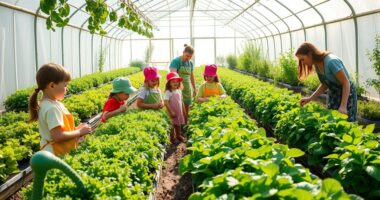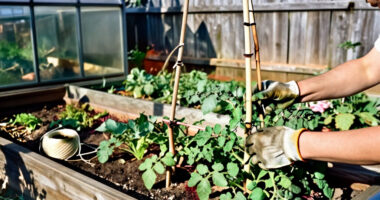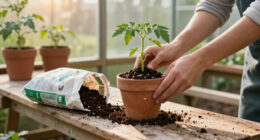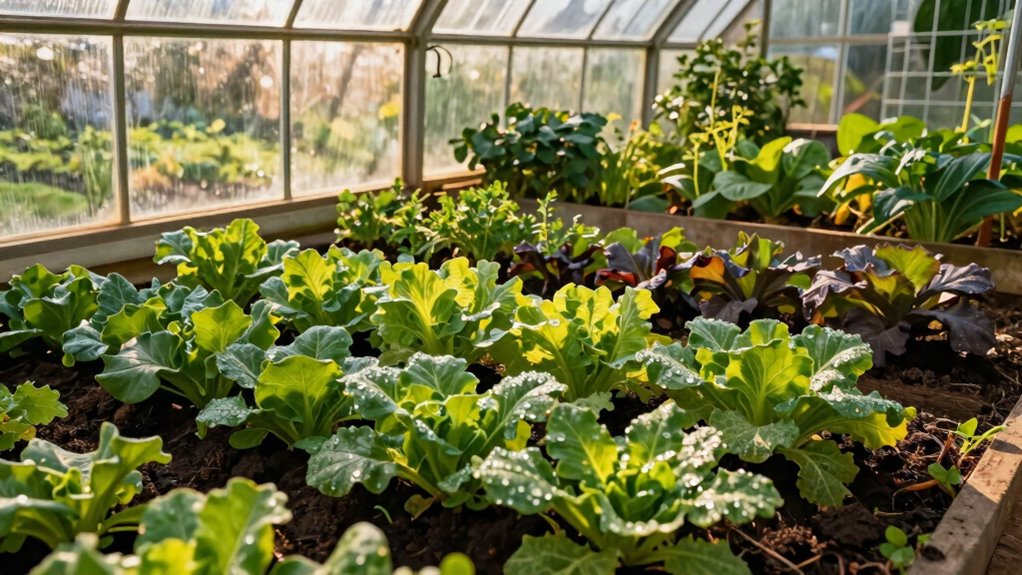

A greenhouse gives you the power to grow fresh vegetables and herbs all year, no matter the season. With controlled environmental conditions, you can extend your growing season, start seedlings earlier, and protect delicate plants. It also helps manage pests naturally and optimizes climate for better yields. Plus, it boosts your gardening skills and efficiency. Keep exploring to discover how a greenhouse can transform your year-round gardening experience and maximize your harvest.

Get garden gear delivered free with Prime
- Fast, free delivery on millions of items
- Prime Video, Amazon Music and more included
- Member-only deals all year
Key Takeaways
- Extends the growing season, enabling year-round cultivation of vegetables and herbs regardless of outdoor weather.
- Protects seedlings and delicate plants, increasing survival rates and early growth success.
- Allows precise environmental control for optimal plant health and higher yields.
- Reduces pest and disease risks through physical barriers and integrated pest management.
- Enhances gardening skills with a controlled environment, improving efficiency and crop quality year-round.
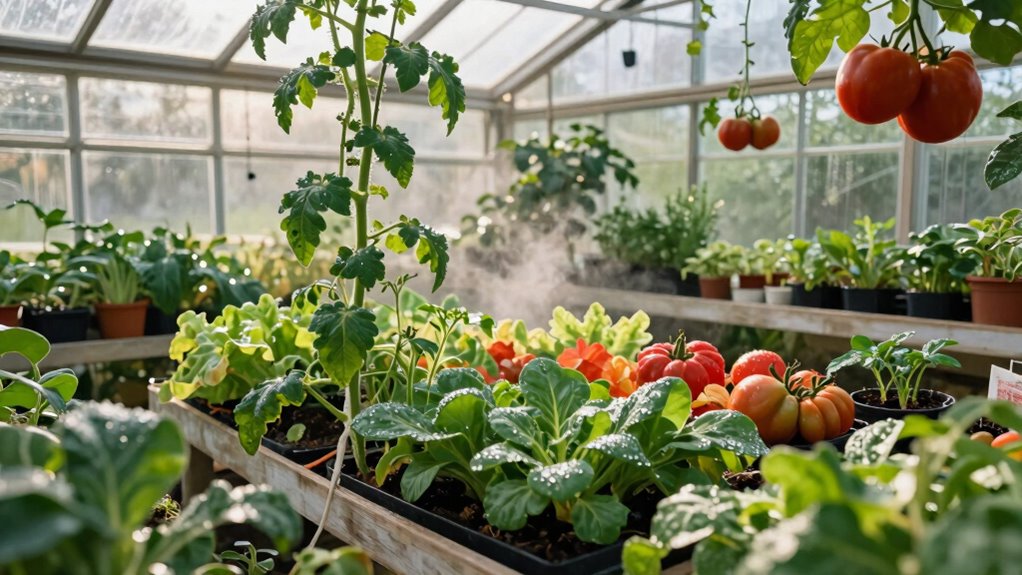
Growing your own produce in a greenhouse gives you a clear advantage over relying solely on outdoor gardening. With a greenhouse, you control the environment, which means you can extend your growing season and produce fresh vegetables and herbs year-round. This control allows you to experiment with plant propagation techniques more effectively, guaranteeing healthy starts for your crops. You can start seeds earlier in the season and nurture delicate seedlings in a protected space, giving them a jumpstart before transplanting them outdoors. This not only boosts your yield but also enhances your gardening skills, making it easier to grow a wide variety of plants.
Growing in a greenhouse extends seasons, improves plant starts, and boosts gardening skills for year-round success.
Another significant benefit of greenhouse gardening is its impact on pest management. Unlike outdoor gardens, where pests can come from multiple sources and spread rapidly, a greenhouse creates a physical barrier that helps keep many pests at bay. You can monitor and address pest issues more quickly, reducing the need for chemical interventions. You can also implement integrated pest management strategies more effectively—using biological controls, traps, or organic solutions—without risking contamination of your entire crop. As a result, you produce cleaner, healthier food that’s safer for your family. Maintaining optimal conditions is crucial, and modern greenhouse technology can help you achieve this with greater precision. Additionally, the controlled environment helps you better understand environmental factors, allowing for more precise adjustments to optimize plant health. Understanding climate control techniques can further improve your yields and plant quality. Incorporating automated climate controls can also streamline this process, making it easier to maintain ideal conditions consistently.
Products Worth Considering

EVERECO Twin-Wall Polycarbonate Greenhouse Panels, 8-Pack, 8 × 4 ft, 6 mm

Sinimaka 8-Pack Twin-Wall Polycarbonate Greenhouse Panels, 8 x 4 ft

EVERECO Polycarbonate Greenhouse Panels, 8 × 4 ft, 0.24 in, 6-Pack
As an affiliate, we earn on qualifying purchases.
Frequently Asked Questions
How Much Does Setting up a Home Greenhouse Typically Cost?
Setting up a home greenhouse usually costs between $500 and $5,000, depending on size, materials, and features. You should do a cost analysis to determine what fits your budget. For budget planning, consider essentials like framing, glazing, and ventilation, plus potential costs for heating or cooling. Investing wisely guarantees you get a functional greenhouse without overspending, making your gardening dreams both affordable and sustainable.
What Are the Best Plants to Grow Year-Round in a Greenhouse?
You can grow a variety of plants year-round in your greenhouse, including herbs, leafy greens, and tomatoes. These plants thrive with proper plant propagation techniques and pest management strategies. Keep pests at bay and promote healthy growth to guarantee a bountiful harvest no matter the season. It’s often said that a well-maintained greenhouse is your ticket to fresh produce all year, turning your space into a green oasis.
How Energy-Efficient Are Modern Greenhouses?
Modern greenhouses are quite energy-efficient, thanks to advancements like solar heating and insulation techniques. You can harness solar energy to warm your greenhouse naturally, reducing reliance on electric or fuel-based heating. Good insulation, such as double glazing or thermal curtains, helps retain heat during colder months. These innovations lower energy costs, making it easier for you to maintain ideal conditions year-round while minimizing your environmental impact.
Can a Greenhouse Be Used for Growing Vegetables Indoors During Winter?
Yes, you can use a greenhouse for indoor gardening during winter to grow vegetables. With proper insulation and heating, it’s ideal for winter vegetables, allowing you to harvest fresh produce even when it’s cold outside. A greenhouse creates a controlled environment, so you can maintain the right temperature and humidity for your indoor gardening needs, making it easier to grow winter vegetables successfully all season long.
What Maintenance Is Required to Keep a Greenhouse Functioning Properly?
You need to stay on top of your greenhouse’s maintenance to keep it running smoothly. Regularly check pest control measures and keep an eye out for pests that could threaten your plants. Make sure your ventilation systems work properly to prevent mold and overheating. Clean glass panes or panels, and monitor temperature and humidity levels. A little upkeep goes a long way, and you’ll enjoy a thriving, healthy greenhouse all year long.
Conclusion
With your greenhouse, you’re planting a year-round oasis—your personal Eden that blooms regardless of the seasons outside. It’s like holding a piece of summer in your hands, no matter the weather. By nurturing your plants indoors, you create a vibrant, ever-changing tapestry of life that feeds your soul and your table. So, embrace your homegrown advantage; with each seed you sow, you’re cultivating a garden that thrives through all seasons, a true sanctuary of growth.