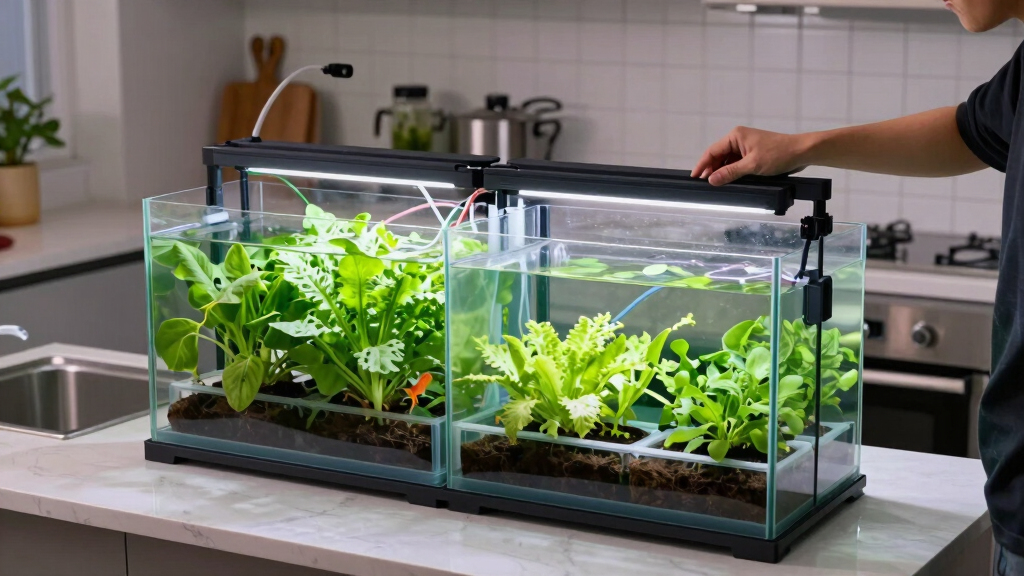

Choosing the best aquaponics system for families involves balancing ease of use, scalability, and maintenance. The top pick, Backyard Aquaponics, offers a straightforward setup perfect for beginners, while DIY Aquaponics Advantage appeals to those wanting a customizable, sustainable solution. More advanced options provide larger yields but often come with higher complexity and cost. The main tradeoffs include initial investment versus long-term benefits and how much effort you’re willing to put into maintenance. Keep reading for a detailed comparison to help you find the right fit for your family.
Key Takeaways
- The most versatile systems balance ease of setup with scalability, making them ideal for families new to aquaponics.
- DIY kits and guides are popular but vary greatly in complexity; choosing one depends on your technical skills and time availability.
- Cost ranges widely, with starter kits being affordable options, while more advanced systems require higher upfront investment.
- Maintenance requirements differ significantly; simpler systems tend to need less daily attention, crucial for busy families.
- Systems that combine fish and plant care in a compact design often offer the best balance of productivity and ease of use.
| The DIY Aquaponics Advantage: How to Build a Sustainable Home System for Growing Fresh Fish and Vegetables (The Resilient Systems Series Book 2) |  | Best for Hands-On Enthusiasts Looking for a Practical Guide | Content Focus: DIY construction, system resilience | Target Audience: Hands-on families, DIY enthusiasts | Complexity Level: Advanced | VIEW LATEST PRICE | See Our Full Breakdown |
| Aquaponics for Beginners: The Ultimate Step-by-step Guide to Building Your Own Aquaponics System (The Ultimate Guide to Maintain and Grow Various Organic Vegetables) |  | Best for Absolute Beginners Starting Small | Content Focus: Beginner setup, organic vegetables | Target Audience: Families new to aquaponics | Complexity Level: Beginner | VIEW LATEST PRICE | See Our Full Breakdown |
| The IBCs of Aquaponics Workshop Manual: A visual self-guided workshop for building and maintaining systems to grow your own produce and fish using Intermediate Bulk Containers (IBCs) |  | Best for Visual Learners and DIY Builders | Content Focus: IBC-based systems, visual learning | Target Audience: DIY families, visual learners | Complexity Level: Intermediate | VIEW LATEST PRICE | See Our Full Breakdown |
| Aquaponics Build and Operation Manual: Step-By-Step Instructions, 400+ Pages, 200+ Images |  | Best for Detail-Oriented Builders and Educators | Content Focus: Detailed instructions, troubleshooting | Target Audience: Committing families, educators | Complexity Level: Advanced | VIEW LATEST PRICE | See Our Full Breakdown |
| Aquaponics: An Essential Step-by-Step Guide to Aquaponics for Beginners |  | Best for Newcomers Wanting a Broad, Practical Introduction | Content Focus: Beginners, comprehensive overview | Target Audience: Families new to aquaponics | Complexity Level: Beginner to intermediate | VIEW LATEST PRICE | See Our Full Breakdown |
| Backyard Aquaponics: A Practical Beginner’s Guide for Growing Fish & Vegetables Together at Home |  | Best for Practical Beginners Seeking a Hands-On Approach | Target Audience: Beginners and families new to aquaponics | Focus: Practical, hands-on setup | Coverage: Basic fish and vegetable integration | VIEW LATEST PRICE | See Our Full Breakdown |
| Aquaponics for Beginners: How to Build your own Aquaponic Garden that will Grow Organic Vegetables |  | Best for Cost-Conscious Families Looking for DIY Simplicity | Target Audience: Budget-minded families and DIY enthusiasts | Focus: Cost-effective, simple construction | Scope: Basic vegetable and fish integration | VIEW LATEST PRICE | See Our Full Breakdown |
| DIY Aquaponics Systems at Home: Urban Setups, Cheap Starter Kits, and Easy Steps for Anyone |  | Best for Urban Families and Small Spaces | Target Audience: Urban families and apartment dwellers | Focus: Compact, beginner-friendly systems | Setup Type: Starter kits, small-scale | VIEW LATEST PRICE | See Our Full Breakdown |
| Aquaponics 101: The Easy Beginner’s Guide to Aquaponic Gardening: How To Build Your Own Backyard Aquaponics System and Grow Organic Vegetables With Hydroponics And Fish |  | Best for Beginner-Level Home Gardeners Wanting a Clear, Methodical Approach | Target Audience: Families committed to detailed planning and learning | Focus: Methodical, step-by-step construction | System Size: Small to medium backyard | VIEW LATEST PRICE | See Our Full Breakdown |
| Aquaponic Gardening: A Step-by-Step Guide to Raising Vegetables and Fish Together |  | Best for Practical, Hands-On Families Ready to Build from Scratch | Target Audience: Families seeking a detailed, hands-on project | Focus: In-depth system design and maintenance | System Size: Customizable, from small to large | VIEW LATEST PRICE | See Our Full Breakdown |
| Aquaponic Gardening for Beginners: Step by Step Guide to Getting Started on Raising Fish and Growing Vegetables in an Aquaponic Garden |  | Best for Beginners and DIY Enthusiasts | Page Count: 150 | Focus: Beginner aquaponics | Format: Paperback | VIEW LATEST PRICE | See Our Full Breakdown |
| Back to the Roots Indoor Aquaponic Garden – 3 Gallon Self Watering, Mess-Free Planter and Self-Cleaning Fishtank for Herbs, Microgreens, Bamboo, Succulents, and Houseplants, support Fish |  | Best for Compact Space and Practical Family Use | Capacity: 3 gallons | Dimensions: 13.4 x 13.4 x 9.5 inches | Material: Plastic | VIEW LATEST PRICE | See Our Full Breakdown |
| Aquaponic Plans and Instructions: Media-Bed (Flood-and-Drain) Systems |  | Best for DIY Enthusiasts and Advanced Hobbyists | System Type: Media-bed flood-and-drain | Detail Level: In-depth plans included | Complexity: Moderate to high | VIEW LATEST PRICE | See Our Full Breakdown |
| Aquaponics for Homeowners: Setup, Water Quality, Plant and Fish Selection, System Maintenance, and Organic Food Production (Sustainable Living and Gardening) |  | Best for Holistic Family Sustainability Education | Scope: Water quality, fish, plants, maintenance | Application: Organic food at home | Audience: Families committed to sustainability | VIEW LATEST PRICE | See Our Full Breakdown |
| Beginner’s Guide to Aquaponics: Step-by-Step Systems for Plants and Fish |  | Best for Newcomers and Educational Families | Approach: Step-by-step, visual | Focus: Basic setup | Content: Materials, costs | VIEW LATEST PRICE | See Our Full Breakdown |
More Details on Our Top Picks
The DIY Aquaponics Advantage: How to Build a Sustainable Home System for Growing Fresh Fish and Vegetables (The Resilient Systems Series Book 2)
This book stands out for its detailed, step-by-step instructions on constructing a resilient, self-sustaining aquaponics system at home. Unlike more general guides like Aquaponics for Beginners, it emphasizes DIY techniques and customization, making it ideal for families willing to invest time and effort into building their unique setup. However, its focus on manual construction may be overwhelming for those seeking quick, ready-made solutions. The book covers essential aspects such as water cycling, fish health, and plant integration, but lacks detailed troubleshooting for system failures. Ideal for families who love DIY projects and want a tailored, educational experience. Not suitable for those preferring plug-and-play systems or with limited space.
Pros:- Comprehensive DIY guidance with clear instructions
- Focus on sustainability and resilience in system design
- Encourages learning through hands-on building
Cons:- Requires significant time and effort to implement
- Less suitable for small or indoor spaces due to system complexity
Best for: Families eager to build their own durable and customized aquaponics system from scratch
Not ideal for: Families seeking quick installation or minimal maintenance solutions
- Content Focus:DIY construction, system resilience
- Target Audience:Hands-on families, DIY enthusiasts
- Complexity Level:Advanced
- System Type:Custom-built, resilient
- Space Requirement:Moderate to large
- Maintenance:Moderate to high
Bottom line: This book is perfect for resourceful families wanting an educational, customized aquaponics build, despite its demanding nature.
Aquaponics for Beginners: The Ultimate Step-by-step Guide to Building Your Own Aquaponics System (The Ultimate Guide to Maintain and Grow Various Organic Vegetables)
This guide makes a compelling case for newcomers with its straightforward, easy-to-follow instructions. Compared with The IBCs of Aquaponics Workshop Manual, it offers more detailed advice on initial setup and maintenance, ideal for families new to aquaponics. Its step-by-step approach minimizes confusion, but it sometimes glosses over troubleshooting complex issues, which might frustrate those seeking long-term solutions. The book emphasizes organic vegetable growth and basic fish care, making it well-suited for small-scale family gardens. It excels for beginners who want a manageable, low-cost entry point but isn’t designed for large or highly automated systems.
Pros:- Clear, beginner-friendly instructions
- Focus on organic vegetable and small-scale fish care
- Affordable and easy to implement
Cons:- Limited depth on troubleshooting complex issues
- Less suitable for large or automated systems
Best for: Families new to aquaponics with limited space and seeking simple, effective guidance
Not ideal for: Experienced growers or those wanting extensive automation features
- Content Focus:Beginner setup, organic vegetables
- Target Audience:Families new to aquaponics
- Complexity Level:Beginner
- System Type:Small-scale, low-cost
- Space Requirement:Small
- Maintenance:Low to moderate
Bottom line: This guide is ideal for families just starting out and wanting an easy, practical introduction to aquaponics.
The IBCs of Aquaponics Workshop Manual: A visual self-guided workshop for building and maintaining systems to grow your own produce and fish using Intermediate Bulk Containers (IBCs)
This manual shines for families interested in building their own aquaponics system using IBCs, making it a practical choice over more generic guides like Aquaponics Build and Operation Manual. Its visual, workshop-style format helps users understand the mechanics through images and diagrams, but it may lack detailed troubleshooting advice for system failures. Compared to more comprehensive manuals, it focuses specifically on IBC-based setups, which are great for moderate-sized, scalable systems. The manual is ideal for hands-on families who prefer learning visually and want to customize their system with readily available containers. It’s less suitable for families seeking a quick, turnkey solution or larger commercial systems.
Pros:- Clear visual instructions and diagrams
- Focus on scalable, modular IBC systems
- Encourages hands-on learning and customization
Cons:- Limited troubleshooting guidance
- Focus on IBCs might not suit all space or design preferences
Best for: Families wanting a visual, step-by-step guide to DIY IBC-based aquaponics systems
Not ideal for: Families looking for pre-made systems or minimal assembly effort
- Content Focus:IBC-based systems, visual learning
- Target Audience:DIY families, visual learners
- Complexity Level:Intermediate
- System Type:Scalable, modular
- Space Requirement:Moderate
- Maintenance:Moderate
Bottom line: This manual benefits families eager to build and maintain their own scalable IBC aquaponics system with visual guidance.
Aquaponics Build and Operation Manual: Step-By-Step Instructions, 400+ Pages, 200+ Images
This extensive manual offers a wealth of detailed instructions and visuals, making it a strong choice for families who want an in-depth, comprehensive resource. Unlike the more concise Aquaponics for Beginners, this book covers a broader range of topics, including system design, water quality management, and troubleshooting, ideal for those aiming for a long-term, sustainable setup. Its detailed approach means it can be overwhelming for absolute beginners, but it provides a solid foundation for families willing to dedicate time to learning. It’s especially useful for educational purposes or larger, more intricate systems. Best suited to families committed to a thorough learning process and detailed system management.
Pros:- Extensive detail with 400+ pages and 200+ images
- Covers all aspects of system operation and troubleshooting
- Suitable for larger, more complex systems
Cons:- Can be overwhelming for beginners
- Requires significant time to digest and implement
Best for: Families seeking an in-depth, comprehensive guide for building and maintaining complex aquaponics systems
Not ideal for: Families looking for quick setup or minimal reading
- Content Focus:Detailed instructions, troubleshooting
- Target Audience:Committing families, educators
- Complexity Level:Advanced
- System Type:Large, intricate
- Space Requirement:Large
- Maintenance:High
Bottom line: This manual is best for families dedicated to mastering detailed aquaponics systems with a comprehensive resource.
Aquaponics: An Essential Step-by-Step Guide to Aquaponics for Beginners
This guide offers an accessible, well-rounded overview suitable for families just stepping into aquaponics, similar to Aquaponics for Beginners. While the initial chapters cover global warming and sustainability themes, the core content provides clear, actionable steps for system setup and maintenance. Its strength lies in covering every aspect of aquaponics in simple language, making it ideal for families seeking a practical, all-in-one resource. However, its broader scope means it lacks the depth of specialized manuals like The IBCs of Aquaponics Workshop Manual. It’s a good starting point for families looking to understand the basics before expanding into more complex systems.
Pros:- Clear, comprehensive coverage of all basics
- Accessible language suitable for beginners
- Good balance of theory and practical advice
Cons:- Some chapters focus on broader themes rather than practical details
- Less technical depth for complex system troubleshooting
Best for: Beginner families wanting a comprehensive yet easy-to-understand aquaponics guide
Not ideal for: Families seeking detailed technical troubleshooting or advanced system design
- Content Focus:Beginners, comprehensive overview
- Target Audience:Families new to aquaponics
- Complexity Level:Beginner to intermediate
- System Type:Basic to moderate
- Space Requirement:Variable
- Maintenance:Moderate
Bottom line: This guide suits families new to aquaponics looking for a broad, practical foundation before moving on to more detailed manuals.
Backyard Aquaponics: A Practical Beginner’s Guide for Growing Fish & Vegetables Together at Home
This book stands out for its clear, step-by-step guidance tailored specifically for beginners who want to set up a functional backyard aquaponics system. Unlike some more technical manuals, it emphasizes practical, easy-to-follow instructions, making it ideal for families new to the concept. It covers essential topics like system design, fish and plant choices, and common pitfalls, which helps avoid mistakes. Compared with the more comprehensive manuals, this guide is less overwhelming and more accessible, though it may lack in-depth technical details for advanced setups. The tradeoff is that beginners won’t get a deep dive into complex water chemistry or advanced fish breeding, but for most families starting out, that’s a reasonable compromise. This pick is perfect for families who want a straightforward, approachable starting point without getting bogged down in technicalities.
Pros:- Clear, practical instructions tailored for beginners
- Emphasizes safety and ease of setup
- Focus on sustainable, home-based food production
Cons:- Limited technical depth for advanced users
- Less coverage of complex water chemistry or fish breeding
Best for: Families eager to start small-scale, manageable aquaponic systems with minimal prior knowledge
Not ideal for: Experienced hobbyists or those seeking detailed technical references for large-scale systems
- Target Audience:Beginners and families new to aquaponics
- Focus:Practical, hands-on setup
- Coverage:Basic fish and vegetable integration
- Difficulty Level:Beginner
- System Size:Small to medium backyard
- Technical Detail:Basic instructions, limited technical depth
Bottom line: This book is ideal for families just getting started and wanting a simple, reliable guide for backyard aquaponics.
Aquaponics for Beginners: How to Build your own Aquaponic Garden that will Grow Organic Vegetables
Compared with the more comprehensive ‘Aquaponic Gardening’ by the same author, this guide emphasizes low-cost, do-it-yourself approaches that are perfect for families on a budget. It offers straightforward instructions for building simple systems using readily available materials, making it accessible for those without technical backgrounds. While it excels at providing affordable options, this focus sometimes means sacrificing some degree of system durability or scalability, which might be an issue for families seeking long-term, high-capacity setups. The tradeoff is that it may require more frequent maintenance or upgrades as your family’s needs grow. This guide makes the most sense for families starting small, prioritizing affordability and ease of construction over high-end features or large output.
Pros:- Affordable DIY approach with easy-to-find materials
- Clear, step-by-step instructions suitable for beginners
- Focus on growing organic vegetables
Cons:- Less durable than professionally assembled systems
- May require frequent repairs or upgrades for larger needs
Best for: Cost-conscious families wanting to build a basic, inexpensive aquaponics system
Not ideal for: Families planning larger, more complex systems that require durability and scalability
- Target Audience:Budget-minded families and DIY enthusiasts
- Focus:Cost-effective, simple construction
- Scope:Basic vegetable and fish integration
- Difficulty Level:Beginner
- Materials:Recycled and readily available
- Durability:Moderate, may need repairs
Bottom line: This book is best suited for families eager to start small and save money, accepting some tradeoffs in system longevity.
DIY Aquaponics Systems at Home: Urban Setups, Cheap Starter Kits, and Easy Steps for Anyone
This guide makes sense for families living in apartments or small yards, emphasizing compact, affordable setups like small starter kits and urban-friendly designs. Compared to larger, more elaborate systems, this book focuses on easy-to-assemble units that fit into limited spaces, with an emphasis on quick, low-cost construction. However, the emphasis on simplicity may limit the growth potential or longevity of the systems, especially if a family hopes to expand their food production over time. The tradeoff here is that these setups are less robust for long-term use but excellent for testing waters or supplementing diet with fresh herbs and small vegetables. It’s a solid choice for urban dwellers or those new to aquaponics who want an easy, space-friendly solution.
Pros:- Compact, space-efficient designs
- Low-cost starter kits available
- Easy, step-by-step instructions
Cons:- Limited capacity for large harvests
- Less durable for extended use or system expansion
Best for: Families in small living spaces seeking beginner-friendly, space-saving aquaponic setups
Not ideal for: Families wanting large-scale or long-term, high-capacity systems
- Target Audience:Urban families and apartment dwellers
- Focus:Compact, beginner-friendly systems
- Setup Type:Starter kits, small-scale
- Ease of Use:Very easy
- Space Requirement:Limited, urban environments
- System Durability:Basic, suitable for short-term or initial testing
Bottom line: This book is ideal for urban families wanting an easy, affordable introduction to aquaponics in small spaces.
Aquaponics 101: The Easy Beginner’s Guide to Aquaponic Gardening: How To Build Your Own Backyard Aquaponics System and Grow Organic Vegetables With Hydroponics And Fish
This book offers a detailed, methodical approach to designing and building small to medium backyard aquaponics systems, making it well-suited for families wanting a clear guide that covers every step logically. Unlike the more general ‘Aquaponic Gardening for Beginners,’ it emphasizes systematic planning and troubleshooting, which helps reduce common beginner mistakes. While it provides comprehensive instructions, some readers might find it slightly dense, especially if they seek quick results without deep technical explanations. It’s also less focused on DIY hacks and more on structured, reliable setups. The main tradeoff involves the level of detail—excellent for those who want a thorough understanding but potentially overwhelming for families seeking rapid deployment. This pick suits families committed to learning and building a resilient, sustainable system.
Pros:- Structured, logical step-by-step guidance
- Detailed troubleshooting and planning advice
- Suitable for medium-sized backyard systems
Cons:- Can be dense and technical for some beginners
- Less focus on quick, DIY shortcuts
Best for: Families eager for a thorough, step-by-step educational resource with detailed planning
Not ideal for: Those seeking quick, simple setups without a focus on technical understanding
- Target Audience:Families committed to detailed planning and learning
- Focus:Methodical, step-by-step construction
- System Size:Small to medium backyard
- Technical Depth:High, detailed instructions
- Ease of Use:Moderate, requires careful reading
- Ideal For:Families seeking educational, durable setups
Bottom line: This book is best for families wanting an in-depth, systematic approach to building a reliable aquaponics system.
Aquaponic Gardening: A Step-by-Step Guide to Raising Vegetables and Fish Together
This book offers a detailed, practical approach to designing and maintaining aquaponic systems, drawing from the author’s thorough experience. It’s a comprehensive guide that covers everything from initial setup to ongoing system management, making it suitable for families willing to invest time in building their own system from scratch. Compared with the more beginner-focused ‘Aquaponics for Beginners,’ this guide dives deeper into system design and troubleshooting, which can be a benefit for families seeking long-term sustainability. The tradeoff, however, is that it might be too detailed for absolute beginners or those looking for quick results. It’s best for families prepared to get hands-on and learn through detailed instruction, especially if they want a resilient, scalable system.
Pros:- Thorough, step-by-step instructions
- Focus on long-term sustainability and scalability
- Includes detailed maintenance guidance
Cons:- More complex and time-consuming to implement
- Requires some technical aptitude
Best for: Hands-on families ready to build and maintain a custom aquaponics setup
Not ideal for: Beginners seeking very simple, quick-start solutions
- Target Audience:Families seeking a detailed, hands-on project
- Focus:In-depth system design and maintenance
- System Size:Customizable, from small to large
- Technical Level:Intermediate to advanced
- Construction Approach:DIY, from scratch
- Long-Term Use:Highly suitable
Bottom line: This book suits families willing to invest time in creating a durable, scalable aquaponics system from scratch.
Aquaponic Gardening for Beginners: Step by Step Guide to Getting Started on Raising Fish and Growing Vegetables in an Aquaponic Garden
This book stands out for its clear, step-by-step instructions tailored for newcomers eager to start aquaponics without prior experience. Unlike more technical manuals, it emphasizes practical guidance with helpful illustrations, making it accessible for those just getting started. However, it lacks detailed technical specifications or system design plans that advanced hobbyists might seek. This resource is ideal for families wanting a straightforward, educational introduction to building their own system from scratch, but it may not satisfy those seeking in-depth engineering details or ready-to-go setups. Pros: Easy-to-understand language, comprehensive beginner instructions, helpful illustrations, covers fish and plant care. Cons: Lacks detailed technical schematics, not suitable for advanced systems, limited focus on system design.
Verdit: Perfect for families new to aquaponics looking to learn the basics and start small.
Specs:- Type: Educational book
- Focus: Beginner aquaponics setup
- Audience: Families and DIY beginners
- Content: Step-by-step guide, illustrations included
- System Scope: Basic concepts, no technical schematics
- Format: Paperback, 150 pages
Pros:- Accessible language suitable for beginners
- Provides practical, step-by-step instructions
- Includes helpful illustrations and checklists
- Focuses on small-scale, family-friendly systems
Cons:- Lacks detailed technical schematics
- Limited coverage of system engineering
- Not ideal for advanced DIY builders
Best for: Families with little to no prior experience seeking a straightforward, educational start to aquaponics
Not ideal for: Experienced hobbyists or those seeking detailed engineering plans and advanced system designs
- Page Count:150
- Focus:Beginner aquaponics
- Format:Paperback
- Audience:Families and DIY beginners
- Content:Step-by-step instructions with illustrations
- Technical Detail:Basic concepts, no schematics
Bottom line: This book makes the most sense for families eager to learn and implement basic aquaponics at home with minimal technical knowledge.
Back to the Roots Indoor Aquaponic Garden – 3 Gallon Self Watering, Mess-Free Planter and Self-Cleaning Fishtank for Herbs, Microgreens, Bamboo, Succulents, and Houseplants, support Fish
This compact aquaponic system excels in small living spaces, offering an all-in-one kit that combines fish, plants, and a self-cleaning feature, making it ideal for families with limited room. Compared with larger, more complex systems like the traditional media-bed setups, it emphasizes ease of use and minimal maintenance, perfect for busy households. Nonetheless, its small 3-gallon capacity limits what can be grown or how many fish it can support, which might be restrictive for families wanting larger harvests or fish populations. It also primarily supports herbs and microgreens, so families aiming for a broader vegetable or fish yield may find it limiting. Pros: Space-saving design, self-cleaning system, all-in-one kit, includes fish support. Cons: Limited capacity for larger harvests, restricts fish and plant variety, not suitable for extensive setups.
Verdict: Best suited for families in apartments or small homes wanting a low-maintenance, decorative aquaponic feature.
Specs:- Capacity: 3 gallons
- Dimensions: 13.4 x 13.4 x 9.5 inches
- Materials: Plastic
- Features: Self-watering, self-cleaning
- Supports: Herbs, microgreens, houseplants
- Fish support: Yes, for small fish
Pros:- Compact and space-efficient
- Self-cleaning and low-maintenance
- All-in-one kit with fish support
- Decorative and educational
Cons:- Limited capacity for large crops
- Supports only small fish and microgreens
- Not suitable for extensive vegetable gardening
Best for: Families living in apartments or small homes wanting a low-maintenance, space-efficient aquaponic system
Not ideal for: Families seeking larger yields or interested in growing a variety of vegetables and supporting bigger fish populations
- Capacity:3 gallons
- Dimensions:13.4 x 13.4 x 9.5 inches
- Material:Plastic
- Features:Self-watering, self-cleaning
- Supports:Herbs, microgreens, houseplants
- Fish support:Yes, for small fish
Bottom line: This pick makes the most sense for families wanting a simple, attractive, and educational aquaponic system in limited space.
Aquaponic Plans and Instructions: Media-Bed (Flood-and-Drain) Systems
This manual appeals to families with some DIY background or those interested in building larger, more traditional media-bed aquaponic systems. It provides detailed plans and instructions for flood-and-drain setups, which are known for their stability and productivity. Compared to simpler kits or books, it offers comprehensive guidance on system design, materials, and maintenance, but requires a higher level of hands-on involvement and technical understanding. Families seeking an easy plug-and-play solution will find this too complex, while those wanting to expand or customize their system will benefit greatly. It’s ideal for those ready to invest time and effort into a durable, scalable family project. Pros: Detailed system plans, suited for larger setups, good for educational family projects, encourages hands-on involvement. Cons: Complex installation process, requires technical knowledge, longer setup time.
Verdict: Best suited for families with some DIY experience aiming to create custom media-bed aquaponics.
Specs:- Focus: Flood-and-drain media-bed systems
- Design Detail: In-depth plans included
- Complexity: Moderate to high DIY skill required
- Application: Larger, scalable systems
- Target Audience: Families with some technical skills
- Purpose: Educational and productive family projects
Pros:- Provides detailed, scalable plans
- Suitable for larger and more productive systems
- Educational for older children and adults
- Encourages hands-on learning
Cons:- Requires technical skills and tools
- Time-consuming to build and maintain
- Not beginner-friendly
Best for: Families with DIY experience wanting to build scalable, durable media-bed aquaponic systems
Not ideal for: Beginners or families seeking quick, simple setups without technical complexity
- System Type:Media-bed flood-and-drain
- Detail Level:In-depth plans included
- Complexity:Moderate to high
- Application:Larger, scalable systems
- Audience:DIY enthusiasts, experienced hobbyists
- Purpose:Educational and productive
Bottom line: This manual is ideal for resourceful families ready to take on a technical project for a custom, scalable aquaponic system.
Aquaponics for Homeowners: Setup, Water Quality, Plant and Fish Selection, System Maintenance, and Organic Food Production (Sustainable Living and Gardening)
This comprehensive guide covers all facets of maintaining a healthy aquaponic system, making it suitable for families interested in sustainable living and organic food production. It emphasizes water quality, fish and plant choices, and ongoing system management, contrasting with more basic guides that focus solely on setup. Compared to the beginner books, it offers a broader scope suitable for families committed to long-term sustainability and organic practices. However, its extensive content can be overwhelming for those seeking quick results or simple systems. It’s particularly well-suited for families eager to integrate aquaponics into their organic lifestyle, with an educational component that can involve children in ongoing learning. Pros: In-depth coverage of system maintenance, focus on organic food, covers water quality, fish, and plant selection, promotes sustainability. Cons: Dense and lengthy content, may be too detailed for quick-start users, requires active management.
Verdict: Ideal for families seeking a holistic approach to sustainable and organic aquaponics, willing to dedicate time to management.
Specs:- Focus: Water quality, fish & plant selection, system maintenance
- Content: In-depth, holistic guide
- Application: Organic food production at home
- Audience: Families committed to sustainability
- Scope: Long-term system management
- Format: Book
Pros:- Comprehensive coverage of system health
- Focus on organic food production
- Involving children in educational activities
- Promotes sustainability and water quality awareness
Cons:- Extensive and dense content
- Time-intensive to implement and maintain
- Not suitable for quick-start or small-scale systems
Best for: Families interested in organic, sustainable living and comprehensive aquaponic management
Not ideal for: Beginners seeking quick, simple setups or families with limited time for ongoing maintenance
- Scope:Water quality, fish, plants, maintenance
- Application:Organic food at home
- Audience:Families committed to sustainability
- Content:In-depth, comprehensive
- Format:Book
- Focus:Long-term management
Bottom line: This guide makes sense for families dedicated to organic practices and sustainable living through aquaponics.
Beginner’s Guide to Aquaponics: Step-by-Step Systems for Plants and Fish
This guide is appreciated for its straightforward approach, clear instructions, and helpful visuals, making it accessible for families just starting out with aquaponics. It emphasizes simplicity and affordability, similar to the beginner book by B00O5ARK9U, but with a slightly more practical focus on setting up basic systems that can be managed at home. While it includes lists of materials and cost estimates, it may not delve deeply into system design or long-term maintenance, which could be a drawback for families seeking more advanced or scalable projects. It’s particularly suited for families wanting an easy, low-cost introduction to aquaponics that can grow along with their learning. Pros: Clear step-by-step instructions, helpful visuals, affordable materials list, easy to implement. Cons: Limited technical detail, less focus on system scalability, basic maintenance coverage.
Verdict: Best suited for families new to aquaponics seeking a simple, cost-effective start that can evolve over time.
Specs:- Approach: Step-by-step, visual guides
- Focus: Basic system setup
- Content: Materials list, cost estimates
- Audience: Families and beginners
- Complexity: Low
- Format: Book
Pros:- Clear, easy-to-follow instructions
- Visual aids enhance understanding
- Low-cost materials and setup
- Suitable for educational family projects
Cons:- Limited technical depth
- Not ideal for large or complex systems
- Minimal coverage of long-term maintenance
Best for: Families new to aquaponics wanting an easy, affordable entry point
Not ideal for: Experienced hobbyists or those seeking detailed, large-scale or advanced system information
- Approach:Step-by-step, visual
- Focus:Basic setup
- Content:Materials, costs
- Audience:Beginners, families
- Complexity:Low
- Format:Book
Bottom line: This guide makes the most sense for families starting small and learning the basics of aquaponics.

How We Picked
Products were evaluated based on performance, ease of setup, maintenance requirements, build quality, and overall value. Priority was given to systems suitable for families, meaning they needed to be safe, manageable, and scalable without extensive technical knowledge. We also considered user feedback, versatility, and the potential for different family sizes and skill levels. The top-ranked options offer a balance of affordability, simplicity, and effectiveness, while more complex systems were placed higher for more experienced users willing to invest extra effort and money.Factors to Consider When Choosing Best Aquaponics Systems For Families
When selecting an aquaponics system for your family, several factors influence how well it will meet your needs. Beyond initial cost and setup, consider how much space you have, your experience level, and how much time you’re willing to dedicate to maintenance. Choosing the right system involves understanding its scalability, ease of use, and compatibility with your local environment. Making informed decisions can help you avoid common pitfalls like overcomplicating your setup or underestimating ongoing upkeep.Size and Scalability
Families should consider how much space they can dedicate to an aquaponics system. Smaller, countertop models are ideal for limited spaces or beginners, while larger, modular setups can support more fish and plants as your confidence grows. Overly ambitious systems may become overwhelming, so assessing your available area and future expansion plans helps prevent costly mistakes. Remember, a manageable system that fits your lifestyle is more likely to succeed long-term.
Ease of Setup and Use
Ease of installation is key for busy families or those new to aquaponics. Pre-assembled kits or straightforward DIY guides reduce the learning curve and frustration. Complex systems with many parts or advanced water chemistry requirements may deter consistent maintenance and lead to failures. Prioritize systems with clear instructions, good customer support, and simple operation to ensure your family can enjoy fresh produce without stress.
Maintenance and Upkeep
Some aquaponics systems require daily monitoring and adjustments, while others are more self-sustaining. Families should evaluate how much time they can realistically spend on upkeep. Automated features like self-cleaning tanks or water recirculation can make a big difference in reducing ongoing effort. Choosing a system aligned with your availability helps keep the project enjoyable rather than burdensome.
Cost and Long-Term Value
Initial investment varies widely, from affordable starter kits to high-end, large-scale systems. Cheaper options might lack durability or scalability, leading to higher replacement costs. Conversely, investing more upfront can provide a more robust, efficient setup that yields better results over time. Consider your budget carefully and weigh short-term costs against the potential long-term savings and food quality benefits.
Fish and Plant Compatibility
Different systems support different types of fish and plants. Families should select a setup compatible with local climate conditions and their dietary preferences. Some systems favor freshwater species like tilapia or trout, while others support herbs and leafy greens effectively. Ensuring compatibility reduces the risk of disease and crop failure, enhancing your family’s gardening success.
Frequently Asked Questions
How much space do I need for a family-sized aquaponics system?
The space required depends on the size of the system you choose. Small countertop or tabletop models can fit in kitchen or balcony spaces and support limited fish and plant varieties. Larger systems designed for family use typically need a dedicated area of at least 4×4 feet, with additional space for maintenance access. Always consider how much space your family can allocate comfortably while allowing for easy access and future expansion.
Are aquaponics systems safe for children and pets?
Most aquaponics systems are safe when properly set up and maintained, as they use non-toxic materials and fish tanks that are sealed. However, it’s important to keep fish tanks out of reach of small children and pets to prevent accidental spills or ingestion. Regular water quality checks and safe handling procedures help maintain a healthy environment for everyone. Choosing systems with secure lids and child-safe features adds an extra layer of safety.
What is the typical maintenance workload for a family aquaponics system?
Maintenance varies depending on the system’s complexity, but most family-oriented setups require weekly checks of water levels, pH, and fish health. Automated systems reduce daily chores, but manual tasks like feeding fish, cleaning filters, and harvesting plants are common. Simpler systems tend to be less time-consuming, making them better suited for busy families. Planning for about 1-2 hours weekly generally provides a manageable routine.
Can I grow all types of vegetables and fish in one aquaponics system?
While many vegetables and fish can coexist in a well-designed aquaponics system, some combinations are more compatible than others. Leafy greens like lettuce and herbs thrive in most setups, whereas root vegetables may require specific soil or water conditions. Fish like tilapia are popular due to their hardiness and fast growth, but not all fish species are suitable for small or indoor systems. Researching compatibility ensures your family gets the best results and a balanced ecosystem.
Is it worth investing in a premium, high-end aquaponics system?
Premium systems often offer higher durability, better automation, and larger yields, making them worthwhile for families committed to sustainable living or those wanting a more hands-off experience. They tend to cost more upfront but can save time and money over the long term through reduced maintenance and higher productivity. If your family is serious about growing organic food and has the space and budget, a premium setup can be a rewarding investment. For casual users, more affordable options might be more practical.
Conclusion
For families just starting out or with limited space, a compact and easy-to-maintain system like Backyard Aquaponics offers simplicity and reliable results. Those seeking the best overall performance might consider more scalable, feature-rich options like the DIY Aquaponics Advantage for customization and growth. Budget-conscious families should look at affordable starter kits, while more experienced or dedicated users may find value in premium, large-scale systems with advanced automation. Ultimately, selecting the right aquaponics system depends on your family’s space, skills, and long-term goals—choose what aligns best with your needs.