Automated drip irrigation systems help you water your plants precisely by delivering water directly to the roots, promoting healthy growth with less effort. These systems monitor soil moisture levels constantly and adjust watering schedules automatically, preventing over- or underwatering. They conserve water, cut costs, and are customizable for different zones and plant types. By ensuring consistent moisture, you reduce issues like root rot and drought stress. Continuing to explore will reveal how to optimize these systems for your garden’s needs.
Key Takeaways
- Delivers targeted watering directly to plant roots, ensuring precise moisture levels.
- Uses soil moisture sensors to automatically adjust watering schedules for optimal hydration.
- Promotes water conservation by preventing overwatering and reducing waste.
- Allows customization of watering duration and frequency for different plants or zones.
- Suitable for various landscape sizes, enabling efficient management and resource optimization.
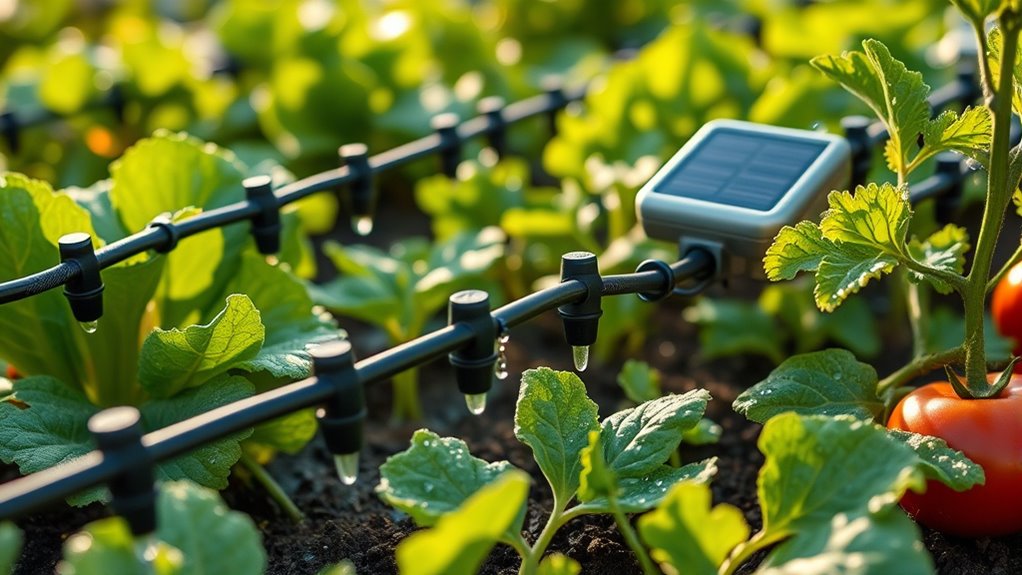
Automated drip irrigation systems have revolutionized how you water your gardens and landscapes by delivering water directly to plant roots with minimal effort. This targeted approach guarantees that each plant receives the right amount of moisture, promoting healthier growth while reducing waste. One of the key advantages of these systems is their ability to monitor and respond to soil moisture levels. Sensors placed in the soil measure moisture content continuously, allowing the system to adjust watering schedules accordingly. This precision prevents overwatering and underwatering, which can stress plants and lead to issues like root rot or drought stress.
By maintaining ideal soil moisture, automated drip systems help you conserve water effectively. When the soil is adequately moist, the system pauses, avoiding unnecessary water runoff or wastage. Conversely, when moisture levels drop, the system activates to replenish what’s lost, ensuring plants stay healthy without excess watering. This smart management not only benefits your plants but also contributes greatly to water conservation efforts, especially in regions facing water scarcity. Over time, you’ll notice a marked decrease in your overall water bill, as the system minimizes wasted water compared to traditional sprinklers or manual watering methods.
Maintaining optimal soil moisture reduces water waste and lowers your water bill over time.
Another benefit of these systems is their efficiency and ease of use. Once installed, they operate automatically based on the soil moisture readings and your preset preferences. You can customize watering durations and frequency to suit different plant types or landscape zones, ensuring each area receives tailored care. This level of precision reduces the chance of overwatering, which can leach nutrients from the soil and promote fungal diseases. It also helps maintain consistent soil moisture levels, creating a stable environment for roots to thrive.
Moreover, automated drip irrigation systems are adaptable to various garden sizes and layouts. Whether you have a small vegetable patch or a sprawling landscape, you can design a system that fits your needs. With modern controllers, you can even set different schedules for different zones, further refining water use. This flexibility makes it easier to manage water resources efficiently, especially during dry seasons or drought conditions. Additionally, understanding soil moisture and how it impacts plant health is crucial for optimizing irrigation practices and ensuring sustainable water use.
Frequently Asked Questions
How Much Does a Drip Irrigation System Typically Cost?
A drip irrigation system usually costs between $100 and $400, depending on size and features. When doing a cost comparison, consider pricing factors like system complexity, brand, and installation needs. You might find basic kits cheaper, while advanced systems with timers and sensors cost more. Investing in the right system can save water and money long-term, so weigh your options carefully before purchasing.
What Maintenance Is Required for Automated Drip Systems?
You need to regularly check your system filter cleaning and emitter inspection to keep it running smoothly. Clear out debris from filters, and inspect emitters for clogs or damage. Test water pressure and replace worn parts promptly. Keep your system in top shape by maintaining these tasks, ensuring consistent watering and avoiding costly repairs. With routine upkeep, your automated drip system delivers precise watering, thriving plants, and a lush garden.
Can These Systems Be Used Indoors or Only Outdoors?
Yes, you can use automated drip irrigation systems indoors for your indoor gardening projects. They help optimize space by providing precise watering, reducing mess and overwatering. Just make certain you select a system designed for indoor use, consider factors like plant type and container size, and set it up near your plants. This way, you keep your indoor space efficient, healthy, and well-maintained with minimal effort.
How Do I Troubleshoot Common System Malfunctions?
When troubleshooting your system, start by checking the system pressure; low pressure can cause uneven watering. Inspect the tubing for blockages or kinks that might restrict flow. Clear any debris or obstructions you find. Confirm the filter is clean and the emitters are working properly. Regularly testing and maintaining these components helps prevent malfunctions, keeping your system running smoothly and efficiently.
Are There Eco-Friendly or Water-Saving Options Available?
Think of your garden as a delicate ecosystem needing just the right amount of water. Yes, eco-friendly alternatives and water-saving technologies exist to help you achieve this balance. You can choose drip emitters with low-flow rates or timers that optimize watering schedules. Installing rain sensors and using reclaimed water further enhances efficiency. These eco-conscious options let you nurture your garden while conserving water and protecting the environment.
Conclusion
By choosing an automated drip irrigation system, you’re investing in efficiency and peace of mind. It takes the guesswork out of watering, ensuring your plants get exactly what they need without wasting resources. Remember, a well-tended garden is a happy garden, and sometimes, the smallest adjustments can make the biggest difference. Don’t wait for problems to crop up—be proactive and let technology do the heavy lifting. After all, an ounce of prevention is worth a pound of cure.