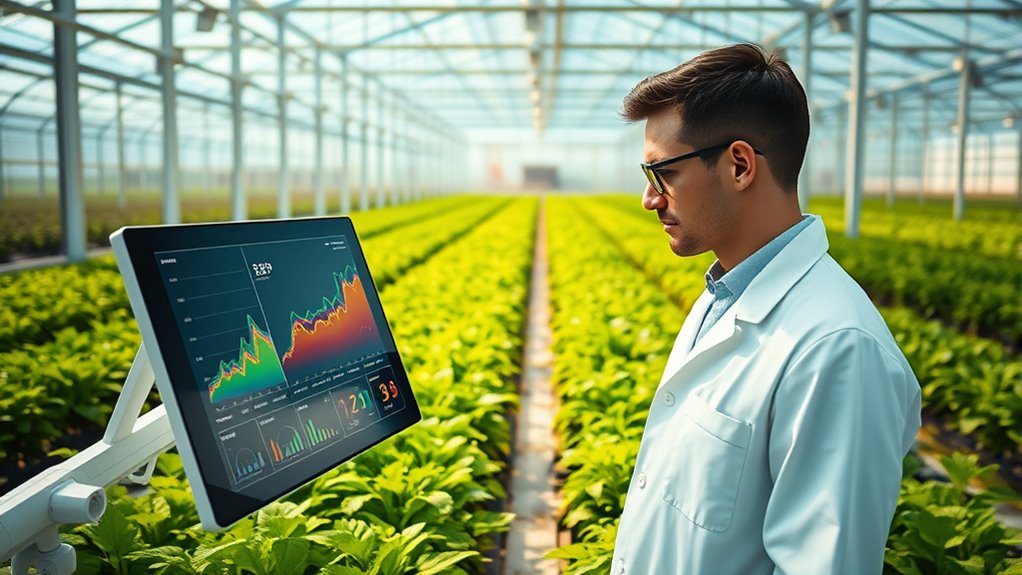

Using big data helps you plan your greenhouse crop schedules more precisely by analyzing environmental variables, weather forecasts, and soil conditions. This information allows you to determine the best planting and harvesting windows, adjust irrigation, and optimize nutrient delivery, reducing waste and increasing yields. With predictive models, you can proactively adapt to changing conditions. Keep exploring how integrating diverse datasets can make your crop management smarter and more efficient.
Key Takeaways
- Analyze environmental and weather data to determine optimal planting and harvesting windows.
- Use predictive models to forecast weather impacts on crop schedules.
- Integrate sensor and image data for precise monitoring of crop growth stages.
- Adjust irrigation and nutrient application timing based on real-time data insights.
- Employ data-driven decision systems to proactively plan and optimize crop timelines.
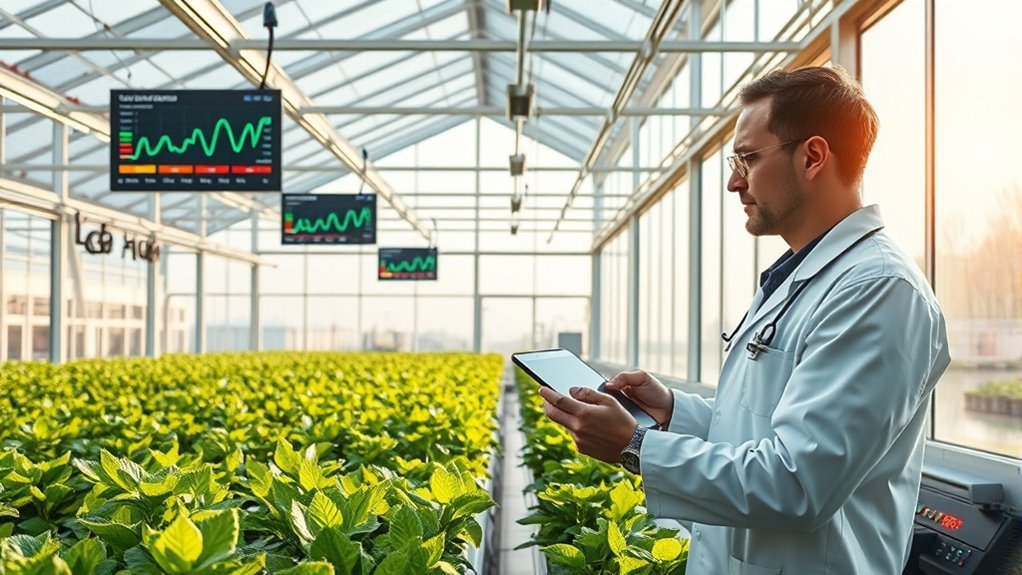
Using big data has revolutionized how greenhouse growers plan their crop schedules, enabling more precise and efficient decision-making. With access to vast amounts of data, you can now tailor planting times, irrigation, and nutrient application more accurately, resulting in healthier plants and higher yields. One of the key advantages is improved plant disease detection. By analyzing data from sensors, images, and environmental monitors, you can identify early signs of disease before symptoms become visible to the naked eye. This proactive approach helps you implement targeted interventions, reducing crop loss and minimizing the use of pesticides. For example, machine learning algorithms can sift through images and sensor data to flag potential infections, allowing you to act swiftly and prevent outbreaks from spreading.
Big data enables early disease detection, targeted interventions, and healthier, higher-yielding crops in greenhouse management.
Energy consumption analysis is another critical aspect facilitated by big data. Greenhouses consume considerable energy for heating, cooling, lighting, and ventilation. By collecting detailed data on energy use patterns, you can identify inefficiencies and enhance your systems accordingly. For instance, analyzing temperature and humidity data alongside energy consumption helps you fine-tune climate controls to maintain ideal growing conditions while reducing costs. You might discover that adjusting lighting schedules or insulation levels can markedly cut energy expenses without sacrificing crop quality. This not only saves money but also lowers your greenhouse’s carbon footprint, aligning with sustainable practices.
Furthermore, integrating data from different sources allows you to develop thorough crop schedules that consider environmental variables, disease risks, and energy efficiency. Predictive models can forecast how weather patterns or pest pressures might impact your crops, enabling you to plan planting and harvesting windows more effectively. This holistic approach ensures you’re not just reacting to problems but actively preventing them. Additionally, by continuously monitoring energy consumption and plant health data, you can adapt your operations in real-time, making your greenhouse more resilient and responsive.
Incorporating big data into your greenhouse management isn’t just about collecting information; it’s about transforming that data into actionable insights. You gain a clearer understanding of the complex interactions within your environment, which empowers you to make smarter decisions. Whether it’s detecting diseases early, reducing energy costs, or optimizing crop schedules, big data provides the tools you need to maximize productivity and sustainability. As a result, you’ll enjoy healthier crops, lower operational costs, and a more environmentally friendly operation. In today’s competitive agricultural landscape, leveraging big data isn’t just an option — it’s a necessity for modern, efficient greenhouse management.
Frequently Asked Questions
How Does Big Data Predict Pest Outbreaks in Greenhouses?
You use big data for pest prediction and outbreak detection by analyzing environmental factors, crop health data, and historical pest patterns. Machine learning models identify early warning signs, like temperature spikes or humidity changes, that signal potential outbreaks. By continuously monitoring these variables, you can act quickly to prevent pest infestations, reducing crop damage and pesticide use. This proactive approach keeps your greenhouse healthier and more productive.
Can Big Data Customize Crop Schedules for Organic Farming?
Yes, big data can customize crop schedules for organic farming by analyzing environmental conditions, soil health, and weather patterns. You can leverage this data to implement sustainable practices, reducing resource use and boosting crop yield optimization. By tailoring planting and harvesting times, you guarantee healthier crops and more efficient operations. This personalized approach helps you meet organic standards while maximizing productivity and maintaining eco-friendly farming methods.
What Are the Main Challenges in Implementing Big Data Solutions?
Think of implementing big data solutions as steering through a maze of tangled vines. Your main challenges include ensuring data privacy, so sensitive info stays safe amid growing concerns, and maintaining data accuracy, like pruning to keep the crop healthy. If you don’t handle these well, you risk flawed insights that could derail your efforts. Overcoming these hurdles requires careful planning, robust security measures, and constant vigilance to keep your data landscape clear and fruitful.
How Does Big Data Integrate With Existing Greenhouse Automation Systems?
You integrate big data with your greenhouse automation systems by connecting sensors that collect real-time data on temperature, humidity, and light. These sensors feed data analytics platforms, allowing you to analyze trends and optimize conditions. You can automate adjustments to watering, heating, and lighting based on insights. Ensuring seamless sensor integration and robust data analytics helps you create a responsive, efficient environment that boosts crop productivity and reduces resource waste.
What Is the Cost-Benefit Analysis of Adopting Big Data Technologies?
You’ll find that adopting big data technologies offers significant cost savings through improved crop yields and resource efficiency. An investment analysis shows upfront costs are offset by reduced waste, optimized watering, and energy use. While initial expenses may seem high, the long-term benefits include better decision-making, increased productivity, and lower operational costs, making it a smart move for sustainable, profitable greenhouse management.
Conclusion
By harnessing big data, you can unbolt hidden patterns that perfectly time your greenhouse crops, turning guesswork into precision. It’s almost like nature and technology collide, revealing insights you never expected. As you analyze weather trends and plant responses, you’ll find yourself surprised at how seamlessly everything aligns. In this coincidence of data and growth, you’ll discover a smarter way to cultivate, making every harvest more predictable and successful than ever before.