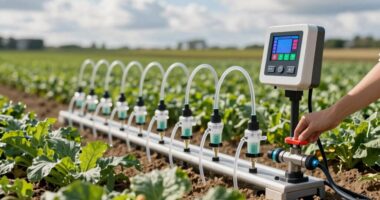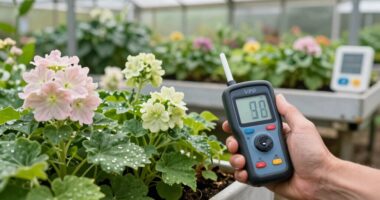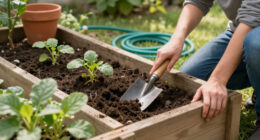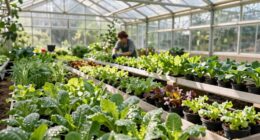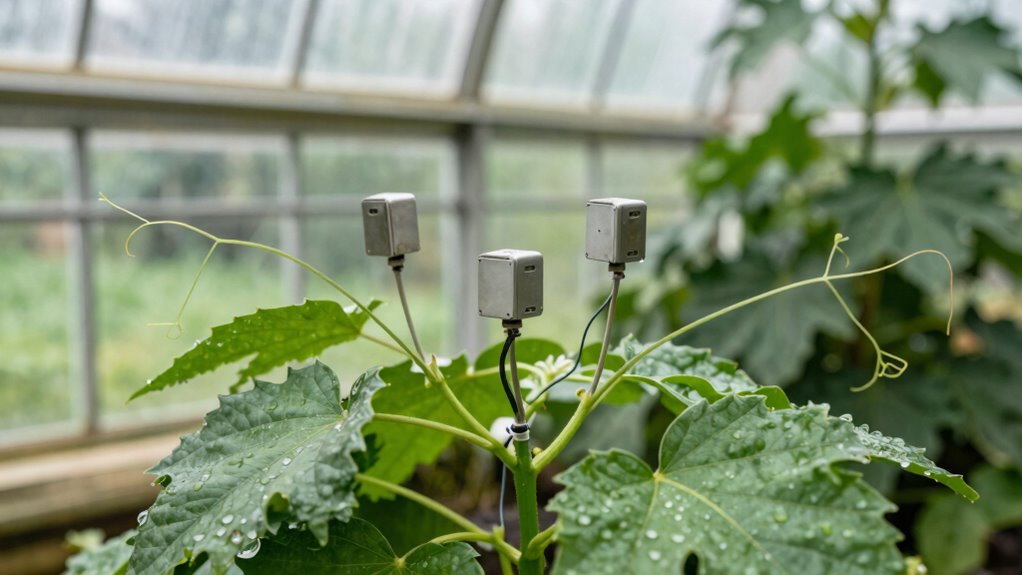
Before investing in fancy greenhouse technology, you should focus on basic sensors that truly matter. Temperature, humidity, and soil moisture sensors provide reliable, real-time data that help you optimize conditions and prevent issues early. They’re straightforward, consistent, and don’t rely on complex systems. By prioritizing these essential tools, you’ll build a strong foundation for healthy plants and efficient management. Keep exploring to discover how these simple sensors can make a big difference in your greenhouse.

Get garden gear delivered free — and shop member deals
- Fast, free delivery on millions of items
- Access to Prime Big Deal Days deals on October 6–7
- Prime Video, Amazon Music and more included
Key Takeaways
- Basic sensors provide essential, reliable data on temperature, humidity, and soil moisture, forming the foundation of effective greenhouse management.
- They enable quick, accurate responses to environmental changes, preventing issues before escalation.
- Simple sensors are cost-effective, reducing resource waste and supporting sustainable operations.
- Overlooking basic sensors risks inaccurate data, leading to poor decision-making and potential crop failure.
- Investing in quality fundamental sensors ensures trustworthiness, forming a resilient system before adding advanced technology.

Greenhouse sensors have become vital tools for optimizing plant growth and guaranteeing efficient resource use. When you’re managing a greenhouse, maintaining the right conditions is essential for plant health, and that’s where reliable sensors come into play. The simplest sensors—those that measure temperature, humidity, and soil moisture—are often overlooked because they seem basic compared to high-tech options. However, these fundamental tools are the backbone of a successful operation. They provide you with the data accuracy needed to make informed decisions and prevent issues before they escalate. For example, a basic soil moisture sensor helps you know exactly when to water, avoiding over- or under-watering, which can damage plant roots or slow growth. Similarly, temperature and humidity sensors help you create an environment that fosters healthy plants, reducing stress and disease susceptibility.
What makes these “before the fancy ones” sensors stand out is their simplicity and reliability. They don’t rely on complex algorithms or cloud-based systems, yet they deliver consistent, accurate readings. When your sensors provide precise data, you can respond quickly to changing conditions, guaranteeing your plants remain in excellent health. Accurate data also prevents unnecessary resource expenditure, saving you money and reducing waste. For instance, if your temperature sensor detects a sudden drop, you can activate heating systems immediately, avoiding frost damage. Conversely, if humidity levels are too high, you can adjust ventilation to prevent mold or mildew. These straightforward sensors empower you to fine-tune your environment effectively, leading to healthier plants and higher yields.
Many growers overlook these basic sensors because they assume that more advanced technology is always better. But remember, the foundation of effective greenhouse management is accurate data collection, which is best achieved through reliable, fundamental sensors. Without it, even the most sophisticated systems can lead you astray. Investing in high-quality, basic sensors ensures you get trustworthy insights at every stage of plant growth. They are the first line of defense in maintaining plant health and maximizing resource use. When you understand the importance of solid, accurate data from the start, you can build a more effective, resilient greenhouse system—one that supports healthy plants and maximizes productivity. A good understanding of greenhouse sensors ensures you are making the most of your setup from the ground up.
As an affiliate, we earn on qualifying purchases.
Frequently Asked Questions
How Do Basic Sensors Improve Greenhouse Plant Health?
Basic sensors improve your greenhouse plant health by providing real-time data on essential factors like temperature, humidity, and soil moisture, which directly affect plant growth. By regularly calibrating these sensors, you guarantee accurate readings, helping you make informed decisions about watering, ventilation, and lighting. This proactive approach minimizes stress on plants, promotes healthy growth, and boosts yields, all while keeping your system simple and cost-effective.
Are Affordable Sensors Reliable for Long-Term Use?
Affordable sensors can be reliable for long-term use if you regularly calibrate them and monitor data accuracy. While some skeptics believe cheaper sensors lack durability, proper maintenance guarantees they provide consistent readings over time. Studies show that with correct calibration and calibration checks, budget-friendly sensors can effectively track environmental conditions, helping you manage your greenhouse efficiently without breaking the bank.
Can Simple Sensors Detect All Environmental Issues?
Simple sensors can’t detect all environmental issues, but with proper sensor calibration, they can effectively monitor key conditions like temperature, humidity, and soil moisture. You need to regularly check data accuracy to guarantee reliable readings. While they may miss some complex problems, these sensors serve well for basic environmental monitoring, helping you maintain ideal greenhouse conditions without the high costs of advanced systems.
What Maintenance Do Basic Sensors Require?
About 80% of sensor failures are due to poor maintenance. You need to regularly check sensor calibration to guarantee accuracy, especially if readings drift over time. Battery life is essential; replace or recharge batteries as needed to prevent data gaps. Keep sensors clean and protected from dirt or moisture. Routine inspections and timely calibration help maintain reliable performance, saving you headaches and costly replacements down the line.
How Do Cost-Effective Sensors Compare to Advanced Models?
Cost-effective sensors typically offer decent data accuracy but may require frequent calibration to maintain their reliability. Advanced models, on the other hand, often come with built-in calibration features and higher precision, reducing maintenance needs. While budget sensors are suitable for basic monitoring, investing in more sophisticated sensors guarantees consistent data quality, ultimately saving you time and effort in calibration and troubleshooting.
Conclusion
By focusing on the essential greenhouse sensors, you can make smarter decisions and improve your crop yields. For example, a small-scale farmer used basic temperature and humidity sensors to optimize watering schedules, reducing water waste and boosting plant health. Remember, investing in the right sensors that truly matter can save you time, money, and effort. Don’t get caught up in fancy gadgets—prioritize what genuinely enhances your greenhouse’s success.
Fall Picks
fall essentials
As an affiliate, we earn on qualifying purchases.