Humidifiers, foggers, and misters can be valuable tools in your greenhouse if you use them correctly. They help maintain ideal humidity, support healthy plant growth, and even assist pest control when managed properly. However, overusing or poorly maintaining these devices can lead to problems like mold, pest issues, or root damage. To get the most benefits, you need to choose the right system and keep it well-maintained. Keep exploring to discover how to maximize their use effectively.

Get garden gear delivered free with Prime
- Fast, free delivery on millions of items
- Prime Video, Amazon Music and more included
- Member-only deals all year
Key Takeaways
- Proper selection and placement of devices ensure even humidity distribution without promoting pests or mold.
- Over-humidification can lead to fungal diseases, pests, and waterlogging, emphasizing the need for careful control.
- Different device types (humidifiers, foggers, misters) offer specific benefits and environmental impacts, influencing choice.
- Regular maintenance and monitoring are crucial to prevent clogs, mineral buildup, and ensure safe, effective operation.
- Humidifiers and foggers are valuable tools but must complement good horticultural practices for optimal greenhouse health.
As an affiliate, we earn on qualifying purchases.
Why Humidity Control Matters in Your Greenhouse

Have you ever wondered how humidity levels impact your greenhouse’s plants? Proper humidity control is essential for climate adaptation, helping your plants thrive in diverse conditions. When humidity is too low, plants can become stressed, leading to poor growth and increased vulnerability to pests. Conversely, excessive humidity creates a perfect environment for mold, fungi, and pests to flourish. By maintaining ideal humidity, you improve pest management, reducing the need for chemical interventions. It also helps stabilize temperature fluctuations, supporting healthier plants overall. Additionally, utilizing luxury lifestyle products like high-end humidifiers can enhance your greenhouse setup for optimal climate control. Recognizing the importance of humidity regulation can help you make informed decisions to protect your plants and reduce reliance on chemical treatments. Properly managing humidity levels is crucial for creating an ideal environment that promotes plant vigor and resilience. Understanding the biological differences between male and female plants can also influence your humidity management strategies, ensuring optimal growth conditions for each. Maintaining appropriate humidity levels can also prevent issues like plant stress and optimize photosynthesis, further supporting robust plant development. Ultimately, humidity control isn’t just about plant health—it’s about maximizing your entire greenhouse’s climate for successful growth.
When and Why to Use Humidifiers, Foggers, or Misters

Using humidifiers, foggers, or misters becomes essential when your greenhouse’s humidity levels drop below the ideal range, especially during dry seasons or in environments with low natural moisture. Maintaining proper humidity promotes healthy plant growth and helps prevent pests that thrive in dry conditions. You should activate these devices when you notice wilting, slow growth, or increased pest activity. Here’s a quick guide:
| Humidity Level | When to Use Humidifiers, Foggers, or Misters |
|---|---|
| Below 50% | To boost moisture for plant health and pest prevention |
| 50-60% | Maintain best growth conditions |
| Above 60% | Reduce humidity to prevent mold or disease |
| During dry seasons | Keep humidity consistent for plant well-being |
| When pests are present | Use to disrupt pest habitats |
Additionally, understanding the essential DIY tools and safety tips can help you set up and maintain these devices effectively. Proper humidity management can significantly impact plant vitality and overall greenhouse success, especially when considering factors like color accuracy and environmental control. Regularly monitoring humidity levels with reliable humidity sensors ensures optimal conditions for your plants.
Humidifiers, Foggers, and Misters: What’s the Difference?

Humidifiers, Foggers, and Misters: What’s the Difference?
Understanding the differences between humidifiers, foggers, and misters is essential for selecting the right tool to manage your greenhouse’s humidity. Humidifiers typically release warm or cool vapor to increase humidity gradually, supporting plant nutrition by maintaining ideal moisture levels. Foggers produce a fine, cooled mist that creates a dense fog, which can enhance humidity quickly and evenly, aiding plant growth and preventing pest outbreaks by reducing dry conditions. Misters deliver larger water droplets, providing a quick boost in humidity with less coverage but more targeted use. Each device’s mist size and delivery method influence plant nutrition and pest control strategies. Choosing the right equipment depends on your specific needs, ensuring your plants stay healthy and pest-free without over- or under-humidifying. Additionally, understanding the climate control process can help optimize your greenhouse environment for plant health. Properly managing humidity levels with the appropriate device can also contribute to disease prevention, making your greenhouse more productive and resilient.
How to Choose the Best Humidification Device for Your Greenhouse
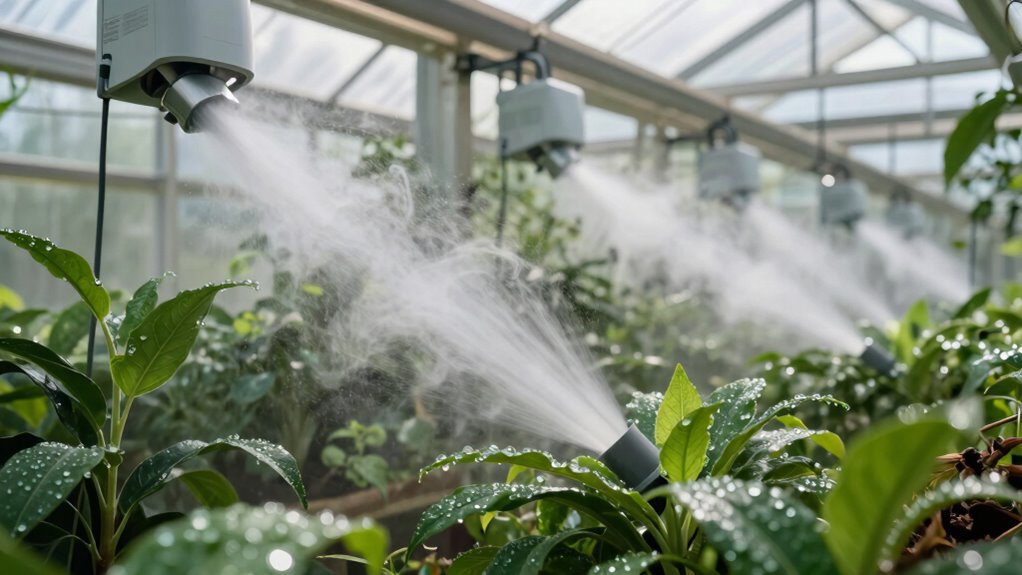
When choosing a humidification device, you need to take into account the different types and how they function to meet your greenhouse’s needs. Factors like size, plant types, and environmental conditions will influence your decision. Understanding these points helps you pick the most effective and efficient option for your setup. Incorporating smart thermostat setup techniques can also optimize humidity levels and improve overall climate control in your greenhouse. Additionally, considering the metabolic health of your plants can ensure they thrive under the right humidity conditions. Exploring sound healing science concepts can even inspire innovative ways to maintain a balanced environment, promoting healthier plant growth. Recognizing the role of body-based methods in environmental management can further enhance your greenhouse’s climate stability. A thorough understanding of plant physiology can help you tailor humidity levels to support optimal growth stages.
Humidifier Types and Functions
Choosing the right humidifier for your greenhouse depends on understanding the different types available and how each functions. Historically, humidifier technology has evolved from simple steam or wick devices to advanced systems, with environmental impacts shaping their design. Evaporative humidifiers use natural evaporation, drawing air through a moist wick or pad, making them energy-efficient and eco-friendly. Ultrasonic humidifiers generate fine mist using high-frequency vibrations, providing precise humidity control with minimal energy use. Spray or atomizer humidifiers produce a mist by forcing water through a nozzle, suitable for rapid humidity adjustments. Each type offers distinct advantages and environmental considerations, so understanding their functions helps you select the best device for your specific needs, ensuring ideal plant growth while minimizing ecological footprints. Additionally, understanding environmental impacts of different humidifier technologies can help you make more sustainable choices in your greenhouse management. Incorporating energy-efficient designs can further reduce your environmental footprint and operational costs. For example, selecting humidifiers that utilize evaporative technology can significantly cut down on power consumption. When selecting a humidifier, considering sustainable practices can lead to more environmentally responsible greenhouse operations. Being aware of the different humidifier types and their respective benefits can help optimize your greenhouse environment efficiently.
Factors Influencing Selection
Selecting the right humidification device for your greenhouse depends on evaluating several key factors. First, consider your main goals, such as supporting plant propagation or pest prevention. The size of your greenhouse impacts the type and capacity of the device you need. Your budget also plays a role; some systems are more cost-effective but might require more maintenance. Additionally, the humidity control precision is vital for delicate processes like propagation. Incorporating inclusive casting and diverse plant needs can also influence your choice of equipment to ensure all plant types are adequately supported. Key factors include: – Greenhouse size and layout – Specific plant requirements and growth stage – Budget constraints and maintenance needs – Desired humidity control accuracy – Compatibility with existing ventilation and watering systems
How to Set Up and Maintain Your Humidification System
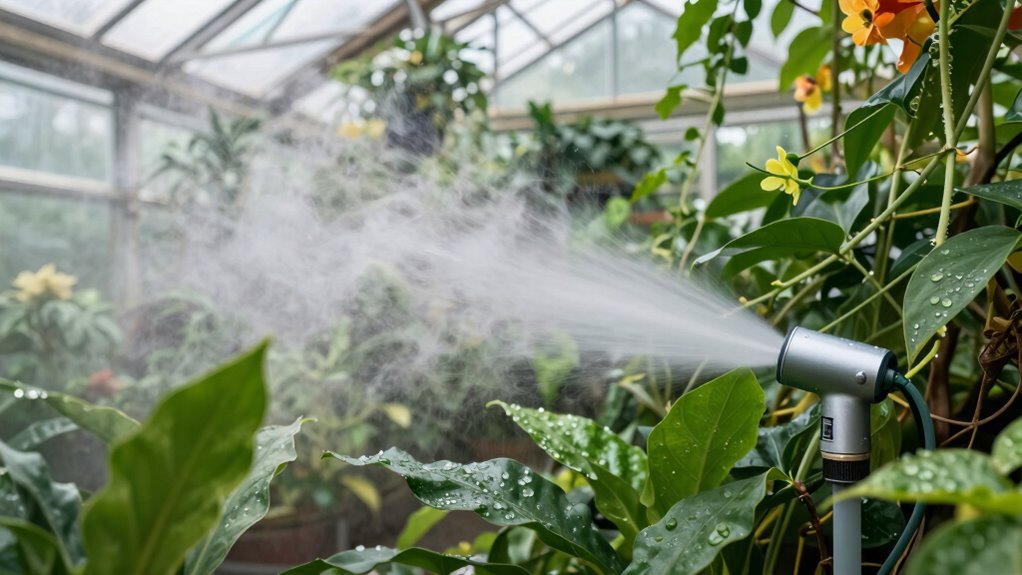
Setting up your humidification system correctly is essential for ensuring ideal performance and longevity. Start by positioning your humidifier, fogger, or mister where it can evenly distribute moisture without creating excess plant nutrient buildup or pest issues. Regularly check and clean filters and nozzles to prevent clogs that hinder performance. Adjust humidity levels based on plant needs, avoiding over-humidification that could promote pests. Maintaining proper airflow to prevent mold and fungal growth, which can threaten plant health, is also critical. Proper humidity levels directly influence plant health and growth, making it important to monitor and adjust accordingly. Use the table below to keep your system efficient:
| Step | Tip |
|---|---|
| Placement | Avoid direct contact with plants |
| Calibration | Regularly verify humidity levels |
| Cleaning | Weekly cleaning of nozzles and filters |
| Monitoring | Use sensors for consistent humidity control |
| Pest prevention | Maintain cleanliness to deter pests, and consider using humidifier technology that helps control environmental conditions more precisely. |
Common Mistakes to Avoid When Humidifying Your Greenhouse

Failing to pay attention to proper humidification practices can lead to serious issues in your greenhouse. Overwatering issues can cause plant diseases and root rot, while excessive humidity may attract pests. To avoid these problems, steer clear of common mistakes:
- Over-humidifying, which creates overly moist conditions
- Ignoring humidity levels and relying solely on guesswork
- Using inconsistent or poorly maintained equipment
- Not monitoring airflow, leading to stagnant, damp air
- Overwatering plants, increasing humidity beyond ideal levels
Troubleshooting Humidification Problems in Your Greenhouse

When your greenhouse isn’t humidifying properly, it’s important to identify common malfunctions in your equipment. You might need to adjust humidity levels or fix issues like clogged nozzles or faulty sensors. Addressing these problems promptly helps maintain a stable environment for your plants.
Common Humidifier Malfunctions
Humidifiers in your greenhouse can sometimes encounter issues that disrupt proper moisture levels, making troubleshooting essential. Common malfunctions include clogs, electrical failures, or mineral buildup, which can hinder fogger operation. These problems not only affect humidity but also pose safety concerns if not addressed. Regular fogger maintenance helps prevent issues, guaranteeing safe and efficient operation. When troubleshooting, keep these points in mind:
- Check for mineral deposits or clogs in nozzles
- Inspect power connections for damage or loose wiring
- Verify the water supply isn’t restricted
- Ensure proper fogger safety protocols are followed
- Clean and descale components regularly to prevent buildup
Addressing these issues promptly maintains consistent humidity and promotes safe, reliable humidifier performance.
Adjusting Humidity Levels
To maintain ideal humidity levels in your greenhouse, it’s vital to monitor and adjust your humidification system regularly. Plant transpiration influences humidity, so observe how your plants respond and tweak your system accordingly. Humidity sensors are essential tools—they provide real-time data to help you set precise levels. If the humidity is too low, increase misting duration or frequency; if it’s too high, reduce them. Remember, fluctuations can occur due to temperature changes or ventilation adjustments. Regularly calibrate your humidity sensors to guarantee accuracy. Keep an eye on plant transpiration rates, as they directly impact humidity needs. Consistent monitoring and fine-tuning help create a stable environment, promoting healthy plant growth and preventing issues caused by overly dry or humid conditions.
Do Humidifiers, Foggers, and Misters Really Boost Plant Health? The Evidence
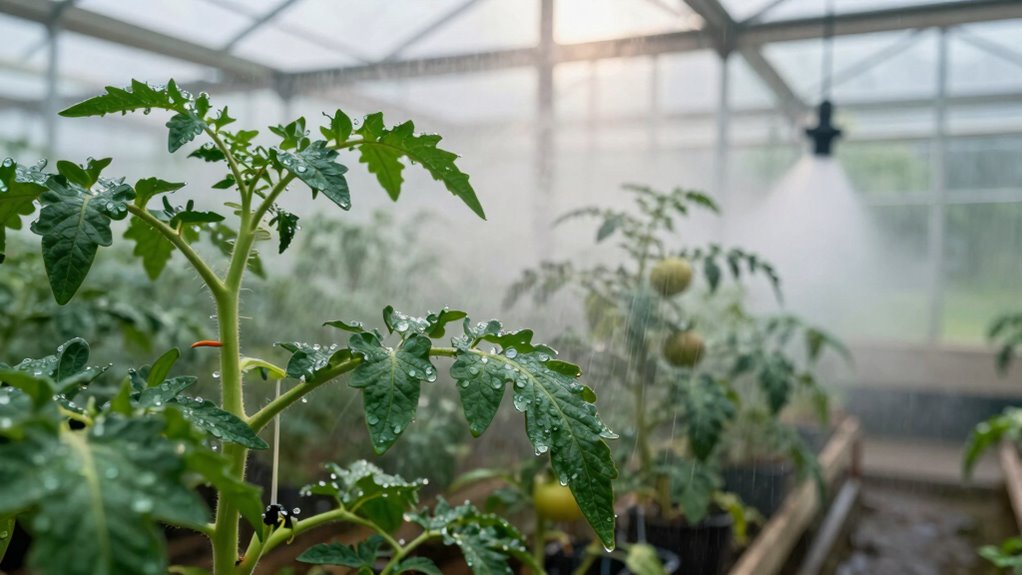
Although many gardeners swear by humidifiers, foggers, and misters to improve plant health, the scientific evidence remains mixed. These tools can temporarily boost humidity, which might support plant nutrient uptake and reduce stress. However, their impact on overall plant health isn’t guaranteed and depends on proper use.
Consider these points:
- Increased humidity can promote healthy growth but may also foster mold or fungal diseases.
- Foggers can improve plant nutrient absorption when used correctly.
- Excess moisture might attract pests, undermining pest control efforts.
- Overuse can lead to waterlogged roots, harming plants.
- Proper calibration is essential to balance benefits with potential risks.
Ultimately, these devices can help, but they aren’t a substitute for good horticultural practices.
Frequently Asked Questions
Can Humidifiers Spread Mold or Fungi in the Greenhouse?
Humidifiers can spread mold or fungi if you don’t practice mold prevention. Excess humidity creates a perfect environment for fungal growth, especially if you don’t maintain your equipment properly. To prevent this, regularly clean and disinfect your humidifiers, control humidity levels, and guarantee good airflow. By doing so, you reduce the risk of mold and fungal growth, keeping your greenhouse healthier and more productive.
How Energy-Efficient Are Foggers Compared to Other Humidification Methods?
Think of foggers as the sleek sports cars of greenhouse humidification—they’re quite energy-efficient compared to traditional methods. Foggers use pressurized water to create fine mist, which cools and humidifies quickly, saving energy. When considering cost comparison and energy savings, foggers typically consume less power than steam or evaporative systems, making them a smart choice for reducing operational costs while maintaining ideal humidity levels efficiently.
Are There Specific Plants That Prefer Misting Over Other Humidity Methods?
You’ll find that certain plants, like orchids and ferns, prefer misting over other humidity methods because it closely mimics their natural environment. Misting provides gentle plant hydration, preventing overwatering while maintaining moisture levels. If you notice your plants thrive with regular misting, it’s likely their misting preferences make this method perfect. Pay attention to their response, as some plants may need alternative humidity techniques for the best health.
How Often Should I Clean or Replace My Humidification Devices?
You should clean your humidification devices at least once a week to prevent mold and mineral buildup that could turn your lush greenhouse into a swamp of bacteria. Replace filters and parts according to the manufacturer’s replacement schedules—usually every 6-12 months. Skipping device maintenance risks damaging your equipment and jeopardizing plant health. Stay vigilant, and your devices will keep your greenhouse thriving, not turning into a forgotten swamp!
Can Humidifiers Help Control Pests in the Greenhouse Environment?
Humidifiers can help control pests in your greenhouse by maintaining ideal plant health and humidity balance. When humidity levels are properly regulated, it becomes harder for pests like spider mites and aphids to thrive, as they prefer dry environments. By consistently using humidifiers, you create a less hospitable environment for pests, supporting healthier plants and reducing the need for chemical pest control methods.
Conclusion
In the end, understanding the differences and proper use of humidifiers, foggers, and misters can truly transform your greenhouse. While some claim these devices boost plant health effortlessly, the real truth lies in careful selection, correct setup, and consistent maintenance. When you approach humidity control thoughtfully, you’ll create an environment that nurtures your plants’ growth, proving that the right tools, used wisely, make all the difference.
Fall yard work Picks
leaf blowers
As an affiliate, we earn on qualifying purchases.