Using robots for planting and harvesting in greenhouses can dramatically boost your efficiency and precision. They cut labor costs, reduce errors, and work continuously to increase productivity. These adaptable machines can handle various crops and tasks, from planting seedlings to picking ripe fruits. Sensors and AI help them assess plant health and make real-time decisions. By incorporating automation, you’ll create resilient, scalable operations ready to meet growing demand—discover more about how these innovations can transform your greenhouse.
Key Takeaways
- Robots automate planting and harvesting, reducing labor costs and increasing efficiency in greenhouse operations.
- They adapt to various plant types and growth stages, ensuring precise and tailored tasks.
- Robotic systems enhance consistency and accuracy, minimizing waste and meeting quality standards.
- Continuous technological advancements improve robot intelligence, making them more adaptable and productive over time.
- Scalable robotic solutions future-proof greenhouses, supporting increased demand and operational resilience.
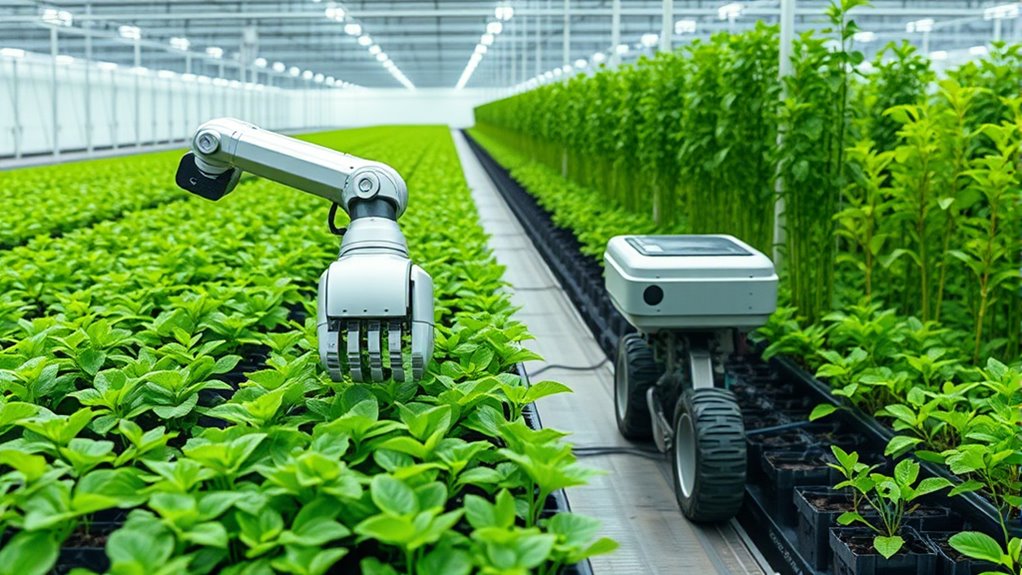
As greenhouses become more automated, robots are transforming the way plants are planted and harvested. You’ll notice that this shift enhances automation efficiency, allowing tasks that once took hours to be completed in a fraction of the time. These robots are designed to streamline operations, reducing labor costs and minimizing human error. Their ability to work tirelessly around the clock means productivity can skyrocket, guaranteeing your greenhouse operates at ideal levels. The integration of robotic systems means you can focus more on strategic planning and less on manual labor, knowing that your automation setup is working reliably and consistently.
Robots boost greenhouse efficiency by reducing labor, increasing speed, and ensuring consistent, reliable automation around the clock.
One of the key advantages of these robots is their remarkable adaptability. They’re built to handle a wide variety of tasks across different plant types and growth stages. Whether you’re planting delicate seedlings or harvesting mature fruits, these machines can be configured to suit your specific needs. Their adaptability extends to navigating complex greenhouse layouts, avoiding obstacles, and adjusting their actions based on real-time data. This flexibility ensures that your workflow remains smooth—even if you need to change crop varieties or update your planting schedule. Robots equipped with sensors and AI can assess plant health, detect ripeness, and make precise movements, which greatly improves overall productivity and output quality. Additionally, the use of preppy dog names as a creative analogy highlights the importance of selecting the right tools and names to match specific tasks or personalities, much like choosing appropriate robot functions for different crops.
You’ll find that automation efficiency isn’t just about speed; it’s also about consistency. Robots perform repetitive tasks with a level of precision that humans can rarely match. This consistency reduces waste and ensures uniformity across your crops, which is vital for meeting quality standards and customer expectations. With robots handling routine planting and harvesting, you free up human workers for more complex, value-added activities like crop management and troubleshooting. This collaboration between man and machine maximizes your operational efficiency and creates a more resilient and scalable greenhouse environment.
Furthermore, these robotic systems are continually evolving. Advances in machine learning and sensor technology mean that your robots will become smarter over time, further boosting their adaptability and efficiency. As you invest in these innovations, you’ll notice an increase in your greenhouse’s overall productivity and a reduction in labor-intensive tasks. This ongoing improvement guarantees that your greenhouse remains competitive in a rapidly changing industry. Essentially, embracing robotic automation transforms your greenhouse into a highly efficient, adaptable, and future-ready operation, allowing you to meet growing demand with precision and confidence.
Frequently Asked Questions
What Are the Initial Costs of Implementing Robotic Systems?
The initial costs of implementing robotic systems can vary widely, often ranging from $50,000 to over $200,000 depending on the complexity and scale. You should conduct a thorough cost analysis to understand expenses like equipment, installation, and training. Explore funding options such as grants, loans, or leasing programs to help offset these costs. Planning carefully guarantees you maximize investment benefits while managing startup expenses effectively.
How Do Robots Adapt to Different Greenhouse Crops?
Think of robots as chameleons, easily changing colors to match their environment. They adapt to different greenhouse crops through advanced sensors and programming, showcasing robotic flexibility. This allows them to handle crop diversity efficiently, whether it’s delicate flowers or sturdy vegetables. By customizing their actions, robots optimize growth and harvest, ensuring each plant receives tailored care, making your greenhouse a versatile, thriving ecosystem.
What Maintenance Is Required for Robotic Planting and Harvesting Units?
You need to regularly perform robot calibration to guarantee precise planting and harvesting. Keep the software updated to improve functionality and fix bugs. Check sensors and mechanical parts for wear and tear, replacing any damaged components promptly. Regular cleaning prevents dirt buildup that can affect performance. Schedule routine inspections to identify issues early, and follow manufacturer guidelines for maintenance intervals. Staying proactive keeps your robotic units running smoothly and efficiently.
Are There Safety Concerns for Workers Around Agricultural Robots?
You should be aware of safety concerns around agricultural robots, especially regarding worker safety and robot malfunctions. While these robots are designed with safety features, there’s always a risk if they malfunction or if workers aren’t cautious. Stay alert, follow safety protocols, and confirm robots are regularly maintained. Proper training and safety barriers can help prevent accidents, keeping everyone safe while working alongside these advanced machines.
How Do Robots Handle Unexpected Obstacles During Operation?
Imagine your robot is a savvy explorer, traversing unknown terrain. When it encounters unexpected obstacles, it relies on advanced sensor integration to detect and assess the surprise. Then, it skillfully adjusts its path through obstacle navigation algorithms, ensuring smooth operation. This real-time adaptability keeps the robot safe and efficient, even when faced with surprises, making sure your greenhouse runs seamlessly without interruptions.
Conclusion
As you embrace robotic technology in greenhouses, you’ll find it’s like having a steady hand guiding your crops to flourish. These machines turn your greenhouse into a well-oiled garden orchestra, where planting and harvesting happen seamlessly. With robots working tirelessly, you can focus on nurturing your plants’ growth, knowing that automation is your reliable partner. Together, you and your robots create a symphony of productivity that promises a bountiful future.