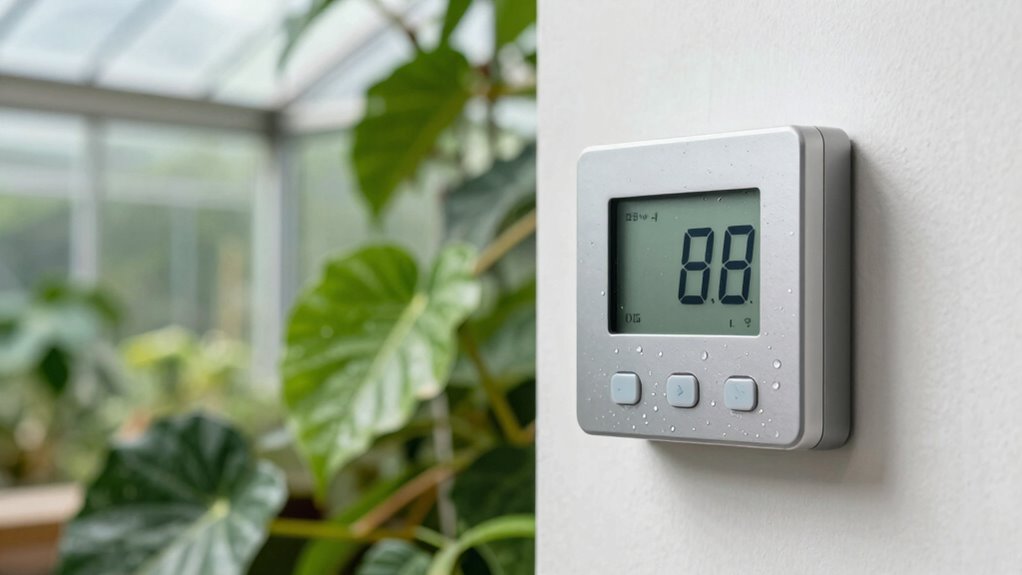
Relying only on a thermostat to control your greenhouse heating is a mistake that can make your system less effective. It ignores critical factors like soil moisture and pest conditions, which directly influence plant health and growth. This narrow focus can lead to uneven temperatures, stressed plants, and increased pest problems. To truly optimize your greenhouse environment, you need to take into account all these elements together. Keep going to discover how integrating sensors can boost your plant’s success.

Get garden gear delivered free with Prime
- Fast, free delivery on millions of items
- Prime Video, Amazon Music and more included
- Member-only deals all year
Key Takeaways
- Relying solely on thermostats ignores soil moisture and pest conditions affecting plant health.
- Fixed temperature settings can cause uneven growth and stress in greenhouse plants.
- Ignoring soil moisture leads to improper watering, reducing heating efficiency.
- Overlooking pest activity allows infestations to worsen, undermining environmental control efforts.
- A narrow focus on temperature prevents a holistic approach, decreasing overall greenhouse productivity.
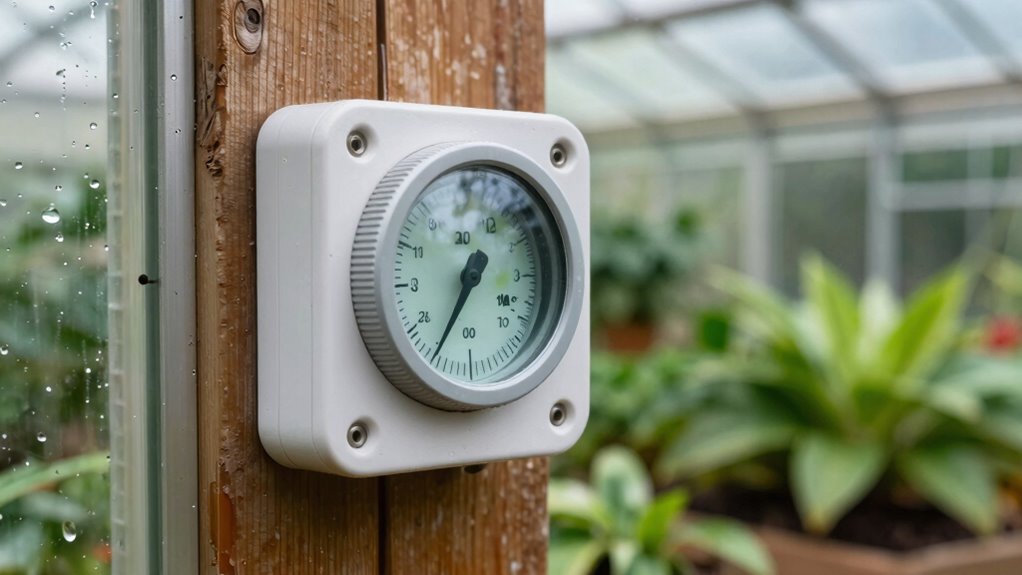
Greenhouse heating systems are essential for maintaining ideal plant growth, but a common mistake many growers make is relying too heavily on thermostats without understanding their limitations. While thermostats help regulate temperature, they don’t account for other critical factors like soil moisture and pest control, which are equally vital for healthy plants. When you depend solely on temperature readings, you might overlook how soil moisture levels influence plant health or how pests thrive in certain conditions. Ignoring these aspects can make your heating system less effective, leading to uneven growth, increased pest problems, and ultimately, reduced yields.
Relying only on thermostats overlooks soil moisture and pests, risking uneven growth and lower yields.
You might set your thermostat to a specific temperature, believing it will keep your greenhouse conditions perfect. However, if the soil becomes too dry or too wet, plants can suffer regardless of the air temperature. Soil moisture directly impacts nutrient uptake; dry soil can stress plants, making them vulnerable to pests and diseases. Conversely, overly moist soil can promote fungal growth and root rot. Without monitoring soil moisture levels, your heating system can’t compensate for these fluctuations, which means your plants won’t grow as healthily as they could. You need to integrate soil moisture sensors into your system so you can adjust watering and heating accordingly. This helps maintain a stable environment, preventing stress that pests often exploit. Soil moisture management is a crucial aspect of comprehensive greenhouse care that many overlook.
Pest control is another aspect that thermostats alone won’t manage. Many pests prefer specific temperature and humidity ranges, and if your heating system is set to a fixed temperature without considering pest activity, you could inadvertently create conditions conducive to infestations. For example, certain insects thrive in warm, humid environments. If your thermostat keeps the temperature steady without adjusting for pest presence, you might see outbreaks that harm your crops. Incorporating pest monitoring alongside temperature controls allows you to fine-tune your environment to make it less attractive to pests. This reduces the need for chemical interventions and promotes healthier plants. Additionally, understanding pest activity patterns helps in developing effective integrated pest management strategies. Regularly adjusting your environment based on pest behavior can significantly improve pest control efforts.
In essence, relying solely on thermostats oversimplifies the complex environment of a greenhouse. To maximize your heating system, you need to take into account soil moisture and pest activity actively. Regularly checking soil conditions and pest levels enables you to make smarter decisions about heating, watering, and pest control strategies. Incorporating environmental monitoring tools and practices into your routine can greatly enhance your ability to maintain optimal conditions. Understanding the full scope of environmental factors allows you to respond more effectively to changing conditions. When you understand these interconnected factors, your system becomes more responsive and effective, leading to healthier plants, better yields, and fewer pest-related setbacks. Remember, a thorough approach that combines temperature regulation with moisture and pest management is key to a thriving greenhouse.
As an affiliate, we earn on qualifying purchases.
Frequently Asked Questions
How Do I Know if My Thermostat Is Faulty?
You can tell if your thermostat is faulty by checking if it responds accurately to temperature changes. Guarantee proper thermostat installation, as poor setup can cause inaccuracies. Test the device by setting a specific temperature and observing if the heating system activates accordingly. Faulty temperature sensors inside the thermostat may give incorrect readings, leading to ineffective heating. Replacing or recalibrating the thermostat often resolves these issues and restores proper function.
What’s the Ideal Temperature Range for Greenhouse Heating?
Imagine a cozy cocoon where your plants thrive. The perfect greenhouse temperature range is between 65-75°F, fostering ideal plant growth while minimizing energy consumption. Staying within this range guarantees your plants stay healthy and vigorous without wasting energy. Too hot, and you risk stress; too cold, and growth stalls. Keep your thermostat steady, and your greenhouse becomes a haven of balanced warmth and efficient energy use.
Can Multiple Thermostats Improve Heating Efficiency?
Yes, using multiple thermostats can boost heating efficiency in your greenhouse. They allow you to better control temperature zones, which helps optimize humidity control and prevents overheating. Combine this with proper insulation strategies to minimize heat loss, ensuring consistent warmth and energy savings. By tailoring heat distribution, you create a more stable environment for your plants, reducing energy waste and enhancing overall greenhouse productivity.
How Often Should I Calibrate My Greenhouse Thermostat?
You should calibrate your greenhouse thermostat at least once a year, especially if you use solar heating or humidity control systems. Regular calibration guarantees accurate temperature readings, which helps maintain ideal growing conditions. During calibration, check the thermostat against a reliable thermometer. If you notice temperature discrepancies, adjust accordingly. Proper calibration prevents overheating or underheating, supporting healthy plant growth and energy efficiency, especially when managing humidity and solar heat variations.
Are Digital Thermostats Better Than Analog Ones?
Digital thermostats are generally better than analog ones because they incorporate smart technology, offering precise temperature control and programming options. These features help you optimize your greenhouse heating, leading to significant energy savings. With digital thermostats, you can set schedules, monitor conditions remotely, and adjust settings easily. This increased accuracy and automation guarantee your plants stay in ideal conditions while reducing energy waste, making digital options a smarter choice overall.
Conclusion
By avoiding the thermostat mistake, you’re tending your greenhouse like a gentle gardener, nurturing growth instead of letting it wither. Picture your heating system as a steady heartbeat, pulsing life into every corner. When you set it right, warmth flows like sunlight through a window—constant, comforting, and essential. Master this, and your plants will thrive as if basking in a perfect, unwavering summer day—an enduring symbol of your attentive care.
Halloween Picks
halloween
As an affiliate, we earn on qualifying purchases.