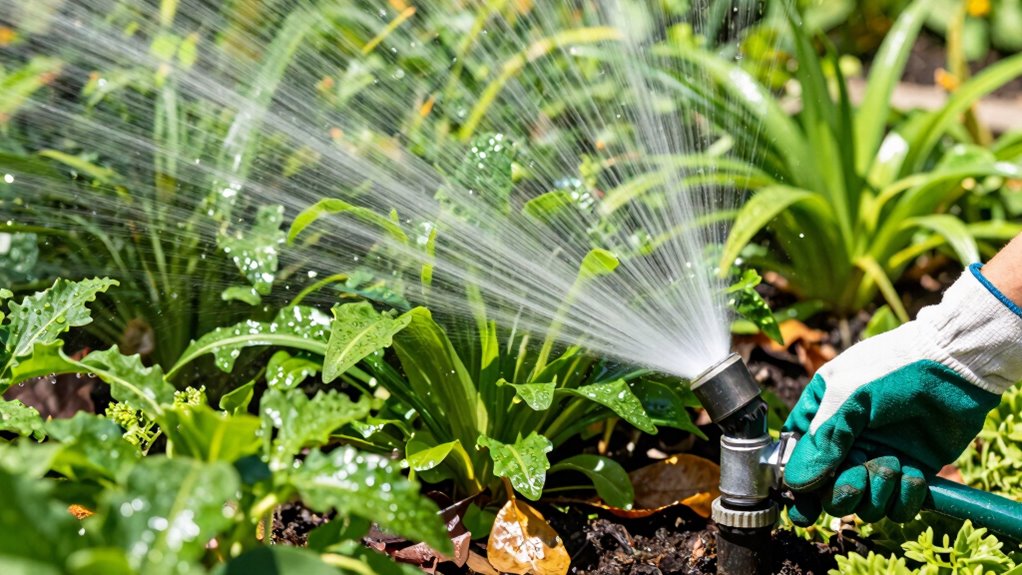

A mid-season checkup is essential to guarantee your irrigation system stays efficient and saves water. Regular inspections help you catch leaks, clogs, or uneven spray patterns early, preventing costly repairs and water wastage. It also keeps your landscape healthy by providing proper watering. By staying on top of maintenance, you’ll keep your system working smoothly all season long. Keep going to discover simple steps and expert tips to keep your irrigation system in top shape.

Get garden gear delivered free with Prime
- Fast, free delivery on millions of items
- Prime Video, Amazon Music and more included
- Member-only deals all year
Key Takeaways
- Early detection of leaks, clogs, or damage prevents water waste and costly repairs.
- Ensures even water distribution, promoting healthy lawn and garden growth.
- Maintains system efficiency, reducing water bills through proper calibration and cleaning.
- Addresses minor issues before they escalate into major system failures.
- Supports eco-friendly watering practices with optimal system performance and digital controls.
As an affiliate, we earn on qualifying purchases.
Why Regular Mid-Season Checks Save Water and Money
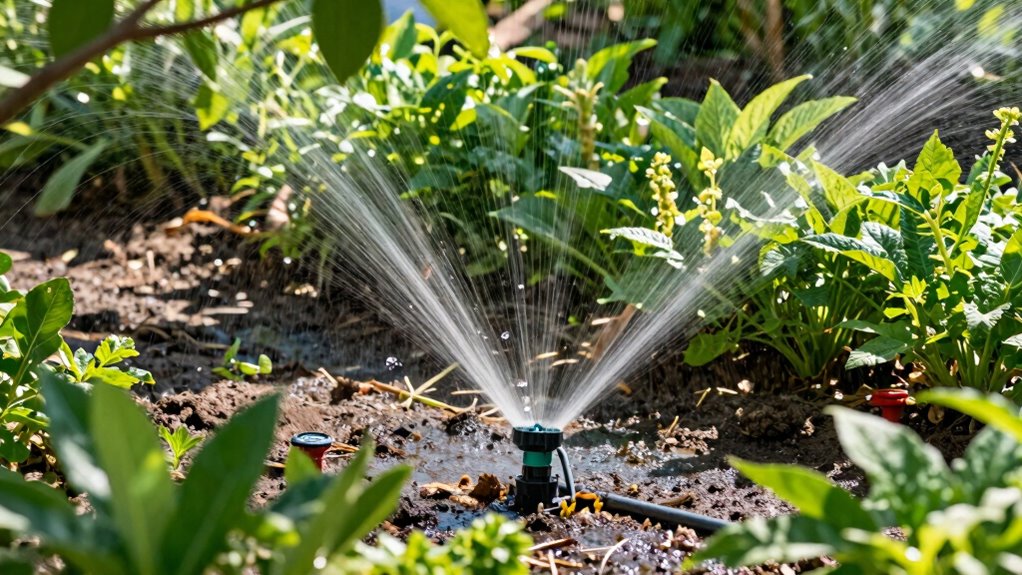
Regular mid-season checks are essential because they help catch leaks, clogs, or damaged components early before they waste significant water or cause costly repairs. By maintaining your irrigation system, you promote water conservation, ensuring you don’t overwater your lawn or garden. A well-functioning system uses water efficiently, reducing waste and lowering your water bills. These checks also lead to cost savings by preventing minor issues from turning into major repairs later in the season. Addressing problems early keeps your system running smoothly and prevents unnecessary water loss. Regular inspections help you stay proactive, saving you money over time and supporting eco-friendly watering practices. Additionally, understanding the digital concepts behind irrigation management can help optimize system performance and efficiency, especially when integrating smart irrigation controllers for better control. Incorporating proper calibration ensures your system distributes water accurately, further enhancing efficiency.
How to Spot Common Irrigation Problems Like Leaks and Clogs
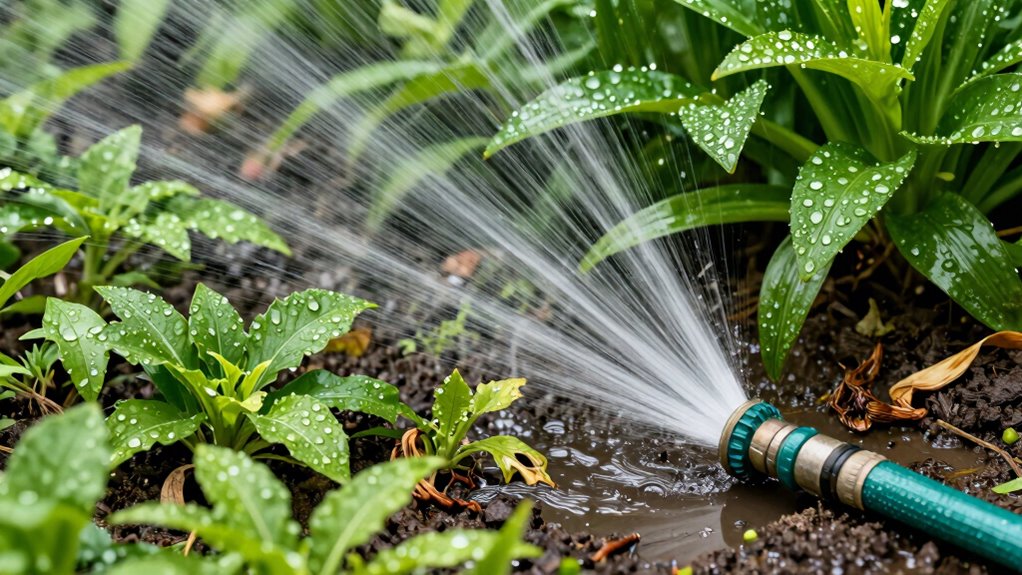
Identifying common irrigation problems like leaks and clogs is essential for maintaining an efficient system. Start by inspecting your sprinklers for uneven spray patterns or water pooling, which may indicate leaks or clogged heads. Soil testing can reveal overly wet spots or dry patches caused by inconsistent watering, signaling hidden leaks or clogs. Check sprinkler calibration to ensure each zone delivers the correct amount of water; misaligned or underperforming heads may point to blockages. Listen for hissing sounds or water running constantly—signs of leaks. Also, physically examine hoses and fittings for cracks or drips. Regularly monitoring these issues helps you catch problems early, saving water and preventing costly repairs down the line. Additionally, understanding irrigation system components can help you troubleshoot issues more effectively and plan for maintenance. Being familiar with the different types of sprinklers commonly used can allow for quicker identification of malfunctioning heads and better system adjustments. To further enhance your troubleshooting, considering the quality and durability of insulated jackets for winter can help prevent system issues caused by exposure to harsh weather conditions. Recognizing common signs of damage can also guide timely repairs before minor issues escalate into major problems.
DIY Mid-Season Irrigation Tune-Up: A Step-by-Step Guide
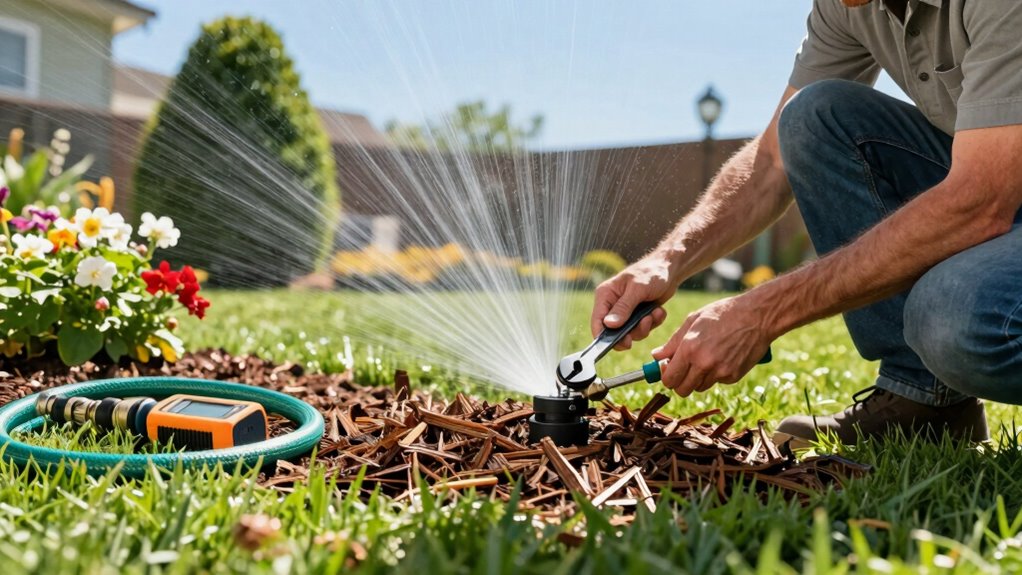
Mid-season is the perfect time to give your irrigation system a thorough tune-up to guarantee it runs efficiently for the rest of the season. Start by inspecting your sprinkler heads, looking for clogs, damage, or misalignment. Clean or replace any faulty heads to ensure even watering. If you have a drip system, check for leaks or blockages in the tubing and emitters. Run your system and observe the spray patterns and flow rates, adjusting or replacing components as needed. Tighten fittings and clear any debris that could obstruct water flow. This quick maintenance helps prevent uneven watering or water waste. Regularly monitoring and tweaking your system mid-season keeps your landscape healthy and conserves water, saving you money and effort in the long run. Proper system protocols also ensure your irrigation works harmoniously with other home systems, like smart thermostats and air quality controls, for an integrated approach to home comfort. Additionally, understanding the components of an irrigation system can help you perform more effective maintenance. Taking time to learn about system components can also help you identify potential issues early before they become costly repairs. Being familiar with watering schedules and how they impact your landscape can further optimize your system’s efficiency and longevity. Knowing the regulatory and environmental considerations related to irrigation can also help you avoid fines and ensure sustainable water use.
Tips to Prevent Future Irrigation Problems
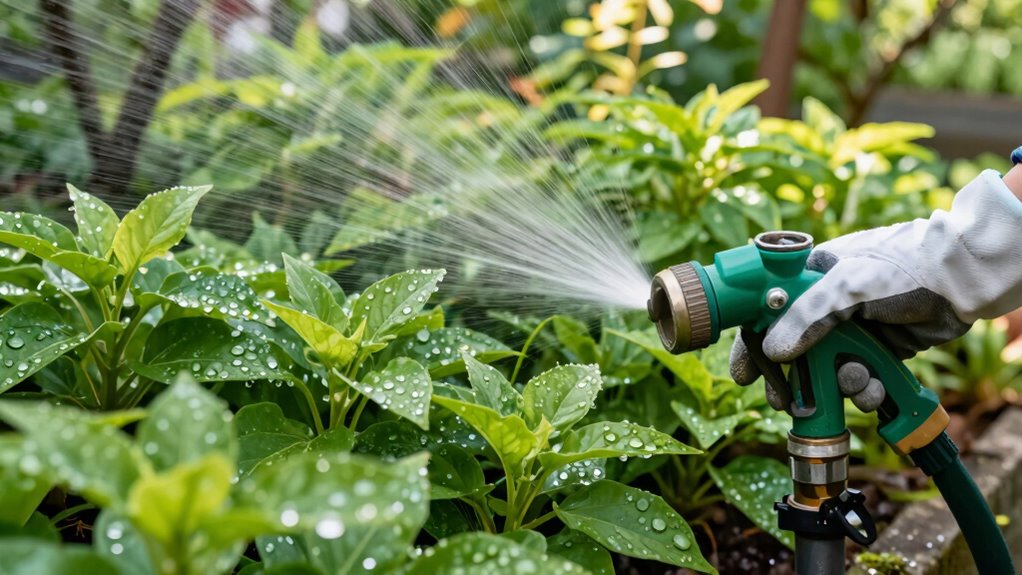
To prevent future irrigation problems, start by scheduling routine inspections and maintenance before issues become serious. Regularly check soil moisture levels to guarantee your system isn’t over- or under-watering, which can harm plant health. Adjust your watering schedule based on seasonal changes and weather patterns. Use the table below to remember key tips:
| Tip | Why it it matters | How to implement |
|---|---|---|
| Monitor soil moisture | Prevents overwatering | Use a moisture meter or feel soil |
| Inspect sprinkler heads | Assures even watering | Clean or replace damaged heads |
| Adjust watering times | Supports plant health | Modify based on plant needs |
| Schedule regular checks | Catch problems early | Set reminders for seasonal review |
Staying proactive helps maintain proper soil moisture, promoting healthy plants and avoiding costly repairs. Additionally, understanding the importance of making safety knowledge simple ensures you’re equipped to handle routine maintenance with confidence. For those interested in investment options, researching reputable Gold IRA markets can provide valuable guidance for secure retirement planning.
Keeping an eye on irrigation system components can help identify issues early before they escalate. Regularly inspecting system components and understanding their functions can save time and money during repairs. An electric dirt bike can be a useful tool for outdoor maintenance tasks and inspections, making your gardening or landscaping efforts more efficient.
When to Call a Pro for Your Irrigation System
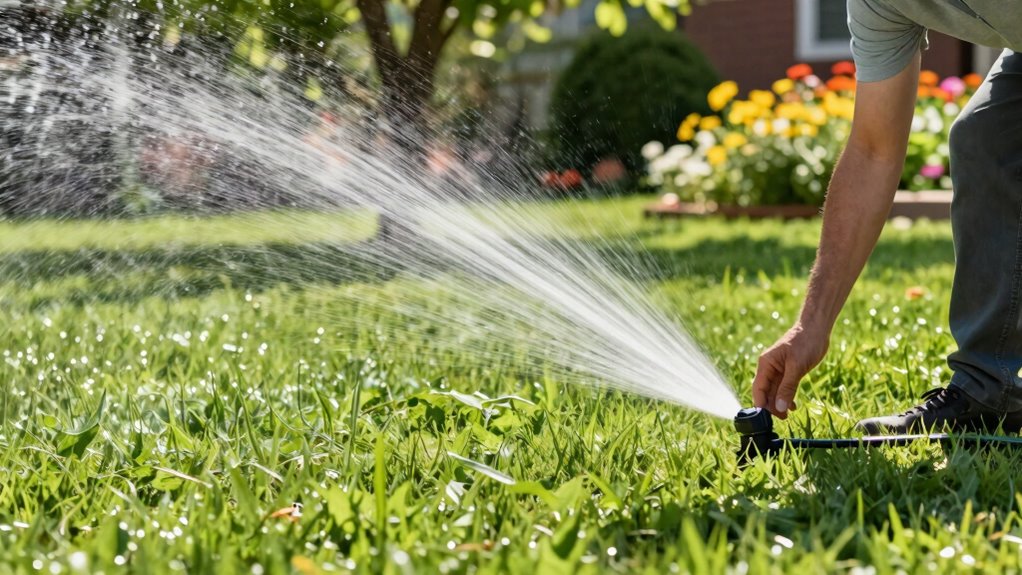
Knowing when to call a professional can save you time, money, and frustration, especially when simple troubleshooting doesn’t resolve your irrigation issues. If your system consistently underperforms, leaks persist, or coverage is uneven, it’s time to seek expert help. Professional irrigation specialists can recommend system upgrades that improve efficiency and incorporate water conservation features, helping you reduce waste and save on your water bill. Consider calling a pro if you notice frequent breakdowns or if you’re planning major adjustments to your landscape. An expert can assess your system’s performance, identify hidden problems, and suggest improvements that ensure reliable operation and better water management throughout the season. Don’t delay repairs that could lead to bigger issues down the line. Proper maintenance can also play a role in ensuring your irrigation system functions optimally with existing components and future upgrades. Additionally, having a properly maintained system can prevent costly repairs and extend the lifespan of your irrigation components. Recognizing early signs of system degradation can help you address issues before they escalate.
Frequently Asked Questions
How Often Should I Schedule a Mid-Season Irrigation Checkup?
You should schedule a mid-season irrigation checkup every 4 to 6 weeks. During this time, you’ll review your watering schedules and verify your system isn’t over- or under-watering. Checking soil moisture levels helps you determine if adjustments are needed, preventing water waste and plant stress. Regular checkups keep your system efficient, maintain healthy soil moisture, and guarantee your landscape gets just the right amount of water throughout the season.
What Signs Indicate My System Needs an Immediate Professional Inspection?
Think of your irrigation system as a busy highway—any disruption causes chaos. If you notice uneven watering, water pressure drops, or sprinkler leaks, it’s a clear sign you need a professional inspection. These issues can waste water and damage your lawn. Don’t ignore these warning signs; addressing them promptly keeps your system running smoothly and your yard healthy. Call a pro to keep things flowing without a hitch.
Can Weather Changes Affect the Timing of My Irrigation System Checkups?
Weather changes definitely impact when you should schedule a mid-season checkup. Seasonal adjustments are necessary because unexpected weather impacts, like heavy rain or drought, can cause your system to over- or under-water. By monitoring weather patterns, you can time your checkups better—ensuring your irrigation system is optimized for current conditions. Regular inspections help prevent water waste and plant stress, keeping your landscape healthy throughout fluctuating weather conditions.
Are There Specific Tools Needed for a DIY Irrigation System Tune-Up?
You’ll need some simple tools for your DIY irrigation tune-up, like a screwdriver to adjust sprinkler heads and pliers for tightening fittings. A water pressure gauge helps check backflow prevention devices, preventing water disasters. Picture yourself as a water wizard, wielding these tools to banish leaks and guarantee even watering. With these essentials, you’ll keep your system running smoothly, saving water and money while avoiding a garden flood of chaos!
How Long Does a Typical Mid-Season Irrigation System Inspection Take?
A typical mid-season irrigation system inspection takes about 30 minutes to an hour, depending on your system’s size. During this time, you’ll check watering efficiency and look for system leaks that could waste water or reduce coverage. You should also verify that all zones are functioning properly and adjust sprinkler heads if needed. Regular inspections guarantee your system runs smoothly, conserving water and maintaining a healthy landscape.
Conclusion
Regular mid-season checks can save you up to 30% on water bills by catching leaks and inefficiencies early. By inspecting your irrigation system now, you prevent costly repairs later and keep your lawn healthy. Remember, a simple tune-up can improve water distribution by 20%, making your system more efficient. Don’t wait until problems worsen—stay proactive and enjoy a lush, well-watered yard all season long.
Fall Picks
fall essentials
As an affiliate, we earn on qualifying purchases.