To pick LED grow lights without falling for marketing hype, focus on the actual specs like spectrum quality, light intensity, and energy efficiency rather than catchy claims. Check if the light provides the right spectrum for your plants’ growth stages and measures PAR output for real performance. Consider durability, coverage area, and brand reputation to guarantee value. Stay cautious of buzzwords like “superior” or “powerful”—understanding these details will guide you to a smarter choice.

Get garden gear delivered free with Prime
- Fast, free delivery on millions of items
- Prime Video, Amazon Music and more included
- Member-only deals all year
Key Takeaways
- Focus on actual technical specs like PAR output, spectral distribution, and coverage area, rather than marketing buzzwords.
- Verify the light’s spectral quality, ensuring it provides appropriate blue, red, UV, and IR wavelengths for plant stages.
- Check for reputable brands with transparent pricing, real user reviews, and proven durability over marketing claims.
- Measure light intensity with a PAR meter and ensure uniform coverage to promote consistent plant growth.
- Avoid overly expensive or “too good to be true” deals; compare features, efficiency, and long-term value before purchasing.
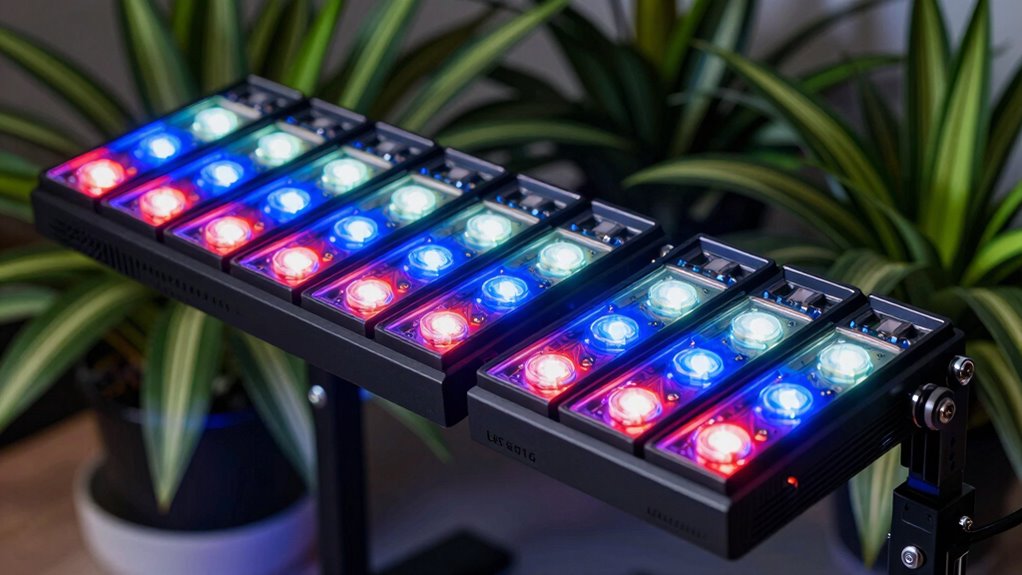
LED grow light with high PAR output
As an affiliate, we earn on qualifying purchases.
As an affiliate, we earn on qualifying purchases.
Understanding How LED Grow Lights Support Plant Growth
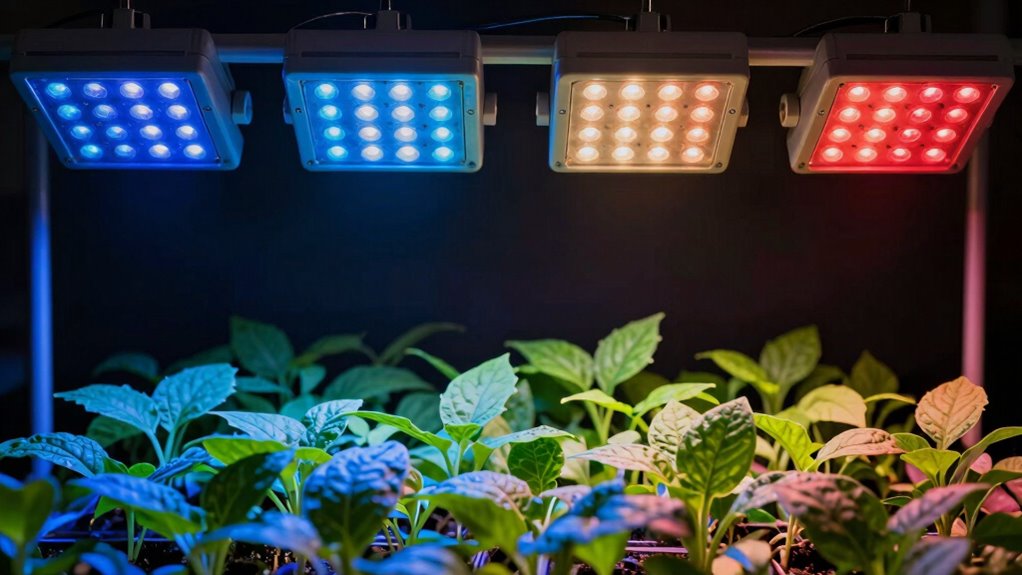
LED grow lights support plant growth by providing the specific wavelengths of light that plants need for photosynthesis. These lights mimic natural sunlight, ensuring your plants receive the right spectrum to produce energy efficiently. Proper soil preparation and supplying essential plant nutrients are vital for healthy growth, but without adequate light, your plants can’t fully develop. When choosing LED grow lights, consider how they complement your soil and nutrient management; the right light boosts photosynthesis, leading to vigorous growth and better yields. Keep in mind that while soil and nutrients lay the foundation, the light spectrum directly influences how effectively your plants convert these resources into energy. Understanding LED specifications is key to selecting the most effective grow lights. Additionally, being aware of essential safety tips for using LED grow lights helps prevent hazards and ensures a safe growing environment. Considering the pollution impact of manufacturing processes can also help you choose more sustainable options. For example, researching light spectrum quality can ensure you select lights that best match your plants’ needs. Properly understanding LED efficiency can further enhance your lighting choices and optimize plant health. Together, proper soil prep and suitable LED lighting create the ideal environment for thriving plants.
Key Features to Look for in a Quality LED Grow Light
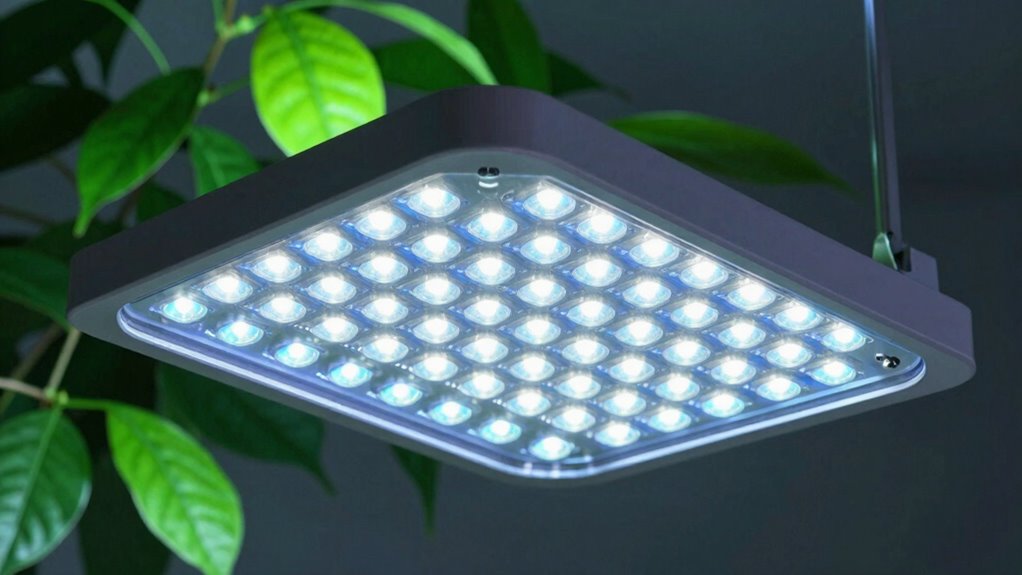
When selecting a high-quality grow light, focusing on key features guarantees you get the best results for your plants. Look for lights that promote ideal plant nutrition by providing the right spectrum and intensity, ensuring healthy growth and higher yields. Quality LEDs should have good heat management to prevent pests that thrive in warm, humid environments caused by poor cooling. Additionally, consider features like adjustable settings to tailor light levels to different growth stages. A reliable grow light also minimizes light spillage, improving efficiency and reducing energy waste. While spectrum and brightness are essential, don’t overlook pest management—an efficient light setup can help prevent issues related to excess humidity and temperature. Choosing a well-designed, feature-rich LED grow light supports your plants’ overall health and productivity. Incorporating proper regulatory checks can also help ensure you select a safe and reputable product.
How to Assess Spectrum and Brightness for Healthy Plants

To guarantee your plants grow healthy, you need to evaluate the light spectrum and brightness of your LED grow lights. Focus on how the spectrum matches your plants’ needs, especially during different growth stages, and use proper measurement tools to gauge brightness accurately. This way, you can provide the ideal light conditions for robust, vibrant growth. Additionally, understanding the importance of color temperature adjustments can help optimize the visual environment for your plants. Incorporating knowledge about spectral quality can further enhance your ability to select the most effective grow lights. Recognizing the role of early warning signs in plant health can also guide you in adjusting your lighting setup promptly for optimal growth. Being aware of lighting specifications ensures you choose lights that meet your plants’ specific requirements at each stage.
Light Spectrum Requirements
Understanding the light spectrum is essential for ensuring your plants receive the right wavelengths for healthy growth. Plants primarily benefit from blue light for vegetative growth and red light for flowering, but a balanced spectrum improves overall health. Look for lights with good color rendering, which indicates accurate wavelengths across the spectrum, enhancing plant vitality. Light penetration is also critical; deeper penetration reaches lower leaves, supporting uniform growth. Color rendering can be a useful indicator of spectrum quality and its impact on plant development. Use this table to compare spectrum features:
| Spectrum Range | Key Benefits | Best for |
|---|---|---|
| 400-500 nm (Blue) | Vegetative growth, leaf development | Seedlings, clones |
| 600-700 nm (Red) | Flowering, fruiting | Blooming phase |
| Full Spectrum | Overall plant health | All stages |
| Enhancements (UV, IR) | Stress resistance, flowering | Specialized growth |
Additionally, selecting appropriate spectrum quality can significantly impact plant development and yield.
Brightness Measurement Tips
Evaluating the brightness of your LED grow lights is essential for guaranteeing your plants receive enough light without overstressing them. To do this effectively, check the light’s intensity with a PAR meter, which measures photosynthetically active radiation. Look for good light uniformity, meaning the light is evenly distributed across your grow area, preventing dark spots that can hinder growth. Consider the cabling solutions involved, as proper wiring can ensure consistent power distribution and optimal light performance. Consider the color rendering index (CRI), which indicates how accurately the light shows colors; a higher CRI helps you evaluate plant health and guarantee your plants aren’t under or overstimulated. Remember, brighter isn’t always better—aim for a balance that provides sufficient intensity without causing stress. Additionally, understanding light measurement units can help you compare different lights more accurately and select the best option for your needs. To better assess your lighting setup, understanding spectral distribution can help ensure your plants receive the full spectrum necessary for healthy growth.
Why Energy Efficiency and Durability Matter When Buying Grow Lights
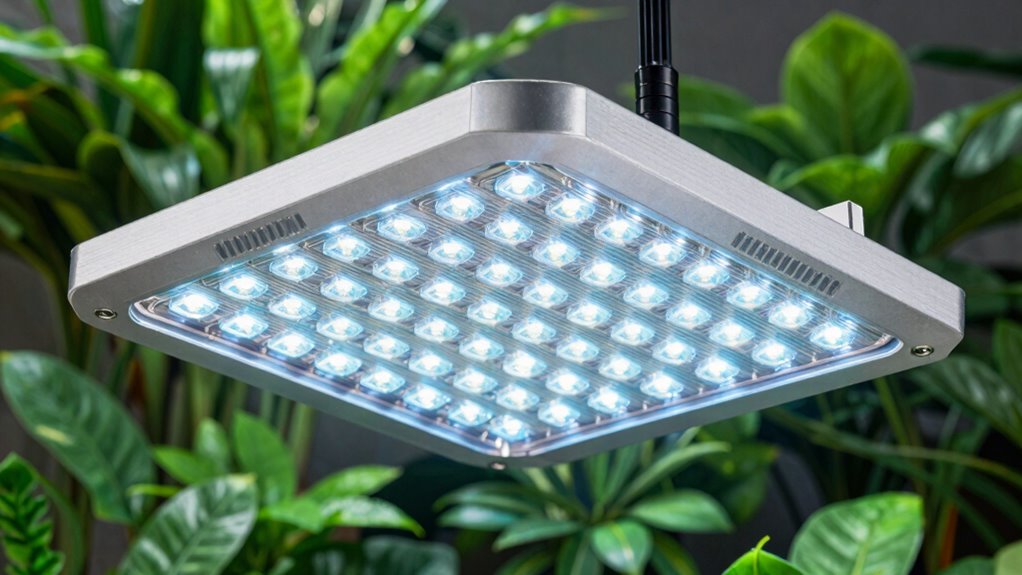
Energy efficiency and durability are vital factors when choosing LED grow lights because they directly impact your long-term costs and the health of your plants. An energy-efficient light consumes less power, helping you save on electricity bills and promoting energy conservation. Durability ensures your grow light withstands daily use and environmental factors, providing long-term reliability. Investing in high-quality, durable lights reduces the need for frequent replacements, saving you money over time. Additionally, choosing lights with proven filtering technology can help ensure optimal light output and reduce maintenance issues. When you prioritize cycling skills and gear care, you can better maintain your equipment and maximize its lifespan, ultimately enhancing your gardening success. Moreover, considering lifestyle for longevity principles, such as proper maintenance and environmental considerations, can further extend the lifespan of your grow lights. Incorporating insights from reputable Gold IRA markets can also guide you in making smarter, more sustainable investments in your gardening setup for long-term benefits. Staying informed about energy-saving features can further optimize your purchasing decisions and support eco-friendly practices.
Determining the Right Wattage and Coverage Area for Your Setup
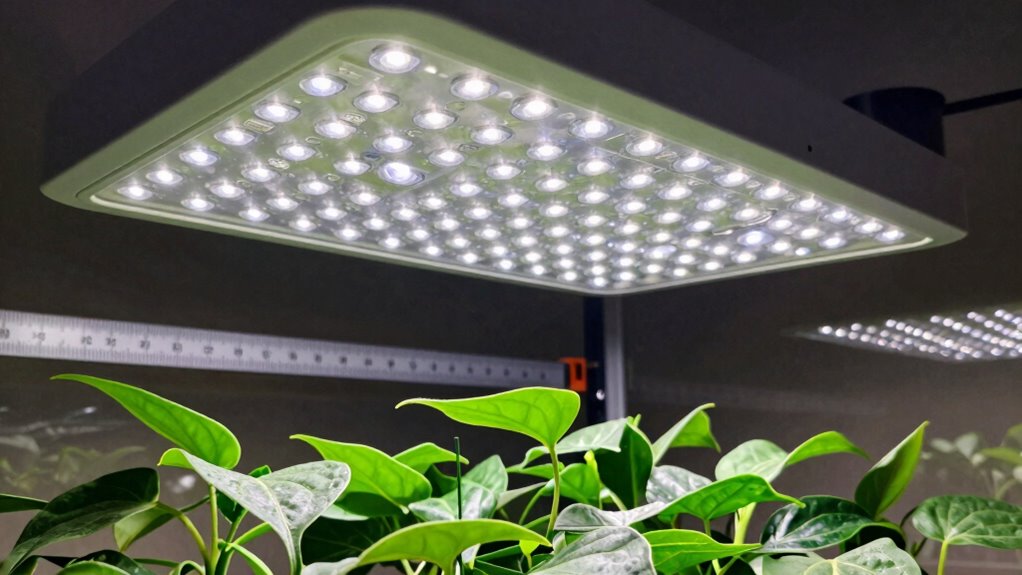
Choosing the right wattage and coverage area is crucial because it guarantees your plants receive adequate light without wasting energy. To do this, consider your grow tent compatibility and the size of your setup. Match the wattage to the area you want to light; too low, and plants may stretch, too high, and you’ll waste power. Think about the color temperature of the LED lights—most growers prefer full-spectrum options that promote healthy growth at different stages. Measure your grow space carefully to ensure the light covers the entire area evenly, avoiding hot spots or shaded spots. Proper wattage and coverage ensure your plants get consistent illumination, leading to better yields and healthier growth without unnecessary energy costs. Additionally, understanding the lighting needs of your plants can help you choose the most effective LED grow lights for your setup.
Buzzwords to Watch Out for When Shopping for Grow Lights
When you’re browsing grow lights, it’s important to be aware of certain buzzwords that can influence your decision. Marketing claims often highlight features like “high PAR output” or “superior LED technology,” but these can be exaggerated or vague. Be cautious of terms like “full spectrum,” which sounds appealing but doesn’t specify actual spectral distribution. Words such as “powerful” or “ultimate” are marketing hype rather than technical facts. Focus on the specifics of LED technology, like diode efficiency and actual lumen output, rather than buzzwords. Recognizing these marketing claims helps you distinguish genuine quality from hype, ensuring you pick a grow light that truly meets your needs without falling for misleading language. Additionally, understanding concepts like Free Floating can help you evaluate how well a grow light will integrate with your overall setup and environment.
Comparing Prices and Finding the Best Value Without Sacrificing Quality

Finding the best value in LED grow lights means balancing cost with quality, so you get the features you need without overspending. Don’t fall for marketing myths that suggest higher prices always mean better quality; many affordable options perform just as well. Use purchasing tips like comparing wattage, PAR ratings, and coverage area to assess value objectively. Look beyond flashy packaging and focus on specifications that matter for plant growth. Remember, a lower price tag doesn’t automatically mean poor quality, but be wary of deals that seem too good to be true. By doing your research and understanding what features genuinely impact performance, you can find an LED grow light that offers the best balance of price and quality without sacrificing your plants’ health or your budget. Additionally, paying attention to waterproofing and durability features like waterproofing or durability can help ensure your grow lights withstand various environmental conditions. Recognizing the importance of eco-friendly materials can also guide you toward more sustainable choices that benefit both your garden and the environment.
Additional Factors to Consider: Price, Brand, and User Reviews
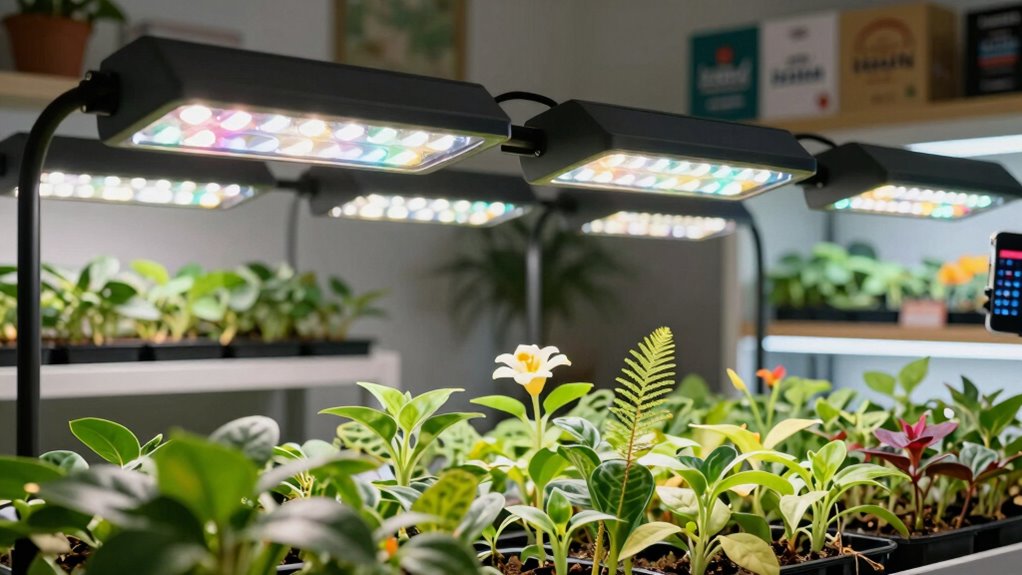
When choosing LED grow lights, you should pay attention to price transparency to guarantee you’re getting a fair deal. A reputable brand often means better quality and customer support, which can save you headaches later. Reading user reviews helps you gauge real-world performance and spot potential issues before making a final decision.
Price Transparency Matters
Price transparency is essential because it helps you compare options effectively and avoid hidden costs. When evaluating LED grow lights, look beyond initial prices and understand the pricing strategies behind each offer. Some sellers may use marketing claims to make their lights seem more affordable while hiding additional fees, such as shipping or accessory costs. Clear, upfront pricing allows you to assess the true value of each product without surprises. It also helps you identify which options fit your budget and prevent overpaying for features you don’t need. Trust brands that provide detailed pricing details and avoid those that obscure costs. Being vigilant about price transparency ensures you make informed decisions and get the best deal for your grow setup.
Brand Reputation Significance
A strong brand reputation can considerably influence your choice because it often reflects product quality and customer satisfaction. When a brand has established loyalty, it indicates consistent performance and reliability, making your decision easier. Be cautious of marketing tactics that emphasize flashy claims without backing them up; reputable brands tend to be transparent and honest. User reviews are also valuable, revealing real experiences and potential issues. Keep in mind that a well-regarded brand usually invests in quality control and customer support, reducing the risk of costly mistakes. While price is important, a trusted brand’s products often justify a higher investment through durability and efficiency. Ultimately, choosing a brand with a solid reputation helps assure you get a dependable LED grow light that meets your needs.
Frequently Asked Questions
How Do I Verify LED Grow Light Specifications From Manufacturers?
To verify LED grow light specifications, start by checking the manufacturer’s datasheets for spectral accuracy, ensuring the light emits the correct wavelengths for plant growth. Look for verified power efficiency ratings to gauge energy use versus output. Research independent reviews or third-party tests to confirm these specs. Ask for certifications or lab test results, which help confirm that the manufacturer accurately reports the spectral output and power efficiency of their grow lights.
What Are Common Marketing Claims to Be Skeptical of in Grow Light Ads?
You should approach spectral claims with a healthy dose of skepticism, as some ads exaggerate the light spectrum’s benefits. Be wary of buzzwords that promise rapid growth or extraordinary yields without solid proof. Check the brand reputation; reputable companies provide transparent specs and third-party testing. If claims sound too good to be true, they probably are, so rely on verified data rather than marketing hype to make an informed decision.
Are Higher Wattage Lights Always Better for Plant Growth?
Higher wattage lights aren’t always better for plant growth, as spectral accuracy and energy efficiency matter more. A more powerful light with poor spectral output won’t promote healthy growth, while a lower-wattage, efficient light can be just as effective. Focus on lights that offer tailored spectra for your plants and good energy efficiency, rather than just wattage. This approach guarantees your plants get the right light without wasting energy or money.
How Does Light Distance Affect Plant Health and Growth?
You should keep your LED grow lights at the right distance to maximize plant health and growth. If lights are too close, they can cause light burn and reduce photosynthesis efficiency; too far, and plants won’t receive enough light. A proper distance ensures your light spectrum effectively supports photosynthesis, boosting growth without stress. Monitor your plants closely and adjust the distance as they grow to maintain ideal conditions.
Can I Combine Different LED Grow Lights Safely?
Yes, you can combine different LED grow lights safely if you guarantee spectral consistency and power compatibility. Check that the lights emit similar spectra to promote uniform plant growth, and verify that their wattage and voltage match your setup’s capacity. Avoid mixing incompatible lights, as mismatched spectra or power levels can stress plants or damage equipment. Always follow manufacturer guidelines and consider consulting an expert for ideal results.
Conclusion
By choosing the right LED grow light, you’re basically giving your plants a VIP pass to the sun itself—no more guessing games or falling for marketing gimmicks. When you focus on spectrum, efficiency, and durability, you’ll turn your grow space into a lush, thriving paradise that outshines even the most dazzling greenhouse. So, pick wisely, and watch your plants flourish like never before—your garden’s about to become the envy of every green thumb out there!
Fall Picks
fall essentials
As an affiliate, we earn on qualifying purchases.