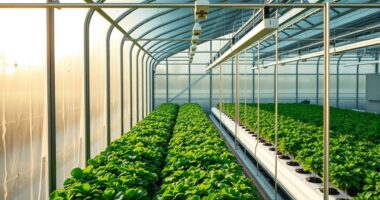
To save more plants during weather swings, upgrade to a weather-responsive irrigation system that uses sensors, AI, and real-time data. These systems monitor soil moisture and weather forecasts, adjusting watering automatically to prevent over- or under-watering. This smart technology helps your crops survive sudden droughts or storms while conserving water. If you want to discover how these innovations work and how they can protect your farm, there’s more to explore below.

Get garden gear delivered free with Prime
- Fast, free delivery on millions of items
- Prime Video, Amazon Music and more included
- Member-only deals all year
Key Takeaways
- Weather-adaptive irrigation systems adjust watering based on real-time weather data to prevent overwatering and drought stress.
- Soil moisture sensors provide immediate data to optimize watering schedules during unpredictable weather swings.
- AI-driven weather prediction tools enable proactive irrigation adjustments, enhancing crop resilience.
- Integrating predictive analytics and sensor data reduces water waste and supports healthy plant growth amid climate variability.
- Automated systems with weather forecasting capabilities help farms adapt quickly to sudden weather changes, safeguarding plants.
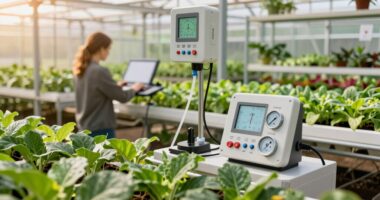
smart irrigation system with soil moisture sensors
As an affiliate, we earn on qualifying purchases.
As an affiliate, we earn on qualifying purchases.
Why Climate Unpredictability Threatens Your Crops
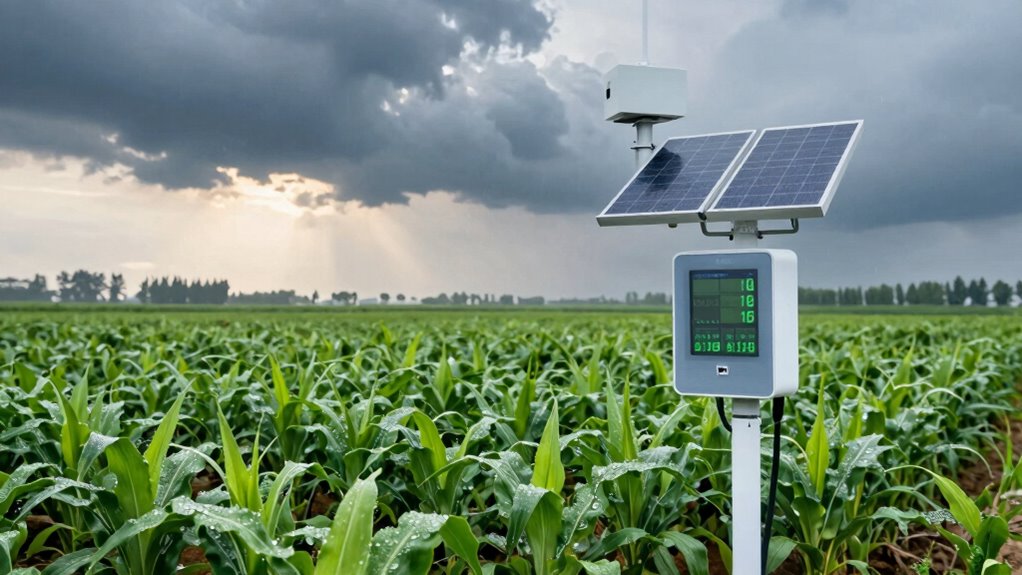
Have you ever wondered how sudden weather changes can devastate your crops? Climate unpredictability makes it hard to rely on traditional farming methods. When weather swings happen, some crops fail, and your soil can suffer damage. To combat this, crop diversification becomes essential. Planting different varieties reduces risk, so a sudden cold snap or drought doesn’t wipe out everything. Soil preservation also plays a vital role; healthy soil withstands weather stress better and supports resilient plant growth. Incorporating water management techniques such as proper irrigation can further mitigate the impacts of droughts or excess rainfall. Additionally, understanding weather patterns can help farmers better prepare and adapt their strategies. Implementing soil health practices can improve soil resilience against climate stress. Developing climate-smart agriculture strategies allows farmers to optimize resource use and minimize risks associated with weather unpredictability. Without these strategies, you’re vulnerable to unpredictable conditions that threaten your harvests. By adopting crop diversification and focusing on soil health, you improve your farm’s ability to adapt and bounce back from weather surprises. These tactics help safeguard your crops against the volatility of climate change, encouraging a calm and resilient approach to farming in uncertain times.
How Weather-Adaptive Irrigation Protects Plants During Sudden Weather Changes
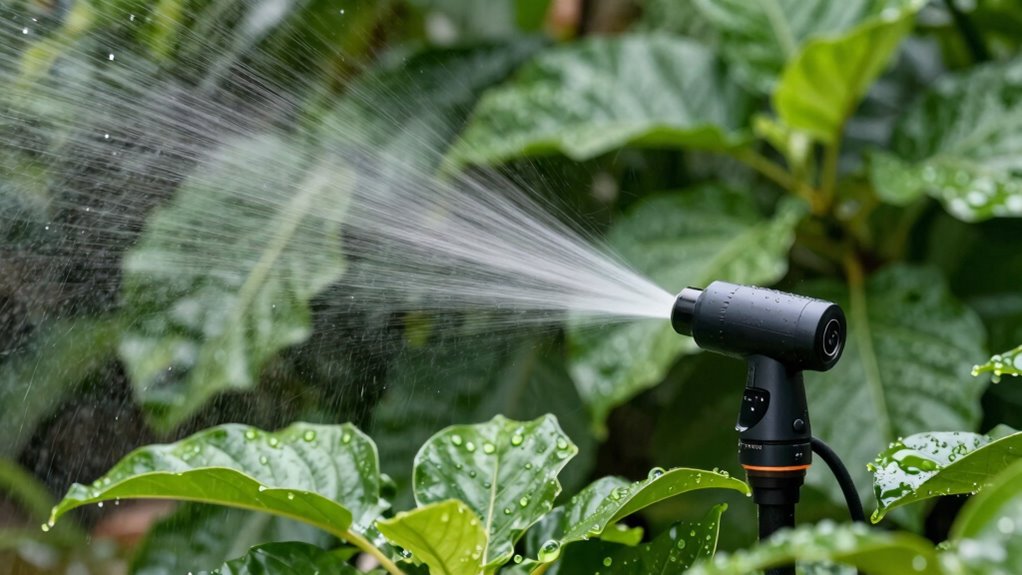
When sudden weather changes strike, weather-adaptive irrigation systems act quickly to protect your plants from stress or damage. These systems adjust watering based on real-time data, boosting plant resilience during unpredictable conditions. They reduce overwatering during rain and prevent drought stress when it’s dry. Incorporating luxury irrigation systems not only enhances plant care but also adds a touch of sophistication to your garden setup. An understanding of sustainable textile care and innovation in fabric technology is essential for developing these innovative solutions that promote environmental responsibility. Additionally, understanding common causes of heat pump failure can inform the development of more durable and reliable climate control systems that support plant health by maintaining optimal temperature and humidity levels. This adaptability helps your plants maintain optimal health and withstand weather swings, especially as advancements in weather-responsive technology continue to evolve.
What Are the Benefits of Weather-Adaptive Irrigation Systems?
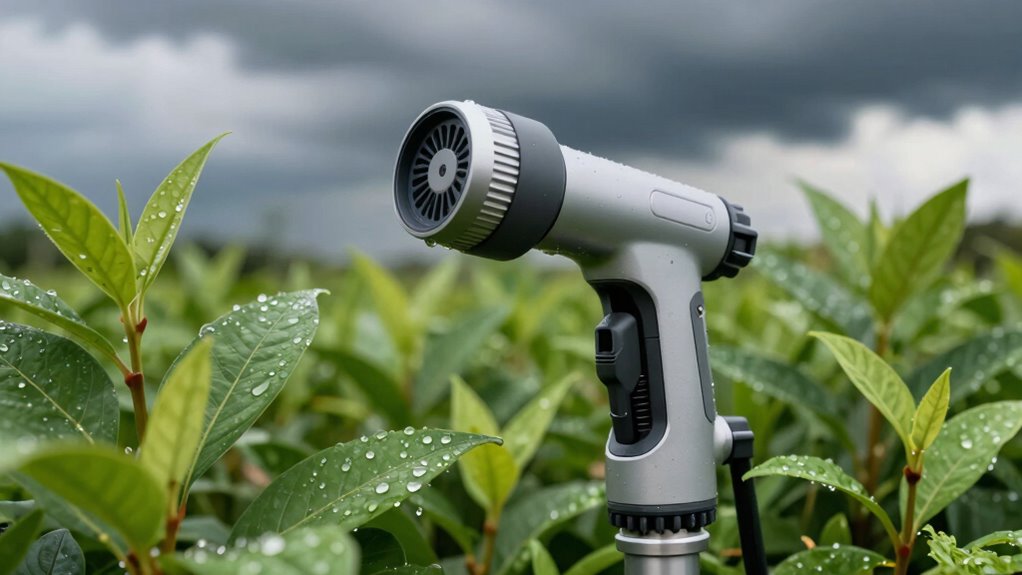
Weather-adaptive irrigation systems offer a range of benefits that can substantially improve your garden’s health and water efficiency. By adjusting watering schedules based on real-time weather data, these systems prevent over- or under-watering, promoting better soil enrichment and nutrient absorption. Consistent, ideal moisture levels help plants develop stronger root systems and resist pests naturally, reducing the need for chemical interventions. Proper soil moisture also minimizes erosion and runoff, maintaining soil integrity. Additionally, by watering precisely when needed, you save water and reduce utility costs. This targeted approach limits pest habitats caused by excess moisture or drought stress, supporting a healthier ecosystem. Incorporating soil health practices can further enhance plant resilience and growth. As these systems become more mainstream, their role in supporting future economies and sustainable practices continues to grow. Moreover, these adaptive systems leverage weather data technology to optimize watering, making them a crucial tool for climate resilience. Understanding the importance of soil moisture levels helps gardeners fine-tune their watering strategies for even better results. Using weather-adaptive technology can also help prevent unnecessary water waste during unexpected weather changes. Overall, weather-adaptive systems empower you to nurture a more resilient, lush garden while conserving resources effectively.
What Features Should You Look for in a Weather-Responsive Irrigation System?
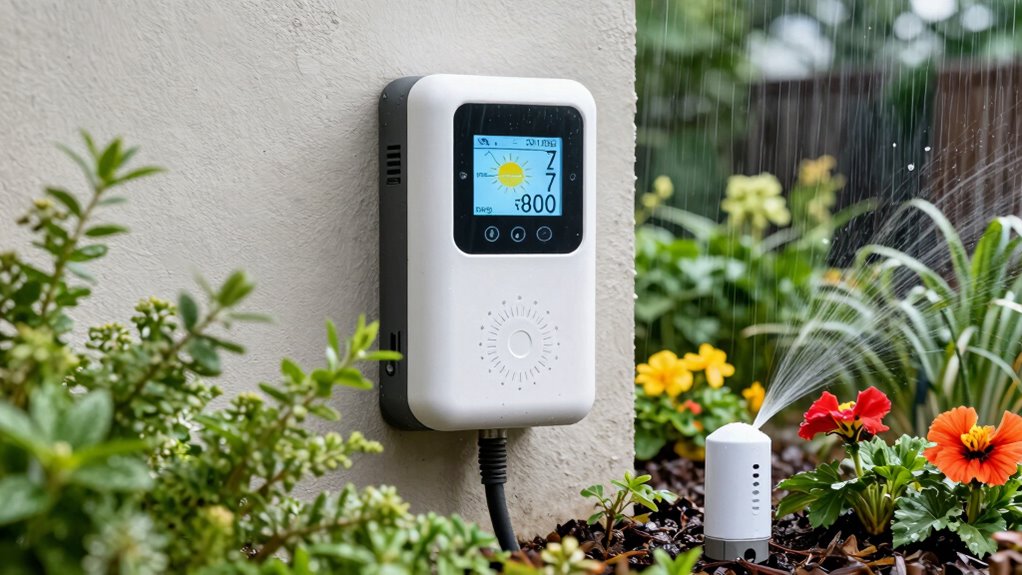
Choosing the right features in a weather-responsive irrigation system guarantees you get the most benefits from its adaptive capabilities. Look for sensors that monitor soil moisture levels, ensuring watering only when your soil needs it. This helps prevent over- or under-watering, which can harm plants. An effective system should also include smart irrigation scheduling, adjusting watering times based on weather forecasts and soil conditions. Automatic rain delays are essential, helping you skip watering during rain events. Additionally, user-friendly controls and real-time data access make managing your system easier. Incorporating soil moisture monitoring can significantly enhance your system’s responsiveness and efficiency. Research into sound vibrations suggests that integrating sound therapy elements can promote plant health and resilience, further optimizing your garden’s growth. The integration of predictive analytics enables systems to anticipate weather changes and adjust watering schedules proactively, ensuring your plants receive optimal care even during sudden weather swings. With these features, you’ll optimize water use, protect your plants during weather swings, and promote healthier growth. Prioritizing soil moisture sensors and intelligent scheduling will give your garden the resilience it needs, especially when combined with durable survival gear to prepare for unexpected environmental challenges.
The Tech Powering Weather-Adaptive Irrigation (Sensors, Data, AI)
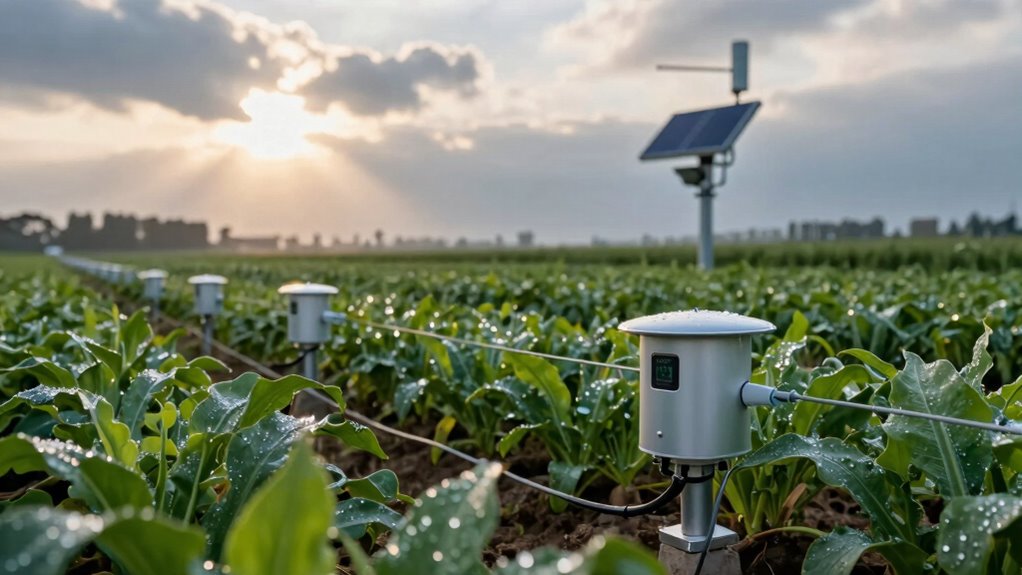
Sensors collect real-time soil and weather data, giving you precise insights into plant needs. This information feeds into data-optimized irrigation strategies that adjust watering schedules automatically. AI-enhanced weather prediction then refines these plans further, helping you stay ahead of changing conditions.
Sensor-Driven Water Management
Have you ever wondered how farms can precisely adjust watering schedules to match changing weather conditions? Sensor-driven water management makes this possible by using soil moisture sensors that monitor real-time data on soil health. These sensors detect moisture levels, ensuring plants get just the right amount of water, reducing waste and preventing overwatering. This precise control also helps with pest control, since healthy, well-maintained soil discourages pests that thrive in damp, poorly managed environments. By integrating sensors with automated irrigation systems, farmers can respond instantly to weather swings, conserving water and protecting crops. This technology creates a balanced ecosystem, optimizing soil health and reducing the need for chemical interventions, ultimately leading to healthier plants and more resilient farms. Incorporating proper tools and safety protocols ensures that farmers can maintain and troubleshoot these advanced systems effectively. Additionally, understanding the latest trends in digital irrigation, such as integrating landscaping techniques, can help farmers stay ahead with innovative solutions. Embracing digital tools further enhances the ability to adapt irrigation strategies in real-time, thereby improving long-term sustainability.
Data-Optimized Irrigation Strategies
As weather patterns become more unpredictable, farmers are turning to data-driven strategies to maximize irrigation. By analyzing soil moisture levels and crop health data, you can make precise watering decisions that conserve water and boost plant vitality. Data-optimized irrigation uses sensors and real-time information to adjust watering schedules dynamically, preventing over- or under-watering. This approach helps maintain ideal soil moisture, promoting healthy crop growth despite weather swings. Here’s a quick overview:
| Data Inputs | Benefits |
|---|---|
| Soil moisture readings | Prevents water waste, supports crop health |
| Weather data | Adjusts irrigation to forecast changes |
| Crop health indicators | Ensures best growth conditions |
This strategy enhances efficiency and resilience, safeguarding crops during unpredictable weather. Additionally, incorporating household safety tips can help protect farm workers and equipment during extreme weather events.
AI-Enhanced Weather Prediction
Building on data-driven irrigation strategies, integrating artificial intelligence transforms how you anticipate weather changes. AI-enhanced weather prediction uses sensors and real-time data to forecast sudden temperature shifts, rainfall, and storms more accurately. This advanced technology helps you adjust irrigation schedules proactively, promoting plant resilience and maintaining soil health. By predicting weather swings before they occur, you reduce overwatering or drought stress, supporting stronger, healthier plants. AI models analyze patterns to identify microclimates and localized weather anomalies, giving you a precise understanding of upcoming conditions. This proactive approach minimizes damage from unexpected weather events, ensuring your plants adapt well and soil remains fertile. Ultimately, AI-powered predictions empower you to optimize watering, enhance plant resilience, and safeguard soil health during unpredictable weather swings.
Real-World Examples of Successful Weather-Responsive Irrigation Projects
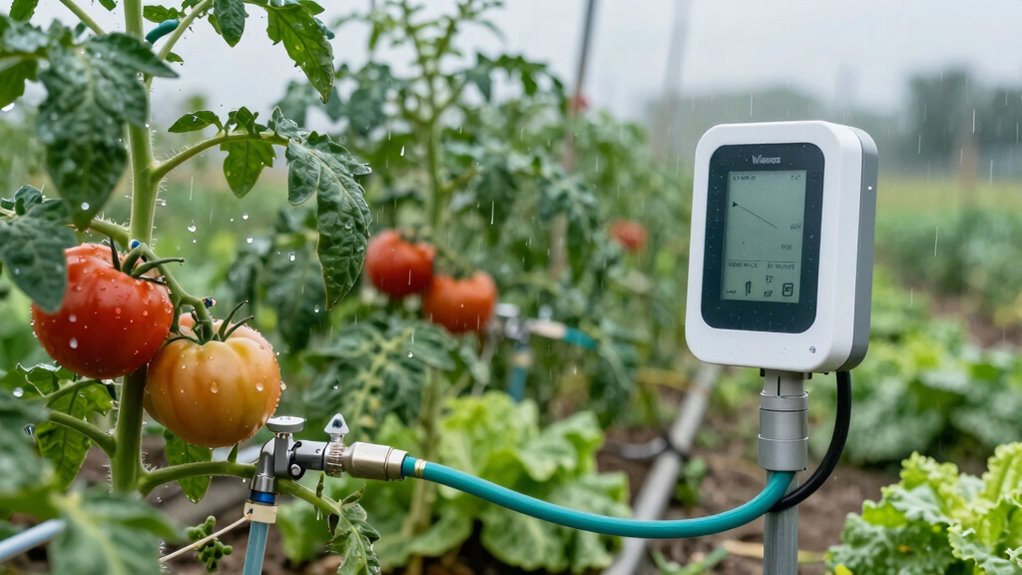
One notable example is the orchard in California that adopted weather-responsive irrigation sensors, which adjust watering schedules based on real-time rainfall and soil moisture data. This system helps maintain ideal soil health by preventing overwatering and drought stress, promoting stronger root development. As a result, the trees become more resilient and less vulnerable to pests, reducing the need for chemical controls. The sensors also enable precise watering, conserving water and lowering costs. By tailoring irrigation to actual weather conditions, the orchard minimizes plant stress during unpredictable weather swings. This approach not only boosts crop yield but also fosters sustainable farming practices. It’s a clear example of how technology can enhance plant health, improve pest control, and support long-term farm resilience.
Common Challenges in Adopting Weather-Responsive Irrigation Systems
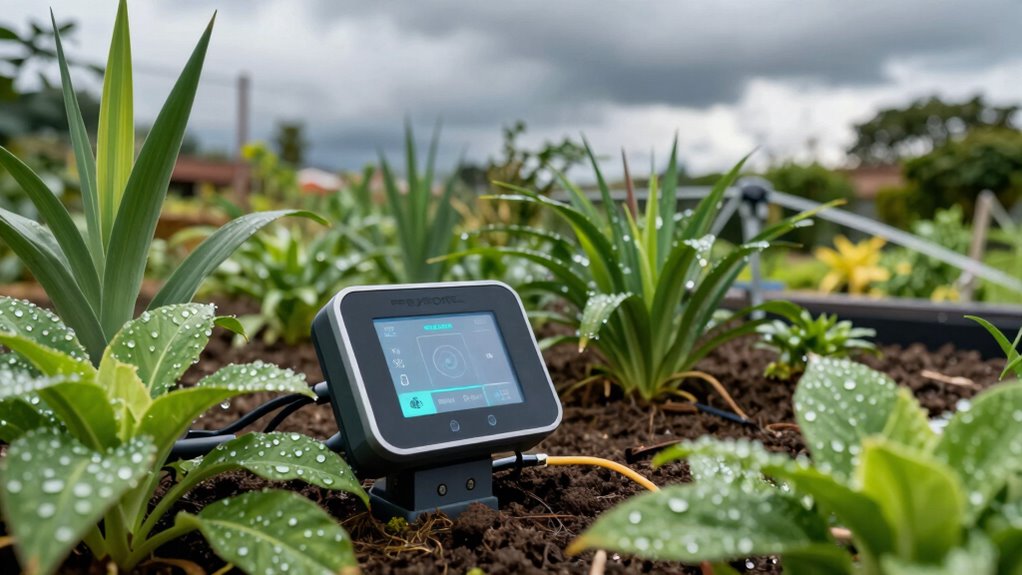
Implementing weather-responsive irrigation systems often presents several challenges that can hinder widespread adoption. One major issue is the risk of soil erosion, especially if watering schedules change suddenly or unevenly, destabilizing soil structure. Without proper adjustments, over-irrigation can wash away valuable topsoil, reducing land productivity. Pest management also becomes trickier, as inconsistent watering may create favorable conditions for pests or fungi, complicating control efforts. Additionally, some farmers worry about the upfront costs and technical complexity of installing sensors and automation. Resistance to change and lack of familiarity with new technology can slow adoption, even when benefits are clear. Overcoming these challenges requires education, proper planning, and tailored solutions to guarantee the system’s sustainability and effectiveness.
How to Implement Weather-Adaptive Irrigation on Your Farm
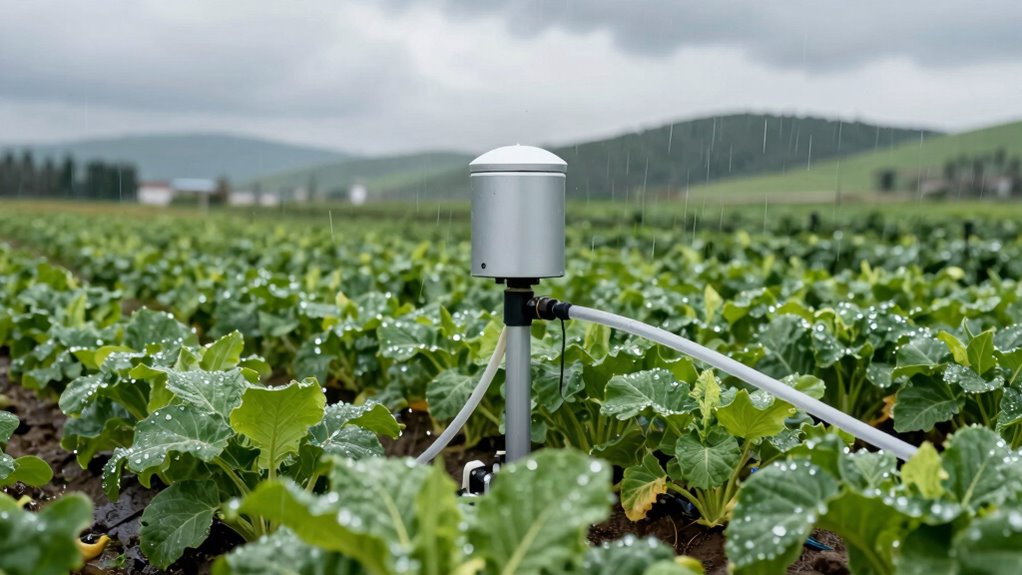
To effectively incorporate weather-adaptive irrigation on your farm, start by evaluating your current system and identifying areas where automation can make a difference. Focus on soil moisture sensors to monitor real-time conditions and adjust watering schedules accordingly. Consider integrating weather forecasts to anticipate rainfall or dry spells, preventing over- or under-watering. Crop rotation plans can help optimize water use and soil health, ensuring efficient irrigation tailored to different crops’ needs.
- Install soil moisture sensors linked to your irrigation controller
- Use weather data to adjust watering schedules dynamically
- Develop crop rotation strategies that improve water retention
- Automate irrigation based on soil moisture and weather inputs
This approach helps conserve water, improve crop health, and adapt to changing weather patterns.
Future Trends in Weather-Responsive Agriculture Technology
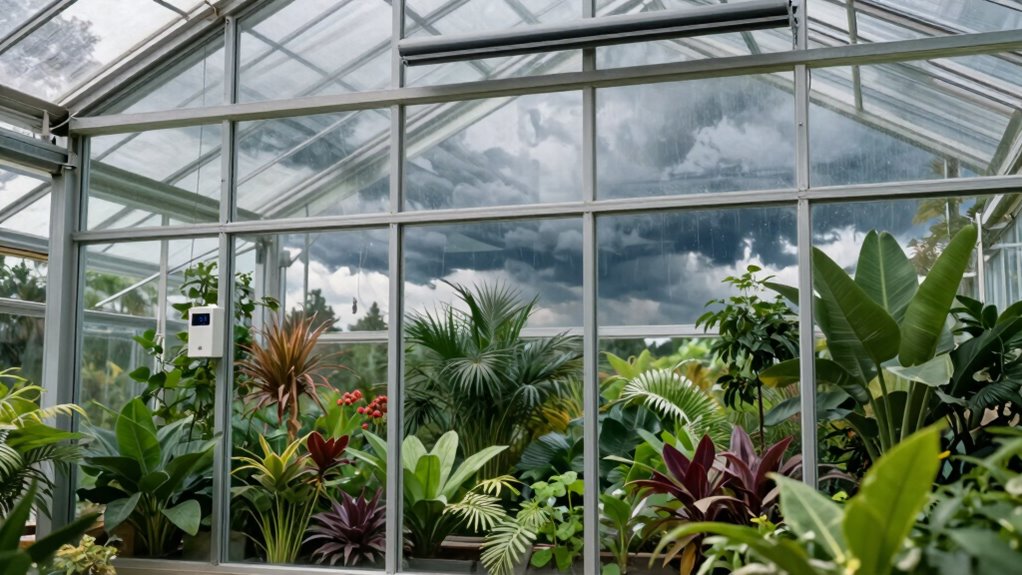
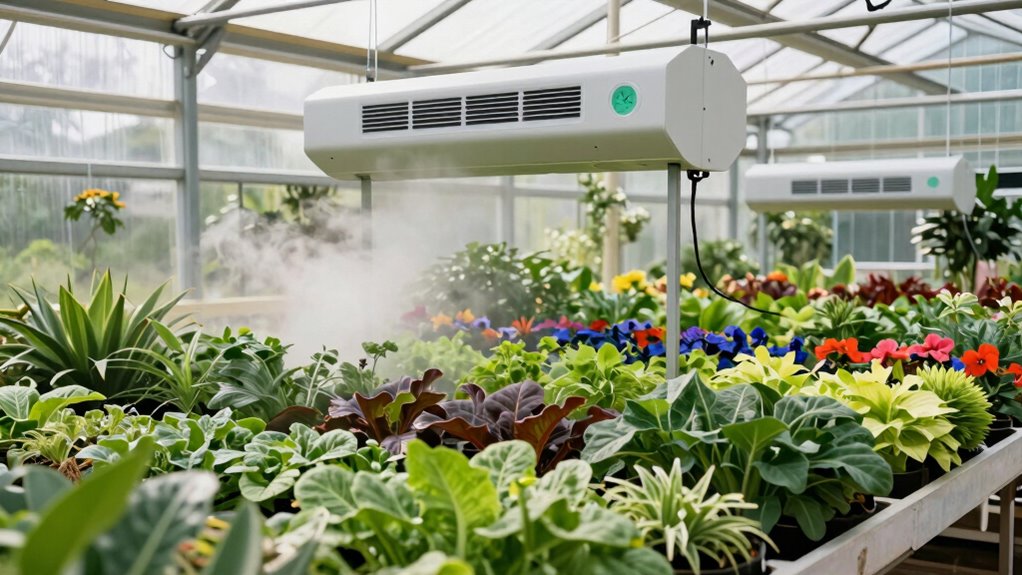
Advancements in weather-responsive technology are poised to revolutionize how you manage irrigation and crop health. Future trends focus on integrating data-driven systems into urban farming setups and greenhouses, making them more efficient and adaptable. Greenhouse automation will become smarter, adjusting climate controls based on real-time weather forecasts to optimize growth conditions and conserve resources. Urban farmers will benefit from compact, responsive systems that monitor microclimates and adjust watering schedules accordingly. These innovations will reduce water waste, improve crop yields, and extend growing seasons despite unpredictable weather swings. As technology becomes more accessible, you’ll find it easier to implement these solutions, ensuring resilient, sustainable food production even in challenging climate conditions.
Frequently Asked Questions
How Much Can Weather-Adaptive Irrigation Systems Save in Water Costs?
Weather-adaptive irrigation systems can save you up to 30-50% on water costs by optimizing water use based on real-time weather data. This technology considerably boosts water conservation efforts while reducing your overall expenses. By adjusting watering schedules according to rain, temperature, and humidity, you prevent overwatering and waste, leading to substantial cost savings. Implementing such systems makes your irrigation more efficient and eco-friendly, ultimately lowering your water bills.
What Is the Typical Installation Time for These Advanced Irrigation Systems?
You might worry about installation challenges, but these systems typically take just a few days, often between one to two weeks, depending on your site’s size and complexity. System customization can extend this timeline, but it guarantees maximum performance. Skilled professionals streamline the process, making sure you get a tailored setup efficiently. Overall, with proper planning, you’ll have your weather-adaptive irrigation system up and running smoothly in no time.
Are Weather-Responsive Irrigation Systems Suitable for Small-Scale Farms?
Weather-responsive irrigation systems are suitable for small-scale farms, especially if you focus on crop diversity and maintaining soil health. These systems help you adapt to weather changes, ensuring your crops get the right amount of water, which promotes healthier soil and diverse plant growth. They’re easy to install and manage, making them a smart choice for small farms aiming to boost productivity while preserving soil quality and supporting a variety of crops.
How Do These Systems Integrate With Existing Farm Management Tools?
You can seamlessly integrate these weather-responsive irrigation systems with your existing farm management tools by connecting sensor integration and data analytics platforms. These systems sync effortlessly, turning complex data into actionable insights, almost like having a weather wizard at your fingertips. They automatically feed real-time sensor data into your management tools, allowing precise control over watering schedules, ensuring healthier plants and maximum efficiency—no matter how unpredictable the weather gets.
What Training Is Required for Farmers to Operate These New Technologies?
You’ll need to undergo farmer training focused on technology adoption to operate these new systems effectively. Training usually covers understanding the hardware, software, and data interpretation involved in managing weather-sensitive technology. It’s essential to familiarize yourself with troubleshooting procedures and maintenance routines. Most programs offer hands-on workshops or online courses, ensuring you gain confidence and competence in using the technology, ultimately helping you make better decisions during weather swings.
Conclusion
By adopting weather-adaptive irrigation, you can profoundly reduce crop losses during unpredictable weather swings. Imagine a farm in California that used sensors and AI to optimize watering during a sudden heatwave, saving thousands of plants. Embracing this technology means you stay ahead of climate surprises, ensuring healthier crops and higher yields. Don’t wait—integrate these systems now to protect your farm’s future and thrive amid climate uncertainties.
Columbus Day / Indigenous Peoples' Day Picks
long weekend sales
As an affiliate, we earn on qualifying purchases.