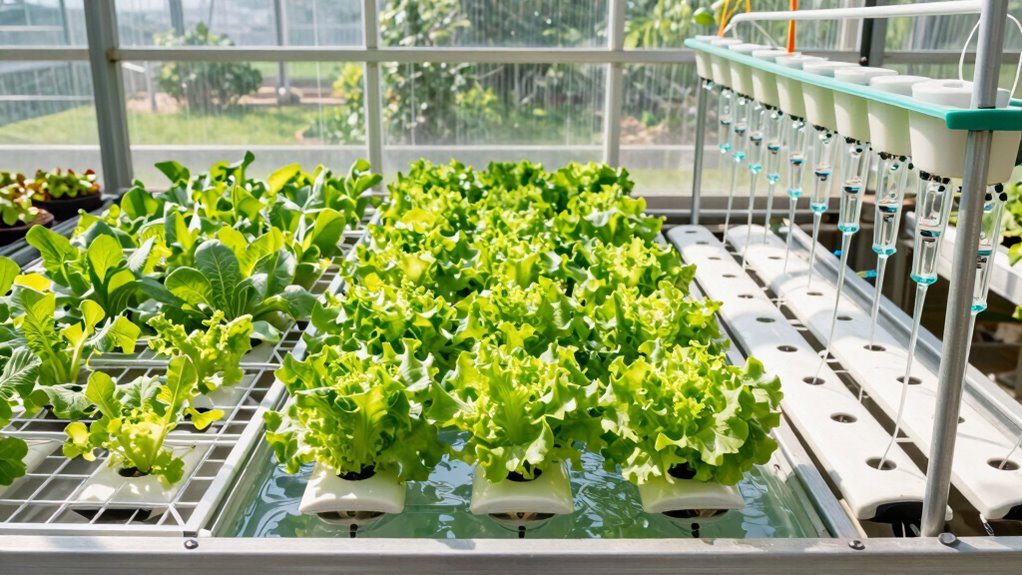

Choosing the right hydroponic system depends on your crop type, space, and management skills. If you’re growing leafy greens and want a compact setup, NFT offers easy monitoring and low costs. For bigger plants or faster growth, DWC provides rapid nutrient absorption but requires more space. Drip systems are versatile and customizable, fitting various crops and setups. Keep exploring to uncover which system best suits your greenhouse and growing goals.

Get garden gear delivered free — and shop member deals
- Fast, free delivery on millions of items
- Access to Prime Big Deal Days deals on October 6–7
- Prime Video, Amazon Music and more included
Key Takeaways
- Choose NFT for space-efficient, leafy greens and herbs requiring steady nutrient flow and easy monitoring.
- Opt for DWC if growing larger plants or seeking rapid nutrient absorption with simpler setup.
- Select drip systems for high flexibility, customization, and suitable for various crops and larger greenhouse environments.
- Consider DWC’s higher initial cost and maintenance needs versus NFT and drip systems’ lower setup complexity.
- Match your regional environment and water management skills to the system’s requirements for optimal results.
NFT hydroponic system for leafy greens
As an affiliate, we earn on qualifying purchases.
As an affiliate, we earn on qualifying purchases.
Understanding How NFT, DWC, and Drip Systems Work
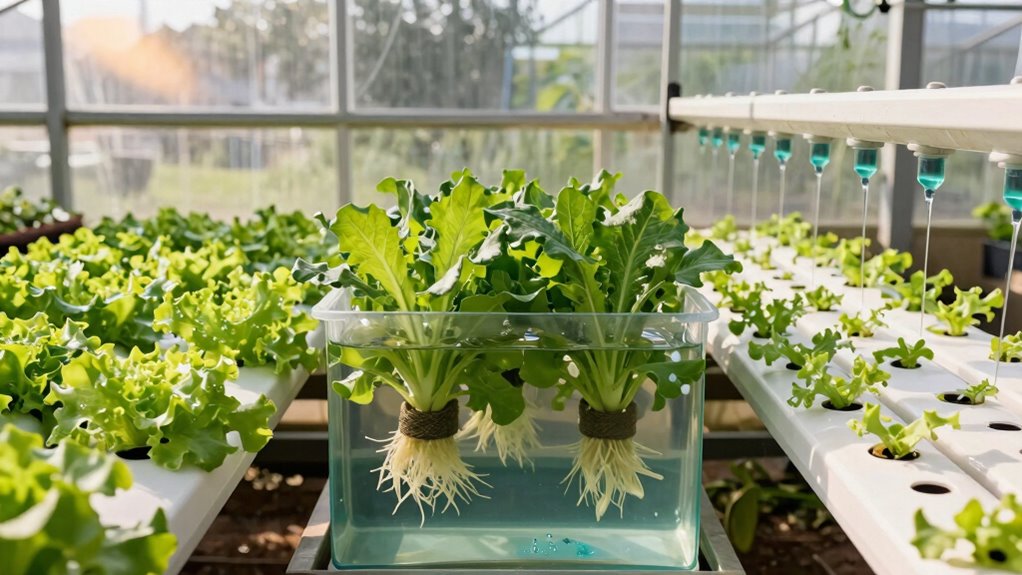
When exploring hydroponic systems, it’s important to understand how each one functions to meet plant needs effectively. Nutrient delivery varies across systems; NFT continuously circulates a nutrient-rich solution over the roots, ensuring steady access. DWC suspends roots directly in a nutrient solution, providing constant contact and allowing for rapid absorption. Drip systems deliver nutrients slowly through tubing, giving precise control over feeding. Root support also differs: NFT uses a sloped channel that supports plants at the base, while DWC relies on a sturdy net pot suspended in the reservoir. Drip systems support roots with growing media in containers, preventing waterlogging. Knowing how these systems handle nutrient delivery and root support helps you decide which setup best suits your plants and space.
Which Hydroponic System Is Easiest for Beginners?
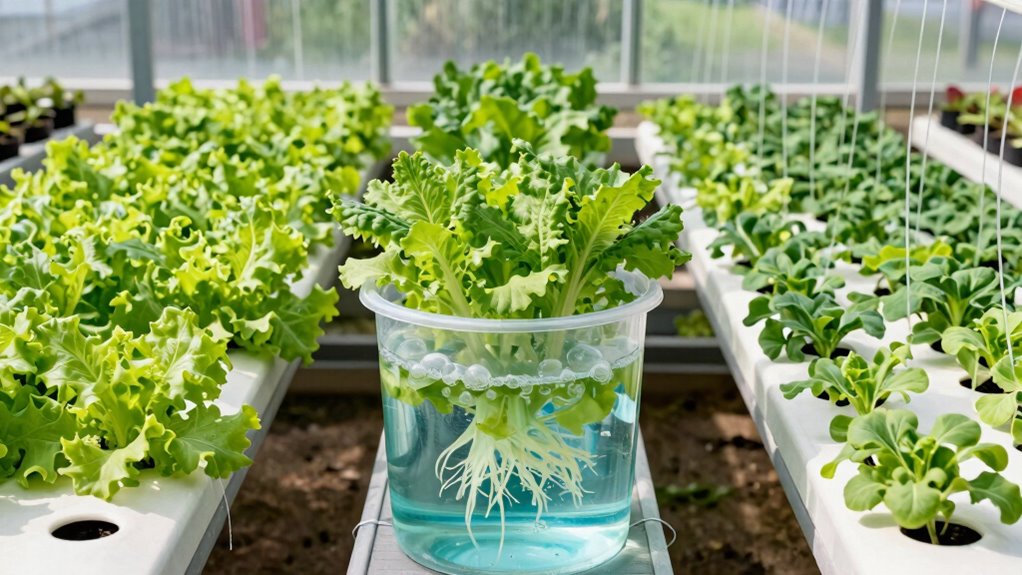
If you’re just starting out, you’ll want a system with simple setup and low maintenance. Some systems require more equipment and ongoing care, making them trickier for beginners. Consider these factors to find the easiest option for your level. Additionally, understanding digital content formats can help you access tutorials and resources more effectively. For beginners, choosing a user-friendly design can make the learning curve much smoother. Incorporating systems with high contrast ratios can also improve visibility and reduce troubleshooting. Exploring artistic influences such as those seen in modern art movements can inspire innovative approaches to your hydroponic setup.
Setup Complexity Levels
For beginners venturing into hydroponics, choosing a system with simple setup requirements can make all the difference. The easiest systems typically have straightforward assembly and minimal equipment. Here are four options to think over:
- Deep Water Culture (DWC): Simple to set up with a container, net pots, and an air pump, making plant nutrition management straightforward.
- Nutrient Film Technique (NFT): Uses a gentle slope for nutrient flow, requiring basic plumbing skills but offering easy monitoring.
- Drip System: Involves drip emitters and tubing, which are easy to install but need regular checks to prevent clogging.
- Wick System: Requires minimal parts, making it ideal for absolute beginners focusing on pest management and plant nutrition.
All these systems are beginner-friendly, but DWC is often the simplest.
Maintenance Requirements
Of the various hydroponic systems, the Wick System stands out as the easiest for beginners to maintain. It requires minimal effort in managing plant nutrition, as wicks naturally supply nutrients directly to roots without complicated pumps or timers. You won’t need to worry about pH balancing or nutrient solutions constantly, making it low-maintenance. Pest management is straightforward too; since the system is simple and contained, pests are less likely to thrive or spread quickly. Regular checks for mold or algae are enough to keep it healthy. Overall, the Wick System offers a user-friendly experience, requiring less hands-on time and technical knowledge, making it perfect for beginners wanting a straightforward, low-maintenance hydroponic setup.
What Are the Space and Setup Needs for Each System?
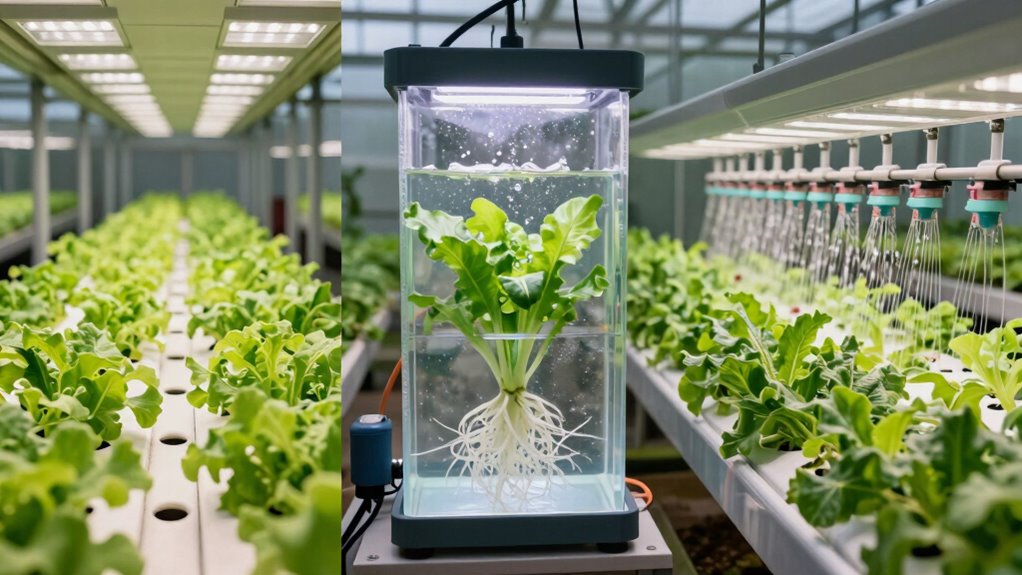
Understanding the space and setup requirements for each hydroponic system helps you choose the right one for your available area. Each system has unique needs:
- NFT systems are compact, requiring a sloped channel for water circulation and space-efficient plant nutrient delivery.
- DWC setups need a sizable container to hold water and aeration equipment, suitable for larger, rooted plants.
- Drip systems demand space for drip emitters and tubing, ideal for targeted plant nutrition.
- All systems benefit from easy access for maintenance, with DWC needing more room for water circulation equipment and plant growth.
- Proper space management ensures that each hydroponic system operates smoothly and promotes healthy plant growth.
Consider your space, airflow, and access to water circulation when selecting a system. This will ensure smooth operation and healthy plant growth.
How Much Do NFT, DWC, and Drip Systems Cost and Require Maintenance?
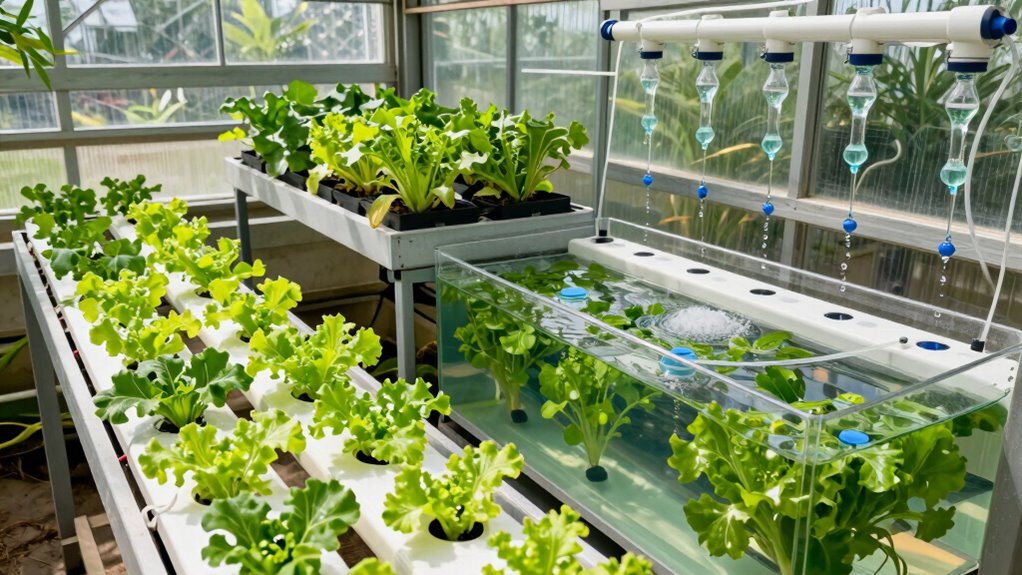
When choosing between NFT, DWC, and drip hydroponic systems, you’ll find that their initial costs and maintenance needs vary considerably. NFT systems are budget-friendly upfront but require regular monitoring of nutrient concentration and pH stability. DWC setups are slightly more expensive initially and demand consistent oxygenation and cleaning. Drip systems have moderate costs and need ongoing adjustments to prevent clogging and ensure even nutrient delivery.
| System | Initial Cost | Maintenance Focus |
|---|---|---|
| NFT | Low | Nutrient concentration, pH stability |
| DWC | Moderate | Oxygenation, cleaning |
| Drip | Moderate | Clogging prevention, nutrient balance |
Understanding these factors helps you select a system aligned with your budget and maintenance capacity.
Which System Delivers the Best Growth and Yields?
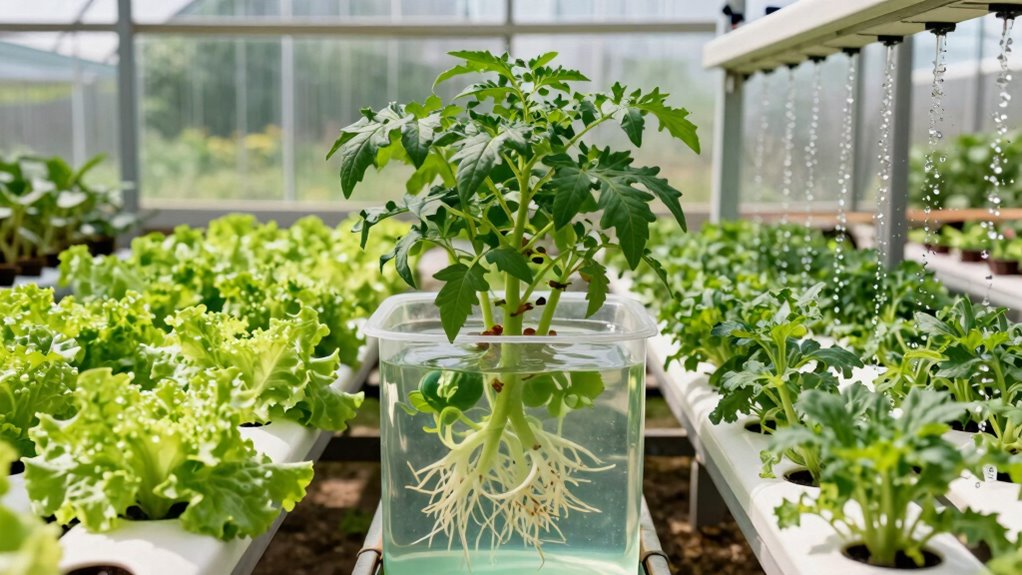
When it comes to growth rate and speed, some systems can produce faster results than others, affecting how quickly you see returns. Yield consistency and quantity also vary, making it essential to choose a setup that maximizes both reliability and output. Understanding these points helps you pick the hydroponic system that will give you the best growth and yields.
Growth Rate and Speed
Among various hydroponic systems, nutrient film technique (NFT) and deep water culture (DWC) often outperform others in promoting rapid growth and higher yields. These systems excel because they maximize plant nutrient delivery and water circulation. To maximize growth speed:
- Ensure a steady flow of plant nutrient-rich water, which provides consistent access to essential nutrients.
- Maintain ideal oxygen levels in water, boosting root health and growth.
- Keep water circulation strong to prevent stagnation, supporting faster nutrient uptake.
- Adjust water temperature to promote quicker metabolic processes.
Both systems promote faster growth by delivering nutrients directly to roots and maintaining continuous water movement, which accelerates plant development and shortens harvest times.
Yield Consistency and Quantity
Building on the rapid growth advantages of NFT and DWC systems, their ability to deliver consistent yields is a key factor for growers aiming for reliable production. Both systems excel at ensuring ideal nutrient absorption because they maintain a steady supply of nutrients directly at the root zone. This continuous access helps plants develop uniformly, resulting in predictable harvests. DWC, with its deeper water reservoir, often provides more stable conditions, leading to higher yield consistency in varying environmental factors. NFT systems, while faster, may experience fluctuations in nutrient delivery if not properly managed. Ultimately, the system that maintains a stable root zone environment and consistent nutrient flow will deliver the best growth and yields over time.
Common Challenges and How to Troubleshoot Them
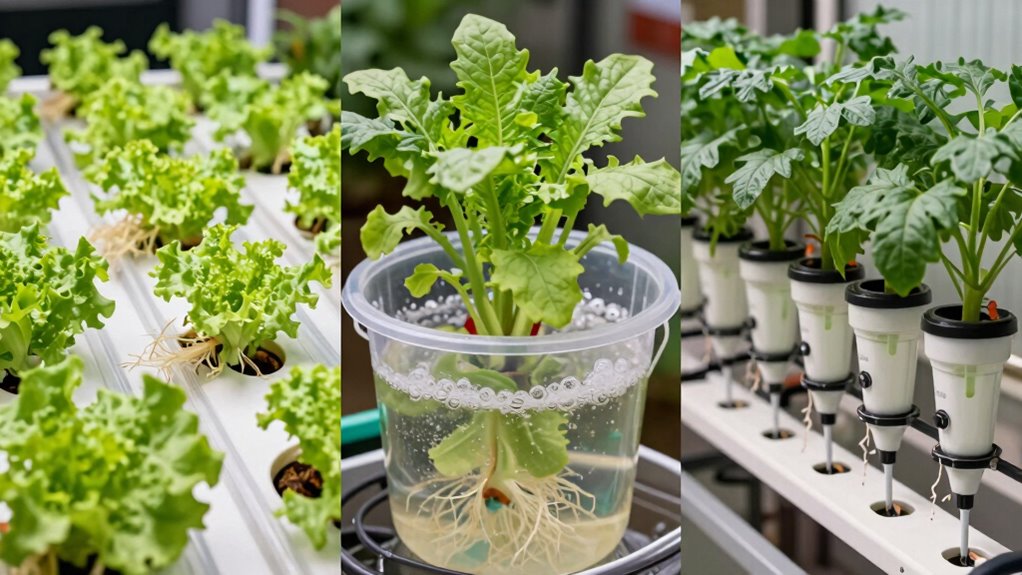
Have you ever wondered why your hydroponic system isn’t performing as expected? Common issues often stem from pest management problems or nutrient imbalances. Here’s how to troubleshoot effectively:
- Check for pests regularly and implement integrated pest management strategies to prevent infestations.
- Test nutrient levels frequently to verify proper nutrient balancing; adjust your solution if plants show deficiencies or excesses.
- Inspect the roots for signs of disease or blockages, especially in DWC systems, and clean or replace parts as needed.
- Monitor water pH and temperature to prevent stress and promote healthy growth.
Addressing these challenges promptly helps maintain system efficiency and healthy plants, avoiding bigger problems down the line.
Who Should Pick NFT, DWC, or Drip for Their Greenhouse?
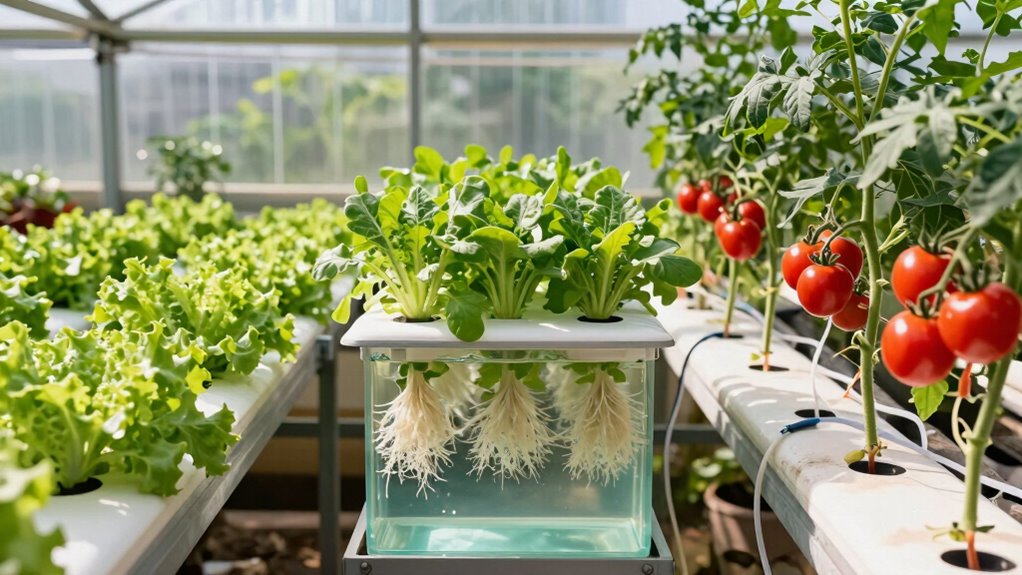
Choosing the right hydroponic system depends on your specific needs, space, and experience level. If you want a system that promotes efficient water circulation and consistent plant nutrient delivery, NFT might be ideal for you, especially for leafy greens and herbs. It’s lightweight and works well in narrow spaces. DWC is better if you’re looking for a simple setup that provides a steady supply of plant nutrient-rich water, suitable for larger plants or those needing more support. Drip systems are flexible and customizable, making them suitable for various plant types and larger greenhouses. Consider your knowledge of water circulation and how much you want to automate or control nutrient delivery. Your choice should match your growing goals and your ability to manage water and nutrient flow effectively.
Choosing the Right Hydroponic System for Your Growing Goals
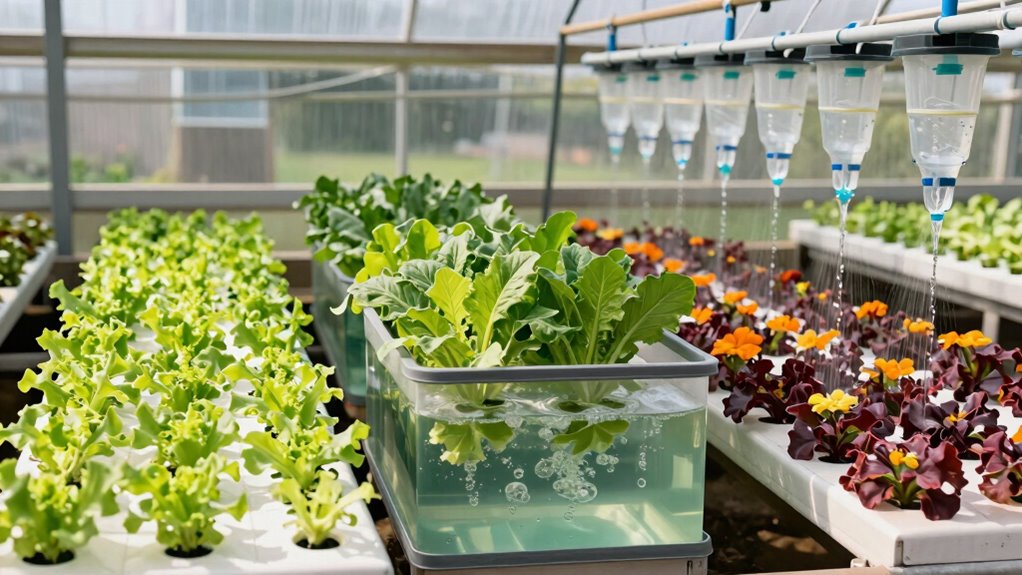
Selecting the right hydroponic system hinges on aligning it with your specific growing goals. To do this effectively, consider these key factors:
- Type of crops you want to grow—some systems suit leafy greens, while others excel with fruiting plants.
- Nutrient management—choose a system that simplifies monitoring and adjusting nutrients for ideal growth.
- pH balancing—pick a setup that allows easy pH adjustments, ensuring plants absorb nutrients correctly.
- Maintenance and scalability—assess how much effort you’re willing to put in and whether the system can grow with your skills.
- Understanding the regional landscape—consider how local climate and environment can influence your hydroponic setup and its success.
Matching these factors with your goals helps you select a hydroponic system that maximizes productivity and minimizes issues related to nutrient management and pH balancing, leading to healthier plants and higher yields.
Frequently Asked Questions
Can These Systems Be Combined for Better Results?
Yes, you can combine hydroponic systems like NFT, DWC, and Drip for better results. System integration allows you to optimize crop compatibility, tailoring nutrient delivery to different plant needs. By blending systems, you improve efficiency and yield, especially if you grow diverse crops. Just make certain each system’s strengths complement each other, and you’ll create a more resilient and productive greenhouse environment.
Which System Is Most Energy-Efficient?
You’ll find that the NFT system is the most energy-efficient, thanks to its minimal water use and quick nutrient delivery. It conserves water and boosts nutrient efficiency because it recirculates a thin film of nutrient solution, reducing waste. DWC and drip systems often consume more energy due to their pumps and timers, but NFT’s streamlined design makes it ideal if you want to save on energy while maintaining healthy plant growth.
How Do Climate Conditions Affect System Performance?
Did you know that 70% of hydroponic growers find climate conditions considerably impact their systems? Climate influences system performance by affecting nutrient delivery, root health, and oxygen levels. For ideal climate adaptability, maintain environmental stability—consistent temperature, humidity, and airflow. You’ll guarantee your hydroponic system functions efficiently, regardless of external variations, helping your plants thrive and reducing system failures caused by fluctuating weather conditions.
Are There Specific Crops Best Suited for Each System?
You’ll find that crop compatibility varies across hydroponic systems. For NFT, leafy greens and herbs thrive due to their shallow root systems, ensuring efficient nutrient absorption. DWC suits larger crops like tomatoes and strawberries, supporting robust growth and nutrient uptake. Drip systems work well with a variety of vegetables, offering precise nutrient delivery. Consider your crop types and their nutrient absorption needs to choose the best system for your greenhouse.
How Scalable Are These Hydroponic Systems for Large Operations?
You can scale NFT, DWC, and drip systems for large operations, but consider cost efficiency and maintenance. NFT systems are highly scalable due to their modular design, allowing easy expansion, but they may need more frequent monitoring. DWC systems handle larger volumes well with lower maintenance, making them ideal for big setups. Drip systems are flexible but require consistent maintenance to prevent clogging, impacting long-term scalability and operational costs.
Conclusion
Choosing the right hydroponic system is like finding the perfect dance partner—each has its rhythm and style. Whether you prefer the simplicity of NFT, the deep-water comfort of DWC, or the precise touch of drip, your ideal match depends on your space, budget, and goals. With patience and a keen eye, you’ll discover the system that helps your greenhouse flourish, turning your growing dreams into a lush, vibrant reality.
Fall yard work Picks
leaf blowers
As an affiliate, we earn on qualifying purchases.