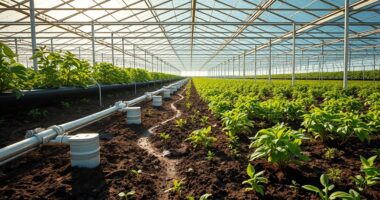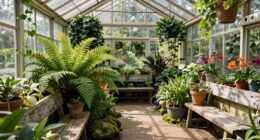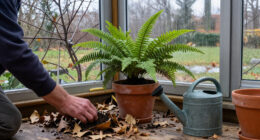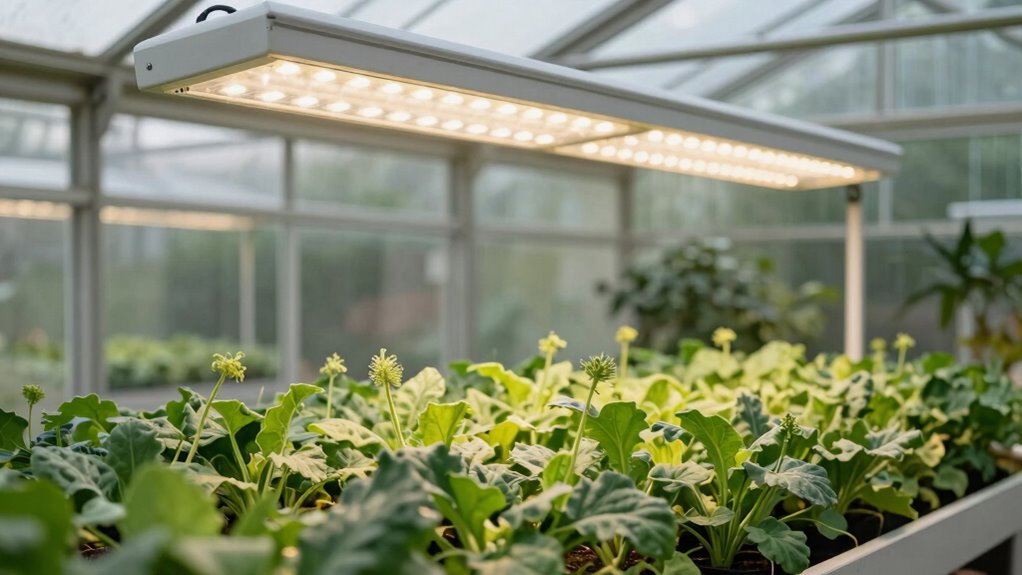

To add supplemental light without overcomplicating your greenhouse, focus on simple, quality LED grow lights paired with timers for easy automation. Position the lights about 12 to 24 inches above your plants and adjust based on their growth and response. Keep the setup user-friendly by avoiding too many adjustments and monitor plant reactions to tweak the light duration and placement. If you want practical tips to maximize efficiency and keep things straightforward, there’s more to explore.

Get garden gear delivered free with Prime
- Fast, free delivery on millions of items
- Prime Video, Amazon Music and more included
- Member-only deals all year
Key Takeaways
- Use energy-efficient LED grow lights with adjustable height and spectrum for easy customization.
- Employ simple timers to automate light cycles, reducing manual adjustments.
- Position lights 12-24 inches above plants for even coverage without hotspots.
- Monitor plant responses and adjust light distance or duration to prevent overexposure.
- Keep setup minimal with quality equipment to ensure reliable, straightforward operation.
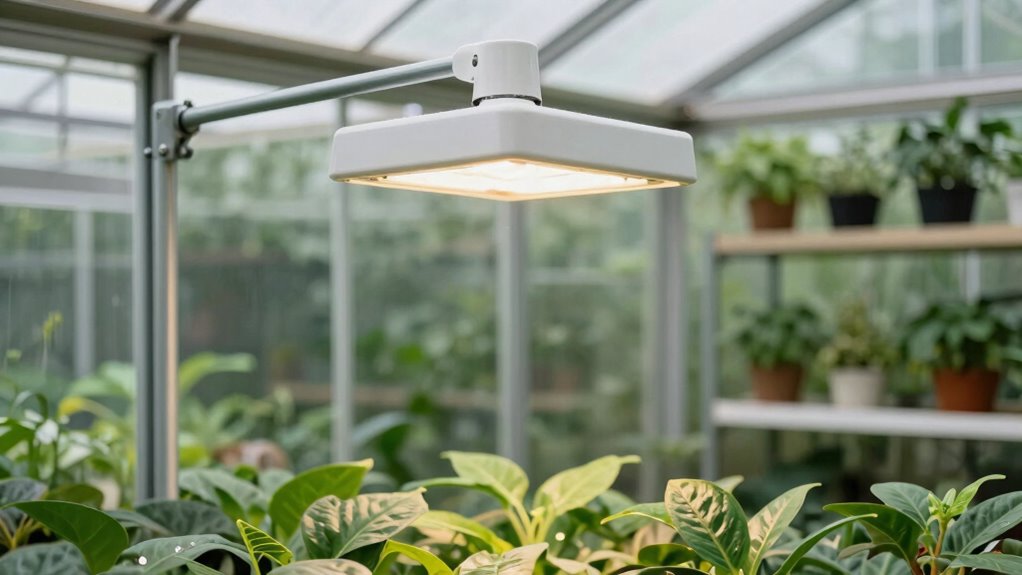
If you want your greenhouse plants to thrive year-round, adding supplemental light is a smart solution. Natural sunlight can be limited during winter months or cloudy days, which hampers plant growth. To keep your plants healthy and productive, you need a reliable, straightforward approach to supplement their light. LED grow lights are an excellent choice because they are energy-efficient, long-lasting, and customizable to your needs. When choosing LED grow lights, consider how much light your plants require and the space you’re working with. Setting up the right lighting system doesn’t have to be complicated—just ensure the lights are positioned correctly and operate on a proper schedule.
Supplement your greenhouse with energy-efficient LED grow lights for healthy, year-round plant growth.
Light duration plays a crucial role in how effectively your plants use supplemental lighting. Most plants need around 12 to 16 hours of light per day for optimal growth, but this can vary depending on the specific species. Using a timer makes it easy to manage the light duration without having to remember to turn lights on and off manually. This not only simplifies your routine but also prevents overexposure, which can stress plants and inhibit growth. For most greenhouse setups, a timer set to deliver consistent light cycles is all you need to maintain a healthy environment. Additionally, understanding the importance of light spectrum can help you select the most effective LED grow lights for your plants’ needs.
You don’t have to get overly technical to add supplemental light without overcomplicating your greenhouse. Position the LED grow lights about 12 to 24 inches above your plants, adjusting based on the intensity of the lights and the plant’s growth stage. Keep an eye on how your plants respond; if they start to stretch or show signs of stress, you might need to tweak the light distance or duration. Remember, too much light can be just as problematic as too little, so moderation is key. Proper light placement ensures even distribution and prevents hotspots that could harm your plants. It’s also helpful to consider lighting efficiency to maximize your setup’s effectiveness without increasing energy costs. Properly managing light quality can further enhance plant health and growth outcomes.
Integrating supplemental light into your greenhouse can be seamless if you focus on the essentials: quality LED grow lights, proper light duration, and simple timers. This way, you ensure your plants receive the consistent, adequate light they need without creating unnecessary complexity. With a little planning, you’ll foster a thriving environment that supports healthy growth all year long. The goal is to make your setup as user-friendly as possible, so you can enjoy the benefits of a productive greenhouse without the hassle of complicated systems.
energy-efficient LED grow lights for greenhouse
As an affiliate, we earn on qualifying purchases.
As an affiliate, we earn on qualifying purchases.
Frequently Asked Questions
What Is the Ideal Color Temperature for Greenhouse Supplemental Lighting?
The ideal color temperature for greenhouse supplemental lighting is around 5000K to 6500K, which offers a full light spectrum similar to natural daylight. This range promotes healthy plant growth and guarantees peak photosynthesis. You should also consider lighting duration, providing 12 to 16 hours of light daily, depending on your plants’ needs. Balancing the right color temperature with proper lighting duration helps you maintain a simple, effective greenhouse setup.
How Often Should Supplemental Lights Be Turned on and Off?
You should turn your supplemental lights on for about 12-16 hours daily, adjusting based on your plants’ needs and natural light conditions. Keep an eye on light duration and light intensity, ensuring they aren’t too harsh or too weak. Regularly monitor plant responses, and if they seem stressed or leggy, reduce light duration or intensity. Consistency is key to promoting healthy growth without overcomplicating your greenhouse setup.
Can Solar-Powered Lights Be Effective for Greenhouse Supplementation?
Solar-powered lights can certainly be effective for greenhouse supplementation if you focus on solar efficiency and smart light placement. You’ll want to position lights where they catch maximum sunlight and minimize shading, ensuring they harness enough solar energy. Proper placement boosts efficiency, so your plants get consistent, supplemental illumination. While they might not match grid-powered lights in intensity, well-placed solar lights can reliably support plant growth, especially during shorter days or overcast periods.
What Safety Precautions Are Necessary When Installing Supplemental Lighting?
You should prioritize electrical safety by ensuring all wiring is properly insulated and grounded to prevent shocks. When installing supplemental lighting, position lights carefully to avoid overheating plants or causing shadows that hinder growth. Use appropriate fixtures rated for greenhouse environments, and double-check connections before powering on. Regularly inspect the system for wear or damage, and follow manufacturer instructions to keep your setup safe and effective.
How Do I Measure the Effectiveness of Supplemental Lighting in My Greenhouse?
You measure the effectiveness of supplemental lighting by checking light intensity with a PAR meter or light sensor, ensuring it matches your plants’ needs. Track plant growth and health over time, noting improvements. Focus on energy efficiency by comparing energy use to plant response. If plants thrive with minimal energy, your lighting setup is efficient. Regularly adjust light levels based on season and plant stage for peak results.
Conclusion
By keeping your supplemental lighting simple, you might just find that your plants thrive more effortlessly — almost like nature’s own coincidence. When you choose the right lights and set them up thoughtfully, you create a cozy, balanced environment without overcomplicating things. Sometimes, the best solutions happen when you least expect them, blending convenience with growth. So, enjoy the process, and watch your greenhouse flourish — all thanks to a little well-placed light.
Halloween Picks
halloween
As an affiliate, we earn on qualifying purchases.