
Vapor Pressure Deficit (VPD) is crucial for greenhouse growers because it directly affects plant transpiration, health, and yield. You need to maintain the right VPD by balancing temperature and humidity—too high stresses plants, too low encourages pests and diseases. Proper VPD management optimizes growth stages and nutrient uptake, helping your crops thrive. If you keep adjusting environmental controls carefully, you’ll see healthier plants and better results. Keep going to learn how to master this essential tool.

Get garden gear delivered free with Prime
- Fast, free delivery on millions of items
- Prime Video, Amazon Music and more included
- Member-only deals all year
Key Takeaways
- VPD is crucial for optimizing plant transpiration, nutrient uptake, and overall growth in greenhouse environments.
- Maintaining the right VPD reduces stress, disease risk, and pest susceptibility for healthier plants.
- Regular monitoring with sensors and adjusting temperature and humidity keeps VPD within ideal ranges.
- VPD needs vary by growth stage; lower during vegetative growth, higher during flowering.
- Proper VPD management ensures consistent environmental conditions, leading to better crop yields and plant resilience.
As an affiliate, we earn on qualifying purchases.
What Is Vapor Pressure Deficit and Why Should Greenhouse Growers Care?
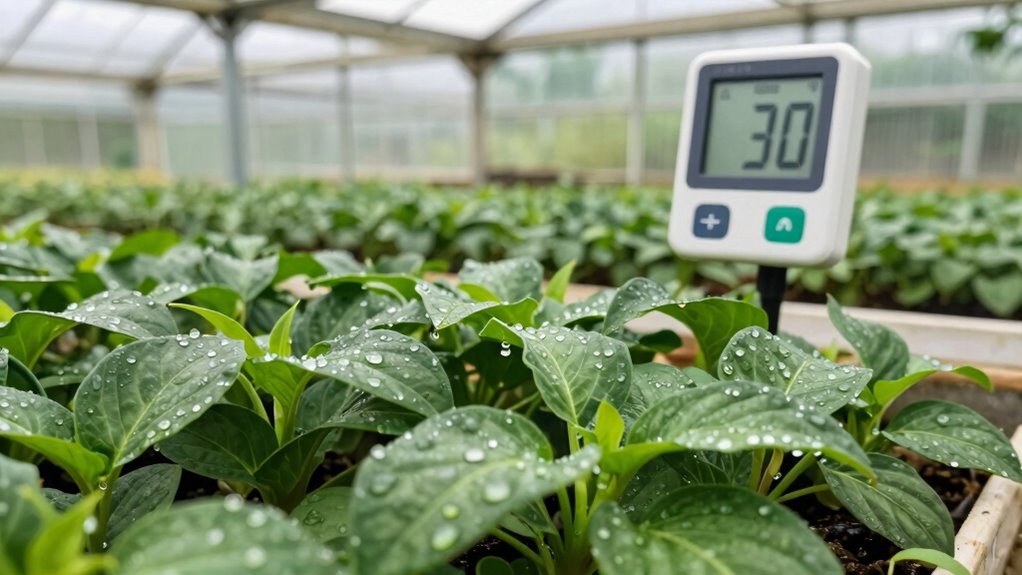
Understanding vapor pressure deficit (VPD) is essential for greenhouse growers because it directly influences plant health and growth. Many VPD misconceptions exist, often leading growers to ignore its importance or misinterpret how to manage it. VPD technology has advanced, providing precise tools to measure and control humidity and temperature, ensuring ideal VPD levels. When you understand VPD, you can prevent issues like overwatering or dehydration, which harm plants. Proper VPD management promotes healthy transpiration, nutrient uptake, and growth rates. Recognizing the significance of accurate environmental monitoring in VPD management enables growers to make informed decisions and improve crop outcomes. Ignoring VPD can result in poor yields or disease susceptibility. By leveraging VPD technology and dispelling misconceptions, you gain better control over your environment, ensuring your plants thrive efficiently and consistently. It’s a crucial aspect of modern greenhouse cultivation that can’t be overlooked. Additionally, understanding the role of contrast ratio can help optimize light conditions and improve overall plant productivity. Incorporating microplastics in dust considerations can also improve indoor air quality and contribute to healthier growing environments, especially as advancements in sensor technology make environmental control more precise. Furthermore, understanding how VPD interacts with temperature and humidity allows growers to fine-tune their environmental settings for optimal plant health.
How VPD Affects Plant Transpiration and Growth
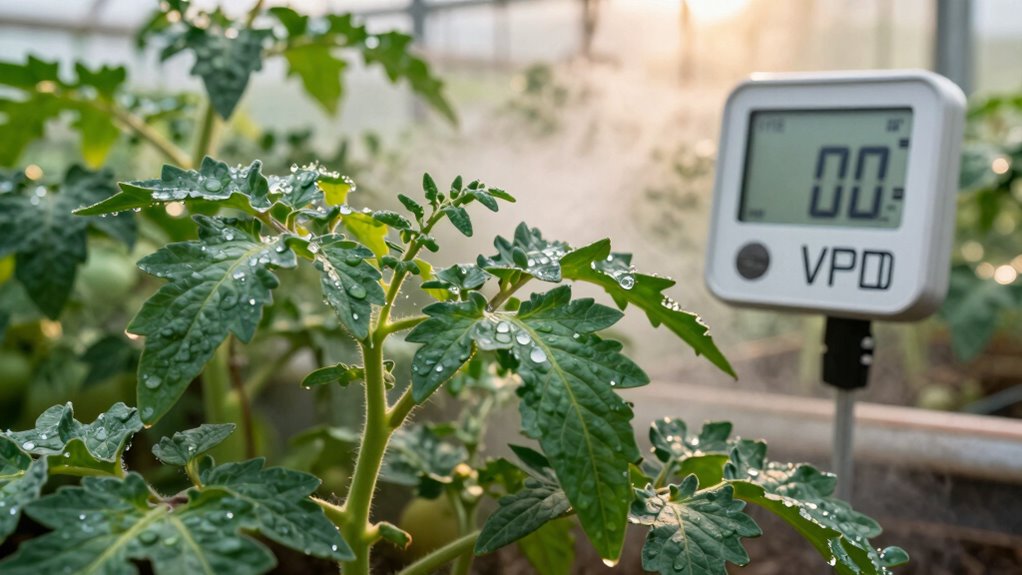
Vapor pressure deficit (VPD) directly impacts how plants transpire, which in turn influences their growth and overall health. When VPD is high, plants lose water faster, increasing the risk of plant water stress and decreasing transpiration efficiency. Conversely, low VPD can slow transpiration, leading to inadequate nutrient uptake. Here’s how VPD affects your plants:
High VPD increases water loss, risking stress; low VPD slows transpiration, limiting nutrient uptake and plant vitality.
- High VPD accelerates water loss, risking stress and stunted growth.
- Optimal VPD promotes balanced transpiration, boosting growth and nutrient absorption.
- Low VPD can cause insufficient transpiration, reducing plant vigor.
- Managing VPD helps maintain steady water uptake, ensuring healthy development and maximizing transpiration efficiency. Proper ventilation and humidity control are essential components of climate management that influence VPD levels. Maintaining accurate sensor calibration is also crucial for effective VPD control. Additionally, understanding the environmental factors that influence humidity can help optimize VPD conditions.
- Understanding the role of transpiration in plant health highlights the importance of controlling environmental factors like VPD for optimal growth. Implementing effective humidity control strategies is crucial for maintaining ideal VPD conditions and supporting plant resilience.
Understanding and controlling VPD allows you to optimize plant health and growth rates.
How to Measure and Monitor VPD in Your Greenhouse
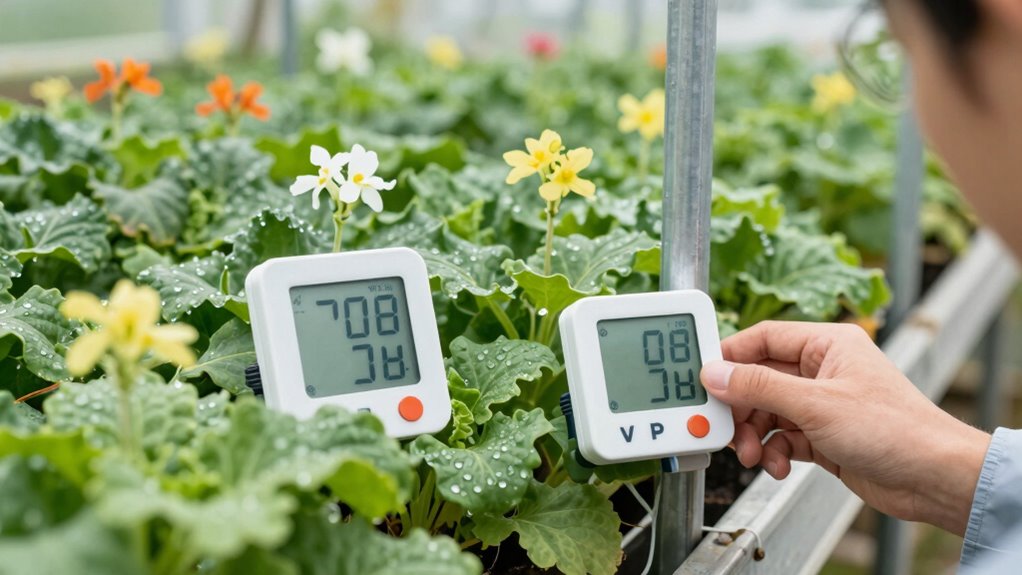
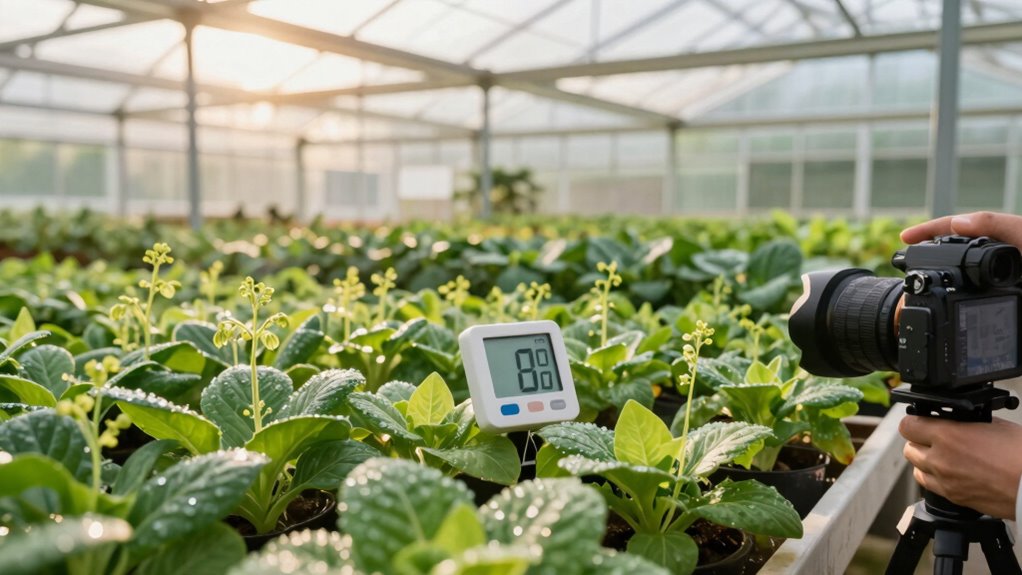
Ever wonder how to accurately measure VPD in your greenhouse? To do so, you’ll need a reliable hygrometer and thermometer to track temperature and humidity. Regular monitoring helps you detect plant stress early and adjust conditions accordingly. Use the table below to record your readings consistently:
| Time of Day | Temperature (°F) | Humidity (%) | Calculated VPD | Notes |
|---|---|---|---|---|
| Morning | Pest activity check | |||
| Midday | Adjust ventilation | |||
| Afternoon | Watch for plant stress | |||
| Evening | Prepare for night | |||
| Night | Maintain ideal VPD |
Monitoring VPD helps prevent stress and pest issues, ensuring healthier plants and better yields. Understanding free floating conditions can also assist in maintaining optimal greenhouse environments. Additionally, maintaining proper water damage and rug cleaning routines can help preserve the humidity levels and overall cleanliness of your growing space. Regularly checking humidity control devices ensures consistent environment conditions, which is crucial for healthy plant growth. Being aware of plant transpiration rates can further aid in fine-tuning your environmental controls for optimal growth conditions. Incorporating knowledge of plant physiology can enhance your ability to create ideal conditions that promote vigorous growth and productivity.
What Is the Ideal VPD Range for Your Crops and Growth Stage?
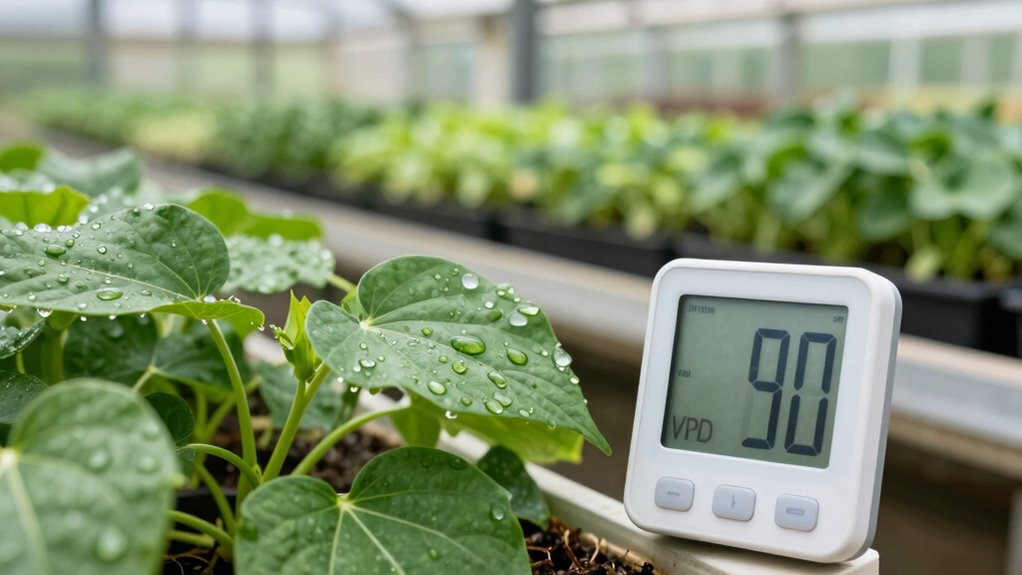
Knowing the ideal VPD range for your crops at different growth stages is essential for optimizing plant health and productivity. Correct VPD supports proper plant nutrition, minimizes stress, and enhances growth. During early vegetative stages, aim for a VPD of 0.8–1.2 kPa to promote vigorous root development. Flowering and fruiting stages benefit from a slightly higher VPD of 1.2–1.5 kPa to increase transpiration and nutrient uptake. Too low a VPD can cause pests and diseases, while too high can stress plants. To keep your crops thriving, consider these key factors: wall art trends such as interactive murals or digital frames can also enhance the workspace environment for growers, promoting a more engaging atmosphere.
How to Adjust Temperature and Humidity to Control VPD Effectively

Adjusting temperature and humidity is essential for managing VPD effectively, as these two factors directly influence the moisture content in the air and, consequently, plant transpiration. To maximize climate adaptation, monitor your greenhouse conditions closely and make incremental adjustments. Increase temperature to lower humidity if VPD is too low, encouraging better transpiration and growth. Conversely, reduce temperature or increase humidity to raise VPD when it’s too high, preventing stress. Maintaining proper VPD helps control pest populations, as many pests thrive in specific humidity ranges. Regularly calibrate sensors and use ventilation, foggers, or heaters to fine-tune humidity and temperature. Thoughtful adjustments ensure your crops grow under ideal conditions, reducing stress and supporting healthy development.
Common Mistakes in Managing VPD and How to Avoid Them

One common mistake growers make when managing VPD is relying solely on sensor readings without considering the overall context of their greenhouse environment. This can lead to misjudging conditions and affecting crop health. To avoid this:
- Overlooking crop selection — different plants have varying VPD needs, so choose crops suited to your environment.
- Ignoring pest management — high VPD can stress plants, making them more vulnerable to pests; managing pests is essential.
- Relying only on sensors — always verify readings with visual inspections and environmental cues.
- Neglecting airflow — poor air circulation can skew VPD and promote disease; guarantee proper ventilation.
Practical Strategies to Optimize VPD for Better Yields and Healthy Plants
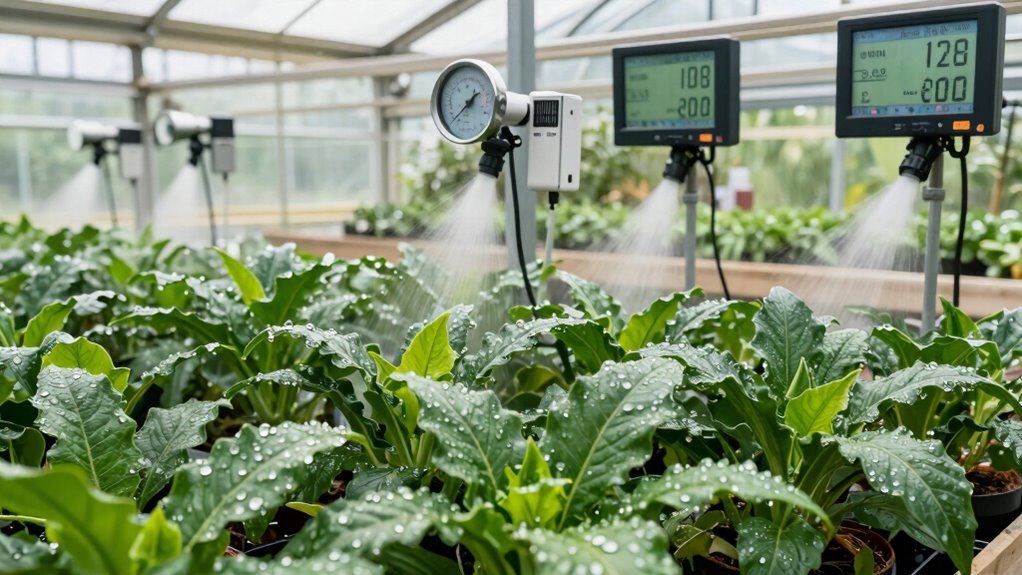
To optimize VPD for better yields and healthier plants, you need to implement practical strategies that balance temperature and humidity effectively. Start by monitoring environmental conditions closely and adjusting heating and ventilation systems to maintain ideal VPD levels specific to your crops. Ensure your plant nutrition supports healthy growth, as strong plants handle VPD fluctuations better. Manage pests proactively, since stressed plants are more vulnerable, and stable VPD reduces pest issues. Regularly calibrate sensors to avoid inaccuracies. Use dehumidifiers or fans to fine-tune humidity, avoiding extremes. Consistent VPD management creates an ideal environment, promoting robust growth and maximizing yields. Incorporating these strategies allows you to maintain excellent plant health, reduce pest problems, and improve overall productivity in your greenhouse. Understanding the basic principles of environmental control can further enhance your ability to fine-tune conditions effectively, especially when considering the role of sensors in maintaining precise environmental parameters. Additionally, paying attention to environmental fluctuations helps prevent sudden changes that could stress your plants.
Frequently Asked Questions
How Does VPD Influence Disease Development in Greenhouse Environments?
You should know that VPD influences disease development in your greenhouse by affecting moisture levels, which impacts pathogen proliferation. Higher VPD can reduce leaf wetness, aiding in disease suppression, while low VPD creates a humid environment that promotes pathogen growth. Maintaining ideal VPD balances moisture, helping you control disease spread and keep your plants healthier. Proper VPD management is key to preventing disease outbreaks and supporting robust plant growth.
Can VPD Management Reduce Energy Costs in Greenhouse Operations?
Yes, managing VPD can reduce energy costs in your greenhouse. By maintaining VPD levels, you improve climate control efficiency, leading to less energy used for heating or cooling. This enhances energy efficiency and results in significant cost savings over time. Proper VPD management ensures your plants grow in ideal conditions without overusing climate control systems, helping you cut expenses while maintaining healthy, vigorous crops.
How Do Different Crop Types Respond Uniquely to VPD Variations?
Think of each crop as a different musician in an orchestra—each responds uniquely to VPD variations. You’ll find that leafy greens thrive with higher crop-specific humidity and precise VPD measurement techniques, while flowering plants prefer more moderate conditions. Adjusting VPD accordingly helps optimize growth and health. By monitoring these variations closely, you’ll fine-tune your environment, ensuring each crop plays its part perfectly in your greenhouse symphony.
What Tools or Technology Can Automate VPD Control Effectively?
You can automate VPD control effectively by using humidity sensors paired with automated ventilation systems. These sensors continuously monitor humidity levels, sending real-time data to control systems that automatically adjust ventilation to maintain ideal VPD. This setup reduces manual effort, ensures consistent environmental conditions, and improves crop health. Investing in reliable sensors and smart ventilation controls helps you maximize VPD management and enhances overall greenhouse productivity.
How Often Should VPD Levels Be Adjusted During a Crop Cycle?
You should adjust VPD levels regularly during a crop cycle, ideally based on real-time data from your humidity control and VPD calibration tools. Daily checks are common, but more frequent adjustments might be needed during critical growth stages or changing weather conditions. Keep monitoring humidity and temperature closely, and fine-tune VPD settings to guarantee ideal plant health and growth, preventing stress and promoting vigorous development.
Conclusion
So, now you’re a VPD expert—ready to turn your greenhouse into the botanical equivalent of a luxury spa. Just remember, managing VPD isn’t about magic or guesswork; it’s about paying attention, making tiny tweaks, and not panicking when things go sideways (which they will). With these tips, your plants will thank you with lush growth and bountiful yields—because nothing says “green thumb” like a little science-backed sarcasm. Happy growing!
Halloween Picks
halloween
As an affiliate, we earn on qualifying purchases.