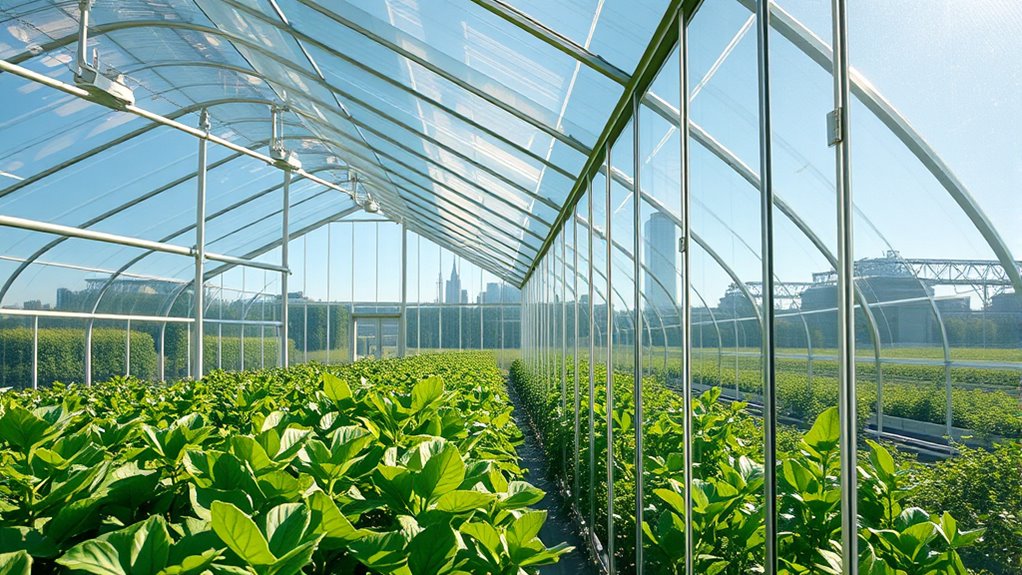

Recent innovations in transparent solar panels are transforming greenhouse design by allowing energy production without blocking sunlight for your crops. These panels use advanced materials like perovskites to maximize efficiency while remaining see-through. They can be customized to absorb specific wavelengths needed for plant growth and even respond dynamically to weather conditions. As a result, greenhouses become energy-generating spaces that support sustainable farming. Keep exploring to uncover how these technologies will shape the future of agriculture and renewable energy.
Key Takeaways
- Advances in materials like perovskites enable highly efficient, flexible transparent solar panels suitable for greenhouse integration.
- New designs allow selective wavelength absorption, optimizing light for plant growth while generating energy.
- Smart, adaptive panels can adjust transparency based on weather or crop needs, enhancing greenhouse productivity.
- Transparent solar technology transforms greenhouses into energy-generating ecosystems, reducing reliance on external power sources.
- Ongoing innovations aim to improve affordability, scalability, and environmental sustainability of solar-powered greenhouses.
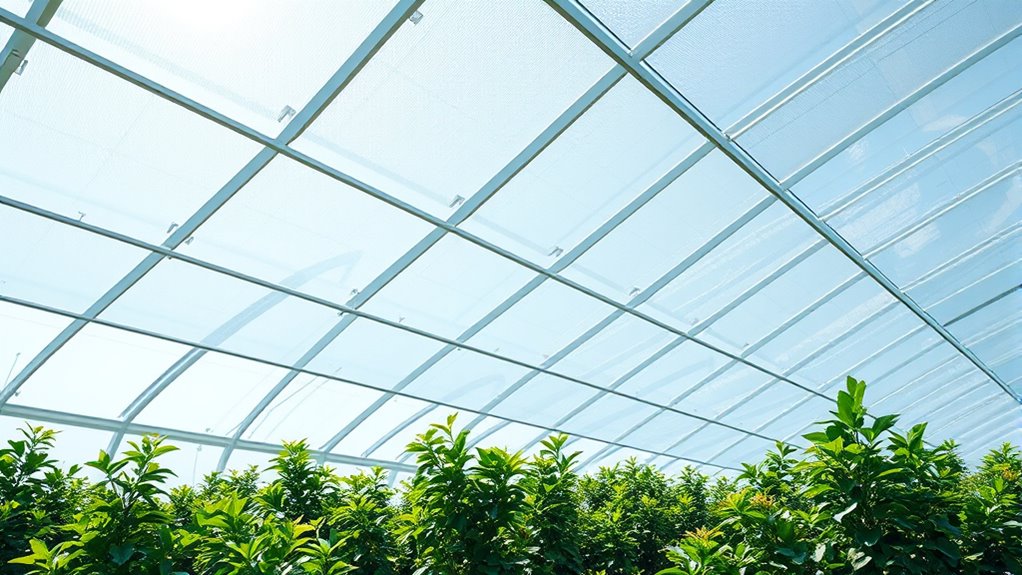
Have you ever wondered how solar technology is becoming more integrated into everyday life? One exciting development is the advancement of transparent solar panels, especially for greenhouses. These panels are designed to let light pass through while simultaneously capturing solar energy, making them perfect for agricultural environments where sunlight is essential for plant growth. Behind these innovations are rapid solar cell innovations and material advancements that are pushing the boundaries of what’s possible.
Recent progress in solar cell innovations has led to more efficient and versatile transparent panels. Engineers and scientists are developing new types of solar cells that maximize energy absorption without sacrificing transparency. These advancements involve tweaking the structure of the solar cells themselves, allowing them to harvest sunlight selectively and transmit the rest. As a result, greenhouse owners can enjoy the benefits of renewable energy without blocking vital sunlight needed for photosynthesis. This dual purpose of light transmission and energy generation marks a significant step forward in sustainable agriculture.
Material advancements play a crucial role in these improvements. Researchers are experimenting with innovative materials like perovskites and organic compounds that are inherently transparent and highly efficient at converting sunlight into electricity. These materials not only improve performance but also offer flexibility and easier integration into existing greenhouse structures. Their lightweight nature reduces installation costs and makes the panels adaptable to various shapes and sizes. Moreover, these new materials tend to be more environmentally friendly and cost-effective, making the technology more accessible to a broader range of users.
The integration of transparent solar panels into greenhouses isn’t just about energy savings; it’s also about optimizing the growing environment. These panels can be tailored to absorb specific wavelengths of light that are most beneficial for plant growth, further enhancing crop yield. As material advancements continue, we’re seeing panels that can dynamically adjust their transparency or energy absorption based on weather conditions or plant needs, creating smarter, more responsive systems.
In essence, the combination of solar cell innovations and material advancements is transforming greenhouses into efficient, energy-generating spaces. You’ll find that these innovations are making sustainable farming more practical and affordable. As research progresses, expect even more sophisticated transparent solar panels that seamlessly blend energy production with crop cultivation. This convergence of technology and agriculture is paving the way for greener, more resilient food systems, all while reducing reliance on fossil fuels and lowering carbon footprints.
Frequently Asked Questions
What Are the Long-Term Durability Concerns for Transparent Solar Panels?
You should be aware that long-term durability concerns for transparent solar panels include material degradation over time, which can reduce efficiency and transparency. Additionally, maintenance challenges like cleaning and repairing delicate components may become more frequent as panels age. Ensuring proper material selection and regular upkeep can help mitigate these issues, extending the panels’ lifespan and maintaining their functionality in greenhouse environments.
How Do Transparent Solar Panels Affect Plant Growth and Photosynthesis?
Ever wondered if transparent solar panels help or hinder plant growth? They allow light transmission, but some parts block specific wavelengths, affecting photosynthesis efficiency. While they generate energy, they can reduce the amount of sunlight reaching plants, potentially slowing growth. However, advanced designs aim to maximize light use. So, with the right balance, transparent solar panels can support healthy plant growth while producing solar energy simultaneously.
Are There Any Health Risks Associated With Using These Panels in Greenhouses?
You might wonder if transparent solar panels pose health risks in greenhouses. Generally, they’re safe, but consider air quality concerns and chemical leaching. Some panels could emit volatile compounds or leach chemicals, affecting air quality and plant health. Regular monitoring helps detect any issues early. Choose panels with proven safety standards, and verify proper installation to minimize potential health risks for both plants and humans.
What Is the Cost Comparison Between Transparent Solar Panels and Traditional Roofing?
You’ll find transparent solar panels often cost more upfront than traditional roofing, but they can be a smart investment in the long run. Their economic feasibility depends on installation costs and energy savings, which can offset initial expenses. While traditional roofing is cheaper initially, the added benefits of solar panels—like generating electricity—may tip the scales, making them a cost-effective choice in the grand scheme.
How Do Transparent Solar Panels Perform in Different Climate Conditions?
You’ll find transparent solar panels adapt well to various climates, enhancing climate adaptation by optimizing light transmission and energy efficiency. In cold, snowy conditions, they can still generate power while allowing sunlight to reach plants. In hot, sunny environments, they help reduce cooling costs. Overall, their performance stays consistent across climates, making them a smart, versatile choice for sustainable greenhouses that maximize energy efficiency regardless of location.
Conclusion
As you explore these breakthroughs in transparent solar panels, you can’t help but imagine a future where greenhouses are powered by sunlight so efficiently, it’s as if they harness the very energy of the sun itself. These innovations are transforming agriculture and renewable energy, making sustainable growth seem almost limitless. With every new development, you’re witnessing a revolution that could change the world’s approach to green energy forever—truly, it’s the dawn of a brighter, greener era.