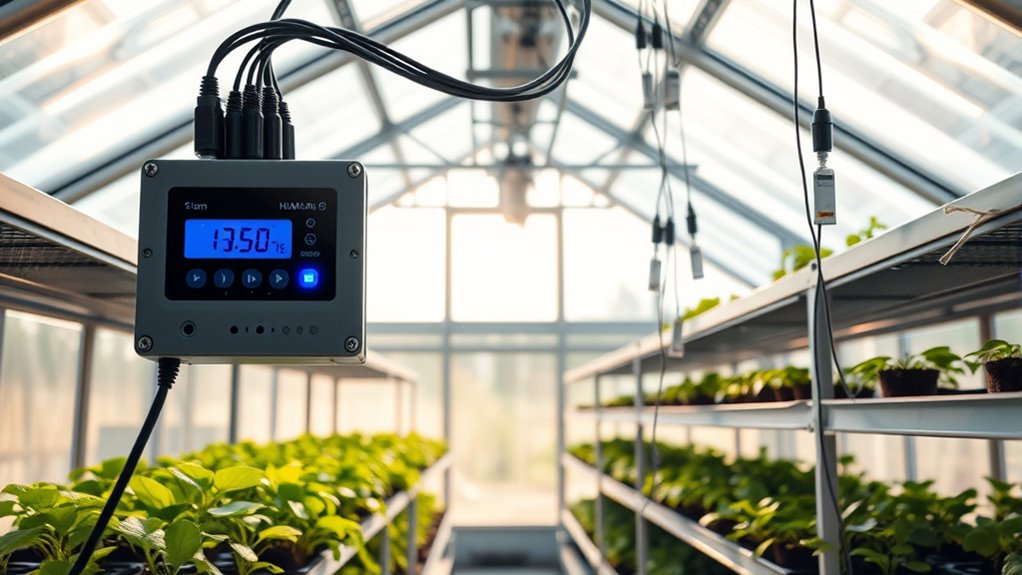

To automate your DIY greenhouse, you can use controllers like Arduino or Raspberry Pi combined with sensors for soil moisture, light, temperature, and humidity. These sensors collect real-time data, allowing your system to automatically water plants, adjust lighting, or control climate conditions. This keeps your plants healthy and reduces manual work. If you want to learn how to set up these components and create a responsive environment, there’s more to explore ahead.
Key Takeaways
- Integrate microcontrollers like Arduino or Raspberry Pi to process sensor data and automate greenhouse systems.
- Use soil moisture sensors to trigger watering systems, ensuring optimal soil hydration.
- Employ light sensors and automated controllers to adjust grow lighting based on natural light conditions.
- Connect sensors and actuators via Wi-Fi or Bluetooth for remote monitoring and control.
- Customize automation routines to maintain ideal temperature, humidity, and lighting for plant growth.
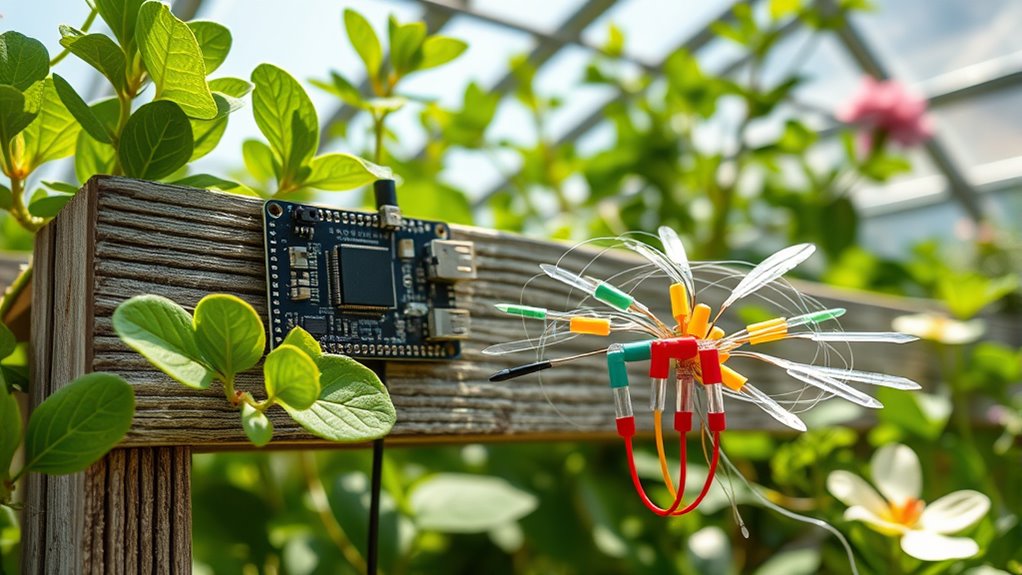
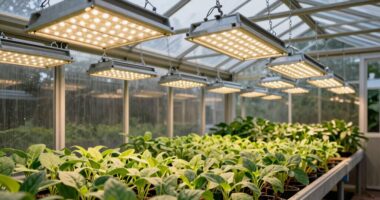
Creating a DIY greenhouse automation system allows you to effortlessly manage your plants’ environment and boost your gardening success. By installing controllers and sensors, you can automate essential functions like watering, lighting, and temperature regulation, giving your plants ideal growing conditions without constant manual intervention. One of the key components you’ll want to focus on is your watering systems. With automated watering, you prevent both overwatering and underwatering, ensuring your plants receive the right amount of moisture at the right times. Soil moisture sensors detect when the soil gets too dry and trigger your watering system to turn on, saving you time and effort. You can set up drip irrigation or sprinklers connected to a controller that responds to these sensors, creating a precise watering schedule tailored to your plants’ needs. This not only promotes healthier growth but also conserves water by eliminating waste. Incorporating personalized plant care strategies into your automation setup can further optimize growth conditions for different plant types. Lighting controls are equally essential for maintaining an ideal environment inside your greenhouse. Using light sensors or photoperiod controllers, you can automate the adjustment of grow lights based on natural sunlight levels or specific schedules. For instance, if daylight wanes in the evening, your lighting system can turn on automatically, extending the photoperiod and encouraging continuous growth. Conversely, during bright days, the system can dim or turn off artificial lights to prevent overstimulation and conserve energy. Smart lighting controls also allow you to simulate specific light spectra or intensities to optimize flowering or vegetative growth stages, giving you more control over your plants’ development.
Automate watering with soil moisture sensors for healthier plants and water conservation.
Integrating controllers like Arduino or Raspberry Pi with sensors enables a highly customizable automation setup. These controllers can process input from soil moisture sensors, light sensors, temperature sensors, and even humidity sensors, making real-time decisions based on your preset parameters. When conditions fall outside your desired ranges, the controllers activate the appropriate devices—watering systems, lighting controls, fans, or heaters—to restore balance. This automation reduces the need for constant monitoring and manual adjustments, freeing up your time and reducing stress. Plus, with remote access through Wi-Fi or Bluetooth, you can oversee and modify your system from anywhere, ensuring your greenhouse environment remains perfect at all times.
In short, by incorporating sensors and controllers, you create a responsive, efficient system that keeps your greenhouse conditions ideal. Whether it’s watering systems that hydrate your plants precisely when needed or lighting controls that simulate ideal sunlight, automation empowers you to focus on other gardening tasks while your system takes care of the environment. It’s a smart, practical approach to sustainable, successful gardening that makes maintaining your greenhouse easier and more effective.
Frequently Asked Questions
What Are the Most Affordable Controllers for Beginners?
If you’re looking for budget options, beginner-friendly controllers like the Arduino or ESP8266 are great choices. They’re affordable, easy to set up, and have a large community for support. These controllers let you automate watering, lighting, and temperature control without breaking the bank. You can find plenty of tutorials online to help you get started. With a little effort, you’ll have a functional, cost-effective greenhouse automation system in no time.
How Do I Troubleshoot Sensor Calibration Issues?
Think of sensor calibration like tuning a musical instrument—you want perfect harmony. To troubleshoot sensor calibration issues, first check sensor connections and make certain they’re secure. Then, follow calibration procedures specific to your sensor type, comparing readings with a reliable reference. If accuracy is off, recalibrate until readings match known standards. Regular calibration maintains sensor accuracy, ensuring your greenhouse environment stays precisely controlled and healthy.
Can I Integrate Solar Power With My Automation System?
Yes, you can integrate solar power with your automation system. Start by installing solar panel integration to harness sunlight efficiently. Pair it with energy storage solutions like batteries to guarantee continuous operation during cloudy days or nighttime. Connect these components to your controller to manage power flow seamlessly. This setup reduces grid dependency, lowers energy costs, and promotes eco-friendly greenhouse management. Proper wiring and compatibility checks are essential for a smooth integration.
What Safety Precautions Are Necessary for DIY Automation?
You should prioritize electrical safety by using insulated wiring and proper circuit breakers, preventing shocks or fires. Guarantee moisture protection by sealing connections and placing electronics in waterproof enclosures to avoid damage from humidity or water leaks. Always turn off power before working on your system, and double-check all connections. Following these precautions keeps your DIY automation safe, reliable, and functioning effectively in your greenhouse environment.
How Can I Expand My System in the Future?
You can easily expand your system by adding wireless modules and expanding sensor networks. Don’t worry about complexity—just connect new sensors or controllers via Wi-Fi or Bluetooth, ensuring compatibility. This allows you to monitor and automate more aspects of your greenhouse seamlessly. Planning ahead for expansion makes future upgrades simple, so you’re ready to grow your system as your needs evolve without starting from scratch.
Conclusion
By integrating controllers and sensors into your DIY greenhouse, you take control of your plants’ destiny. Automation isn’t just a tool; it’s the heartbeat of a thriving garden. With each sensor and controller, you’re not just managing conditions—you’re creating a symphony of growth and energy. Remember, the power to nurture lush, healthy plants is in your hands—so seize it, and let your greenhouse flourish like never before.