When setting up a new greenhouse, start by installing your ventilation and watering systems first. These foundational systems create a stable, healthy environment that supports plant growth and makes future equipment easier to add. Proper airflow and moisture control prevent problems like mold or pests, while automation keeps conditions steady. Focusing on these core systems early guarantees your greenhouse stays manageable and effective, paving the way for successful plant growth—if you want to discover more, keep exploring the essential setup steps.

Get garden gear delivered free — and shop member deals
- Fast, free delivery on millions of items
- Access to Prime Big Deal Days deals on October 6–7
- Prime Video, Amazon Music and more included
Key Takeaways
- Establish ventilation systems, including intake and exhaust fans, to promote airflow and prevent overheating.
- Install basic watering systems like drip irrigation or soaker hoses with timers for consistent moisture control.
- Set up climate monitoring tools such as humidity and temperature gauges to inform system adjustments.
- Ensure ventilation and watering systems are functioning together to maintain optimal environmental conditions.
- Complete foundational systems before adding shelves, grow lights, or other specialized equipment.
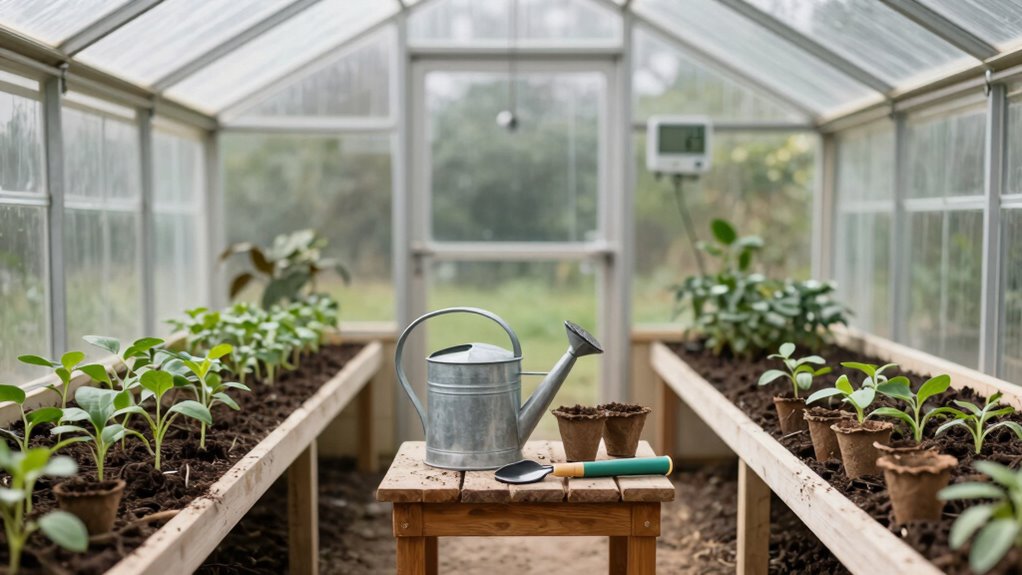
Setting up a new greenhouse can be an exciting project, but knowing where to start is key to guaranteeing a smooth and successful setup. The first steps involve planning the fundamental systems that will keep your plants healthy and thriving. Among these, ventilation systems are essential, as they help regulate temperature, humidity, and fresh air circulation. Proper ventilation prevents overheating during hot days and reduces humidity buildup that could lead to mold or pests. When installing ventilation, guarantee you have intake and exhaust fans positioned to promote airflow across all plant zones. Automated vents or oscillating fans are great options for maintaining consistent conditions without constant manual adjustment. Once the ventilation system is in place, focus on establishing a reliable watering schedule. Consistent watering is indispensable for plant health, but it varies depending on plant types, container sizes, and environmental conditions inside your greenhouse. It’s best to set up a drip irrigation system or soaker hoses connected to a timer, allowing you to automate watering and avoid over- or under-watering. Before scheduling, determine the most suitable moisture levels for your chosen plants, and adjust your system accordingly. Keep in mind that the watering schedule should be flexible enough to accommodate changes in weather or plant growth stages. As you set up these systems, consider their integration with your overall climate control plan. Ventilation and watering are interconnected; for instance, proper airflow helps dry out excess moisture from watering, reducing disease risk. Regularly monitoring humidity and temperature levels with gauges will guide you in fine-tuning both systems for peak performance. Once these foundational systems are operational, you can proceed with installing shelves, planting beds, grow lights, and other equipment. But it’s essential to get the ventilation and watering routines right from the start. Doing so creates a stable environment that supports healthy plant development and minimizes maintenance surprises. Remember, the key to a successful greenhouse setup lies in establishing these core systems first. They form the backbone of your greenhouse’s climate management, helping you maintain consistent conditions that foster vigorous growth. With ventilation and watering schedules properly in place, you’ll find it easier to focus on other aspects like plant selection and layout design. Overall, starting with well-planned and functional ventilation systems and watering routines guarantees your greenhouse remains a controlled, welcoming space for your plants to flourish. Understanding the importance of climate control systems] is foundational for long-term greenhouse success.
As an affiliate, we earn on qualifying purchases.
Frequently Asked Questions
How Do I Ensure Proper Ventilation in My New Greenhouse?
To guarantee proper ventilation in your new greenhouse, start by installing a reliable ventilation system, like exhaust fans or roof vents, that promote airflow management. Position vents strategically to facilitate cross-ventilation, helping to regulate temperature and humidity. Regularly open windows or vents during warm days, and consider automated systems for consistent airflow. Good ventilation prevents mold and keeps your plants healthy, creating an ideal growing environment.
What Are the Best Lighting Options for a New Greenhouse?
Your greenhouse lighting options can transform your space into a plant paradise. LED grow lights are your best bet—they’re energy-efficient, long-lasting, and mimic natural sunlight perfectly. Combine them with proper pest control and hydroponic systems for ideal growth. Think of it as giving your plants a daily dose of sunlight, turbocharged for maximum health. Proper lighting not only boosts photosynthesis but also keeps pests at bay, ensuring a thriving, lush greenhouse.
How Should I Organize Tools and Supplies Inside the Greenhouse?
You should organize tools and supplies by creating dedicated tool storage areas, like wall-mounted racks or pegboards, to keep everything accessible and tidy. Use labeled bins or shelves for supply organization, grouping items like seeds, fertilizers, and watering cans together. Keep frequently used tools near your workbench for easy access, and store less-used supplies elsewhere. This setup helps maintain a clean, efficient greenhouse environment, making gardening tasks quicker and more enjoyable.
When Should I Start Planting After Setting up the Greenhouse?
You should start planting once you’ve completed soil preparation and pest management. Wait until your soil is rich, well-drained, and free of pests or disease. This guarantees your plants grow healthy from the start. Typically, you can begin planting after the last frost date, but always check your local forecast. Proper soil prep and pest control create an ideal environment, giving your seedlings the best chance to thrive early on.
How Do I Maintain Consistent Temperature and Humidity Levels?
Oh, sure, just magic your greenhouse into perfect climate conditions, right? To keep temperature and humidity steady, you’ll want to start with soil preparation, ensuring proper drainage and moisture levels. Use fans, vents, or humidifiers strategically, and don’t forget pest management—because pests love a cozy greenhouse hideout. Regularly monitor and adjust settings, like a climate control wizard, to maintain consistent conditions that keep your plants thriving.
Conclusion
As you step into your new greenhouse, think of it as planting the seeds of your gardening dreams. Starting with the essentials sets a sturdy foundation like roots anchoring a mighty tree. With each tool and plant in its rightful place, your greenhouse becomes a thriving oasis—ready to bloom with life. Embrace the process, and soon, you’ll watch your green sanctuary flourish, a vibrant tapestry woven from your careful planning and nurturing hands.
Fall Picks
fall essentials
As an affiliate, we earn on qualifying purchases.