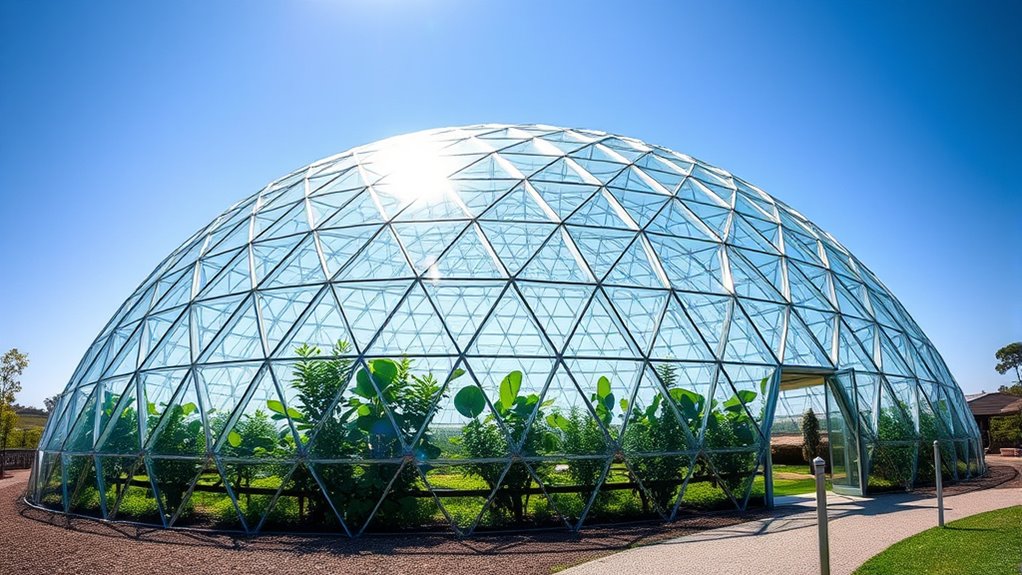

To construct a geodesic dome greenhouse, select sustainable materials like recycled steel, bamboo, or sustainably sourced glass for the framework and panels. Position your dome for ideal sunlight exposure and incorporate passive design elements such as shading and natural airflow. Install adjustable vents and consider solar-powered exhaust fans for ventilation. Properly planning your structure’s orientation and choosing eco-friendly materials will create a durable, energy-efficient environment for your plants. Continuing will reveal key tips to perfect your design and construction.
Key Takeaways
- Use sustainable, lightweight materials like recycled steel, bamboo, or eco-friendly polycarbonate for the dome’s framework and covering.
- Incorporate natural ventilation features such as vents and solar-powered exhaust fans to regulate airflow and temperature.
- Orient the dome to maximize sunlight exposure and utilize passive cooling techniques like shading and reflective surfaces.
- Design with eco-friendly materials and passive strategies to enhance energy efficiency and minimize environmental impact.
- Ensure proper construction techniques for structural stability, integrating ventilation and passive design principles for optimal plant growth.
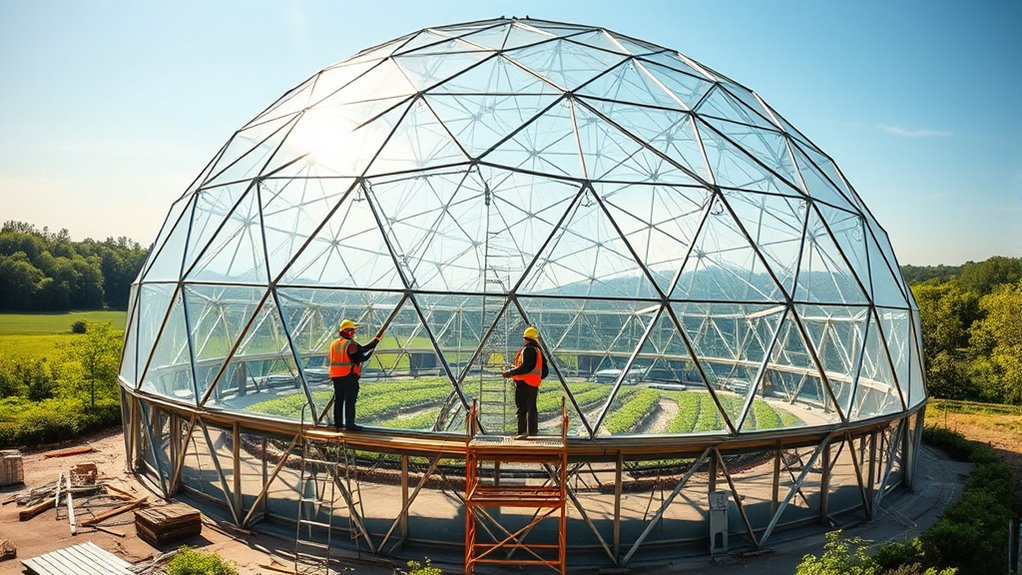
Building a geodesic dome greenhouse is an innovative way to create a durable, energy-efficient space for growing plants year-round. The key to maximizing its benefits lies in choosing sustainable materials and implementing effective ventilation strategies. When constructing your dome, opt for sustainable materials like recycled steel or bamboo for the framework. These choices reduce environmental impact and guarantee your greenhouse remains eco-friendly over time. Using lightweight yet sturdy materials helps maintain the structural integrity of the dome while minimizing resource consumption. For the transparent covering, consider recycled polycarbonate panels or sustainably sourced glass. These materials allow ample sunlight to reach your plants while providing insulation and durability.
Ventilation is vital in maintaining a healthy environment inside your geodesic dome. Since the structure is tightly sealed to retain heat, you’ll need to incorporate strategic ventilation strategies to prevent overheating, excess humidity, and mold growth. Design vents at the base and apex of the dome to facilitate natural airflow. Installing adjustable vents allows you to control airflow based on weather conditions, promoting fresh air circulation without sacrificing energy efficiency. You might also consider incorporating solar-powered exhaust fans to enhance airflow during hotter months. Proper ventilation helps regulate temperature and humidity levels, creating an ideal environment for your plants to thrive year-round.
When constructing your dome, position it thoughtfully to take advantage of natural elements. Orient the structure to maximize sunlight exposure while minimizing wind resistance. This not only enhances energy efficiency but also reduces the load on your ventilation system. Incorporate passive cooling techniques, like shading devices or reflective materials, to further control internal temperatures without relying heavily on mechanical systems. Using sustainable materials for shading screens or installing natural windbreaks can improve airflow and temperature regulation naturally. Additionally, considering passive design principles during planning can significantly improve the overall energy efficiency of your greenhouse.
In designing your geodesic dome greenhouse, keep in mind that sustainable materials and well-planned ventilation strategies work together to create an eco-friendly, energy-efficient environment. This combination reduces your carbon footprint and lowers energy costs over time. By paying attention to material choices and airflow management, you set up a resilient structure capable of supporting healthy plant growth throughout the year. Your effort in selecting eco-conscious materials and implementing smart ventilation will pay off with a thriving, sustainable greenhouse that’s both functional and environmentally responsible.

Magidome® Geodesic Dome Connectors- Easy DIY Connector kit for Dome, yurt, Tent, Trellis, pergola, Gazebo, Camping, Gardens, shelter, Festivals.
- Patented Design: Unique connector design
- Galvanized Steel: Corrosion-resistant material
- Easy Assembly: Fits equal length lumber
As an affiliate, we earn on qualifying purchases.
As an affiliate, we earn on qualifying purchases.
Frequently Asked Questions
What Is the Ideal Location for a Geodesic Dome Greenhouse?
You should place your geodesic dome greenhouse where it gets maximum solar exposure, ideally facing south for consistent sunlight year-round. Make certain it’s protected from strong winds by positioning it near natural windbreaks like trees or hills. Avoid shaded areas or locations prone to frost pockets. By choosing a spot with good solar access and wind protection, you’ll optimize plant growth and energy efficiency in your greenhouse.
How Much Does a Geodesic Dome Greenhouse Typically Cost?
A geodesic dome greenhouse typically costs between $3,000 and $20,000, depending on size and material options. For example, a 10-foot dome might start around $3,500, while larger custom designs can exceed $20,000. Cost considerations include material choices like PVC, metal, or polycarbonate, which impact durability and price. You’ll want to balance your budget with your desired size, quality, and longevity to find the best fit.
What Permits Are Needed to Build a Geodesic Dome Greenhouse?
You’ll need to check local building codes and zoning regulations before building your geodesic dome greenhouse. These rules specify permits required, setback distances, and structural standards. Contact your city or county planning office to determine if you need a building permit or special approval. Failing to follow these regulations could lead to fines or needing to dismantle your greenhouse later. Always verify requirements early to avoid delays.
How Do I Insulate a Geodesic Dome Greenhouse Effectively?
To insulate your geodesic dome greenhouse effectively, focus on using high-quality insulation materials like foam panels, bubble wrap, or reflective foil to enhance temperature regulation. Seal all gaps and joints to prevent drafts, ensuring even warmth inside. You can also add insulation blankets during colder months for extra protection. Proper insulation helps maintain consistent temperatures, promoting healthy plant growth and energy efficiency throughout the year.
Can a Geodesic Dome Greenhouse Withstand Extreme Weather Conditions?
A geodesic dome greenhouse is highly resilient, thanks to its superior dome strength and evenly distributed load. It can withstand extreme weather conditions like heavy snow, wind, and storms. The geometric design minimizes wind resistance, and materials like reinforced steel or sturdy plastics enhance weather resilience. Regular maintenance and proper anchoring further guarantee your dome remains durable, providing a safe environment regardless of harsh weather.
Conclusion
Now that you’ve pieced together your geodesic dome greenhouse, you’ve crafted more than just a structure—you’ve built a sanctuary where nature and innovation dance in harmony. Like a delicate web spun by an unseen artist, your dome stands resilient, inviting life to flourish within its geometric embrace. With each sunrise, your greenhouse becomes a living masterpiece, a proof to your ingenuity and passion. Embrace this space as your personal Eden, where growth and wonder intertwine seamlessly.