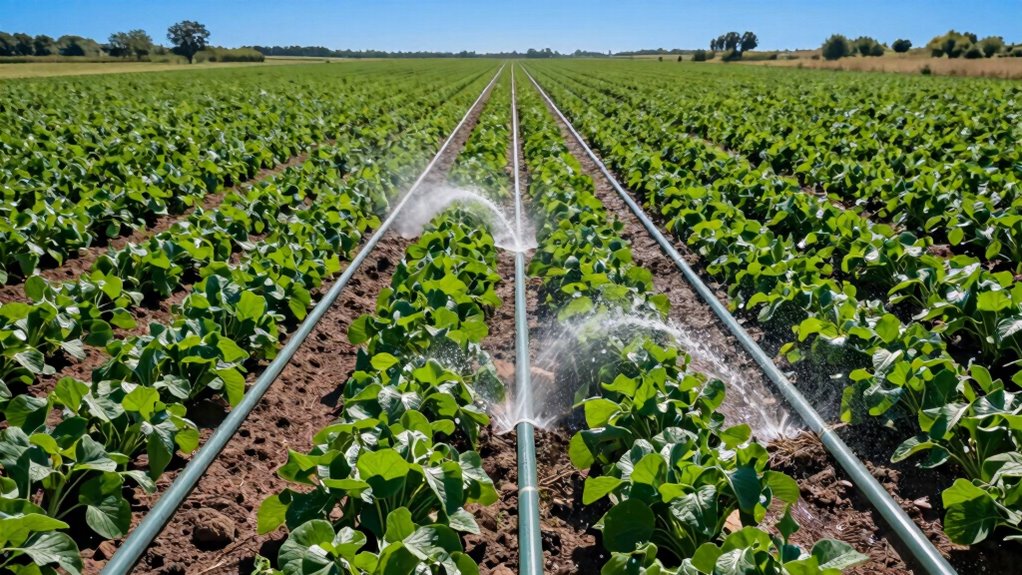

One common irrigation mistake that wastes water in every row is uneven sprinkler placement, which causes dry patches and overwatering areas. When sprinklers aren’t properly spaced or adjusted, water doesn’t reach plants evenly, leading to soil runoff and nutrient loss. To prevent this, make sure your sprinklers are correctly positioned, with proper overlap, and regularly maintained. Keep going to discover how adjusting your system can improve coverage and reduce waste efficiently.

Get garden gear delivered free with Prime
- Fast, free delivery on millions of items
- Prime Video, Amazon Music and more included
- Member-only deals all year
Key Takeaways
- Incorrect sprinkler spacing causes overlapping coverage, leading to excessive watering and water waste in every row.
- Poor placement of sprinkler heads results in dry spots and uneven water distribution across the rows.
- Failing to adjust or replace malfunctioning nozzles causes inconsistent flow and overwatering in certain areas.
- Ignoring soil variability can lead to overwatering in some zones and under-watering in others, wasting water overall.
- Lack of proper system calibration and regular maintenance allows leaks and inefficient coverage, increasing water waste.
adjustable garden sprinkler heads
As an affiliate, we earn on qualifying purchases.
As an affiliate, we earn on qualifying purchases.
Why Water Distribution Is Critical for Your Garden’s Health

Proper water distribution is essential because uneven watering can lead to stressed plants, weak roots, and increased susceptibility to pests and diseases. When soil moisture levels fluctuate unpredictably, plants struggle to absorb nutrients and maintain healthy growth. Weather patterns heavily influence this balance; for instance, hot, dry conditions can dry out soil quickly, while heavy rain can cause over-saturation. An effective irrigation system must adapt to these patterns, ensuring consistent soil moisture. Implementing efficient irrigation techniques can help prevent uneven watering and water waste. If watering is uneven, some areas become too dry, stressing plants, while others become waterlogged, risking root rot. By understanding weather patterns and maintaining even water distribution, you promote a resilient, healthy garden where roots develop strong, and plants resist pests and diseases more effectively. Additionally, water management techniques can help optimize irrigation efficiency and prevent water waste. Regular monitoring of soil moisture levels can further help adjust watering schedules to fit current conditions and avoid common watering mistakes.
Common Irrigation Layout Flaws to Watch Out For

One common mistake is overlapping sprinkler coverage, which can lead to water waste and uneven watering. Another issue is an incorrect pipe slope, causing pressure problems or leaks that disrupt your system’s efficiency. Being aware of these flaws helps you create a more effective and reliable irrigation layout. Additionally, utilizing system calibration techniques can optimize your system for water conservation and efficiency.
Overlapping Sprinkler Coverage
Overlapping sprinkler coverage is a common mistake that can lead to inefficient watering and wasted water resources. When sprinklers overlap excessively, you get more water than necessary in some areas, causing runoff or pooling. Conversely, coverage gaps may appear if sprinklers are spaced unevenly, leaving patches dry. Proper spacing and adjustment prevent these issues. Use the table below to plan your layout:
| Sprinkler Type | Ideal Radius | Placement Tips |
|---|---|---|
| Pop-up | 8-15 ft | Place to ensure slight overlap |
| Rotator | 10-20 ft | Adjust for uniform coverage |
| Drip emitter | 2-4 ft | Cover small, targeted areas |
Avoid excessive overlap and coverage gaps for efficient water use and healthy plants.
Incorrect Pipe Slope
Incorrect pipe slope is a common mistake that can disrupt your irrigation system’s efficiency. When the pipe slope isn’t right, water doesn’t flow smoothly through the system. Too little slope causes water to pool, risking water runoff and potential damage. Conversely, too steep a slope can lead to faster water flow, causing noise, pressure issues, or air pockets. Proper pipe slope guarantees water moves steadily without delay or waste. You need to maintain a gentle, consistent slope to prevent water runoff, which wastes water and reduces system effectiveness. Check your pipe installation for proper slope during setup. Ensuring proper drainage is essential for effective irrigation and to prevent water pooling. Correct slope minimizes water loss, prevents pressure problems, and keeps your irrigation system running smoothly. Incorporating water conservation strategies can further enhance the efficiency of your irrigation system. Avoiding this mistake helps conserve water and ensures even, efficient watering.
How Proper Row Spacing and Sprinkler Placement Improve Coverage
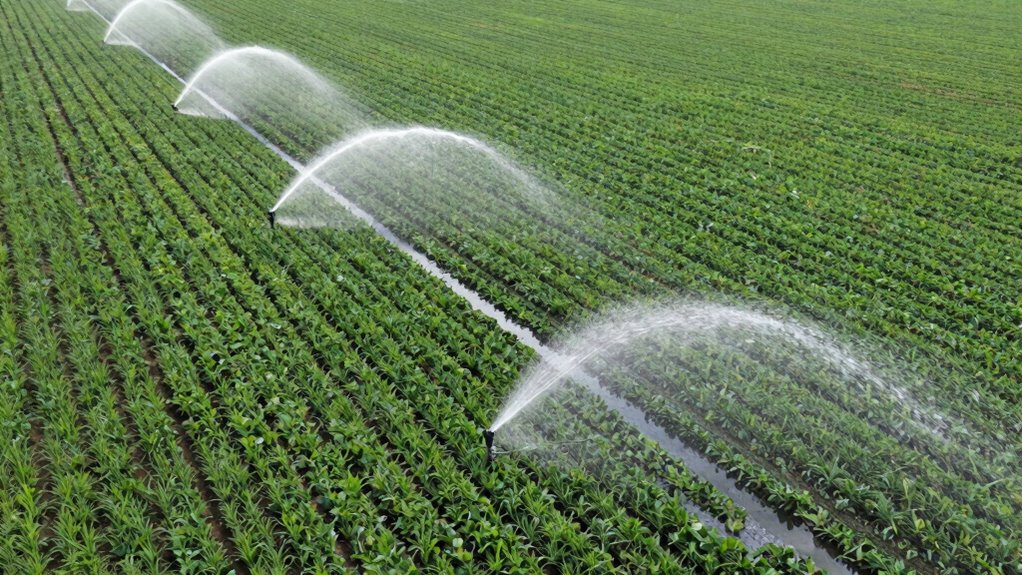
Proper row spacing and sprinkler placement are key to ensuring even water coverage across your lawn. When you space your rows correctly and position sprinklers strategically, you prevent dry spots and overwatering. This simple setup makes a big difference in maintaining a healthy, lush yard. Effective irrigation layout helps conserve water and supports the overall health of your landscape. Additionally, understanding watering efficiency can further enhance your irrigation system’s performance. Properly designed layouts also minimize water waste, ensuring that every drop counts. Optimizing sprinkler head placement is essential for achieving consistent coverage and preventing dry patches.
Optimal Row Spacing Techniques
When you choose the right row spacing and position your sprinklers thoughtfully, you considerably enhance your irrigation coverage. Proper spacing allows for better plant diversity, guaranteeing each species receives adequate water without waste. It also helps maintain consistent soil moisture levels across the field, preventing dry spots or oversaturation. If rows are too close, water overlaps excessively, wasting it and risking disease. If they’re too far apart, some areas remain dry, harming plant health. Ideal row spacing balances coverage and efficiency, reducing runoff and evaporation. Consider your crop types and soil characteristics to determine the best spacing. Thoughtful placement ensures water reaches all plants evenly, supporting healthy growth while conserving resources. Additionally, understanding irrigation system design can help optimize coverage and efficiency. Proper spacing is key to maximizing irrigation effectiveness and minimizing waste, especially when combined with system calibration to fine-tune water delivery. Moreover, implementing efficient scheduling techniques can further reduce water waste and improve crop health. Incorporating soil moisture monitoring can provide real-time data to adjust watering schedules more precisely, enhancing overall efficiency.
Strategic Sprinkler Positioning
Strategic sprinkler positioning plays a crucial role in ensuring your irrigation system delivers uniform coverage across your field. Proper placement prevents dry spots and overwatering, saving water and promoting healthy crops. To optimize coverage, position sprinklers based on your row spacing, ensuring overlapping spray patterns without excessive waste. Incorporate rain sensors to avoid unnecessary watering during rain, and monitor soil moisture levels to adjust sprinkler placement accordingly. This approach helps you target dry areas precisely and reduces runoff or puddling. By carefully planning each sprinkler’s position, you can improve efficiency, maintain consistent moisture, and prevent waste. Remember, strategic placement isn’t just about covering every inch but doing so intelligently with tools like rain sensors and soil moisture data guiding your decisions.
How Uneven Watering Affects Plant Growth and Yield

Uneven watering can considerably hinder plant growth and reduce crop yields. When parts of your soil receive too little water, roots don’t develop deep enough, limiting nutrient uptake and weakening plant stability. Conversely, overwatering causes shallow root growth, making plants more vulnerable to drought and disease. Soil texture plays a vital role — sandy soils drain quickly, risking dryness, while clay soils retain water, leading to waterlogged roots. This inconsistency causes uneven growth, with some plants thriving while others lag behind. Over time, yield decreases as stressed plants produce fewer flowers and fruits. Proper watering ensures roots grow evenly and deeply, promoting healthy plant development. Achieving uniform moisture levels across different soil textures is key to maximizing growth and optimizing crop yields. Understanding soil properties can help tailor watering practices for better results and prevent common irrigation layout mistakes that waste water. Additionally, regularly assessing soil moisture levels allows for adjustments in watering schedules to maintain consistent soil conditions, preventing water stress and encouraging uniform growth.
Easy Signs That Your Water Is Wasted in the Garden

If you notice your garden’s water bills climbing or the soil staying overly moist in some spots, your watering habits might be wasting more water than necessary. Easy signs include uneven soil moisture, which can hinder plant nutrition and growth. When soil remains soggy, roots can’t absorb nutrients properly, affecting plant health. Conversely, dry patches indicate under-watering. Look for these signs:
| Soil Moisture Signs | Plant Nutrition Impact | Water Waste Indicator |
|---|---|---|
| Soggy soil | Nutrients leach away | Excess runoff |
| Dry patches | Nutrient deficiency | Overwatering |
| Uneven moisture | Poor plant growth | Inefficient use |
Monitoring soil moisture levels helps you identify waste and adjust your irrigation accordingly. Using appropriate watering techniques can prevent this water waste and promote healthier plant growth. Being aware of efficient watering techniques ensures you optimize water usage and avoid unnecessary waste. Regularly testing soil moisture levels with soil moisture sensors can further enhance your watering efficiency and reduce water waste.
Design Tips for an Efficient Irrigation System

Are you maximizing your irrigation system’s efficiency? Start by improving your soil with proper soil amendments, which help retain moisture and reduce water waste. Healthy soil allows water to penetrate evenly, ensuring roots get enough moisture without overwatering. Use efficient sprinkler heads and time your watering to avoid runoff and evaporation. Incorporate mulch to retain soil moisture and keep plants healthy. A well-maintained system reduces the need for excessive watering and minimizes pest problems, since pests thrive in overly wet or poorly drained soil. Regularly inspect and adjust your system to prevent leaks or uneven coverage. Proper design not only conserves water but also promotes healthier plants, making pest control easier and more effective. Additionally, understanding smart thermostat setup and how to integrate it with your irrigation schedule can optimize water use even further.
Step-by-Step Fixes for Water Distribution Problems
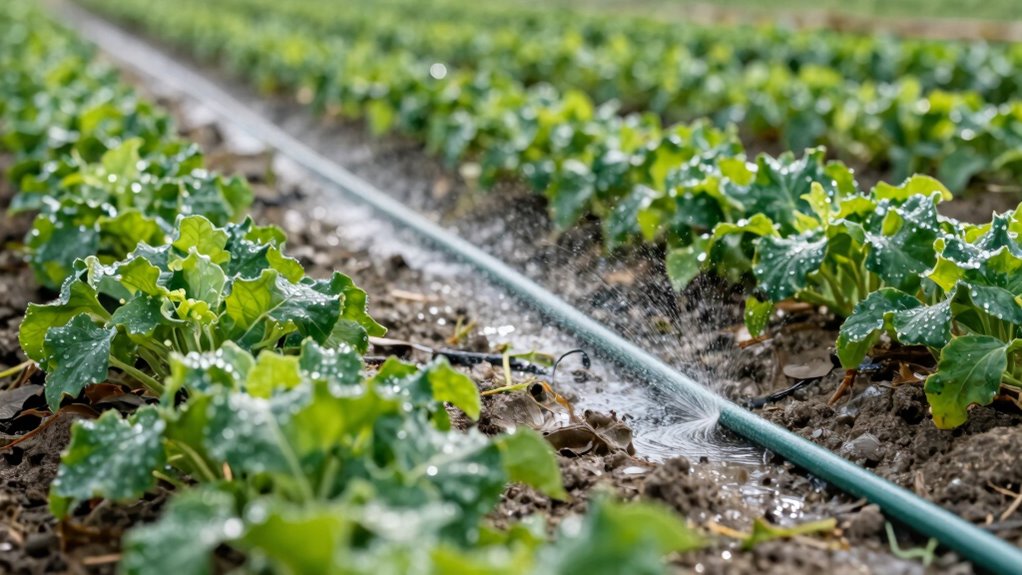
When water isn’t distributed evenly across your irrigation system, some areas may receive too little moisture while others become oversaturated. To fix this, start with soil testing to identify moisture levels and soil type variations. This helps you understand where adjustments are needed. Next, review your plant selection; choose drought-tolerant plants for dry spots and moisture-loving ones for wetter areas. Adjust sprinkler heads or emitters to match each zone’s needs, ensuring even coverage. You may need to replace or reposition heads to improve water flow. Regular maintenance, like cleaning clogged emitters, keeps water distribution consistent. These step-by-step fixes, grounded in soil testing and appropriate plant selection, help optimize your system and reduce water waste.
Tools and Techniques to Optimize Water Flow and Coverage
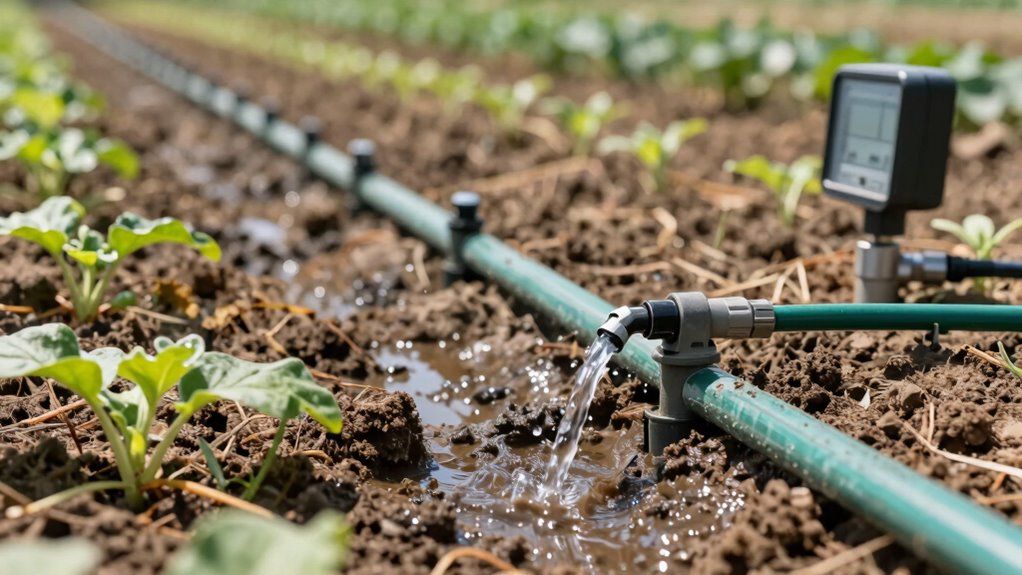
To guarantee your irrigation system delivers water effectively, employing the right tools and techniques is essential. Monitoring soil moisture with sensors helps you understand when your soil needs water, preventing overwatering and promoting water conservation. Additionally, using adjustable nozzles ensures even water coverage across your rows, reducing waste. Ultimately, incorporating flow meters can help you track water usage, allowing you to identify leaks or inefficiencies early.
Here are three key tools and techniques:
- Soil moisture sensors for precise watering needs
- Adjustable nozzles to improve coverage and uniformity
- Flow meters to monitor and optimize water flow
These tools help you achieve efficient water distribution, conserve resources, and maintain healthy plants.
Prevent Water Wastage With These Best Practices

Implementing smart watering schedules is one of the most effective ways to prevent water wastage. By adjusting irrigation times based on weather monitoring, you avoid overwatering during rain or cooler days. Incorporate soil amendments like organic matter to improve water retention, guaranteeing your soil holds moisture longer and reduces unnecessary watering. Regularly check soil moisture levels to determine when watering is truly needed. Using weather data helps you skip irrigation during forecasted rain or high humidity, conserving water and energy. Creating a tailored schedule based on real-time conditions minimizes runoff and deep percolation losses. These best practices ensure efficient water use, promote healthier plants, and reduce your overall water bills. Stay proactive, and your irrigation system will work smarter, not harder.
Troubleshooting Common Irrigation Layout Issues

Even with a well-designed irrigation plan, layout issues can undermine water efficiency and plant health. Common problems include uneven watering caused by soil compaction or pest infestation, which can block water flow. To troubleshoot:
Soil compaction and pests can cause uneven watering, affecting plant health and water efficiency.
- Check for soil compaction around sprinkler heads—it reduces infiltration and causes dry patches. Aerate or loosen soil as needed.
- Inspect plants for pest infestation, which can damage roots and disrupt water absorption, leading to uneven growth. Use appropriate pest control.
- Ensure sprinkler heads are correctly aligned and not blocked by debris or weeds. Proper positioning guarantees even coverage.
Addressing these issues improves water distribution, prevents waste, and promotes healthier plants. Regular maintenance helps catch problems early and keeps your irrigation system functioning at its best.
Frequently Asked Questions
How Can I Identify if My Sprinkler System Is Wasting Water?
You can identify if your sprinkler system is wasting water by checking for uneven watering or pooling in certain areas, which indicates poor sprinkler efficiency. Look for signs like wet patches or dry spots, and observe if some sprinklers spray beyond their designated zones. Regularly inspect and adjust your system to guarantee it’s operating correctly. This helps promote water conservation and ensures your system delivers water efficiently, saving you money and resources.
What Are the Long-Term Cost Implications of Irrigation Mistakes?
Irrigation mistakes can substantially impact your long-term costs by increasing water bills and maintenance expenses. Poorly designed systems waste water, reducing water conservation efforts and driving up costs over time. You might also face higher repair costs from overworked equipment. To guarantee cost efficiency, regularly check your system for leaks and adjust spray patterns. Investing in proper layout and maintenance helps save water and money, benefiting your budget and the environment.
Can DIY Adjustments Fix All Water Distribution Issues?
Did you know that improper irrigation can waste up to 50% of water? DIY adjustments can fix many issues, but not all. Installing rain sensors helps prevent overwatering, and upgrading to drip irrigation ensures water goes directly to roots, reducing waste. While small tweaks help, complex problems like uneven coverage may require professional help to optimize your system completely.
How Often Should I Inspect and Maintain My Irrigation Layout?
You should inspect and maintain your irrigation layout at least once a month to guarantee ideal plant health. During these inspections, perform soil testing to check moisture levels and identify dry spots. Regular maintenance helps prevent overwatering or underwatering, which can harm plants. Adjust your system as needed, clean filters, and check for leaks. Consistent upkeep keeps your plants healthy and conserves water effectively.
Are There Eco-Friendly Alternatives to Traditional Sprinkler Systems?
Yes, you can adopt eco-friendly alternatives like rainwater harvesting and drip irrigation. Rainwater harvesting captures natural rain, reducing your dependence on municipal water and conserving resources. Drip irrigation delivers water directly to plant roots, minimizing waste and evaporation. Together, these methods promote sustainable watering practices, save water, and support eco-conscious gardening. Switching to these alternatives helps reduce your environmental footprint while keeping your garden healthy and thriving.
Conclusion
Think of your garden as a delicate symphony; each plant needs its moment in the spotlight. When your irrigation layout is flawed, it’s like an orchestra playing out of tune—wasting water and missing harmony. But with proper spacing and placement, you become the conductor, guiding every drop to its rightful place. Master this art, and watch your garden flourish in perfect rhythm, saving water and boosting growth with each well-placed sprinkle.
Halloween Picks
halloween
As an affiliate, we earn on qualifying purchases.