To prevent overcrowding in your seed-starting zone, plan a clear layout with vertical shelving, hanging planters, and tiered racks to maximize space. Use compact, well-draining containers and label everything for easy tracking. Maintain good airflow, monitor seedlings regularly, and transplant them at the right time to reduce congestion. Avoid common mistakes like overcrowding and poor organization—if you follow these tips, you’ll create an efficient, space-saving setup that promotes healthy growth.

Get garden gear delivered free with Prime
- Fast, free delivery on millions of items
- Prime Video, Amazon Music and more included
- Member-only deals all year
Key Takeaways
- Plan the layout with clear pathways and vertical shelving to maximize space and prevent overcrowding.
- Use appropriately sized containers and stackable or foldable pots to optimize container space.
- Group seedlings by growth stage and light needs to facilitate organized and efficient management.
- Label all trays and supplies clearly to streamline maintenance and prevent accidental overcrowding.
- Regularly monitor seedling growth, remove weak plants, and adjust spacing as needed to maintain airflow and health.
As an affiliate, we earn on qualifying purchases.
Why Planning Your Seed-Starting Zone Matters
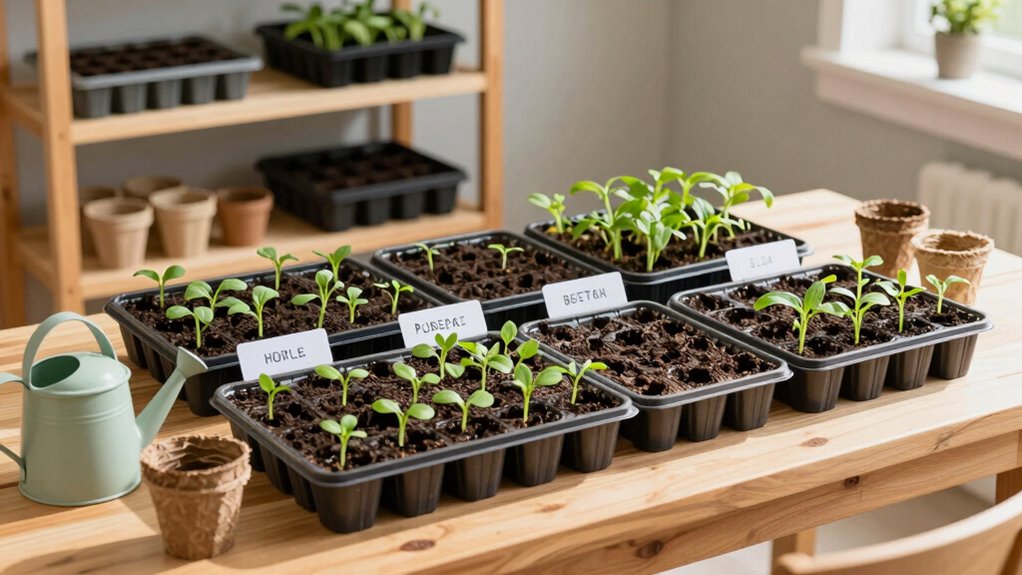
Planning your seed-starting zone is essential because it sets the foundation for successful germination and healthy seedlings. Proper seed start planning helps you determine the right amount of space needed for each plant, preventing overcrowding later on. When you organize your space effectively, you guarantee each seed gets enough light, airflow, and nutrients, which boosts germination rates. Good space management also makes watering and monitoring easier, reducing the risk of disease and mold. Additionally, incorporating proper organization techniques can streamline your setup and improve overall efficiency. Using space-efficient methods ensures you maximize your available area without sacrificing plant health. By thoughtfully designing your seed-starting zone from the start, you avoid chaos and frustration once seedlings sprout. Clear planning saves time, effort, and resources, giving you a smoother gardening experience and healthier plants in the long run. Ultimately, strategic space management makes all the difference in successful seed starting.
How to Choose Space-Saving Containers for Seedlings
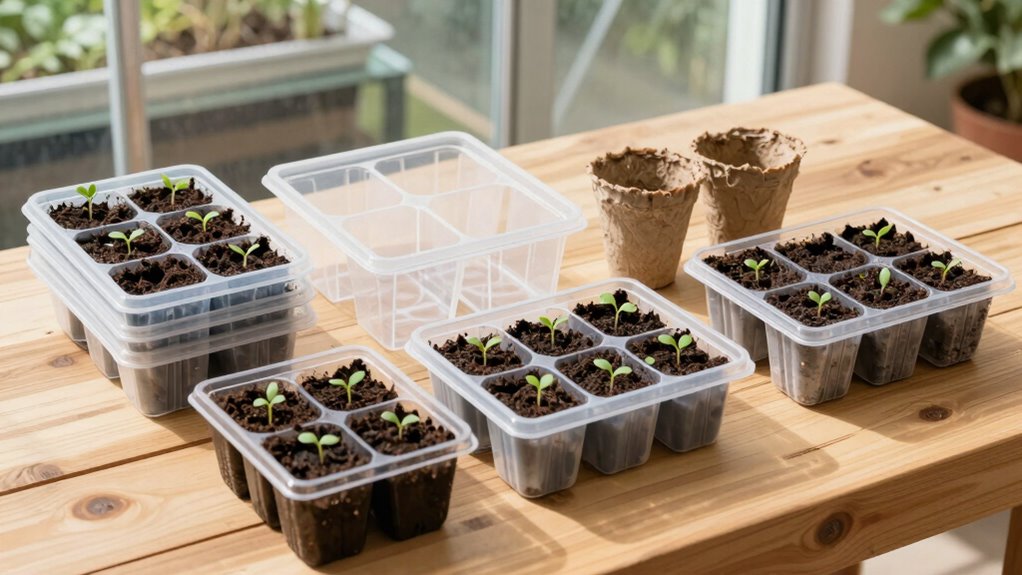
When selecting containers for your seedlings, focus on compact options that maximize limited space without sacrificing root growth. Make sure the containers have proper drainage to prevent overwatering, and choose materials like plastic or biodegradable options based on your setup. Considering these factors helps you create an efficient, healthy start for your plants. Incorporating professional architectural solutions can also inspire innovative and space-efficient container designs. Additionally, paying attention to space utilization ensures your seed-starting zone remains organized and accessible. Using containers with appropriate size can further optimize your space and improve plant health. Being mindful of material durability can also enhance the longevity and reusability of your containers, making your setup more sustainable. Incorporating space-saving techniques can help maximize your limited area while maintaining optimal conditions for your seedlings.
Compact Container Options
Choosing the right containers is essential for efficient seed starting, especially if space is limited. Compact containers save room and make it easier to organize your seedlings. Look for options like mini tray systems, stackable seed trays, or foldable pots that can be stored easily when not in use. These containers should facilitate simple seed storage and promote proper soil preparation, ensuring your seedlings have enough room to grow without overcrowding. Small, uniform containers help maximize your available space and reduce clutter. Additionally, choose containers that are lightweight and easy to move, so you can optimize your seed-starting zone. By selecting space-saving options, you streamline your setup and create a more manageable, efficient planting environment. Incorporating space-saving containers can also support your efforts to protect your seedlings from environmental stressors and pests. Utilizing innovative container designs can further improve airflow and drainage, promoting healthier seedling development. Proper air circulation within your containers is crucial for preventing disease and ensuring even growth. To ensure your seedlings thrive, consider selecting containers that are also easy to clean and reuse, which can help maintain hygiene and reduce waste. Using containers that are designed for optimal drainage can prevent waterlogging and root rot, further supporting healthy growth.
Drainage and Material
Selecting containers with proper drainage and appropriate materials is essential to guarantee healthy seedling growth while saving space. Good drainage prevents waterlogging, which can cause root rot and hinder growth. Choose containers made from breathable materials like unglazed ceramic or porous plastics, which promote airflow and moisture regulation. When preparing your containers, incorporate soil amendments that improve drainage and nutrient retention. Proper drainage also aids pest control by reducing excess moisture that attracts pests. Opt for stackable or modular containers to maximize space efficiency and keep your seedlings organized. Avoid containers that trap water or are too shallow, which can stunt growth or lead to disease. Prioritize quality materials that are durable and easy to clean, ensuring your seedlings develop strong roots without overcrowding. Incorporating smart composters into your setup can also help recycle organic waste and enrich your soil naturally. Additionally, choosing containers with ventilation features can enhance airflow and prevent mold growth on your seedlings. Being mindful of material durability can extend the lifespan of your containers and reduce waste over time. Using eco-friendly materials not only benefits the environment but can also promote healthier plant growth. Ensuring your containers are made from non-toxic, safe materials further supports healthy seedling development.
Designing an Efficient Layout to Maximize Growing Space
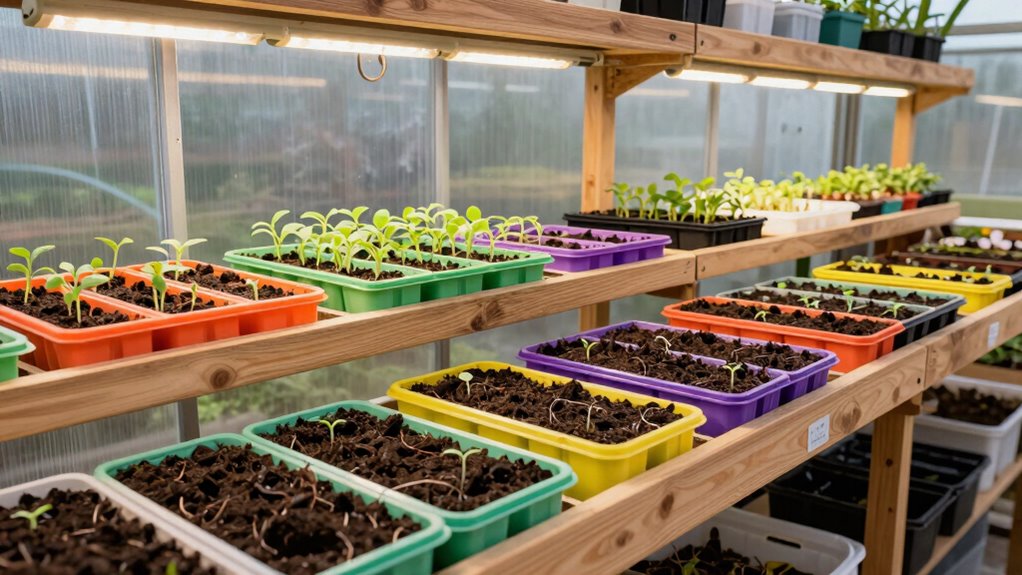
To maximize your growing space, focus on optimizing plant placement for easy access and efficient use of light. Use vertical shelving or hanging setups to take advantage of height and free up surface area. Make sure to create clear pathways so you can move easily without disturbing your seedlings. Incorporating proper plant color matching can also enhance visual organization and reduce clutter in your seed-starting zone. Additionally, arranging plants based on their growth requirements can improve overall health and productivity of your seedlings. Considering portable restroom solutions can also ensure a comfortable and hygienic environment for yourself while tending to your garden. Implementing innovative planter designs can further optimize space utilization and add aesthetic appeal to your setup. Properly planned greenhouse layout can further improve airflow and reduce the risk of disease among your seedlings.
Optimizing Plant Placement
Creating an efficient arrangement for your seed-starting zone begins with understanding the specific space you have and the needs of your plants. Proper plant placement guarantees ideal growth, soil sterilization, and pest prevention. Group plants with similar light and watering needs to prevent overcrowding and promote healthy development. Leave enough space between seedlings for airflow, reducing disease risk. Using hanging baskets or vertical arrangements can help maximize limited space and improve accessibility. Additionally, incorporating smart design principles can further optimize your layout for comfort and efficiency. Use the table below to plan your layout effectively:
| Plant Type | Placement Strategy | Special Considerations |
|---|---|---|
| Leafy greens | Near light source | Soil sterilization helps prevent pests |
| Herbs | Compact clusters | Ensure good air circulation |
| Tomatoes | Larger containers | Avoid overcrowding for airflow |
This approach maximizes space and minimizes pest issues, helping your seedlings thrive.
Utilizing Vertical Space
Have you considered how vertical space can dramatically boost your seed-starting efficiency? By adding shelves or stacking containers, you maximize limited area without overcrowding your seedlings. Use tiered racks to organize trays, freeing up surface space and improving airflow. Hanging planters or vertical gardens can also increase your growing capacity. To keep pests in check, place a compost bin nearby to reduce waste and avoid attracting insects. Properly spaced vertical setups improve pest control, as better airflow discourages mold and disease. Confirm each level has adequate light, and use reflective surfaces to enhance brightness. This approach keeps your seed-starting zone organized and efficient, preventing overcrowding while making the most of every inch of space available.
Creating Clear Pathways
Designing an efficient layout for your seed-starting zone involves strategically planning pathways that allow easy access without wasting valuable space. Clear pathways make soil preparation and maintenance straightforward, reducing the risk of pest control issues by keeping plants accessible for inspection. Keep pathways wide enough for comfortable movement but narrow enough to maximize growing space. Use materials like gravel or mulch to define paths and prevent weed growth. Properly planned pathways help you avoid trampling seedlings and make watering or fertilizing more efficient. As you arrange your seed trays, consider airflow and light exposure to promote healthy growth. Organizing your zone with these pathways ensures you can quickly tend to plants, manage soil preparation effectively, and stay vigilant about pest control without overcrowding your space.
Selecting Shelving and Stands to Save Room
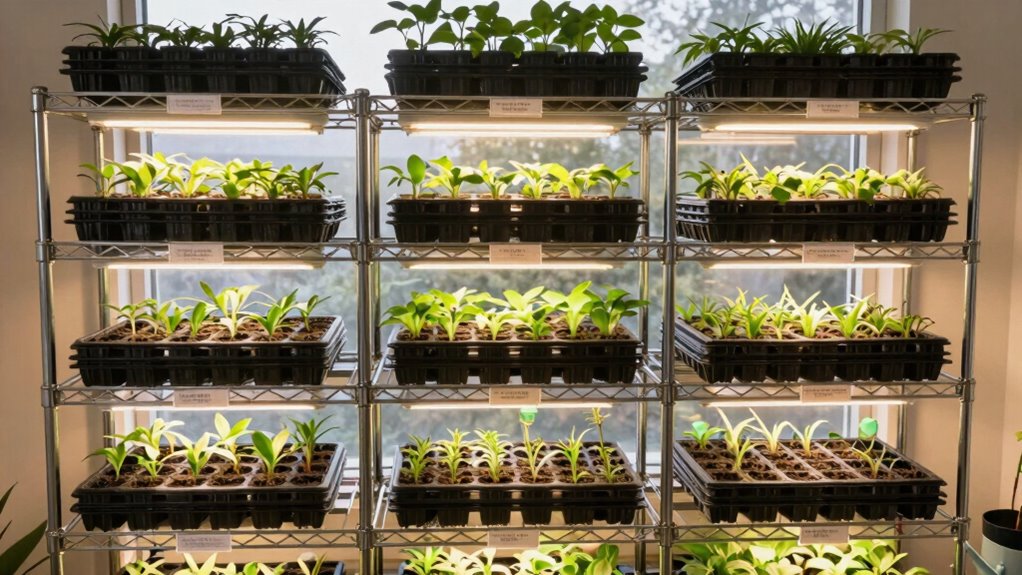
Choosing the right shelving and stands can make a big difference in maximizing your seed-starting space. Consider various shelving styles, such as wire, plastic, or wood, to find what fits your setup and budget. Wire shelves offer good airflow and visibility, while plastic or wooden options can be sturdier and easier to clean. Stand materials also matter; metal stands are durable and lightweight, while wooden ones add stability and a natural look. Look for adjustable or stackable shelves to make the most of vertical space. Compact, multi-tier stands help you use limited room efficiently, keeping your seedlings organized and accessible. Selecting appropriate shelves and stands guarantees you maximize your space and create a functional, overcrowd-free seed-starting zone.
Labeling Seedlings Clearly for Easy Tracking

To keep track of your seedlings easily, use clear labeling materials that won’t smudge or fade. Place labels consistently in the same spot for quick identification, and include essential details like plant name, date started, and any special care instructions. Clear labels help you stay organized and monitor each plant’s progress efficiently.
Use Clear Labeling Materials
Clear labeling is essential for keeping track of your seedlings as they grow. Using clear labeling materials prevents confusion and makes container identification easy. Opt for waterproof markers, labels, or tags that won’t smudge or fade in moisture. Write legibly and include key details like plant type, planting date, and variety. To organize your seed labeling, consider this simple chart:
| Seed Labeling Method | Container Identification |
|---|---|
| Waterproof markers | Color-coded tags |
| Plastic labels | Reusable stakes |
| Paper tags | Writable plant labels |
| Paint pens | Distinctive shapes |
| Laminated labels | Numbered containers |
Choose durable, visible materials to guarantee your labels stay legible throughout the growing process.
Consistent Label Placement
Placing labels consistently on your seedlings guarantees that you can easily identify each plant as it grows. Position labels at the same height and in the same spot relative to each seedling to avoid confusion. Keep labels clear and visible, especially when seedlings start to fill out, making sure they don’t get buried or obscured by foliage. Proper seedling spacing helps maintain neatness, making it easier to place labels without overcrowding. Use durable materials, like plastic or weatherproof labels, to assure label longevity and avoid fading or falling off over time. Well-placed, durable labels streamline your tracking process and prevent mix-ups, especially as seedlings mature and require different care. Consistent placement simplifies maintenance and helps you stay organized from start to finish.
Include Essential Growing Details
Including essential growing details on your labels guarantees you can quickly identify each seedling’s specific needs. Clear labels should include the seed variety, planting date, and any special care instructions. This helps you track seedling nutrition requirements, ensuring they receive the right nutrients at the right time. Accurate labeling also aids in pest prevention by alerting you to vulnerable plants that might need extra protection or monitoring. Use waterproof markers or labels to prevent fading, and consider adding color codes for quick identification. Well-labeled seedlings make maintenance easier, reducing mix-ups and ensuring each plant gets tailored care. Precise labels give you confidence in your seed-starting process, helping your seedlings thrive without overcrowding or neglect.
Setting Up Proper Lighting to Prevent Overcrowding
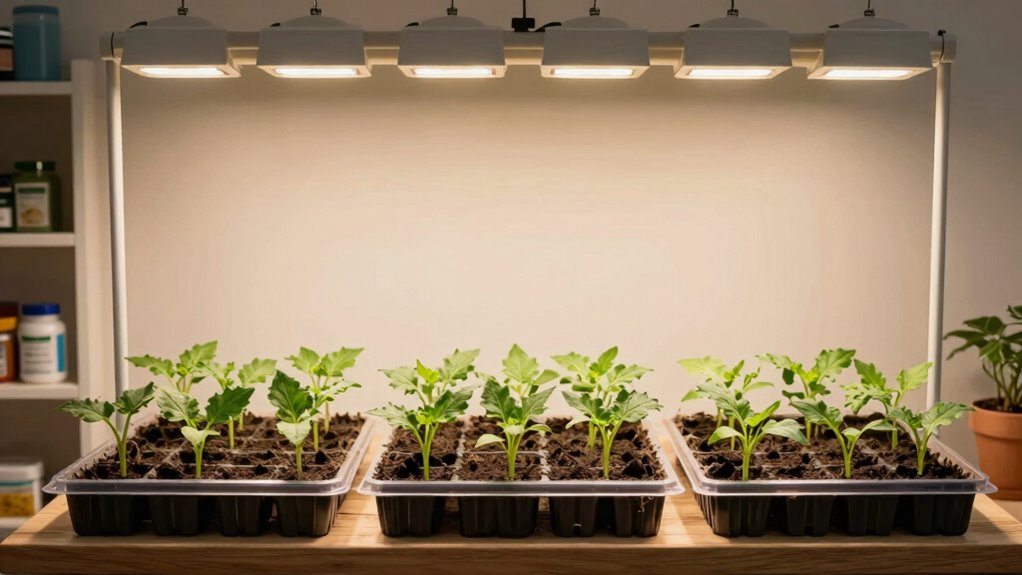
Proper lighting is essential for healthy seed growth and helps prevent overcrowding by encouraging seedlings to develop at a balanced rate. Artificial lighting is a practical solution, especially if natural light is limited. Choose grow lights with adjustable height and intensity to optimize light exposure. Light intensity must be sufficient to promote strong, healthy seedlings without causing stress or leggy growth. Keep lights close enough to prevent seedlings from stretching, but avoid too close, which can scorch them. Guarantee consistent lighting schedules—around 12-16 hours daily—to support even growth. Properly managed artificial lighting creates uniform seedlings, reducing overcrowding and competition. Regularly monitor and adjust light placement and intensity to maintain an ideal environment for your seedlings’ healthy development.
Managing Watering and Ventilation for Healthy Seedlings
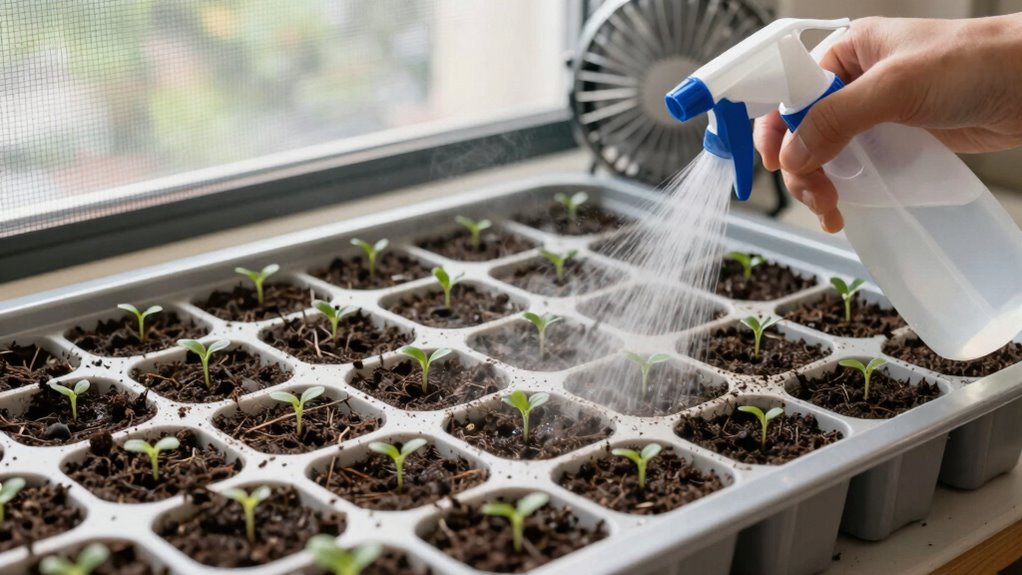
Once your seedlings have enough light and space to grow, managing watering and ventilation becomes key to their healthy development. Water consistently, keeping the soil moist but not soggy, and establish a fertilizer schedule that provides essential nutrients without overfeeding. Proper ventilation helps prevent fungal issues and keeps air circulating, reducing the risk of pests and diseases. Use a small fan or open vents to improve airflow, especially in enclosed spaces. Regularly inspect seedlings for signs of pests or mold, and adjust watering routines accordingly. Good ventilation also helps regulate temperature and humidity, creating an ideal environment for growth. By balancing watering, fertilizer, and airflow, you promote strong, healthy seedlings that are less vulnerable to pests and other problems.
When and How to Transplant Seedlings to Reduce Congestion
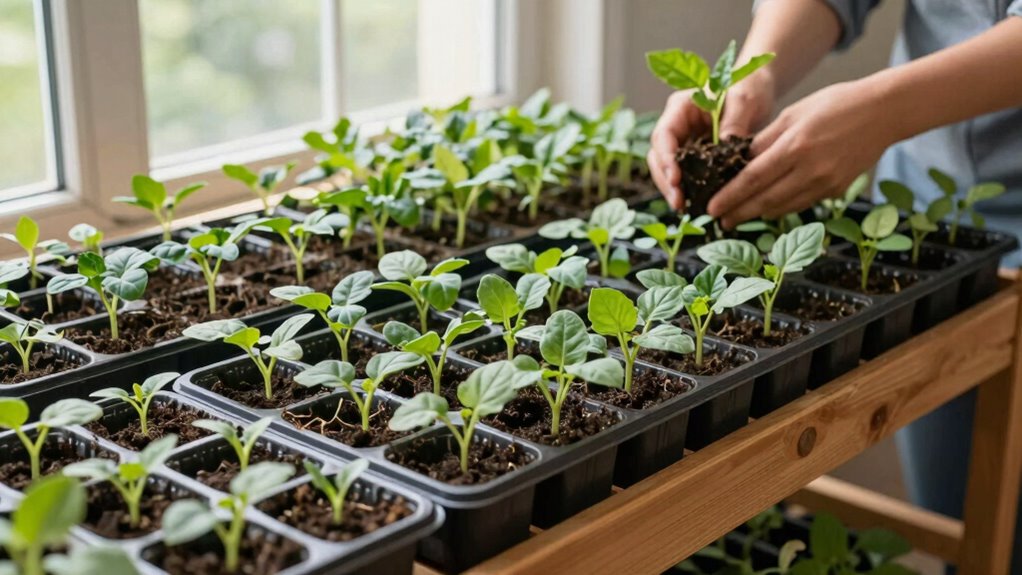
Transplanting seedlings at the right time is essential to prevent overcrowding and guarantee healthy growth. Waiting too long can cause roots to become tangled, making transplanting stressful or damaging. Aim to transplant when seedlings have at least 2-3 sets of true leaves and are sturdy enough to handle. Proper seedling spacing during transplanting ensures each plant has enough room to grow. Use the following guidelines for transplant timing:
| Seedling Age | Number of True Leaves | Ideal Condition |
|---|---|---|
| 2-3 weeks | 2-3 | Healthy, strong, ready |
| 4-6 weeks | 4 or more | Ready for outdoor planting |
Adjust based on plant type and growth rate for best results.
Common Mistakes That Lead to Overcrowding: and How to Avoid Them

Overcrowding often happens when gardeners ignore early signs that seedlings need more space or misjudge their growth pace. Common mistakes include poor seedling spacing, which leads to container overcrowding and weak growth. To avoid these pitfalls:
Overcrowding occurs when seedlings are ignored or planted too close, leading to weak growth and container issues.
- Overcrowding seedlings by planting them too close together hampers airflow and nutrient access.
- Failing to monitor seedling growth, causing you to underestimate when they need more space.
- Using containers that are too small, which quickly results in container overcrowding and stunted plants.
Tips for Keeping Your Seed-Starting Area Organized and Efficient
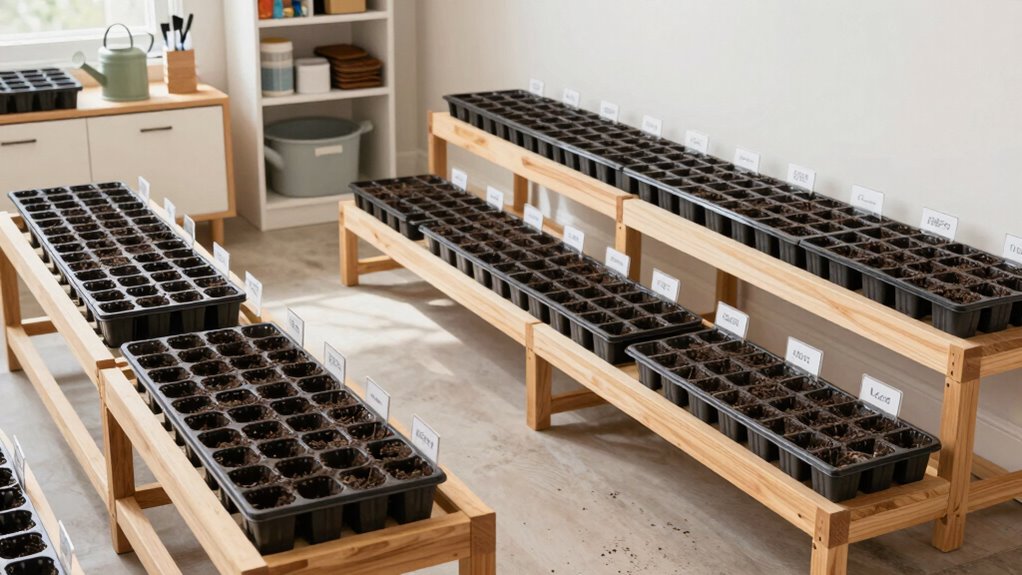
Keeping your seed-starting area organized and efficient requires a proactive approach that minimizes chaos and maximizes productivity. Regularly sort seedlings by growth stage, discarding weak ones to prevent overcrowding and seedling pests. Use labeled trays and shelves to keep supplies and soil amendments tidy, making it easy to find what you need. Clean tools between uses to avoid spreading pests or diseases. Incorporate fresh soil amendments to promote healthy growth and reduce the risk of pests.
| Organization Tip | Benefit |
|---|---|
| Label trays and containers | Quick identification and efficient setup |
| Keep supplies in designated spots | Saves time and reduces clutter |
| Regularly inspect seedlings | Catch pests early and prevent overcrowding |
| Use labeled soil amendments | Ensures proper application and healthy growth |
| Clean tools frequently | Prevents seedling pests and disease spread |
Frequently Asked Questions
How Can I Prevent Pests in a Crowded Seed-Starting Zone?
To prevent pests in a crowded seed-starting zone, you should use pest-resistant plants and natural pest control methods. Keep your area clean and free of debris, which attracts pests. Introduce beneficial insects like ladybugs or use organic sprays to control pests naturally. Guarantee proper airflow and avoid overwatering, as damp conditions attract pests. Regularly inspect your seedlings, and act quickly at the first sign of trouble to keep pests at bay.
What Are the Best Materials for Space-Efficient Seedling Containers?
Imagine nesting tiny seedlings in sleek, space-saving containers like mini seed trays or upcycled yogurt cups. These seedling container options maximize your limited space while keeping roots cozy and organized. Use vertical stacking or tiered systems for space-saving planting techniques, allowing you to grow more in less room. Lightweight, biodegradable pots or modular seedling trays are perfect choices, making your seed-starting zone efficient, tidy, and bursting with potential.
How Do I Schedule Watering to Avoid Overcrowding and Overwatering?
You should water your seedlings based on their soil drainage and light needs. Check soil moisture daily; water only when the top feels dry to prevent overcrowding and overwatering. Make certain containers have good drainage to avoid waterlogging. Position your seedlings to meet their light requirements, which helps them grow strong and healthy. Consistent, mindful watering keeps your seed-starting zone balanced, promotes healthy growth, and prevents overcrowding caused by overly wet or weak seedlings.
What Are Signs My Seedlings Are Overcrowded or Stressed?
Overcrowded seedlings often show signs like leggy stems, yellowing leaves, and slow growth, indicating stress. When seedlings are spaced too closely, roots can become tangled, hindering healthy root development—research shows proper seedling spacing promotes 30% more vigorous growth. Keep an eye out for these stress signals, and guarantee adequate spacing to foster strong root development and prevent overcrowding, which can lead to disease and poor plant health.
How Often Should I Rotate Seedlings to Optimize Space?
You should rotate your seedlings every few days to prevent overcrowding and minimize root competition. Keep an eye on seed spacing; if seedlings start to crowd each other, gently thin them out or transplant the extras. Regularly adjusting their positions guarantees each seedling gets enough space and nutrients, promoting healthy growth. This proactive approach helps you maintain an organized seed-starting zone, reducing stress and encouraging strong, vigorous plants.
Conclusion
By planning your seed-starting zone carefully, you prevent overcrowding and guarantee healthy growth. Even if space feels limited, choosing compact containers and efficient layouts makes a big difference. Don’t worry about needing a large area—smart organization and timely transplanting can maximize your space. Stick to these tips, and you’ll enjoy a thriving garden without the chaos, no matter how small your starting area is. Your healthy seedlings will thank you!
Fall yard work Picks
leaf blowers
As an affiliate, we earn on qualifying purchases.