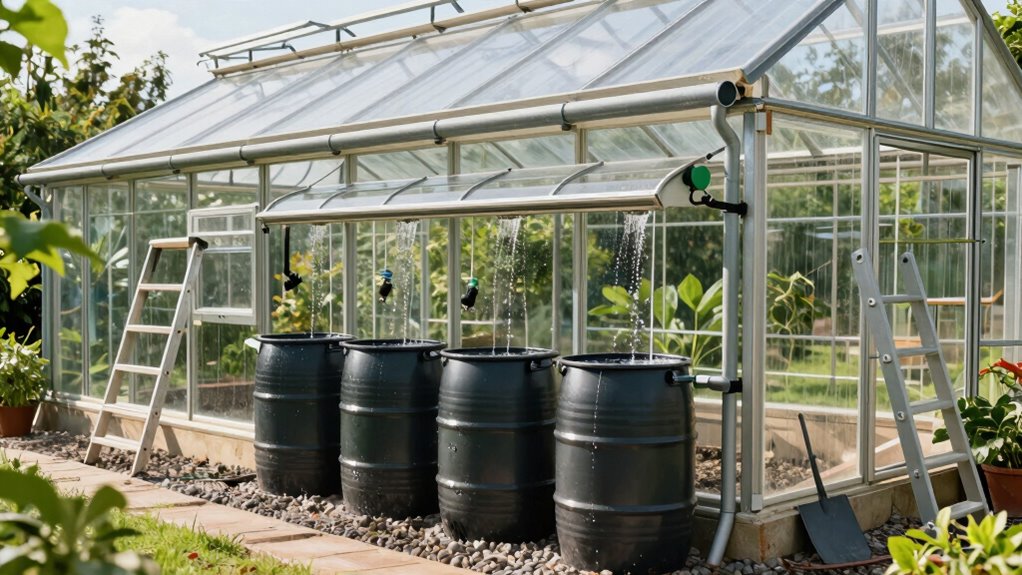
To add rainwater collection to your greenhouse, start by selecting durable gutters, filters, and a safe, food-grade storage tank placed on a stable surface. Connect your gutters to the tank with secure, leak-proof joints, and install first-flush diverters to prevent debris and contaminants. Regularly clean and inspect your system to keep it functioning efficiently. If you keep exploring, you’ll discover how to optimize your system for best results and guarantee safety and compliance.
Key Takeaways
- Assess your greenhouse roof and site to determine suitable rainwater harvesting system placement and capacity.
- Select durable gutters, filters, first-flush diverters, and storage tanks that meet safety and compatibility standards.
- Install gutters along roof edges with proper slope, connect downspouts to storage tanks, and secure all connections tightly.
- Incorporate filtration, first-flush systems, and regular maintenance routines to ensure water quality and system efficiency.
- Ensure compliance with local regulations, obtain necessary permits, and implement safety measures during installation.
Why Greenhouses Benefit From Rainwater Harvesting
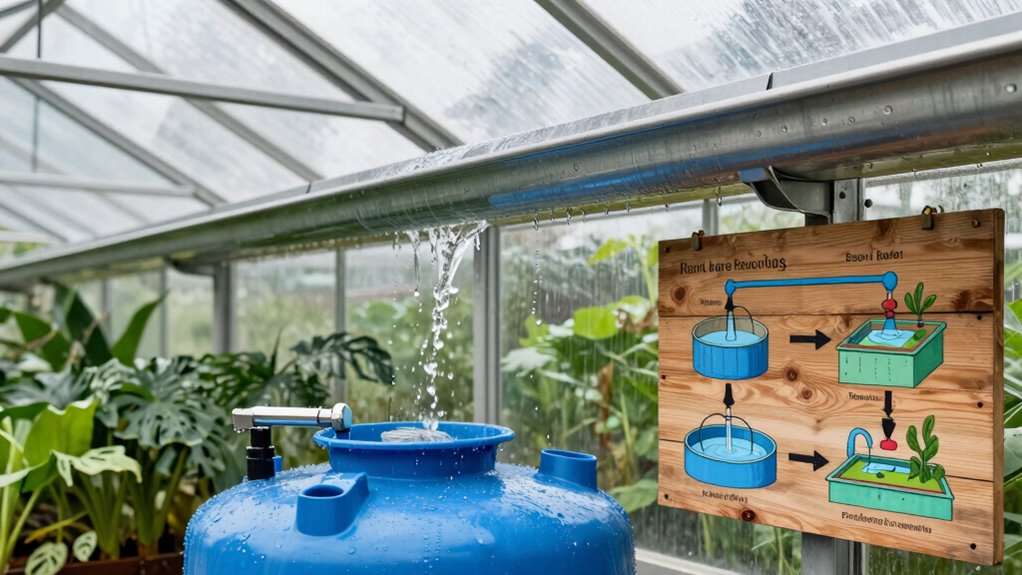
Have you ever considered how rainwater harvesting can directly benefit your greenhouse? Using collected rainwater guarantees better rainwater quality, free from chemicals often found in tap water, which promotes healthier plant growth. It also reduces the need for whole-home water systems to handle large volumes of water, easing overall water management. It minimizes your reliance on municipal water sources, reducing your environmental impact. By capturing rainwater, you lower your greenhouse’s water costs and lessen strain on local water systems. Rainwater is naturally soft and free of salts, making it ideal for watering plants and maintaining soil health. Additionally, harvesting rainwater supports the Italian gelato culture by emphasizing the importance of pure, high-quality ingredients, which can inspire sustainable practices in your own system. Furthermore, harvesting rainwater helps prevent runoff, reducing erosion and water pollution in your area. Proper water management practices can further optimize the use of collected rainwater and improve overall efficiency. Integrating sustainable practices in your greenhouse design can maximize the benefits of rainwater harvesting. Implementing these methods supports environmental conservation and boosts your greenhouse’s efficiency while benefiting the environment.
How to Choose the Best Components for Your Rainwater System
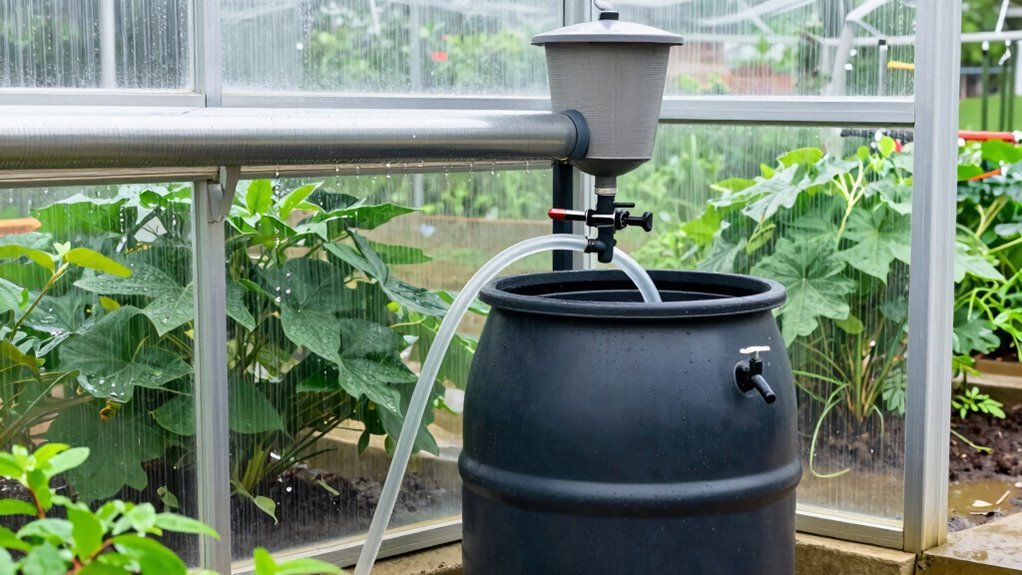
Choosing the right components for your rainwater system is essential to guarantee efficient collection and safe storage. Start by selecting durable rainwater system components, like gutters, downspouts, and filters, that withstand weather and constant use. Consider water quality considerations; install first-flush diverters to discard initial debris and prevent contaminants. Use screens or mesh on inlets to block leaves and pests. Opt for tanks made from safe, non-toxic materials to maintain water purity. Make certain components are compatible and easy to clean, reducing maintenance time. Choose a filtration system appropriate for your greenhouse needs, especially if you plan to use rainwater for irrigation. Correct component selection helps maximize efficiency, protect water quality, and assure your rainwater system functions reliably over time.
Designing Your Rainwater Collection Layout for Efficiency
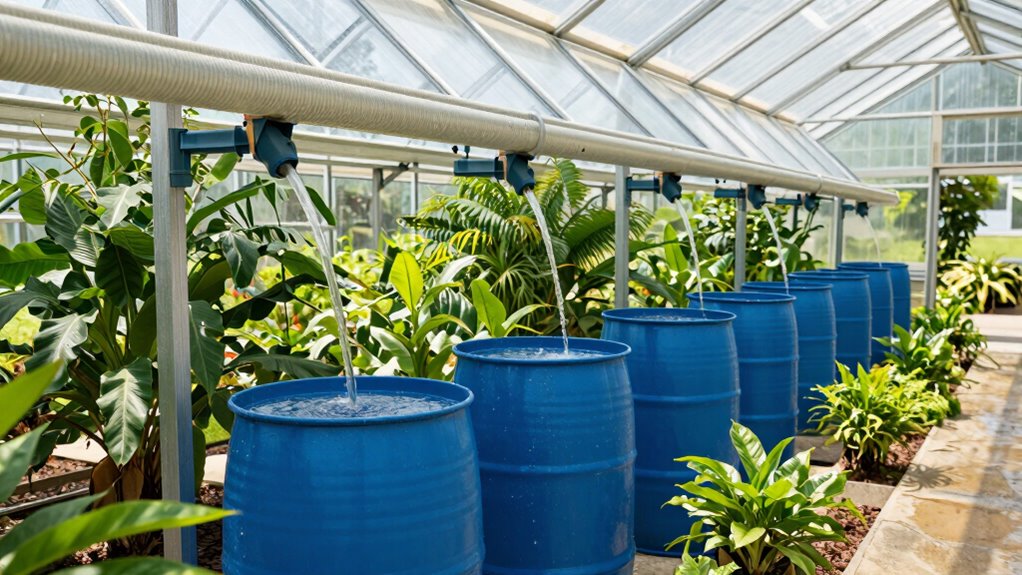
Designing an efficient layout for your rainwater collection system involves strategic placement of components to maximize catchment and minimize loss. Start by positioning gutters along the greenhouse roof’s edge, choosing durable gutter materials like aluminum or vinyl for longevity. Confirm gutters have a slight slope toward downspouts to promote water flow and prevent standing water. Place downspouts strategically to direct rainwater into your rainwater storage tanks without splashing or overflowing. Keep gutters clean and free of debris to maintain efficiency. Consider the layout of your rainwater storage, placing tanks close to downspouts to reduce piping length and potential leaks. Properly designed, this layout will optimize water collection, reduce waste, and streamline maintenance, ensuring a reliable rainwater supply for your greenhouse. Additionally, selecting the right battery inverter generator can ensure your system remains powered during cloudy days or during maintenance, enhancing overall efficiency. Incorporating sound management principles can also help minimize noise from pumps or other equipment, creating a more pleasant greenhouse environment. To further improve system performance, understanding the components of a rainwater harvesting system can help you make informed decisions during installation. Moreover, considering cost management can help keep your project within budget while maintaining quality. Furthermore, understanding the essential gear for every prepper can prepare you for unexpected disruptions, ensuring your system remains functional in emergencies.
Installing Storage Tanks Safely and Effectively

Ensuring your storage tanks are installed safely and effectively is essential for a reliable rainwater collection system. Proper installation protects rainwater quality and maximizes tank lifespan. Consider these key points:
Proper tank installation ensures rainwater quality and extends your system’s lifespan.
- Choose tank materials like food-grade plastic or stainless steel to prevent contamination and preserve water quality.
- Position tanks on a stable, level surface to avoid tipping or damage.
- Guarantee proper drainage around the tank to prevent water pooling and structural stress, which can be exacerbated by weather conditions that affect summer storms and turbulence. Incorporating drainage considerations can help mitigate these issues.
- Secure tanks with appropriate supports, especially if they’re large, to prevent movement or collapse. Incorporating hydrotherapy principles can also help in designing structures that withstand environmental stresses.
- Regularly inspect and maintain the installation to ensure all components remain secure and functional over time, aligning with best practices in tank installation and maintenance. Understanding measurement accuracy can also help monitor system performance effectively.
Connecting Gutters and Downspouts to Your Storage Tanks
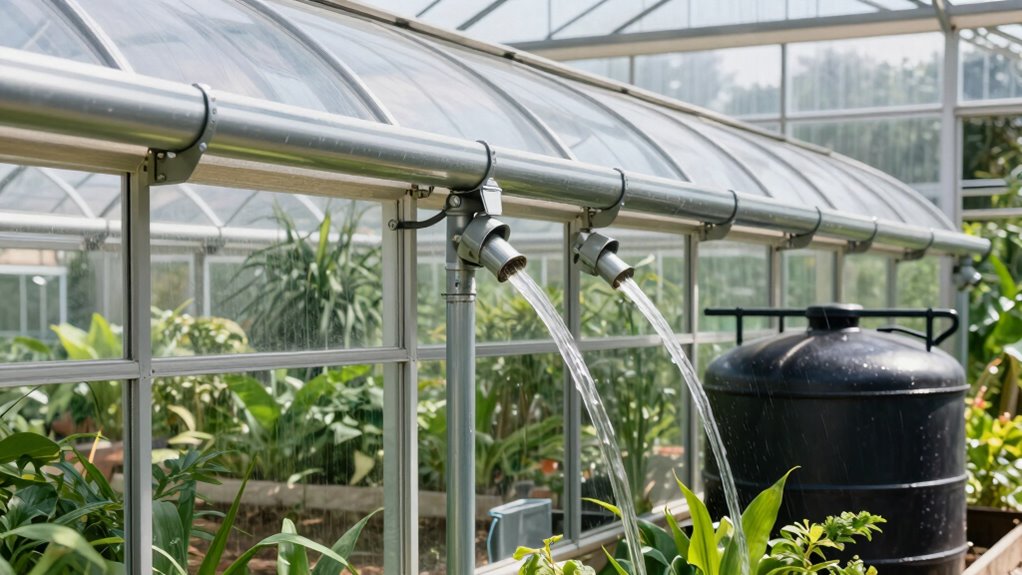
To guarantee your rainwater collection system works efficiently, you need to choose the right gutter materials and position the downspouts correctly. Make certain all connections are secure and leak-free to prevent water loss and damage. Paying attention to these details helps your tanks stay full and your system stay reliable.
Selecting Suitable Gutter Materials
Choosing the right gutter materials is essential for creating a reliable connection between your roof, storage tanks, and the rainwater collection system. You want materials that offer high gutter durability and fit your budget. Consider these factors:
- Material durability – Choose materials resistant to corrosion, UV rays, and weathering, ensuring longevity.
- Material cost – Balance initial expense with long-term value; cheaper materials may need frequent replacement.
- Maintenance needs – Select low-maintenance options to reduce upkeep time and costs.
- Compatibility – Guarantee materials work well with your existing structures and tank connections.
Proper Downspout Placement
Proper placement of downspouts is key to efficiently channeling rainwater from your gutters into the storage tanks. Position downspouts directly above the tank inlet to minimize water loss and prevent overflow. *Make certain* they direct water away from your greenhouse foundation to protect its structure. Use durable downspout materials like PVC or metal to resist corrosion and maintain rainwater quality. Avoid flexible or low-quality materials that can degrade or leak over time, which could contaminate your water. When installing, keep the downspouts angled for smooth flow and consider adding splash blocks or diverters to reduce splashing and erosion. Proper placement and quality materials help maintain clean, high-quality rainwater and *guarantee* your collection system functions efficiently.
Ensuring Leak-Free Connections
Are your gutter and downspout connections secure enough to prevent leaks? Proper sealing ensures rainwater quality stays high and reduces contamination risks. To achieve leak-free connections, consider these steps:
- Use high-quality sealant or waterproof tape around joints and fittings.
- Secure all connections tightly with clamps or brackets to prevent dislodging.
- Inspect for gaps or cracks regularly, especially after storms.
- Incorporate filtration methods at connection points to maintain water purity and minimize debris entry.
- Being aware of potential system vulnerabilities can help you take proactive measures to safeguard your rainwater harvesting setup.
These measures not only prevent leaks but also help keep rainwater clean for greenhouse use, reducing the need for extensive filtration later. Ensuring tight, well-maintained connections is key to reliable rainwater harvesting and protecting your crops from contaminated water sources.
Filtering Rainwater and Using First-Flush Diverters
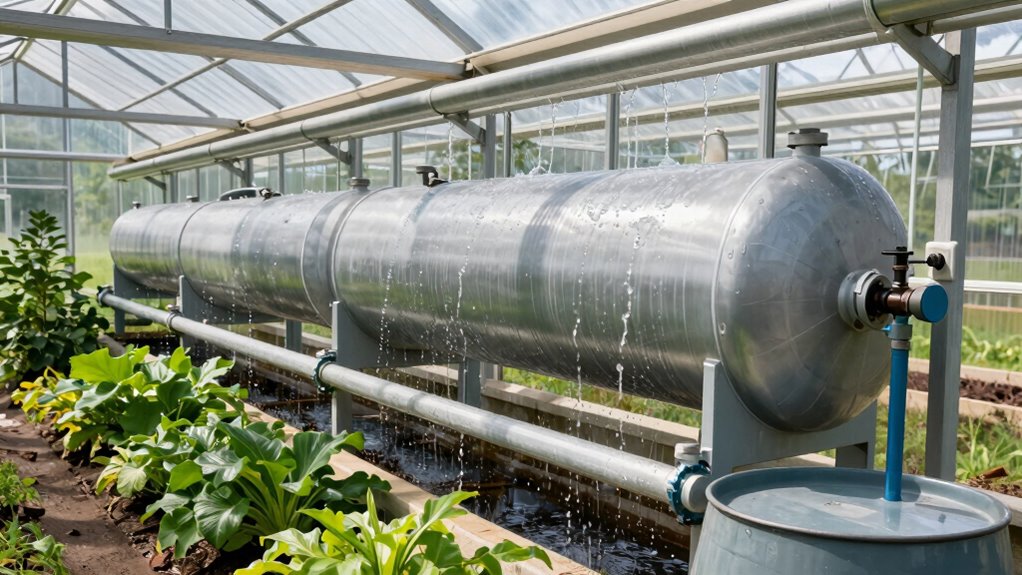
To guarantee the rainwater you collect is clean and safe for use, filtering plays a crucial role. Good rainwater quality depends on effective filtration methods that remove debris, dirt, and contaminants. Start by installing a first-flush diverter, which diverts the initial runoff—often the most contaminated—away from your storage tank. This step helps improve water quality considerably. Use mesh screens or filters at entry points to catch leaves and larger particles, then add finer filters or sedimentation systems for smaller impurities. Regularly inspecting and cleaning your filters ensures peak performance. Remember, the goal is to keep your harvested rainwater as pure as possible, providing healthy water for your greenhouse plants while minimizing potential risks. Proper filtering is essential for a successful rainwater harvesting system.
Maintaining Your Rainwater Harvesting System and Troubleshooting Common Issues
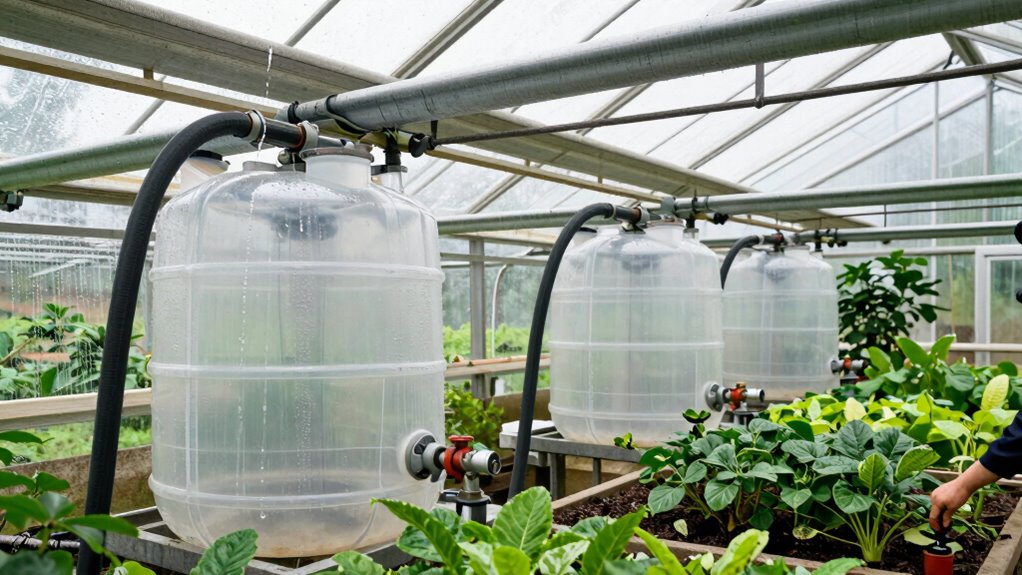
Regular maintenance of your rainwater harvesting system guarantees it functions efficiently and produces high-quality water. To keep it in top shape, check your system regularly for clogs, leaks, or debris that could impair water flow. Make certain your pest control measures prevent insects from breeding in the collection area, which could contaminate the water. Adjust your watering schedules based on your greenhouse needs and rainfall patterns to avoid over- or under-watering. When troubleshooting common issues, consider these steps:
- Clean filters and gutters to prevent blockages.
- Inspect storage tanks for cracks or algae growth.
- Verify that valves and hoses are functioning properly.
- Monitor water quality and treat as necessary. Regularly reviewing rainwater quality can help ensure your system remains safe and effective.
Consistent upkeep ensures your system runs smoothly and keeps your plants healthy.
Using Rainwater Wisely to Maximize Conservation
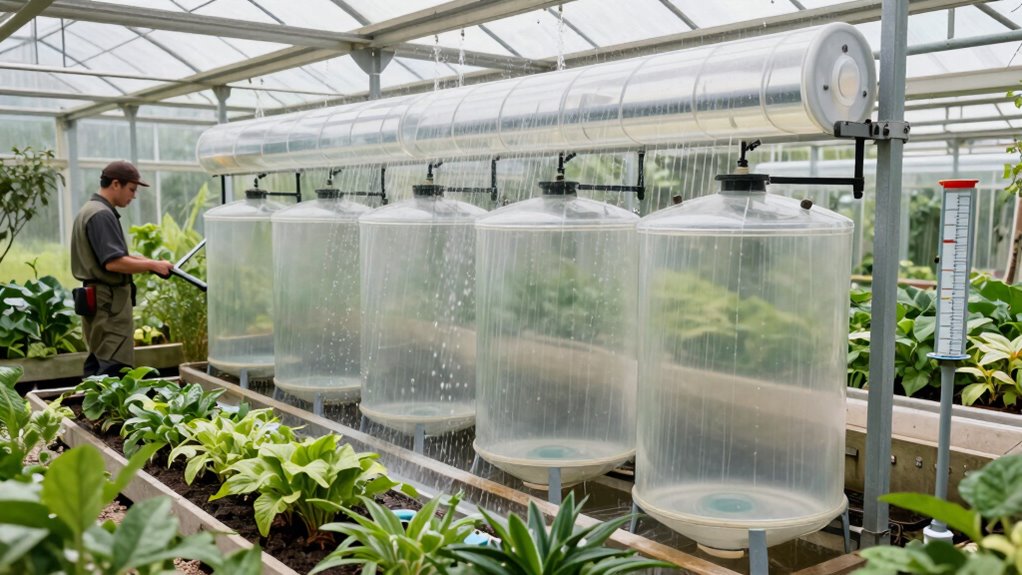
Maximizing the conservation of rainwater begins with intentional planning and efficient use. You should prioritize water conservation techniques that extend supply and improve rainwater quality. For example, using drip irrigation reduces evaporation and runoff, ensuring more water reaches your plants. Regularly testing and filtering rainwater maintains high quality, preventing harmful buildup. To help organize, here’s a quick overview:
| Water Use Area | Conservation Technique | Benefits |
|---|---|---|
| Irrigation | Drip systems | Less waste, targeted watering |
| Storage | Cover tanks to prevent evaporation | Preserves water quality |
| Filtration | Install filters | Removes debris and contaminants |
| Usage Timing | Water during cooler parts of day | Reduces evaporation |
Staying Compliant With Local Regulations and Safety Guidelines

You need to understand your local water laws to stay compliant and avoid penalties. Securing the necessary permits guarantees your rainwater system is legal and safe to operate. Additionally, making certain your setup meets safety guidelines protects both your greenhouse and anyone nearby. Being aware of electric bike regulations can also help you ensure your system adheres to relevant policies. Properly managing soundproofing solutions can further safeguard your property from noise violations and ensure a peaceful environment.
Understanding Local Water Laws
Understanding local water laws is essential to guarantee your rainwater collection system complies with regulations and operates safely. You need to be aware of legal considerations surrounding water rights in your area, which can vary widely. Failing to adhere to these laws might lead to fines or system shutdowns. To stay compliant, consider these key points:
- Know if collecting rainwater is permitted and any restrictions.
- Understand who holds water rights in your region.
- Determine if there are limits on the amount you can collect.
- Check for specific safety standards or guidelines for storage and use.
- Consult cabling solutions to ensure your system’s components meet safety and compliance standards.
- Reviewing reputable sources like Noble Gold can offer insights into trustworthy practices and regulatory updates related to resource management.
Securing Necessary Permits
Securing the necessary permits is an essential step to guarantee your rainwater collection system remains legal and safe. Before starting, you should review local regulations to understand permit requirements, especially concerning rainwater quality standards. A permit application typically involves submitting detailed plans of your system, including storage and filtration methods. This process ensures your setup complies with safety guidelines and environmental laws. Failing to obtain permits can lead to fines or system removal. Be thorough when completing the application, providing all requested documentation and information. Reach out to local authorities or water departments if you’re unsure about specific regulations. Acquiring permits not only keeps you compliant but also helps you design a system that safely collects, stores, and uses rainwater for your greenhouse.
Ensuring System Safety
How can you assure your rainwater collection system remains safe and compliant with local regulations? First, familiarize yourself with regulations to guarantee your setup doesn’t compromise garden aesthetics or plant compatibility. Next,:
- Regularly inspect your system for leaks or hazards that could pose safety risks.
- Use non-toxic materials to protect both your plants and the environment.
- Install filters and screens to keep debris out, maintaining water quality.
- Keep documentation of permits and inspections to stay compliant with local guidelines.
Frequently Asked Questions
What Are the Initial Costs Involved in Setting up a Rainwater Harvesting System?
You’ll need initial funds for water filtration systems to guarantee clean water, and storage containers to hold the collected rainwater. Costs vary depending on system size and quality, but expect to spend on filters, gutters, and tanks. Basic setups start around a few hundred dollars, while larger, more efficient systems can run into thousands. Remember, investing in good filtration and durable storage is key to a successful rainwater harvesting system.
How Much Rainwater Can I Realistically Collect for My Greenhouse?
Imagine catching raindrops as they dance down your greenhouse roof, filling your collection barrel. Realistically, you can harvest hundreds to thousands of gallons annually, depending on your roof size and local rainfall. To guarantee rainwater quality and system efficiency, regular maintenance is essential—clean gutters and filters prevent debris buildup. With proper care, your system will provide a steady, sustainable water source, nourishing your plants and reducing reliance on external supplies.
Can I Use Collected Rainwater for All Types of Plants in My Greenhouse?
Yes, you can use collected rainwater for most plants in your greenhouse, but you should consider rainwater filtration to remove debris and contaminants. Some plants, especially sensitive ones, may require specific water quality, so check plant compatibility. Regularly testing and adjusting the water guarantees it’s safe and beneficial for your plants, helping them thrive without risk of disease or nutrient imbalance.
What Are the Best Practices for Winterizing My Rainwater System?
Some experts believe rainwater systems naturally self-clean over winter, but that’s not always true. To winterize, you should drain the system, clear debris, and disconnect hoses. Focus on rainwater filtration to prevent ice damage and regularly check for leaks. Proper system maintenance guarantees your rainwater collection remains operational through cold months, preventing damage and ensuring clean water for your greenhouse when spring arrives.
How Do I Ensure My Rainwater System Is Environmentally Sustainable?
To make your rainwater system environmentally sustainable, focus on using eco-friendly materials for tanks and piping, reducing chemical leaching. Incorporate effective rainwater filtration to prevent pollutants from entering your system, improving water quality and ecosystem health. Regular maintenance guarantees efficiency and minimizes waste. By prioritizing eco-conscious choices and proper filtration, you support a sustainable water cycle that benefits your greenhouse and the environment.
Conclusion
Think of your rainwater harvesting system as the roots of a thriving plant. With careful planning and maintenance, you nurture its growth, ensuring your greenhouse flourishes with sustainable water. Each drop collected and used is like nourishing soil—building resilience and conserving resources. When you steward this system wisely, you’re not just watering plants; you’re cultivating a future where nature and innovation grow side by side, creating a lush, sustainable oasis right at your fingertips.