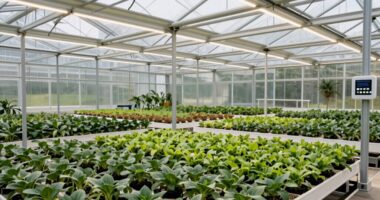

To add grow light racks to your backyard greenhouse smartly, start by measuring your space and understanding your plants’ light needs. Choose adjustable, durable racks that support even light distribution and allow for easy maintenance. Set them up at the right height and position your lights to avoid shadows. Regularly check and maintain your fixtures for maximum growth. Keep exploring tips and tricks to guarantee your greenhouse thrives all year.

Get garden gear delivered free with Prime
- Fast, free delivery on millions of items
- Prime Video, Amazon Music and more included
- Member-only deals all year
Key Takeaways
- Measure available space and plan rack placement to maximize light coverage without overcrowding plants.
- Choose adjustable, sturdy racks supporting full-spectrum grow lights for flexibility and durability.
- Position lights evenly, adjusting height regularly to match plant growth stages and prevent stress.
- Ensure proper airflow and consider architectural details to optimize environmental conditions around racks.
- Maintain and clean lighting fixtures regularly, and monitor light spectrum seasonally for optimal plant health.
adjustable grow light racks for greenhouse
As an affiliate, we earn on qualifying purchases.
As an affiliate, we earn on qualifying purchases.
Assess Your Greenhouse Space and Light Needs
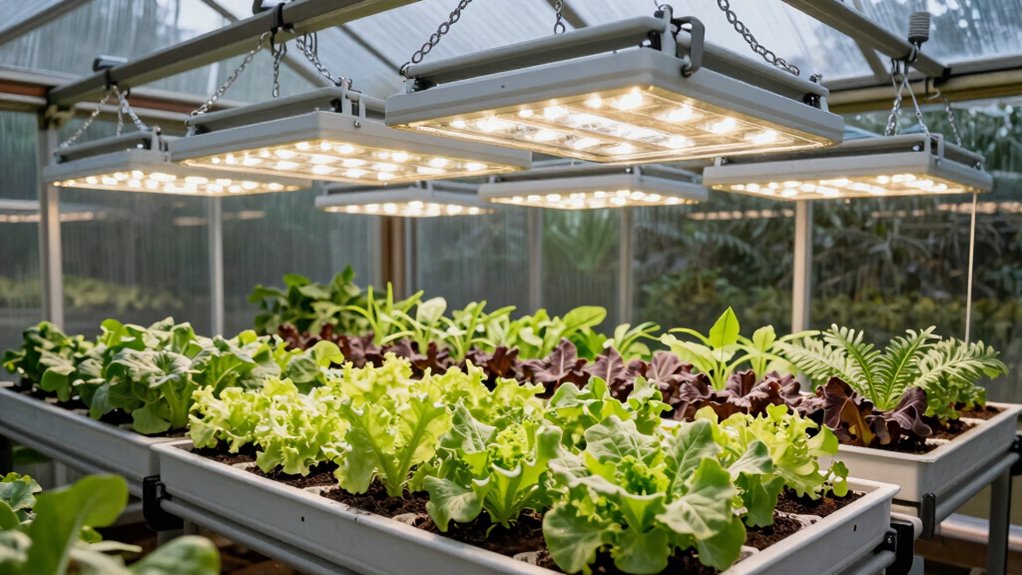
Before choosing grow light racks, you need to evaluate your greenhouse space and lighting requirements. Measure your available area to determine how many racks you can accommodate without overcrowding. Consider the light intensity your plants need; some crops require more light, while others thrive in lower levels. Proper soil amendments are essential for healthy plant growth, so plan your soil quality and amendments accordingly. Also, think about pest control—ensuring your space is clean and pest-free helps protect your investments and maintains ideal conditions for your plants. Remember, effective planning now prevents issues later. By appraising both your space and light needs, you set a strong foundation for selecting the right grow light racks that will support your greenhouse’s productivity and health. Additionally, understanding your lighting requirements can help optimize light placement and improve plant growth outcomes. Incorporating innovative lighting solutions can further enhance your greenhouse’s efficiency and crop yields. Recognizing the importance of proper planning ensures that your setup maximizes growth potential and minimizes future adjustments. Moreover, considering the evolution of arcade game popularity can inspire creative ways to integrate lighting and entertainment elements into your greenhouse design. A thorough understanding of sound healing science and how it influences plant health might also open new avenues for optimizing your greenhouse environment.
Choose the Best Grow Light Racks for Your Setup
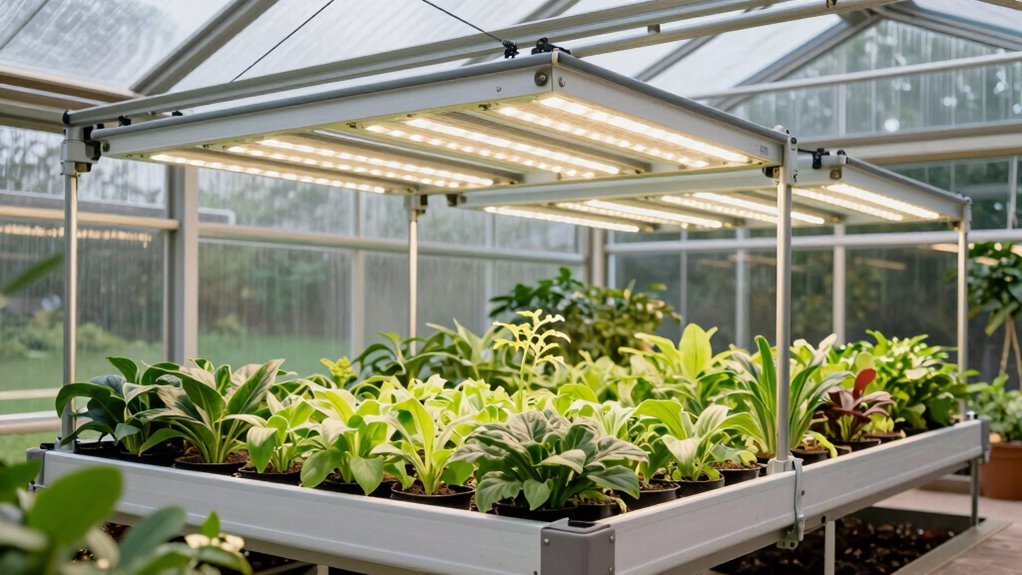
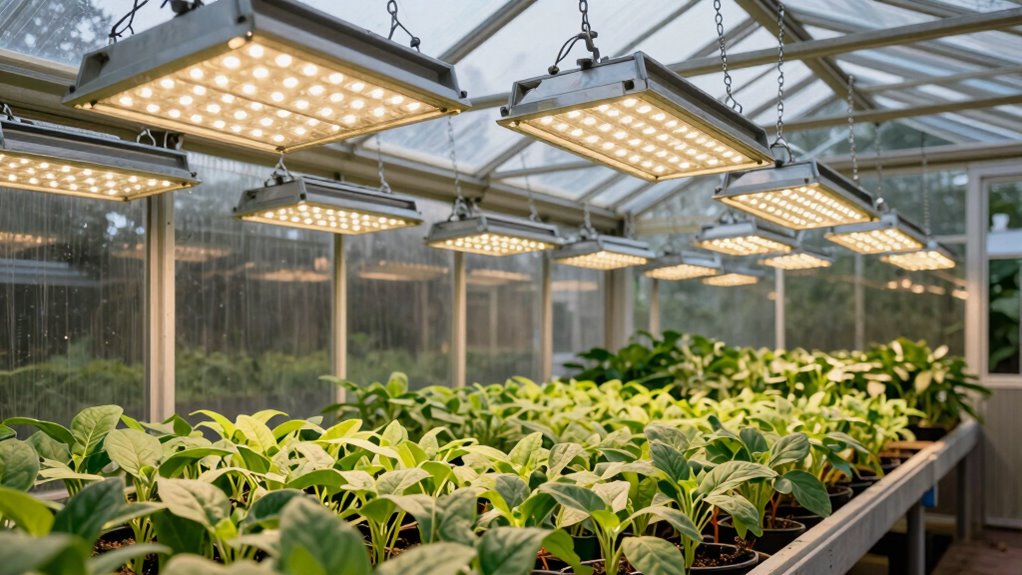
Selecting the right grow light racks is essential to maximizing your greenhouse’s efficiency and plant health. You want racks that support ideal plant growth by providing even light distribution and easy access for maintenance. When choosing racks, consider their height adjustability to match different plant stages. The light spectrum emitted by your grow lights impacts plant growth, so confirm your racks can accommodate lights with full-spectrum options to promote healthy development. Durable materials like powder-coated steel or high-quality aluminum ensure longevity. Think about ease of installation and whether the racks can hold the weight of your preferred lighting system. Properly chosen racks will maximize light exposure, enhance growth, and make your greenhouse setup more organized and effective overall. Additionally, selecting racks with adjustable lighting height allows for better customization as your plants grow. Incorporating racks designed with materials suited for greenhouse environments ensures they withstand humidity and temperature fluctuations, extending their lifespan. To ensure your racks maintain their stability over time, consider models with sturdy construction and secure mounting options. Using racks with proper weight capacity guarantees they can support your lighting system safely without risk of tipping or collapse. Moreover, choosing racks with easy maintenance features can simplify cleaning and adjustments, keeping your greenhouse running smoothly.
Set Up Grow Light Racks for Maximum Efficiency
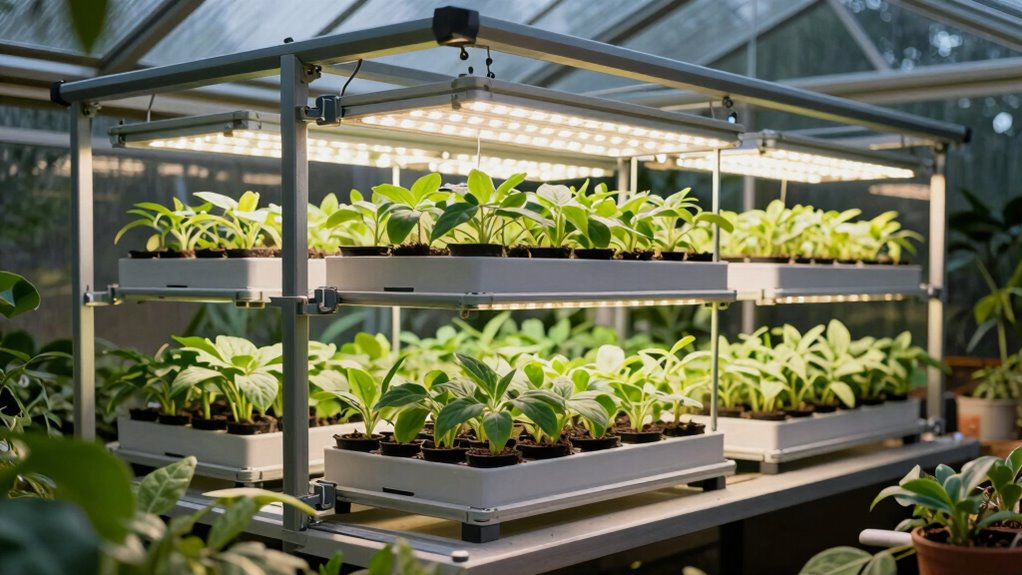
Once you’ve chosen the right grow light racks, setting them up properly can considerably boost your greenhouse’s efficiency. To optimize, consider these steps:
Proper setup of grow light racks enhances greenhouse efficiency and plant growth.
- Adjust the height of your lights based on plant height, keeping lights close enough to prevent stretching but far enough to avoid heat stress.
- Guarantee even light distribution by spacing lights evenly across the rack, minimizing shadows and dark spots.
- Select the correct light spectrum for each growth stage, providing blue light for vegetative growth and red for flowering, maximizing plant development.
- Regularly monitor and balance support and boundaries to ensure your plants receive adequate light without causing stress or damage. Additionally, paying attention to the architecture details of your setup can help optimize light placement and airflow, further enhancing growth conditions.
Maintain and Optimize Your Grow Lights Year-Round
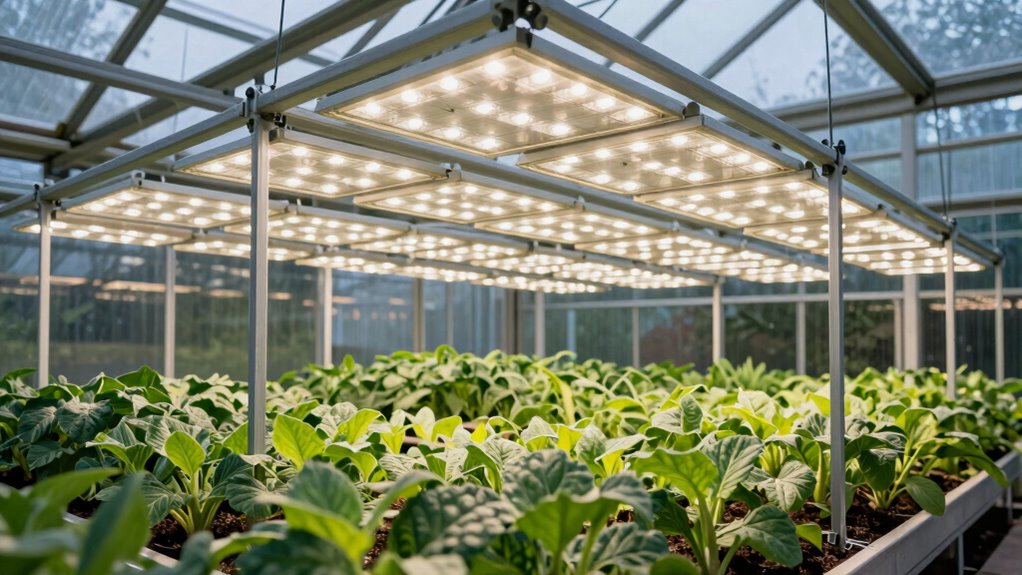
Maintaining and optimizing your grow lights throughout the year is essential for consistent plant growth and productivity. Regularly check your lights to guarantee they’re functioning properly and clean any dust or debris that could reduce output. Adjust the light spectrum to match the plants’ growth stages—blue for vegetative growth, red for flowering. Use the following table to help keep your system optimized:
| Task | Frequency |
|---|---|
| Check light bulb lifespan | Every 6-12 months |
| Adjust height for growth | Weekly or as needed |
| Clean light fixtures | Monthly |
| Monitor light spectrum | During seasonal changes |
| Ensure proper electrical setup | Annually |
Additionally, indoor air quality and humidity control can influence your greenhouse environment, supporting healthier plant development and maximizing your setup’s efficiency. Proper ventilation and maintaining appropriate environmental conditions can also prevent issues like mold or pests, further ensuring optimal growth. Regularly assessing these climate control factors helps sustain a healthy and productive greenhouse environment. Regular calibration of your projector technology can also improve overall light output and consistency in your setup.
Troubleshoot Common Grow Light Rack Problems
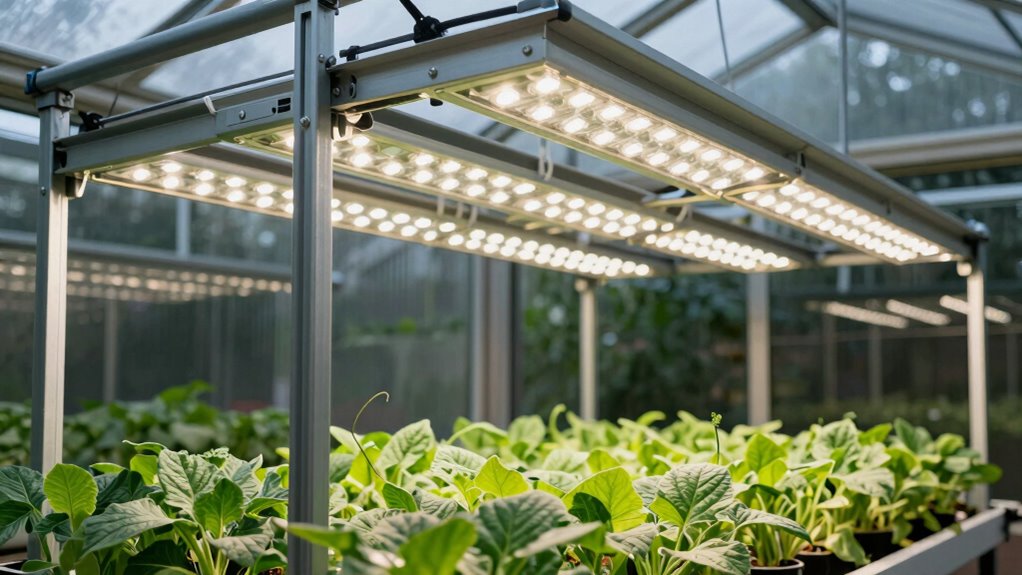
Even the best-designed grow light racks can develop issues that disrupt your plant growth if not addressed promptly. Common problems include uneven light distribution, pest infestations, and poor soil health. To troubleshoot:
Even well-designed grow light racks can face issues like uneven lighting, pests, and soil problems if not promptly addressed.
- Check your setup for uneven light coverage, adjusting the height or angle of your grow lights as needed.
- Inspect plants regularly for pests, implementing pest management strategies to prevent outbreaks.
- Conduct soil testing to identify nutrient deficiencies or imbalances that hinder growth, then amend soil accordingly.
- Consider protective accessories for your greenhouse to prevent pests and environmental damage, ensuring optimal conditions for your plants.
- Regularly monitor light distribution to maintain even coverage and avoid shadowed areas that could stunt plant development. Staying informed about soil health and nutrient management enhances overall plant vigor.
Addressing these issues promptly guarantees your plants receive ideal light and nutrients, preventing further problems that could compromise your greenhouse’s productivity. Regular maintenance, including soil testing and pest management, keeps your grow light racks functioning efficiently.
Frequently Asked Questions
How Do I Prevent Grow Light Heat Damage to Plants?
To prevent heat stress and light intensity damage from grow lights, keep lights at an appropriate distance—usually 12-24 inches above your plants. Use adjustable grow light racks so you can modify height as plants grow. Monitor temperature regularly, and consider using fans or ventilation to keep heat levels in check. This way, your plants receive enough light without suffering from heat damage, promoting healthy growth.
What Safety Precautions Should I Take During Installation?
Think of installation as building a sturdy bridge; safety first. You should prioritize electrical safety by turning off power, using insulated tools, and ensuring proper wiring. Secure fixtures firmly to prevent collapse, like anchoring a ship to weather storms. Wear protective gear, avoid water contact with electrical components, and double-check connections. These precautions keep you safe while creating a reliable, stable setup that supports healthy plant growth.
Can I Automate Grow Light Schedules Easily?
Yes, you can easily automate grow light schedules with a smart home system. Lighting automation allows you to set specific on and off times, mimicking natural sunlight patterns, which promotes healthy plant growth. Connect your grow lights to a smart plug or integrate them with a home automation hub. This way, you can control and adjust your lighting remotely, ensuring your plants get consistent lighting even when you’re away.
How Do I Upgrade Existing Racks for Better Performance?
To upgrade your existing racks for better performance, focus on optimizing lighting placement and rack durability. Adjust the height and angle of your grow lights to guarantee even coverage and maximize plant growth. Reinforce your racks with sturdy materials to support increased weight from upgraded lighting fixtures. These improvements enhance light efficiency and confirm your racks withstand the added strain, helping your greenhouse operate more effectively and last longer.
What Are Eco-Friendly Options for Grow Lighting?
Think of your greenhouse as a sunlit grove; eco-friendly grow lighting options enhance this natural vibe. You should consider solar-powered LED grow lights for maximum solar efficiency, harnessing sunlight to power your plants. LED lights also boast remarkable longevity, reducing waste and energy costs. This sustainable approach supports your plants while respecting the environment, creating a thriving, eco-conscious greenhouse that’s both efficient and gentle on the planet.
Conclusion
By evaluating your space, choosing the right racks, setting them up efficiently, and maintaining them diligently, you create a suitable environment for your plants to thrive. Keep your grow lights aligned, your racks sturdy, and your system flexible to adapt to seasonal changes. Stay proactive, troubleshoot promptly, and continually improve. With these strategies, you’ll guarantee your backyard greenhouse remains a lush, productive oasis year-round—growing healthier plants, maximizing yields, and enjoying gardening with confidence.
Fall yard work Picks
leaf blowers
As an affiliate, we earn on qualifying purchases.