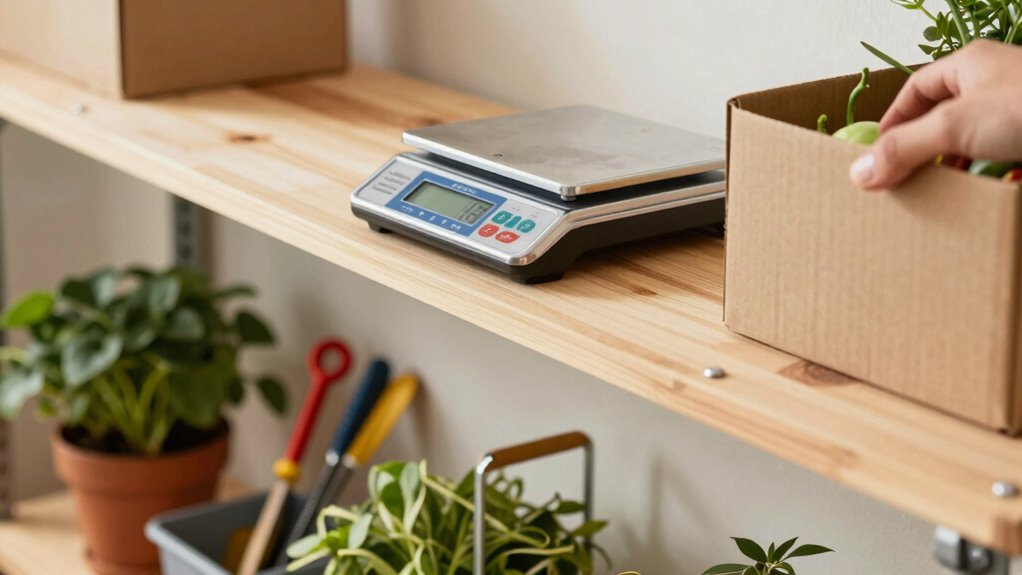
Regularly checking your shelf load capacity is essential for a safe and healthy grow setup. You should verify the maximum weight each shelf can handle by consulting labels, manufacturer specs, or construction details. Watch out for signs of damage like warping, rust, or loose brackets, and make sure loads are evenly distributed. Keeping up with maintenance helps prevent accidents and prolongs shelf life. If you want to ensure your setup stays strong and secure, continue exploring how to perform these checks properly.
Key Takeaways
- Verify shelf labels or manufacturer specifications for maximum load ratings before placing items.
- Distribute weight evenly across shelves to prevent stress points and potential damage.
- Regularly inspect shelves for signs of bending, rust, cracks, or instability.
- Use appropriate tools, like scales, to accurately measure item weights and ensure they stay within limits.
- Perform routine maintenance by tightening bolts, cleaning surfaces, and replacing damaged parts promptly.
Why Checking Shelf Load Capacity Is Essential for Your Grow Setup
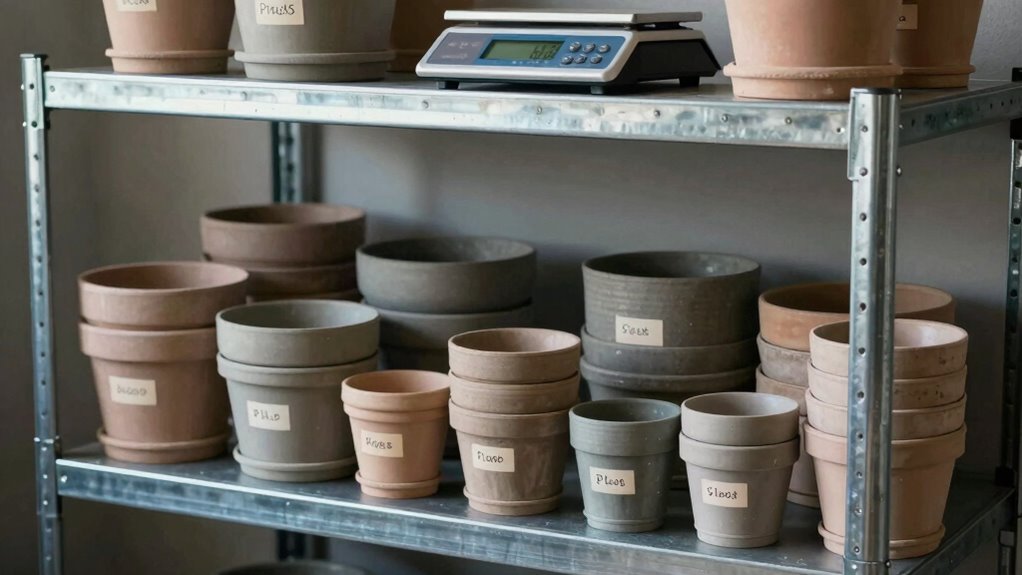
Ensuring your grow shelves can handle the weight you plan to put on them is essential for safety and plant health. Proper shelf organization helps you evenly distribute weight, preventing weak spots that could lead to collapse. When shelves are overloaded or unevenly loaded, it stresses the material and compromises stability. By checking your shelf load capacity, you avoid accidents that could damage your plants or cause injury. Good weight distribution also ensures your plants get proper light and airflow without crushing or bending under excess weight. Ignoring load limits might seem minor but can lead to long-term damage to your setup. Taking the time to verify and maintain appropriate weight limits guarantees a safe, efficient, and productive grow environment. Additionally, considering design details such as door swings and stair proportions can help optimize your space for better storage and safety. Understanding weight capacity and how it relates to the materials used can help you choose or reinforce shelves for maximum durability. Regularly reviewing your shelf load capacity can also prevent unexpected failures as your setup evolves over time. Being aware of material strength can help you select shelves that are less prone to wear and tear over time.
How to Find Out Your Shelves’ Maximum Load Capacity

To find out your shelves’ maximum load capacity, start by checking any labels or manufacturer specifications that came with the shelves. If unavailable, consider the material types and shelf design. Metal shelves typically handle more weight than wood or plastic, but design influences strength too. Examine the construction details: thicker shelves and reinforced edges support heavier loads. Use this table to gauge your shelves’ durability:
| Material Types | Shelf Design | Load Capacity Range |
|---|---|---|
| Steel | Reinforced, adjustable | Heavy-duty |
| Wood | Thick, sturdy planks | Moderate to heavy |
| Plastic | Thin or reinforced | Light to moderate |
| Wire | Open, minimal supports | Light |
| Composite | Varies, reinforced | Moderate |
Additionally, understanding the load-bearing capacity of your shelves can help you avoid potential hazards and prolong their lifespan. Considering material strength is crucial when assessing how much weight your shelves can safely support, especially for long-term use. It’s also helpful to understand how shelf design influences overall load limits, particularly when planning for heavier or fluctuating loads. Being aware of shelf stability can further prevent accidents caused by overloading or improper placement.
Signs Your Shelving Is Weak or Damaged
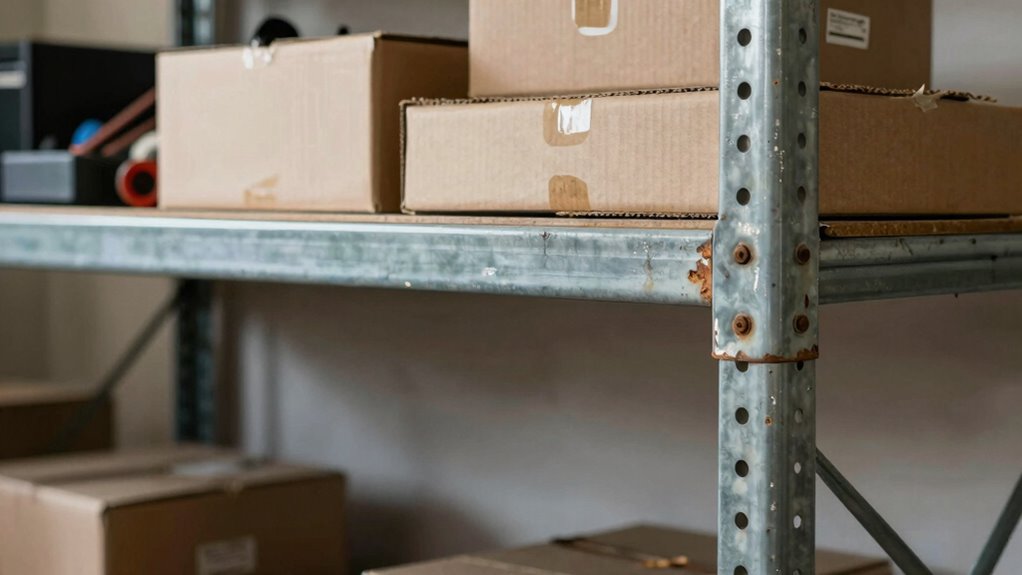
Overloading shelves or using them beyond their capacity can lead to visible signs of weakness or damage. Check the shelf materials—if you notice bending, warping, or cracking, it’s a clear sign they’re under stress. Uneven weight distribution can cause certain areas to sag or bow, indicating the shelf isn’t handling the load properly. Look for rust, corrosion, or loose brackets, which weaken structural integrity. Wobbly or unstable shelving suggests the supports are compromised. If you see small cracks or chips on the edges, these can escalate into larger failures. Regularly inspecting for these signs helps prevent sudden collapses and protects your crops. Ensuring proper shelving materials can also aid in maintaining safety and ease of inspection. Additionally, using appropriate cabling solutions to secure shelving components can reduce movement and increase stability. Proper maintenance and inspection routines are essential to identify issues early and extend the lifespan of your shelving. Incorporating preventative measures based on regular assessments can further enhance stability and safety. Address any issues immediately to maintain a safe and sturdy growing environment.
How to Perform a Load Capacity Check Step by Step
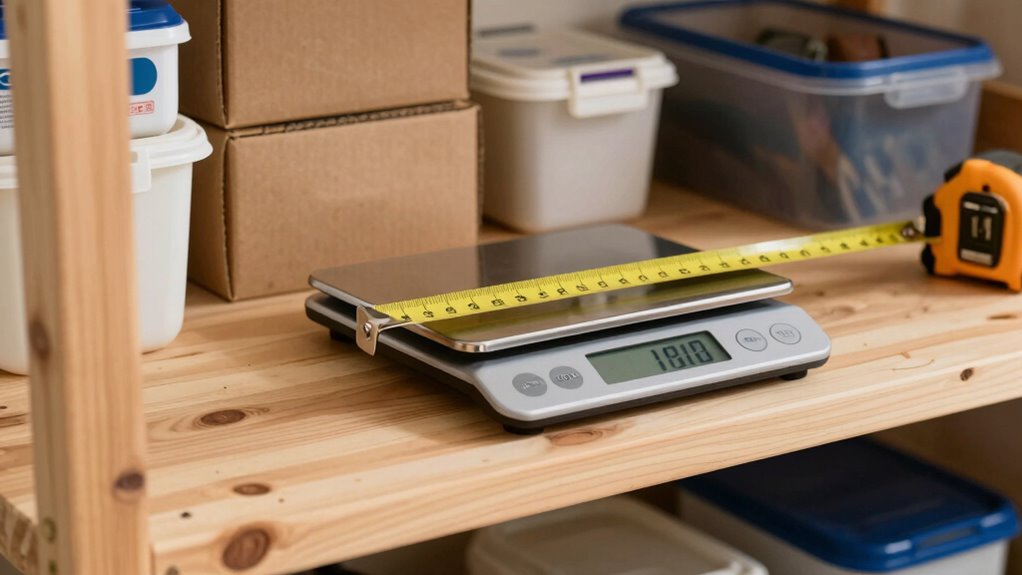
Performing a load capacity check is a straightforward process that helps you determine whether your shelving can safely hold its intended weight. Start by examining your shelf organization—know what’s on each shelf and its weight. Next, evenly distribute the load to promote proper load distribution, avoiding concentrated weights that could cause damage. Use a reliable scale or weight measurement tools to verify the weight of items, ensuring they stay within the shelf’s limits. Additionally, consider vehicle accessories that can help you better organize and secure your items, preventing overloads and ensuring safety. Being aware of load limits is crucial for maintaining the safety and longevity of your shelving units. Properly assessing system efficiency can help you optimize your storage and prevent unnecessary strain on your shelves. Remember that understanding load distribution can significantly enhance safety and durability.
Check your shelves’ load capacity by knowing your items’ weights and distributing them evenly for safety and durability.
- Feel the confidence that comes with knowing your shelves are safe and sturdy
- Experience peace of mind, avoiding costly damages or accidents
- Maintain a well-organized, efficient workspace that protects your investments
Maintenance Tips to Keep Your Shelving Safe and Durable
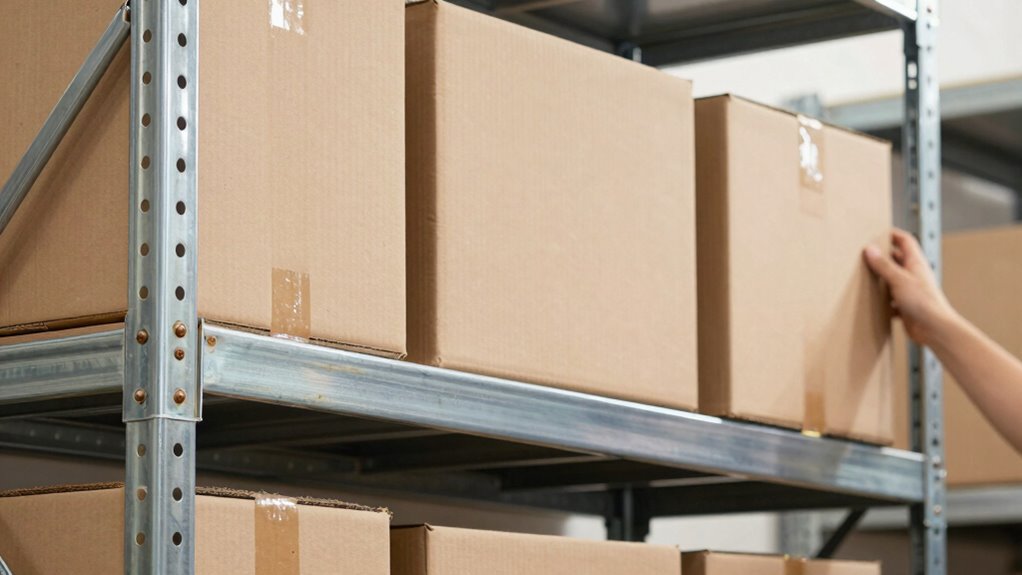
Regular maintenance is essential to keep your shelving safe and durable. Start by regularly inspecting shelf organization to prevent overloading or uneven load distribution, which can compromise stability. Confirm items are evenly spread across shelves, avoiding concentrated weight in one spot. Tighten any loose bolts or brackets to maintain structural integrity. Clean shelves to remove dust and debris that could weaken materials over time. Check for signs of wear, rust, or damage, and replace compromised parts promptly. Proper load distribution not only prolongs shelf life but also reduces the risk of accidents. Additionally, consider inspecting the floor surface beneath shelving units to ensure stability and prevent unexpected shifts or collapses. Monitoring the shelf load capacity helps prevent overloading and extends the lifespan of your storage system. Staying aware of market trends and potential risks can also inform better decisions about your storage choices and safety measures. Recognizing the importance of regular inspections can help catch issues early before they lead to serious problems. By maintaining your shelving regularly, you guarantee it remains sturdy, safe, and capable of supporting your growing needs efficiently.
Frequently Asked Questions
Can Uneven Weight Distribution Affect Shelf Stability?
Yes, uneven weight distribution can substantially affect shelf stability. When you have a weight imbalance, it puts extra stress on certain areas, increasing the risk of tipping or collapsing. To prevent stability concerns, regularly check your shelves for uneven loads and adjust items accordingly. Proper weight distribution ensures your shelves stay secure, reducing the chance of accidents and protecting your valuable crops or products.
How Often Should I Recheck My Shelving’s Load Capacity?
You should recheck your shelving’s load capacity every few months, especially after making shelf reinforcement or redistributing weight. Regularly inspecting guarantees your shelves can handle changing loads and prevents accidents. If you notice uneven weight distribution or signs of stress, it’s time for another check. Staying proactive helps maintain stability, avoids damage, and keeps your grow operation safe and efficient. Don’t wait until a failure occurs—regular checks save you trouble later.
Are There Specific Materials Better for Heavy Loads?
You’ll find that steel and heavy-duty wire shelving are your best bets for heavy loads, thanks to their superior material durability. These materials handle weight better because they promote even load distribution, preventing weak spots or bending. It’s a coincidence that your choice of sturdy materials guarantees safety and longevity, giving you peace of mind as your grow operation expands. Prioritize these options for reliable, long-lasting shelving.
What Tools Are Best for Measuring Load Capacity Accurately?
To measure load capacity accurately, you should use reliable tools like digital weight measurement scales or load cells for precise weight measurement. Load testing instruments, such as portable load testers or strain gauges, help verify shelf strength under real conditions. These tools guarantee you can assess the maximum load your shelves can handle safely, preventing overloading and potential damage while maintaining ideal storage efficiency.
How Do Environmental Factors Impact Shelf Strength Over Time?
Think of your shelves as brave guardians standing against time’s relentless march. Environmental degradation and corrosion effects silently weaken their strength, much like rust erodes iron’s resolve. Over time, moisture, temperature swings, and pollutants chip away at their integrity, risking collapse. To protect your harvest, regularly assess these environmental influences, keep shelves dry, and inspect for signs of wear—preserving their steadfast service amidst nature’s shifting tides.
Conclusion
Regularly checking your shelf load capacity isn’t just a safety measure—it’s crucial for peak growth. Did you know that over 30% of shelving failures are caused by overloads? By staying vigilant and performing routine checks, you prevent accidents and protect your investment. Keep an eye on signs of wear and follow maintenance tips. Taking these simple steps ensures your setup remains sturdy, safe, and ready to support your thriving grow operation.