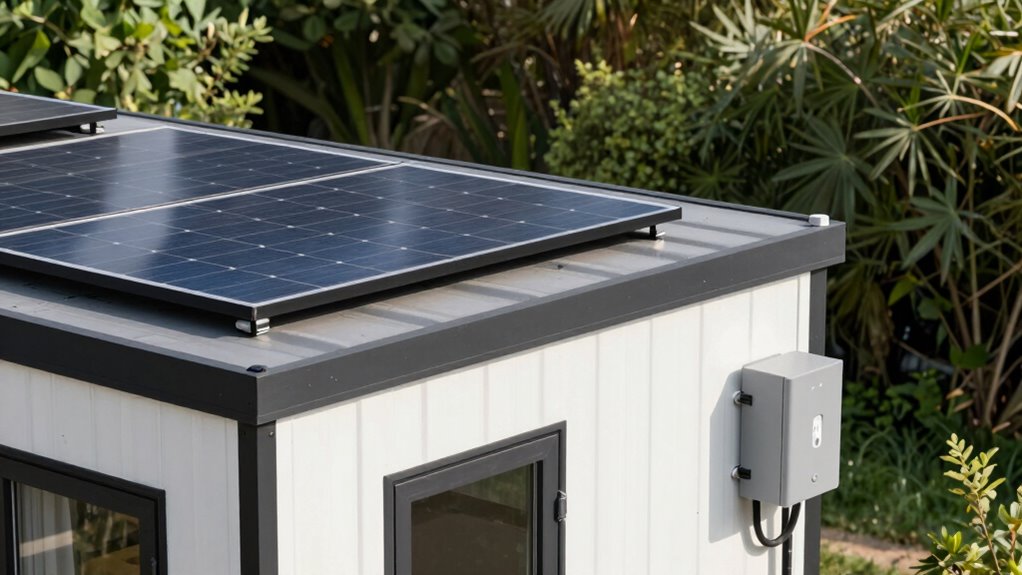

To add solar backup power without overcomplicating your build, start by evaluating your essential appliances and their energy needs. Choose straightforward, user-friendly solar panel and battery options, like plug-and-play systems or lithium-ion batteries, to simplify installation and maintenance. Keep your system scalable for future upgrades and ensure safety by following proper grounding and secure mounting. Focusing on efficiency and affordability helps maximize savings while maintaining reliable backup power—stick around to learn easy tips for a smooth setup.

Get garden gear delivered free with Prime
- Fast, free delivery on millions of items
- Prime Video, Amazon Music and more included
- Member-only deals all year
Key Takeaways
- Start with a pre-designed, plug-and-play solar generator or portable system for easy setup.
- Focus on essential appliances to size a simple, streamlined backup system.
- Choose reliable, user-friendly batteries and inverters with straightforward connections.
- Minimize wiring complexity by using integrated or modular components and proper grounding.
- Regularly maintain and monitor the system to ensure efficiency without added complexity.
As an affiliate, we earn on qualifying purchases.
What Is Solar Backup Power and Why It Matters
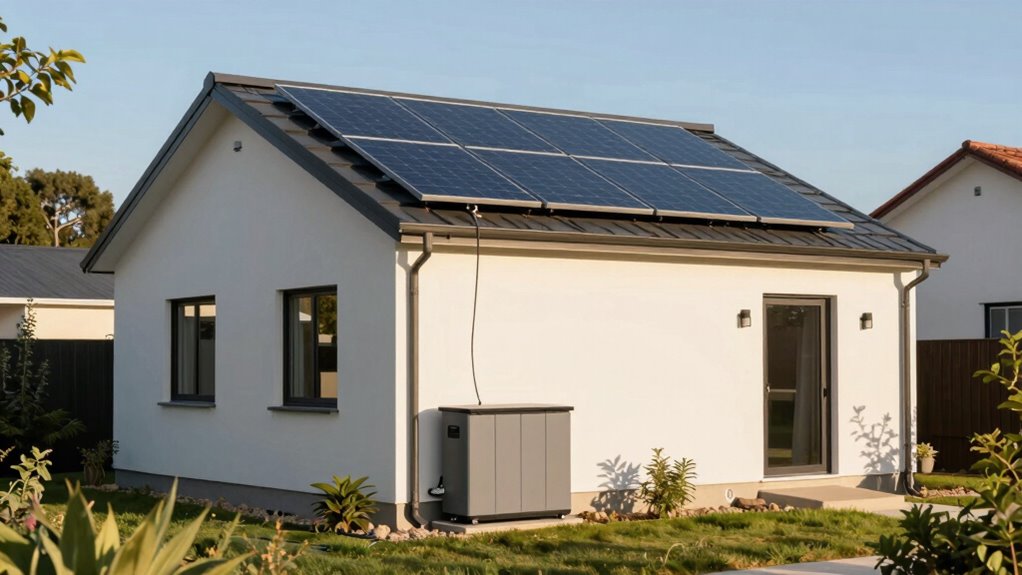
Have you ever experienced a power outage and wondered how to keep your essential devices running? Solar backup power offers a reliable solution by harnessing solar energy to provide continuous electricity. It works by storing excess sunlight in batteries, so your home can draw on this stored energy when the grid goes down. This boosts your power reliability, ensuring your appliances, medical devices, and other essentials stay operational during outages. A variety of solar battery banks are available, ensuring you can find an option suitable for your energy needs. Unlike traditional backup options, solar backup power is clean, sustainable, and reduces dependence on fossil fuels. It’s especially valuable in areas prone to storms or frequent outages. By integrating solar backup power into your home, you gain peace of mind and a more resilient energy system, all while contributing to a greener environment. Proper smart thermostat setup can further optimize energy use during outages, enhancing overall home comfort and efficiency. Additionally, understanding the importance of contrast ratio helps in selecting the right equipment to ensure clear and detailed visuals during power availability. Incorporating energy storage solutions can further improve your system’s efficiency and reliability during extended outages. Considering system scalability allows you to expand your backup capacity as your energy needs grow.
Determine How Much Backup Power Your Home Needs
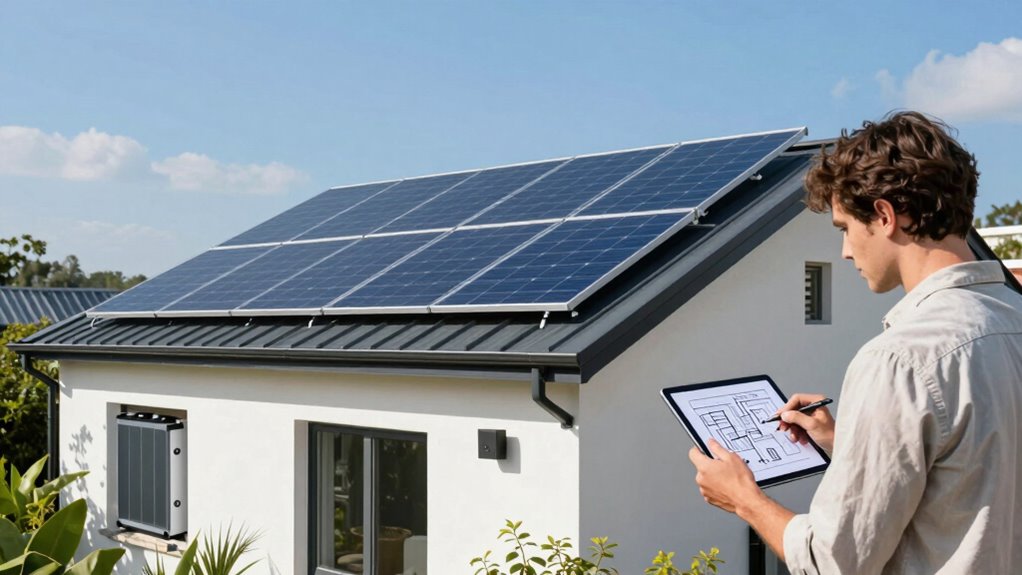
To figure out how much backup power you need, start by listing your essential appliances and noting their power use. Next, calculate the total energy each device consumes to understand your overall needs. Additionally, consider incorporating home theater fundamentals to help optimize your system’s efficiency and adaptability over time. A good understanding of your whole-home water systems can also influence your backup power planning, ensuring your water needs are met during outages. If you have electric dirt bikes or other electric vehicles, understanding their horsepower and energy requirements can help you plan for additional energy demands during extended outages. Properly managing your battery maintenance is crucial to ensure your backup system remains reliable when needed, and deciding how long you want your backup system to keep your home running during an outage.
Assess Essential Appliances
Before choosing a backup power system, you need to identify which appliances are essential during an outage. Focus on appliances critical for safety, comfort, and security, like refrigerators, lights, and medical devices. Make a list of these essentials and note their power requirements, considering your home’s electrical wiring and safety regulations. It’s important to prioritize appliances that keep your household safe and functional. Keep in mind that not all devices need backup power, so avoid overestimating your needs, which could complicate your system. Knowing exactly what you need to run helps you determine the right size for your backup system without overloading your electrical wiring or violating safety standards. Incorporating natural pools and other eco-friendly features can influence your backup power needs, so consider how these elements fit into your overall plan. For example, understanding the mechanics of French press can inspire energy-efficient brewing methods that might reduce overall power consumption during outages. Additionally, understanding sound healing science can offer insights into creating a calming environment during stressful outages, ensuring safety and comfort. This step guarantees your backup power is efficient and reliable during outages, and understanding solar energy fundamentals can help you optimize your system’s performance.
Calculate Power Consumption
Once you’ve identified the appliances you need during an outage, the next step is to determine how much power they require. Start by checking each device’s wattage, usually found on a label or in the manual. Add up their wattages to get a total power load. Keep energy efficiency in mind—opting for energy-efficient appliances reduces overall power needs. This step helps you understand the size of the backup system you’ll need, ensuring your setup is neither underpowered nor overbuilt. Considering battery capacity and how it relates to your total watt-hour needs can help you select the appropriate inverter generator or battery system. Additionally, choosing folder structures for organizing your backup components can streamline maintenance and future upgrades. Remember, planning for system scalability allows you to add more capacity later if your needs grow. Accurate calculations prevent overspending and ensure your backup power can handle all essential appliances reliably during outages.
Determine Backup Duration
Determining how long your backup power needs to last is essential for designing an effective solar backup system. Your backup duration planning depends on your typical power outages and essential appliances. To estimate, list critical devices and their wattages, then calculate total energy needs. Remember, solar panel efficiency affects how much energy your system can generate daily, influencing backup capacity. Use this simple table to guide your planning:
| Appliance | Wattage | Backup Duration (hours) |
|---|---|---|
| Refrigerator | 150W | 4 |
| Lights | 60W | 6 |
| Phone Charger | 10W | 8 |
Total backup time depends on your energy storage and solar input, so plan accordingly for reliable power during outages.
Choose an Easy Solar Backup System for Your Home
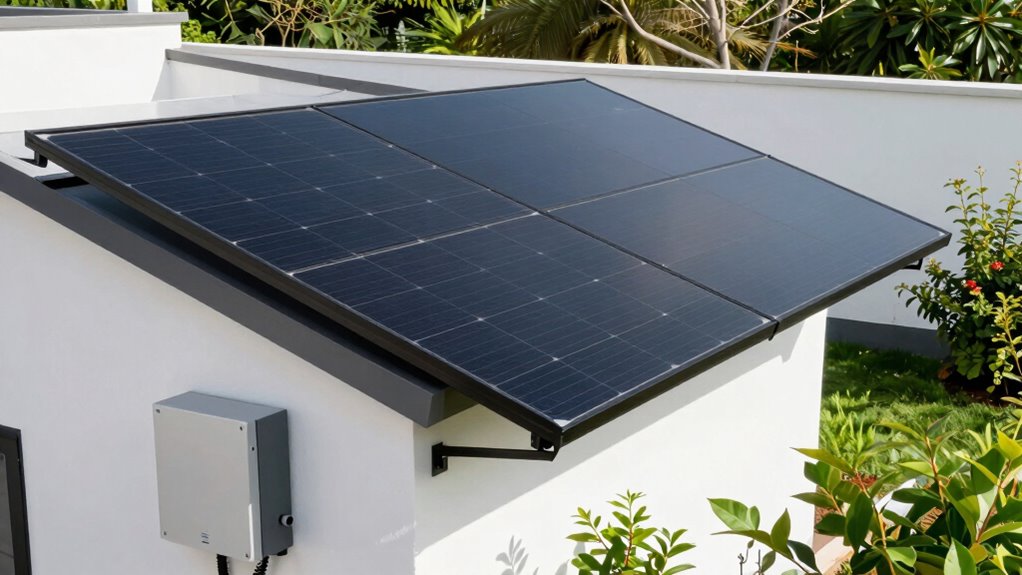
Choosing an easy solar backup system for your home starts with evaluating your energy needs and budget. Focus on systems with high solar panel efficiency to maximize energy generation without adding complexity. Look for solutions that offer reliable battery lifespan, ensuring your backup power lasts through outages without frequent replacements. Simplified systems, like plug-and-play portable or solar generator options, can be ideal if you want minimal setup. These systems often come with integrated batteries and require little maintenance, making them perfect for beginners. Keep in mind, a straightforward system saves you time and reduces potential issues down the line. By prioritizing efficiency and battery longevity, you’ll find a solar backup setup that’s easy to manage and fits your home’s needs. Additionally, opting for systems with high solar panel efficiency can help you get the most out of your investment with less hassle. To ensure your system remains reliable over time, consider components with durable battery technology that can withstand frequent use and environmental factors. Selecting components with robust safety features is also crucial to prevent hazards and ensure safe operation during outages and maintenance. Incorporating weatherproof tool storage can further protect your equipment from the elements, extending its lifespan.
Install Solar Panels Without Complicating Things
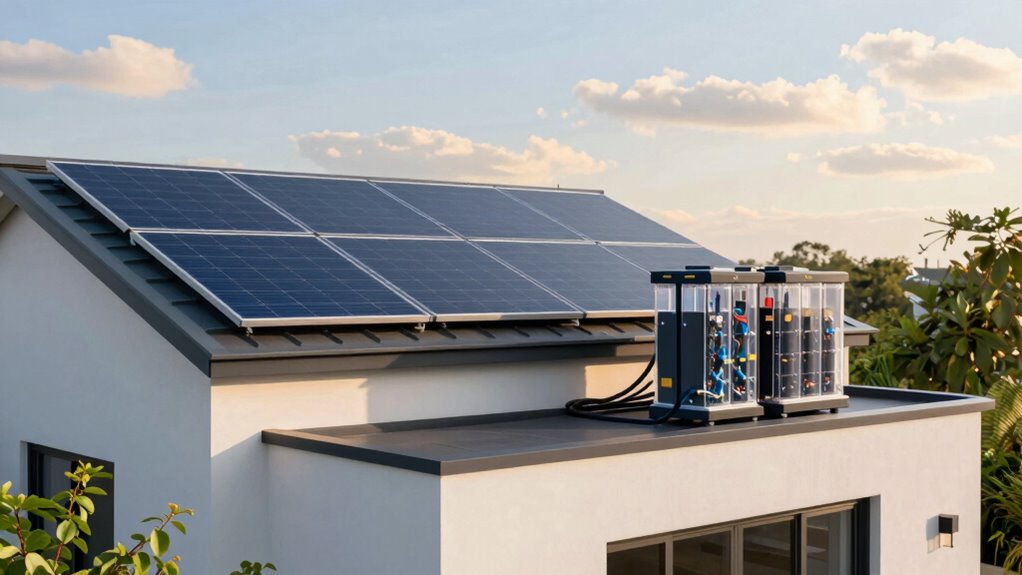
Installing solar panels doesn’t have to be complicated. To keep things simple, focus on choosing the right solar panel materials that suit your needs, like monocrystalline or polycrystalline panels. Next, follow straightforward installation techniques:
Installing solar panels is simple—choose the right materials and follow easy, straightforward steps.
- Assess your roof’s angle and shading to maximize sunlight exposure.
- Secure mounting brackets properly to guarantee stability.
- Connect the panels using simple wiring techniques, avoiding unnecessary complexity.
- Make certain proper grounding for safety and longevity.
- Choose reliable and tested components to ensure your system’s durability and safety over time solar panel materials. Additionally, understanding routines for safe solar setup can help streamline your installation process and prevent common pitfalls.
Pick a User-Friendly Battery Storage Solution
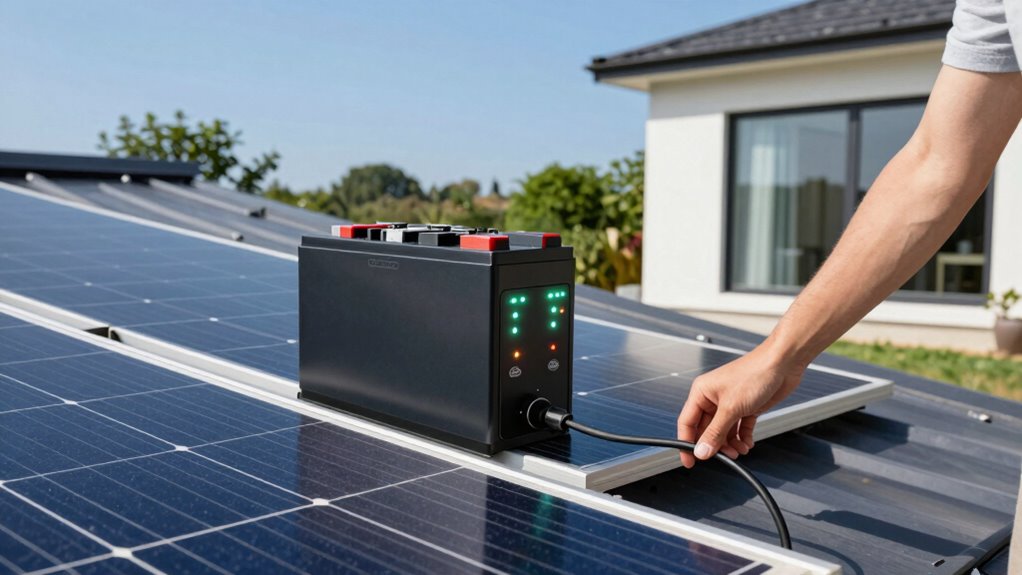
Once your solar panels are in place, selecting a battery storage solution that’s easy to use can greatly simplify managing your solar power system. Look for user-friendly options with clear interfaces and straightforward installation. Consider battery capacity to guarantee it meets your energy needs without overcomplicating your setup. Smaller batteries are simpler to manage, but larger ones offer more backup power. To help you decide, here’s a quick comparison:
| Battery Type | User Friendly Options | Battery Capacity |
|---|---|---|
| Lithium-ion | Easy to install/use | Moderate to high |
| Lead-acid | Budget-friendly | Lower to moderate |
| Saltwater | Eco-friendly | Varies |
| Flow batteries | Scalable, user friendly | Very high |
| Solid-state | Emerging tech, simple | Moderate |
Understanding modern family dynamics can help you choose the best system for your household’s energy needs.
Connect Backup Power to Your Existing Electrical System
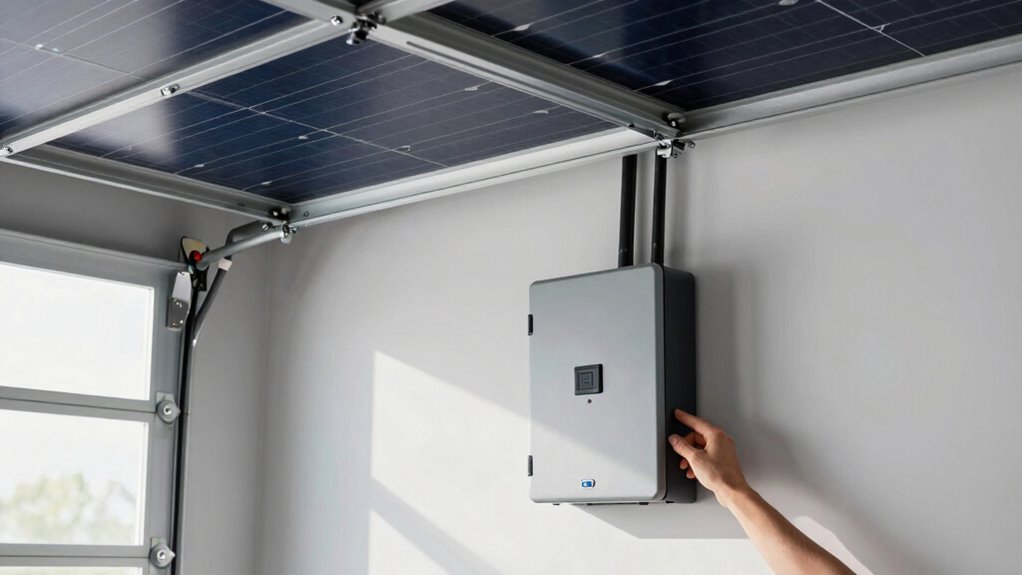
To connect your backup power system to your existing electrical setup, you’ll need to integrate it carefully to guarantee safety and reliability. This step is essential for achieving grid independence and maximizing renewable integration.
- Turn off your main breaker to prevent any electrical hazards during installation.
- Install a transfer switch to safely toggle between grid power and backup power, ensuring seamless operation.
- Connect your solar batteries or inverter to your main panel, allowing your system to supply power during outages.
- Test the system thoroughly to confirm it’s functioning correctly and safely, giving you peace of mind.
Keep Your Solar Backup System Running Smoothly
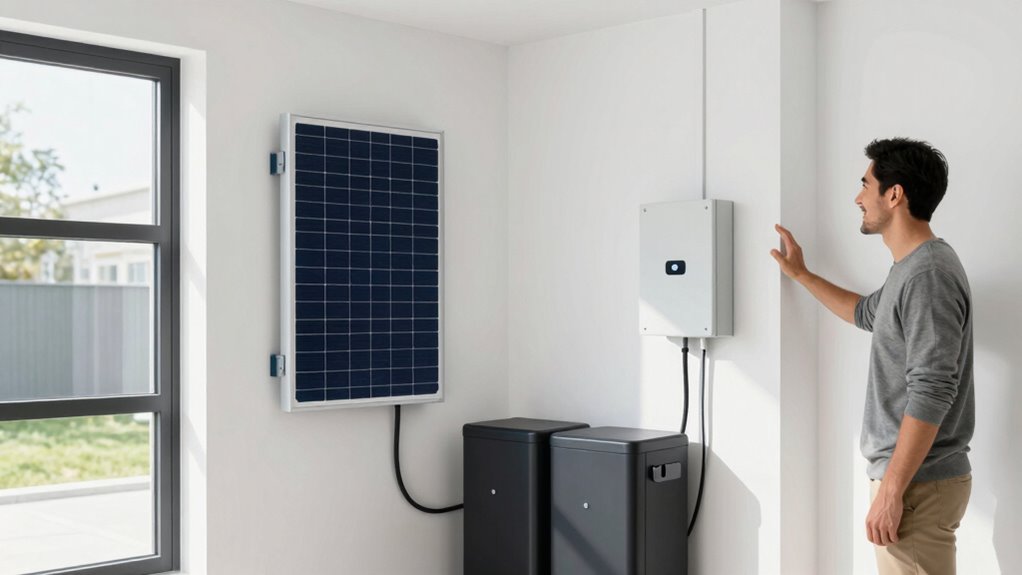
To keep your solar backup system running smoothly, you’ll want to perform regular maintenance and check for any issues. Monitoring your battery health guarantees you won’t be caught off guard when you need backup power most. Additionally, optimizing your energy usage helps extend system life and maximizes efficiency.
Regular System Maintenance
Regular maintenance is essential to keep your solar backup system operating at peak performance. By staying on top of upkeep, you can extend battery longevity and seamlessly implement system upgrades when needed. Here are four key steps to keep your system in top shape:
- Inspect connections and wiring regularly to prevent corrosion and ensure safety.
- Clean solar panels to maximize energy absorption and efficiency.
- Check battery terminals for corrosion or damage, promoting longer battery life.
- Schedule professional system upgrades to improve capacity and performance.
Staying proactive with maintenance not only boosts reliability but also saves you from costly repairs later. Consistent care guarantees your backup power remains dependable and ready when you need it most.
Monitor Battery Health
Monitoring your battery health is essential to guarantee your solar backup system runs smoothly when you need it most. Regular health monitoring helps you track battery longevity and identify potential issues early, preventing costly replacements or failures. Keep an eye on voltage levels, temperature, and charge cycles, as these indicators reveal the battery’s overall condition. Many systems include built-in monitoring tools or apps that provide real-time data, simplifying the process. By staying proactive, you ensure your batteries maintain peak performance and lifespan. Consistent health checks allow you to address problems before they escalate, keeping your backup power reliable and efficient. Ultimately, good health monitoring extends your battery’s life and ensures your solar backup is ready whenever you need it.
Optimize Energy Usage
Maximizing your energy efficiency is essential to keeping your solar backup system running smoothly during outages. By focusing on energy conservation and improving appliance efficiency, you reduce strain on your system. Consider these steps:
- Use energy-efficient appliances to cut power consumption and extend backup availability.
- Unplug devices when not in use to prevent phantom loads draining your battery.
- Schedule high-energy tasks during peak sunlight hours to maximize solar input.
- Implement simple habits like turning off lights and electronics when unnecessary to conserve energy.
These actions not only extend your backup power but also ensure your system operates reliably when it matters most. Small adjustments can make a big difference in keeping your power flowing smoothly.
Find Affordable Solar Backup Solutions for Your Home
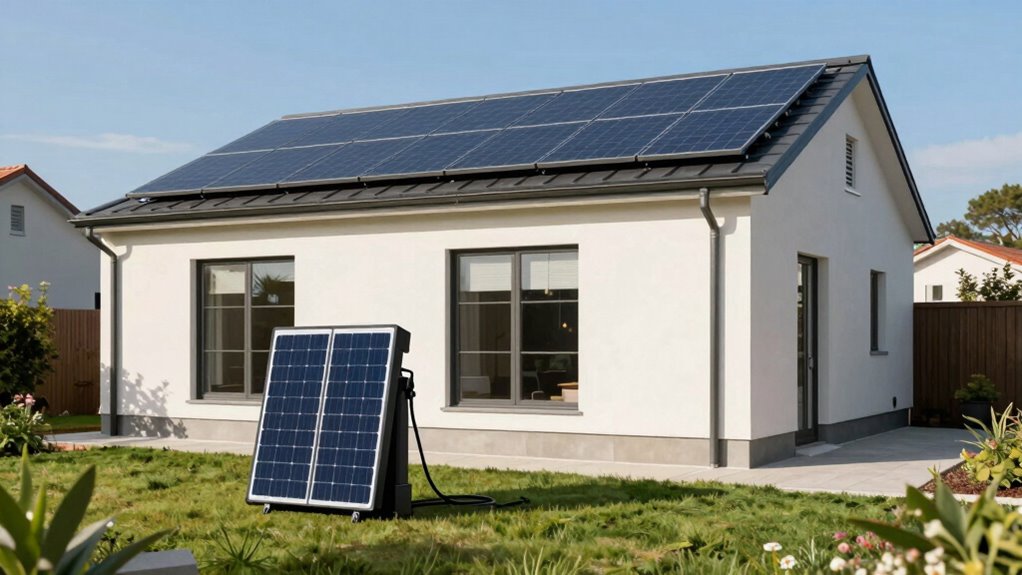
Finding affordable solar backup solutions for your home starts with understanding your energy needs and budget. Begin by exploring cost-effective options like flexible solar panel mounting systems that suit your roof or yard, reducing installation costs. Consider purchasing used or recycled batteries, which can be found through battery recycling programs, lowering your overall expenses without sacrificing quality. Research solar panel brands that offer reliable performance at lower prices, and compare warranties and reviews to guarantee value. Keep an eye out for local incentives or rebates that can further reduce your upfront costs. By focusing on these affordable options, you can build a practical backup system that fits your budget while providing dependable power during outages.
Estimate the Cost of Your Solar Backup System
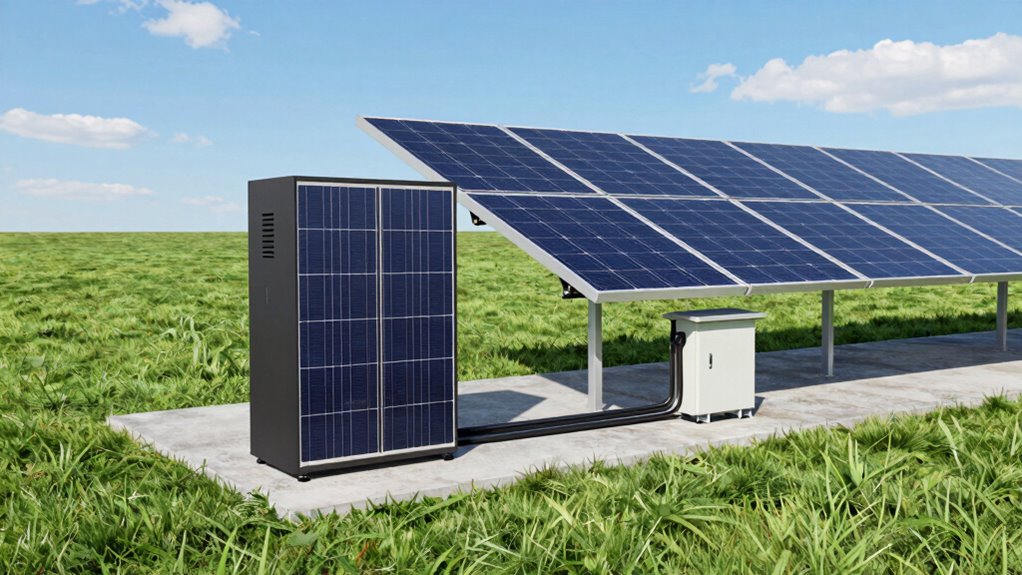
Estimating the cost of your solar backup system depends on several key factors, including system size, equipment quality, and installation complexity. You’ll want to take into account your budget and plan accordingly to guarantee the system meets your needs without overspending. By understanding these points, you can make informed decisions and set realistic expectations for your project.
Factors Influencing Cost
The cost of your solar backup system depends on several key factors that can substantially influence the overall price. First, the size of your system determines the amount of equipment needed, affecting costs directly. Second, your choice of solar panel financing options can make a difference—whether paying upfront or through loans. Third, government incentives can notably reduce expenses, so it’s essential to explore available rebates and tax credits. Fourth, the quality and brand of batteries and inverters impact both price and performance, so investing in reliable components pays off long-term. Keep in mind, understanding these factors helps you budget smarter and maximize savings. By carefully considering each element, you’ll avoid surprises and build a backup power system that’s both effective and affordable.
Budgeting and Planning
Planning your budget for a solar backup system involves more than just adding up equipment costs; it requires a clear understanding of all potential expenses and how they fit into your financial plan. Consider energy efficiency improvements that can reduce your overall system size and cost, saving you money upfront and over time. Research government incentives, rebates, and tax credits available in your area, as these can substantially lower your investment. Include costs for installation, maintenance, and possible upgrades to your existing electrical system. Creating a detailed plan helps you avoid surprises and prioritize essential components. By balancing your desired backup capacity with available incentives and energy savings, you can develop a realistic budget that keeps your solar backup project affordable and effective.
Troubleshoot Common Solar Backup Problems

Troubleshooting common solar backup problems involves systematically identifying and resolving issues that can prevent your system from functioning at its best. If your solar panel efficiency drops, your system may not store enough power, risking backup failure. To fix this:
Troubleshooting solar backup issues keeps your system reliable and maximizes energy storage.
- Check for dirt or debris on your panels—cleaning them can restore efficiency.
- Inspect wiring connections for corrosion or looseness—secure or replace as needed.
- Monitor your battery’s health—a declining battery lifespan reduces backup capacity.
- Verify inverter performance—faulty inverters can cause power outages during backup.
Addressing these issues helps maintain maximum solar panel efficiency and prolongs your battery lifespan. Regular troubleshooting ensures your system reliably supplies backup power when needed, giving you peace of mind.
Frequently Asked Questions
Can I Expand My Solar Backup System Later?
Yes, you can expand your solar backup system later. To do so effectively, consider system scalability from the start, making sure your current setup allows for easy addition of batteries or panels. Keep in mind that expanding may impact battery lifespan, so choose quality batteries with good durability. Planning for future expansion guarantees your backup power remains dependable and flexible without overcomplicating your initial build.
How Long Does a Typical Solar Backup Battery Last?
A typical solar backup battery lasts about 5 to 15 years, depending on its quality and usage. Your battery’s lifespan is influenced by its storage capacity and how often it cycles through charges and discharges. To maximize longevity, select a high-quality battery, avoid deep discharges, and guarantee proper maintenance. Regularly monitoring your system helps you catch issues early and extend your battery’s overall lifespan.
Is Professional Installation Necessary for Solar Backup Systems?
You absolutely need professional installation for your solar backup system if you want it to work flawlessly for years. Skipping this step risks damaging the battery lifespan, drastically reducing its efficiency, and potentially causing costly repairs. While installation costs might seem high initially, they guarantee safety and maximum performance. Trust experts to handle wiring, safety protocols, and system integration, giving you peace of mind and a reliable backup power source that lasts longer.
What Maintenance Is Required for Solar Backup Batteries?
You should regularly check your solar backup batteries for signs of wear and guarantee your system monitoring alerts you to issues. Keep an eye on battery performance, and if needed, schedule professional maintenance. Also, prioritize battery recycling when they reach the end of their lifespan to stay eco-friendly. Proper maintenance helps extend battery life and maintains system efficiency, giving you reliable backup power without unnecessary hassle.
Are There Government Incentives for Installing Solar Backup Power?
Yes, there are government incentives for installing solar backup power. You can benefit from government rebates and tax credits that help offset the costs. These incentives make solar backup systems more affordable and accessible. Be sure to check federal, state, and local programs, as eligibility varies. Taking advantage of these incentives can considerably reduce your upfront investment, making it easier to enjoy reliable backup power without overcomplicating your build.
Conclusion
Imagine your home as a ship steering stormy seas; solar backup power is your sturdy anchor, keeping you steady during blackouts. By choosing simple, user-friendly solutions, you avoid unnecessary complexity and guarantee smooth sailing. With a clear plan and affordable options, you can confidently add solar backup power without overloading your build. Just like sailors rely on their anchor, your home can rely on solar backup to stay safe and powered, no matter the weather.
Halloween Picks
halloween
As an affiliate, we earn on qualifying purchases.