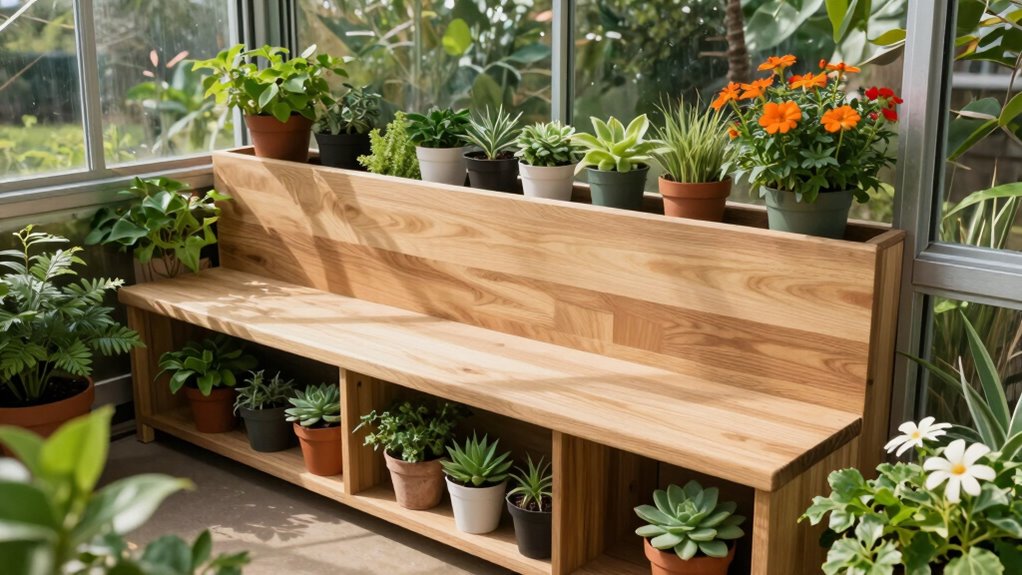

Maximizing space in a tiny greenhouse is easy with a well-designed bench-and-storage combo. Using vertical racks, wall-mounted shelves, and multi-functional furniture helps keep tools, supplies, and plants organized, making the space feel larger and less crowded. Durable materials like recycled plastic or weatherproof wood guarantee stability and low maintenance. Proper installation, combined with smart storage ideas and a comfortable seating area, transforms your greenhouse into an efficient, welcoming space. Explore more tips to optimize your small greenhouse’s potential.

Get garden gear delivered free with Prime
- Fast, free delivery on millions of items
- Prime Video, Amazon Music and more included
- Member-only deals all year
Key Takeaways
- Vertical storage maximizes floor space, creating an open, less crowded greenhouse environment.
- Multi-functional furniture combines seating and storage to reduce clutter and enhance space efficiency.
- Wall-mounted shelves and pegboards keep tools organized and off the ground, increasing usable space.
- Using stackable and modular storage solutions allows flexible organization without bulkiness.
- Proper structural reinforcement ensures stability, preventing clutter from shifting or collapsing in tight quarters.
As an affiliate, we earn on qualifying purchases.
What Challenges Do Small Greenhouses Face?
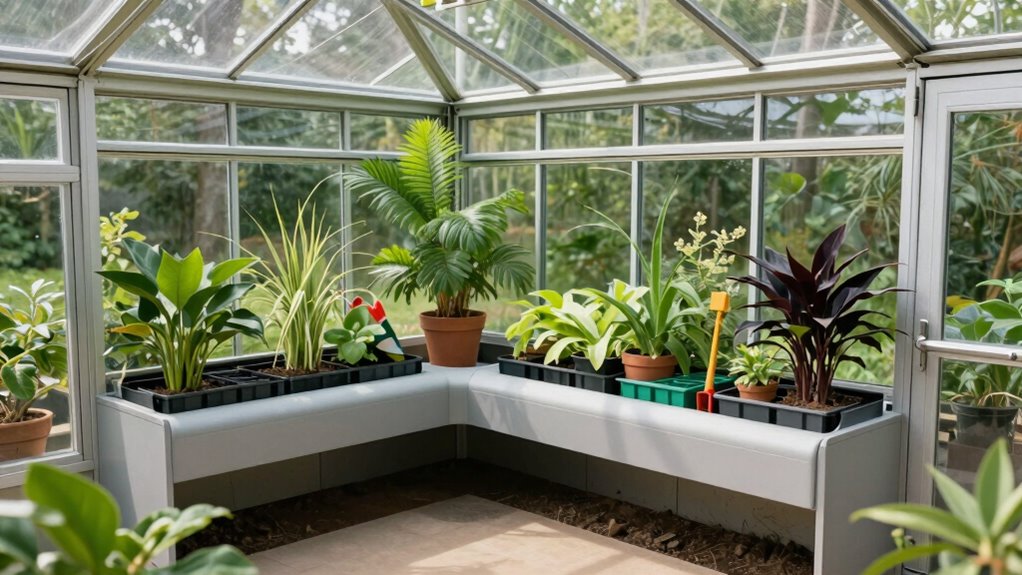
Small greenhouses often face space limitations that make it difficult to organize tools, supplies, and plants efficiently. These tight quarters can lead to challenges in maintaining proper soil moisture, as crowded conditions hinder airflow and water distribution. When soil stays too wet or too dry, plants become stressed and more vulnerable to pests. Pest control is also tougher in small greenhouses because pests can quickly spread from one plant to another, especially when space is cramped. Limited room makes it hard to isolate infected plants or implement targeted treatments. Without proper organization, managing soil moisture levels and controlling pests become daily struggles. To succeed, you need clever storage solutions that maximize space while helping you keep soil conditions and pest populations in check. Incorporating soundproofing techniques can also reduce noise disturbances, creating a more peaceful environment for both plants and growers. Additionally, utilizing efficient storage solutions can help optimize limited space and improve overall greenhouse management. Implementing space-saving furniture can further enhance your greenhouse layout, making it more functional and accessible. Employing smart organization strategies can significantly streamline daily maintenance tasks and improve overall efficiency. Properly designed storage systems can prevent clutter from accumulating, making it easier to focus on plant health and growth.
How to Design a Bench-and-Storage Combo for Tiny Greenhouses
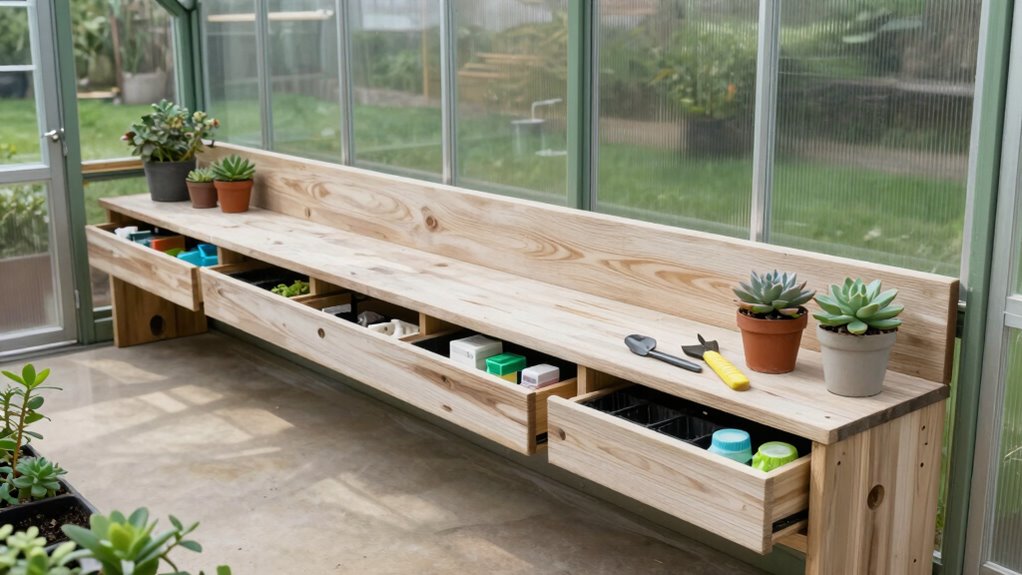
To design an effective bench-and-storage combo for your tiny greenhouse, focus on maximizing space efficiency by using multi-functional furniture. Choose durable materials like treated wood or metal that can withstand humidity and frequent use. Incorporating landscaping elements can also help blend the structure seamlessly into your outdoor space, making it feel larger and more inviting. By carefully planning your layout and material selection, you’ll create a practical setup that makes the most of limited space. Additionally, selecting smart furniture solutions can help optimize storage and organization, keeping your greenhouse tidy and functional as your gardening needs grow. Considering space-saving techniques can further enhance your greenhouse’s usability and comfort, especially in limited areas. Using adaptable, long-term structures can also help ensure your greenhouse remains functional as your needs evolve. To ensure durability, selecting weather-resistant materials is essential to sustain the structure over time.
Maximizing Space Efficiency
Designing a bench-and-storage combo that maximizes space in tiny greenhouses requires careful planning. Use vertical storage to keep tools, pots, and supplies off the floor, freeing up space for plant propagation. Incorporate multi-functional features, like shelves with built-in trays for seed starting. To optimize airflow and pest control, avoid clutter and guarantee easy access to all areas. Consider this layout:
| Feature | Benefit | Tip |
|---|---|---|
| Wall-mounted shelves | Saves floor space | Use adjustable heights |
| Under-bench storage | Keeps tools within reach | Use stackable bins |
| Vertical racks | Expands storage vertically | Ideal for small plant pots |
Maximizing space means smarter organization, supporting both plant health and pest prevention.
Selecting Durable Materials
Choosing durable materials for your bench-and-storage combo guarantees it withstands the humid, sometimes harsh conditions inside tiny greenhouses. Prioritize materials that balance material sustainability with aesthetic appeal, ensuring your setup lasts and looks good. Consider these options:
- Pressure-treated wood – resistant to moisture and decay, eco-friendly if sourced sustainably.
- Recycled plastic lumber – highly durable, low maintenance, and eco-conscious.
- Powder-coated metal – offers strength and corrosion resistance, with sleek aesthetic appeal.
- Composite materials – combine durability, sustainability, and a modern look. Additionally, selecting weather-resistant materials is crucial for longevity in the humid environment of tiny greenhouses. Durability plays a key role in maintaining the integrity of your furniture over time, especially in high-moisture settings.
Choosing Durable Materials for Your Greenhouse Bench

When selecting materials for your greenhouse bench, prioritize weather-resistant options that can withstand moisture and temperature changes. You’ll also want sturdy materials that provide stability and support over time, reducing the need for repairs. Additionally, choose low-maintenance options to keep your bench looking good without extra effort. Incorporating recycled plastics into your routine can also promote a healthy environment by supporting plant and personal health. Considering the sustainability and longevity of materials aligns with advancements in AI-driven sustainability solutions, which can optimize resource usage and reduce environmental impact. Using eco-friendly materials can also contribute to a healthier bioluminescent fungi environment, making your greenhouse more sustainable. Embracing eco-friendly materials not only benefits your plants but also supports broader efforts toward environmental preservation.
Weather-Resistant Materials
Selecting weather-resistant materials is essential to guarantee your greenhouse bench withstands the elements and remains durable over time. Durable materials help maintain humidity control and prevent pests from damaging your plants. When choosing materials, consider options like treated wood, galvanized steel, concrete, or UV-resistant plastics. These materials resist moisture, rust, and UV damage, ensuring longevity. Additionally, opting for eco-friendly and sustainable options can support natural materials and promote environmental health. Using electric bikes or other renewable energy sources can reduce your carbon footprint and make your gardening setup more sustainable. Incorporating UV-resistant plastics can also help protect your materials from prolonged sun exposure, extending their lifespan. To further enhance durability, selecting materials that are climate-specific can help your greenhouse withstand local weather conditions. Here are some tips:
- Opt for rust-proof metals to prevent corrosion.
- Use sealed or treated wood to avoid rot and pest infiltration.
- Choose plastics with UV resistance for prolonged outdoor use.
- Incorporate materials that are easy to clean, reducing pest buildup.
Structural Strength and Stability
To guarantee your greenhouse bench remains sturdy and safe, focus on using materials that provide strong structural support. Proper structural reinforcement ensures the bench can handle the weight of plants, soil, and storage items without sagging or wobbling. Choose durable materials like steel or treated hardwood that offer high load distribution capabilities, preventing stress points that could weaken the frame over time. Incorporating cross-bracing or reinforcement panels to improve stability and evenly distribute weight. A well-designed load distribution system minimizes the risk of collapse, especially when storing heavy supplies. Additionally, considering fiber-rich materials can enhance the resilience of your structure by providing extra support and durability. Using heavy-duty hardware can also contribute to overall stability by securely fastening components and reducing movement. Incorporating multi-unit setups can also help distribute weight more effectively across your greenhouse, increasing overall stability. Moreover, selecting cultural artifacts that align with traditional principles can add both aesthetic appeal and structural integrity. By prioritizing these elements, your bench will stay reliable and secure, supporting your greenhouse activities for years to come.
Low Maintenance Options
Choosing durable materials for your greenhouse bench is essential if you want to reduce ongoing maintenance. Opting for eco-friendly materials not only benefits the environment but also guarantees longevity. For a sleek aesthetic design that requires less upkeep, consider options like composite woods, recycled plastics, or metal with rust-resistant coatings. These materials resist rot, corrosion, and pests, saving you time and effort.
Here are four low-maintenance choices:
- Recycled plastic lumber—long-lasting and weatherproof
- Powder-coated metal—resists rust and scratches
- Bamboo composites—eco-friendly and durable
- Treated cedar—naturally resistant with minimal upkeep
Prioritize these materials to keep your tiny greenhouse looking great with less work.
How to Install and Secure Your Greenhouse Bench
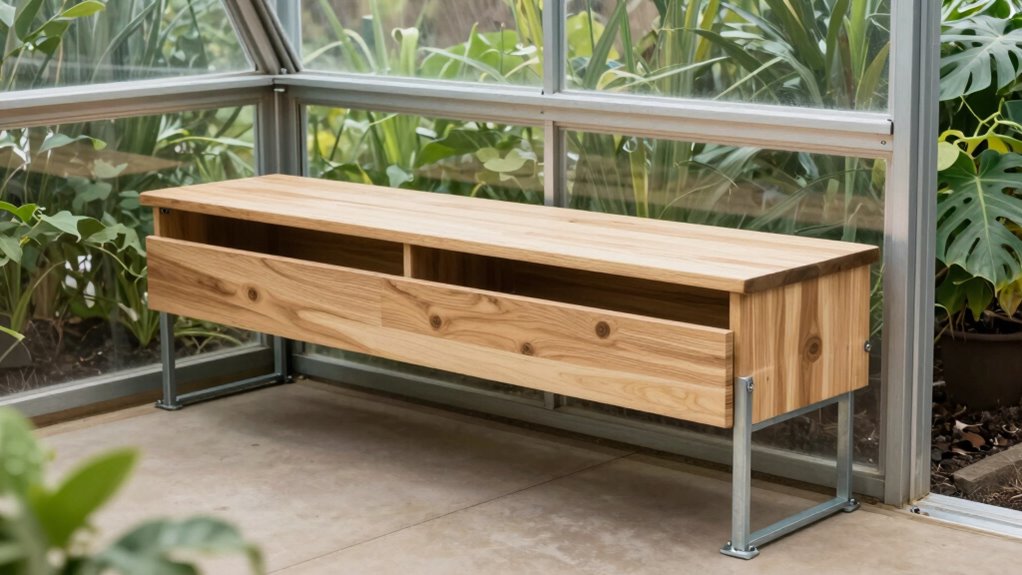
Before installing your greenhouse bench, gathering all the necessary tools and hardware, such as a drill, screws, brackets, and a level, is essential. Start by positioning the bench where you want it, confirming it’s level for stability. Secure the legs or frame with brackets and screws, anchoring them into the greenhouse floor or walls. Proper installation helps support plant propagation by creating a stable surface. It also reduces pest management issues, as a secure, well-anchored bench prevents pests from hiding underneath. Double-check that everything is tight and level before loading your plants. A sturdy setup ensures your plants grow safely and efficiently, making your tiny greenhouse more functional and easier to maintain. Proper securing minimizes accidents and keeps your space organized.
Creative Storage Ideas to Organize Your Gardening Supplies
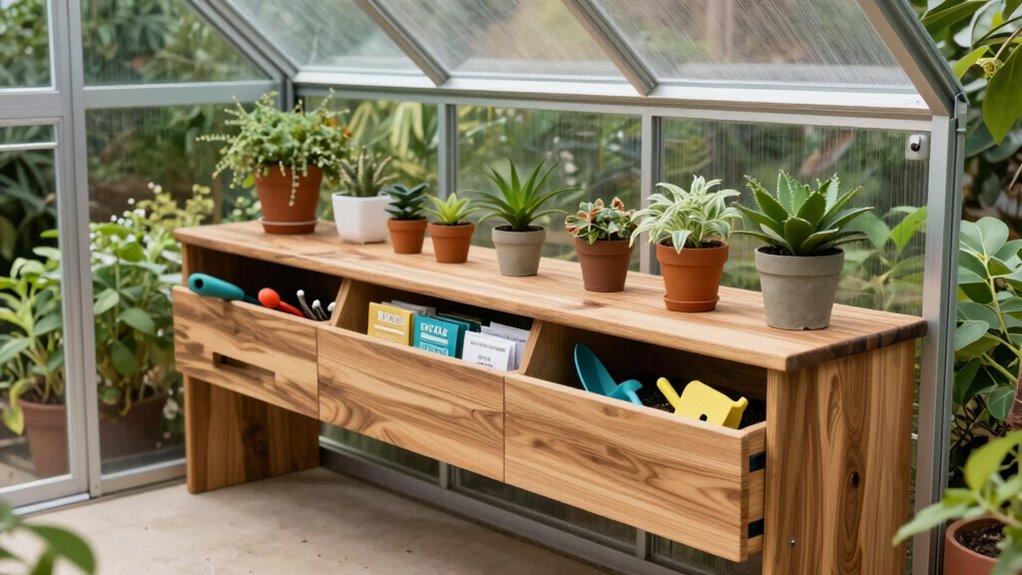
Maximizing space in a tiny greenhouse calls for creative storage solutions that keep your tools and supplies organized and easily accessible. Use vertical wall hooks or pegboards to hang tools, plant propagation materials, and pest control items, freeing up bench space. Consider stackable storage bins for seed packets, fertilizers, and small supplies, so everything stays tidy. Install a small, wall-mounted cabinet to hide pesticides or plant propagation supplies, keeping them out of reach. Use labeled containers to quickly find what you need during gardening tasks. Incorporate a magnetic strip for metal tools or small items. These ideas help optimize space while maintaining easy access, ensuring your tiny greenhouse remains functional and clutter-free for all your gardening needs.
Design Tips for a Comfortable, Functional Seating Area
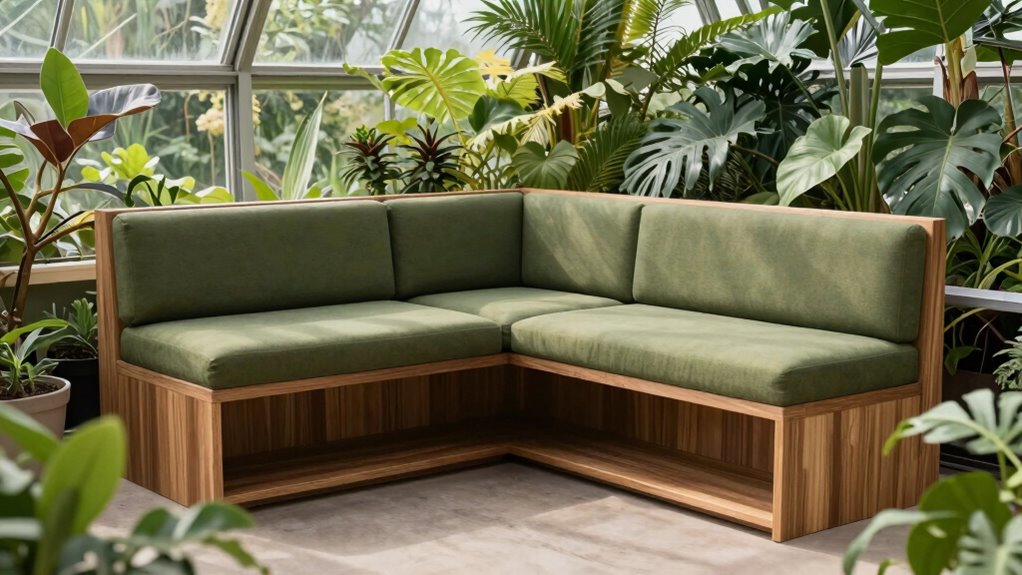
Creating a comfortable, functional seating area in your tiny greenhouse enhances your gardening experience by providing a relaxing spot to enjoy your plants and take breaks. Choose a sturdy, weather-resistant bench that doubles as storage for tools and supplies, keeping your space organized. Position your seating where you can observe plant propagation, making it easy to monitor growth and nurture seedlings. Incorporate elements like cushions for comfort and use natural materials to blend with your greenhouse’s environment. A well-designed seating area also helps with pest control; you can inspect plants closely and spot pests early. Keep the area clean and clutter-free to prevent pest hideouts. This setup guarantees you stay comfortable, productive, and engaged with your plants while maintaining a tidy, pest-free environment.
Maintaining Your Bench-and-Storage System for Long-Term Use
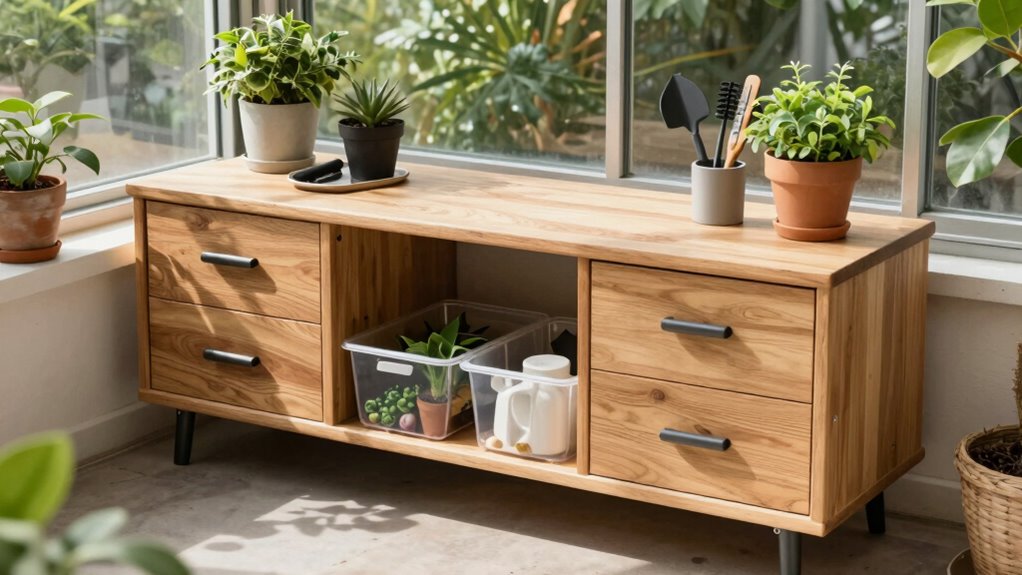
To keep your bench-and-storage system in top condition, regular maintenance is key. Proper upkeep ensures your space stays functional for plant propagation and pest control. Here are four essential tips:
- Clean surfaces regularly to prevent mold and maintain hygiene.
- Check for any damage or wear, repairing or replacing parts as needed.
- Keep storage organized to easily access tools and supplies for plant propagation.
- Monitor for pests and implement control measures promptly to avoid infestations.
Consistent cleaning and inspection help you spot issues early, prolonging the lifespan of your system. Staying vigilant also reduces the risk of pests spreading to your plants, keeping your tiny greenhouse healthy and productive. Regular maintenance makes your setup more efficient, saving you time and effort in the long run.
Troubleshooting Common Issues With Greenhouse Benches
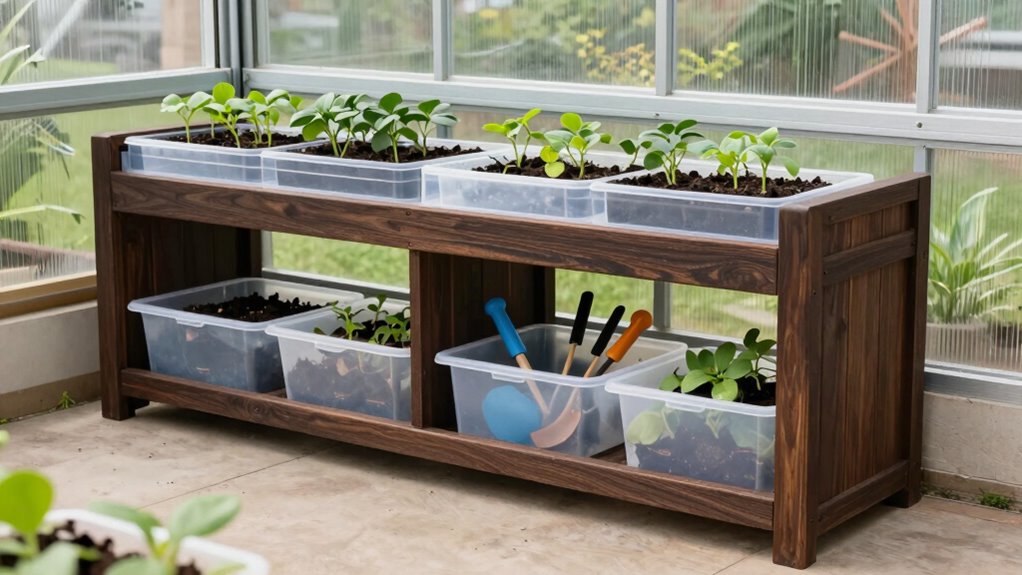
Greenhouse benches are essential for an organized and efficient growing space, but they can encounter common issues that disrupt your workflow. If plant propagation becomes slow or uneven, check for overcrowding or poor drainage, which can hinder root development. Adjust the spacing or improve soil conditions to promote healthy growth. Pest management is also critical; if pests appear on your benches, inspect for hiding spots and remove infested plants promptly. Regularly sanitize your benches to prevent pests and diseases from spreading. Loose or unstable shelving can cause accidents, so tighten or replace damaged parts. By addressing these issues quickly, you’ll maintain a smooth operation, ensuring your plants thrive and your greenhouse stays productive.
Enhance Your Greenhouse Atmosphere With Smart Organization
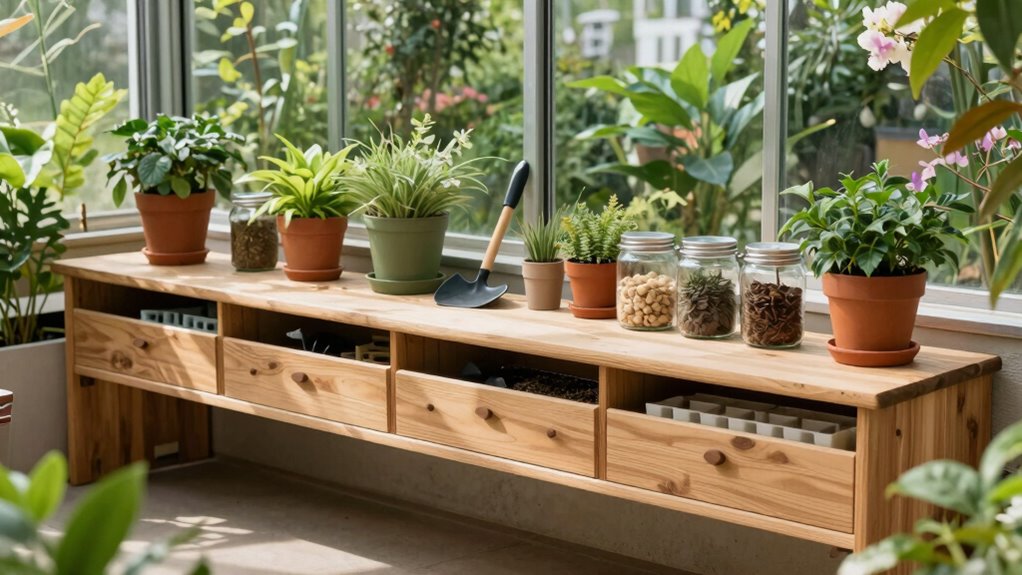
Enhancing your greenhouse atmosphere hinges on smart organization that maximizes space and streamlines daily tasks. Well-organized setups improve plant propagation, pest control, and overall efficiency. To achieve this, focus on:
Smart organization boosts greenhouse efficiency through better space use and task management.
- Designate specific zones for different activities, such as propagation areas separate from mature plants.
- Use vertical storage solutions to free up bench space and keep tools, fertilizers, and supplies accessible.
- Implement clear labeling to quickly identify plants and materials, reducing clutter and errors.
- Maintain cleanliness to prevent pests and disease, making pest control easier and more effective.
Frequently Asked Questions
Can This Bench-And-Storage Combo Be Customized for Different Greenhouse Sizes?
Yes, this bench-and-storage combo can be customized for different greenhouse sizes. You can explore various customization options, like adjusting the dimensions to fit your space perfectly. Material choices also matter—select from durable wood, metal, or composite materials to match your greenhouse’s style and climate needs. This flexibility guarantees you get a tailored fit, making your greenhouse more functional and organized, regardless of its size.
What Are the Best Plants to Grow Alongside This Bench Setup?
You should choose plant pairings that thrive together and have similar growth compatibility. Consider pairing herbs like basil or parsley with leafy greens such as lettuce, as they grow well in close proximity and enjoy similar light and moisture levels. Flowers like marigolds can also complement your setup, providing pest control benefits. Focus on plants that share space comfortably, ensuring healthy growth without overcrowding your bench.
How Does This Design Improve Greenhouse Airflow and Light?
You’ll notice this design boosts ventilation optimization by creating open space underneath and around the bench, encouraging better airflow. The elevated position also helps prevent stagnant air, reducing disease risk. Plus, the setup enhances light diffusion, as the open design allows more natural sunlight to reach plants from different angles. This combination results in a healthier environment by improving both airflow and light distribution, promoting robust plant growth.
Is the Bench Suitable for Outdoor Garden Use Outside of Greenhouses?
Yes, the bench is suitable for outdoor garden use because it’s designed with outdoor durability and weather resistance in mind. You can place it outside without worrying about damage from rain, sun, or wind. Its sturdy materials withstand the elements, making it a reliable addition to your garden or patio. Just make sure you maintain it periodically, and it’ll serve you well, providing functional storage and seating outside year-round.
What Maintenance Is Required to Keep the Storage Compartments Pest-Free?
To keep your storage compartments pest-free, prioritize proactive pest prevention by sealing cracks and avoiding food remnants. Regularly perform storage cleaning, wiping down surfaces and removing debris to deter pests. Check for signs of unwanted visitors often, and consider natural deterrents like essential oils. Consistent cleaning combined with vigilant pest prevention guarantees your compartments stay hygienic and pest-free, protecting your tools and supplies effectively.
Conclusion
By optimizing your greenhouse with a smart bench-and-storage combo, you’ll create a more spacious and efficient environment. Did you know that well-organized greenhouses can boost plant growth by up to 20%? With thoughtful design and durable materials, you’ll enjoy easier maintenance and a more comfortable space to nurture your plants. Embrace these tips, and watch your tiny greenhouse transform into a thriving, inviting oasis that maximizes every inch.
Fall yard work Picks
leaf blowers
As an affiliate, we earn on qualifying purchases.