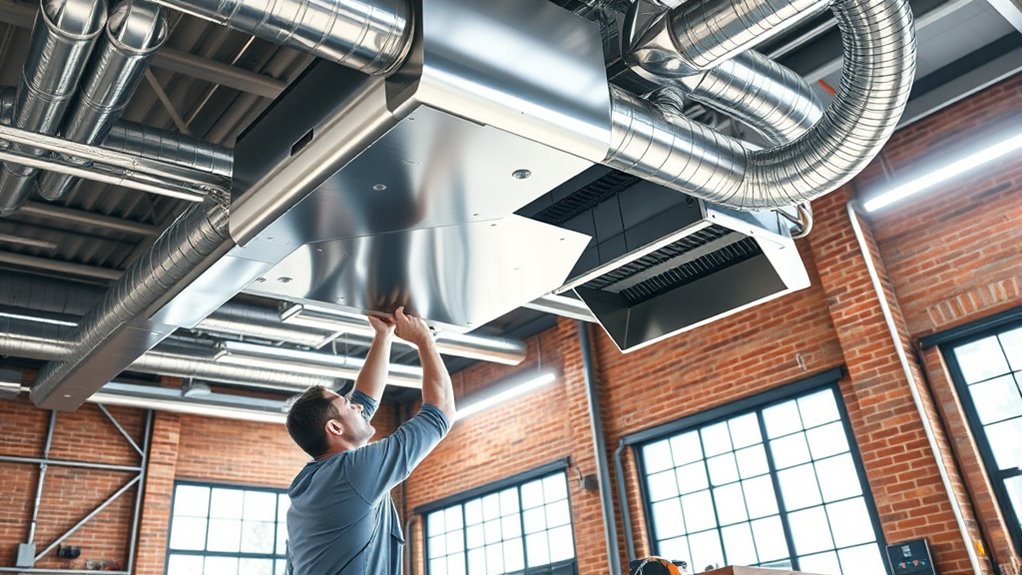

Installing an automated ventilation system helps you improve indoor air quality and save energy by using sensors and smart controls that adjust airflow based on occupancy and environmental conditions. It continuously monitors humidity, CO₂, and VOC levels to activate ventilation when needed, reducing pollutants and allergens. This system works seamlessly with your existing HVAC, enhancing efficiency and preventing issues like mold and odors. Keep exploring to discover how this can transform your indoor environment effortlessly.
Key Takeaways
- Assess indoor air quality needs and select appropriate sensors for humidity, CO₂, and VOC monitoring.
- Choose a compatible automated ventilation system that integrates with existing HVAC and smart controls.
- Plan installation locations for sensors, vents, and control units to optimize airflow and responsiveness.
- Follow manufacturer guidelines or consult professionals for proper wiring, mounting, and system configuration.
- Test and calibrate the system regularly to ensure accurate monitoring and efficient ventilation performance.
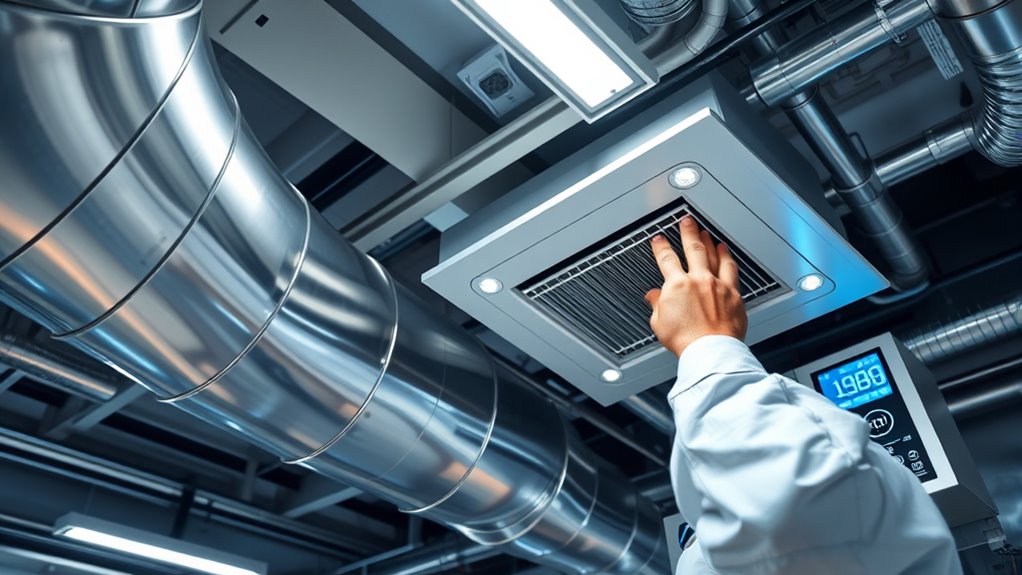
Installing an automated ventilation system can substantially improve indoor air quality and energy efficiency in your home or workplace. When you choose to upgrade your ventilation, you’re taking a significant step toward creating a healthier and more comfortable environment. Automated systems are designed to monitor air conditions constantly, adjusting airflow automatically to guarantee ideal quality without wasting energy. This means you won’t have to manually open windows or rely on inefficient fans; the system takes care of everything, maintaining fresh air and reducing indoor pollutants seamlessly.
Automated ventilation improves air quality and energy efficiency seamlessly.
With an automated ventilation system, air quality becomes a top priority. These systems continuously track humidity levels, carbon dioxide concentrations, and the presence of indoor pollutants, such as VOCs or allergens. When the system detects poor air quality, it activates to bring in fresh outdoor air while exhausting stale indoor air. This real-time response helps prevent issues like mold growth, musty odors, or airborne allergens from accumulating. As a result, everyone in your space breathes cleaner, healthier air, which can boost overall well-being and productivity.
Energy efficiency is another key advantage. Unlike traditional ventilation methods that run constantly or only when manually activated, automated systems operate intelligently, using sensors to optimize airflow based on actual need. They adjust ventilation rates depending on occupancy levels, indoor pollutant levels, and environmental conditions. This targeted approach minimizes unnecessary energy consumption by avoiding over-ventilation while still maintaining air quality standards. Over time, this can lead to noticeable reductions in your energy bills because you’re not wasting power on ventilation when it’s not needed.
Installing an automated ventilation system also enhances overall energy efficiency by working in harmony with your heating and cooling systems. Because fresh air is brought in and stale air removed efficiently, your HVAC system doesn’t have to work as hard to maintain a comfortable temperature. This synergy reduces strain on your heating or cooling units, further lowering energy costs and extending their lifespan. Hydrocolloid technology is often used in related contexts, as it promotes healing by drawing out impurities, which is similar to how these systems draw out indoor pollutants. Plus, many systems are equipped with smart controls and programmable settings, allowing you to customize ventilation schedules around your daily routines, ensuring you’re only ventilating when necessary.
Frequently Asked Questions
How Much Does an Automated Ventilation System Typically Cost?
You can expect an automated ventilation system to cost between $2,000 and $6,000, depending on several pricing factors. Your cost estimate varies based on system size, complexity, and features like smart controls or energy efficiency. Installation fees also influence the overall price. To get an accurate idea, consider consulting professionals who can assess your space and provide tailored pricing factors for your specific needs.
Can Existing Ventilation Systems Be Upgraded to Automation?
Think of upgrading your existing ventilation system like adding a smart thermostat to your home. You can certainly upgrade with smart sensors and ventilation control to make it more efficient. Many systems are compatible with automation modules, allowing you to control airflow based on real-time data. This upgrade improves air quality and energy efficiency, much like turning on a light with a simple switch, making your space smarter and more comfortable.
What Maintenance Is Required for an Automated Ventilation System?
You need to regularly check and replace filters to keep your automated ventilation system running efficiently. Additionally, system calibration is essential to guarantee sensors and controls function accurately. Schedule these maintenance tasks periodically, usually every few months, depending on usage and environment. Keeping filters clean and the system calibrated helps maintain air quality and prevents malfunctions, ensuring your ventilation system operates smoothly and efficiently over time.
How Long Does Installation Usually Take?
Installation typically takes between one to three days, depending on various installation factors like the system’s complexity, your building’s size, and existing electrical setups. You’ll want to plan for some downtime during installation, especially if upgrades or additional wiring are needed. To guarantee smooth setup, it’s best to consult with your installer beforehand to understand the specific timeline and any potential delays based on your property’s unique features.
Are There Energy Efficiency Benefits With Automated Systems?
Think of your automated ventilation system as your home’s modern knight, defending against energy waste. It offers significant energy savings by adjusting airflow based on real-time needs, which reduces unnecessary energy consumption. This not only boosts your comfort but also provides cost benefits over time. With smart controls, you optimize efficiency and lower your bills, making it a savvy investment for both your wallet and the environment.
Conclusion
So, now you’ve installed your fancy automated ventilation system—your home’s new gust of fresh air. No more manual fanning or accidental mold parties; just sit back and enjoy the sweet sound of your system doing all the work. Who knew that breathing clean air could be so effortless? Just remember, if it ever starts talking back, it’s probably just thanking you for finally giving it a purpose. Welcome to the future of ventilation—your nose’s new best friend.