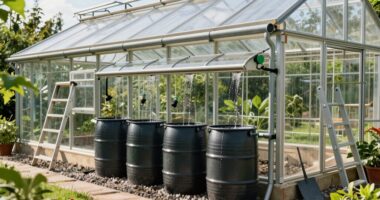

Adding a rainwater harvesting system during construction is the best way to guarantee it’s integrated smoothly and efficiently. It streamlines installation, reduces future disruptions, and helps you plan for proper placement of tanks, gutters, and filtration. Doing this early also saves money by avoiding costly retrofits later. Plus, it promotes eco-friendly practices and enhances water management from the start. Keep going to discover how this proactive approach can benefit your project even more.
Key Takeaways
- Installing during construction streamlines system integration, reducing future disruptions and costly retrofits.
- Early planning allows optimal placement of gutters, tanks, and filtration systems for maximum efficiency.
- Incorporating rainwater harvesting during construction lowers long-term costs and minimizes maintenance needs.
- Collaboration with engineers ensures proper system sizing, sunlight exposure, and accessibility for maintenance.
- It demonstrates sustainable building practices, promoting eco-friendly water conservation from the outset.
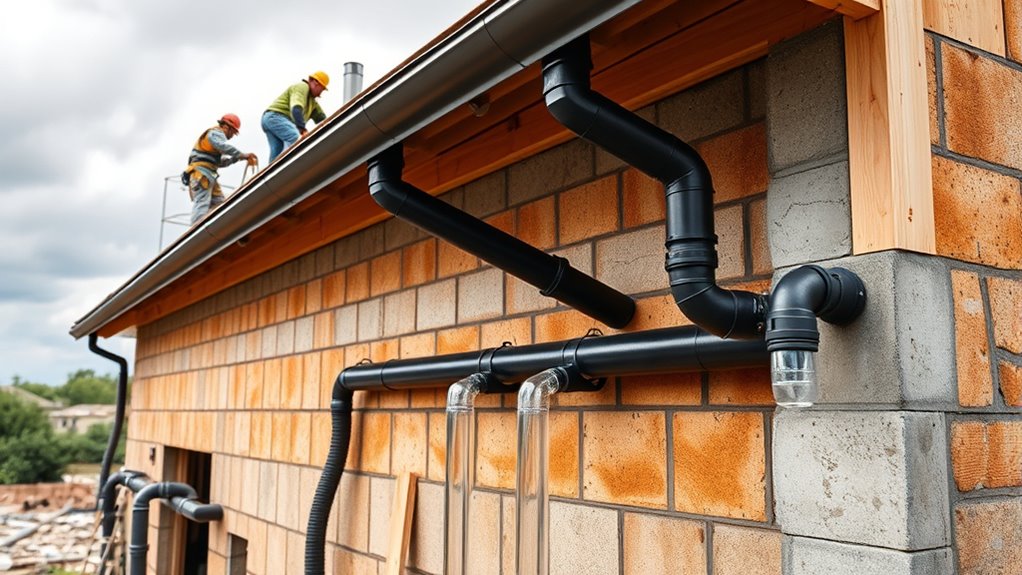
Rainwater harvesting systems provide an effective way to collect and use rainwater, helping you conserve water and reduce utility costs. Integrating these systems during construction is a smart move that can streamline installation and guarantee your property benefits from sustainable water management from the start. By doing this early, you set the foundation for effective stormwater management, reducing runoff and minimizing potential erosion issues. Incorporating rainwater harvesting into your construction plans aligns with water conservation techniques that promote eco-friendly and cost-efficient living. It’s easier and more cost-effective to install these systems during the building phase rather than retrofitting later, which can be disruptive and expensive.
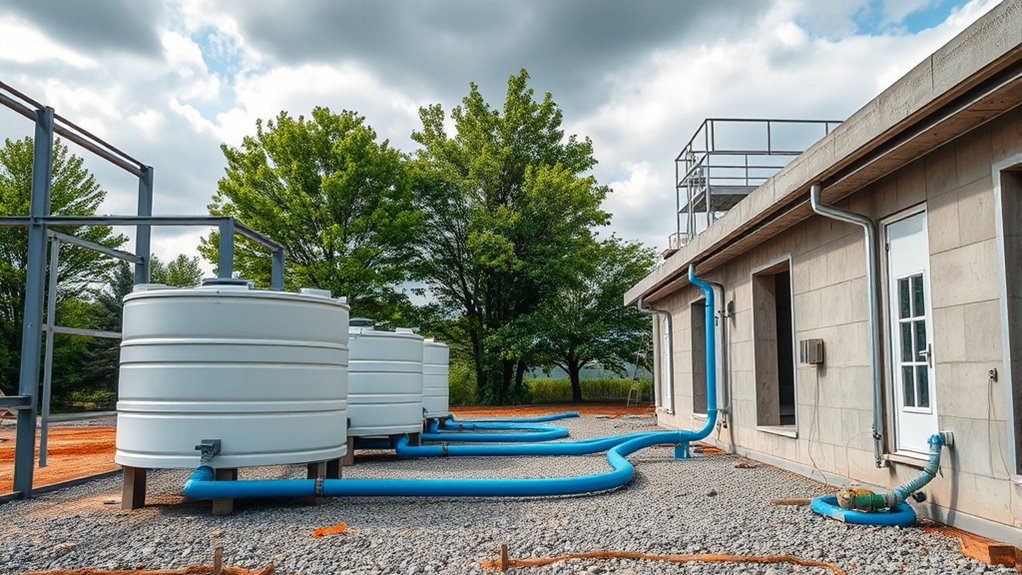
When you add rainwater harvesting systems during construction, you create an opportunity to design your infrastructure with maximum efficiency. For example, you can plan for gutters and downspouts that direct water into storage tanks seamlessly, avoiding the need for costly modifications later. You also have the chance to integrate filtration systems to ensure the water you collect is clean and safe for various uses, from irrigation to flushing toilets. This proactive approach supports stormwater management by capturing runoff before it reaches storm drains, reducing the risk of flooding and water pollution. It also complements other water conservation techniques by providing an alternative water source, decreasing dependence on municipal supplies and lowering your overall water bills.
Furthermore, including rainwater harvesting systems early on allows you to collaborate with engineers and contractors to optimize placement and capacity. You can determine the best locations for storage tanks, considering factors like sunlight exposure and accessibility. This planning ensures the system operates efficiently and requires minimal maintenance over time. Additionally, understanding the importance of proper storage helps in maximizing the benefits of your rainwater harvesting system and ensuring water quality is maintained. Incorporating these systems during construction also encourages sustainable building practices, demonstrating your commitment to environmental stewardship and responsible resource use.
Frequently Asked Questions
What Permits Are Required for Installing Rainwater Harvesting Systems?
You need to obtain the necessary permits through a permit application to guarantee legal compliance when installing rainwater harvesting systems. Check with your local building department or regulatory agency, as requirements vary by location. Submitting a permit application helps you follow safety standards and zoning laws. Failing to secure permits can lead to fines or system removal, so always verify permit requirements before starting your project.
How Much Does a Rainwater Harvesting System Typically Cost?
Imagine a time when saving water was as vital as tending to a garden. A rainwater harvesting system typically costs between $1,000 and $5,000, depending on size and complexity. Your budget considerations play a key role, as materials, installation, and permits influence the final price. Planning ahead helps guarantee you find a system that fits your needs without breaking the bank, making water conservation both affordable and sustainable.
Can Rainwater Harvesting Systems Be Integrated With Existing Plumbing?
Yes, you can integrate a rainwater harvesting system with your existing plumbing, but you need to take into account rainwater system compatibility and plumbing integration challenges. You may require additional components like filters and pumps to ensure smooth operation. Consulting a professional helps you navigate potential issues, ensuring the system connects seamlessly without disrupting your current plumbing setup. Proper planning guarantees efficient water use and long-term reliability.
What Maintenance Is Needed for Rainwater Harvesting Systems?
You need to regularly clean your filters to keep debris out of your rainwater system, preventing clogs and ensuring water quality. Inspect your tank at least once a year for cracks or algae buildup, which could affect system performance. Keep an eye on gutters and downspouts for blockages, and clear them as needed. Consistent maintenance like filter cleaning and tank inspection helps your rainwater harvesting system operate efficiently and last longer.
How Effective Are Rainwater Harvesting Systems During Droughts?
Rainwater harvesting systems can be quite effective during droughts, helping you with drought mitigation and water conservation. By collecting and storing rainwater, you reduce reliance on traditional water sources, ensuring a supply during dry periods. Properly maintained systems can provide supplemental water for irrigation, flushing, or even household use, making them a smart choice to enhance resilience against drought conditions and promote sustainable water management practices.
Conclusion
Think of your construction project as a mighty ship sailing through unpredictable waters. Installing rainwater harvesting systems is like adding a reliable sail, capturing the wind’s gift and guiding you safely forward. By embracing these systems during construction, you’re not just building a structure—you’re setting a course toward sustainability and resilience. So, harness the rain’s energy now, and let your project navigate toward a greener, more self-sufficient future with confidence.