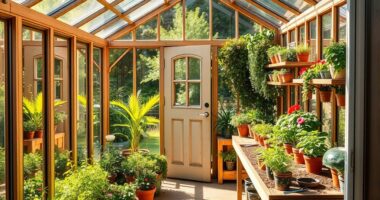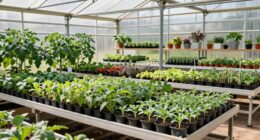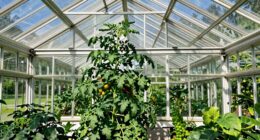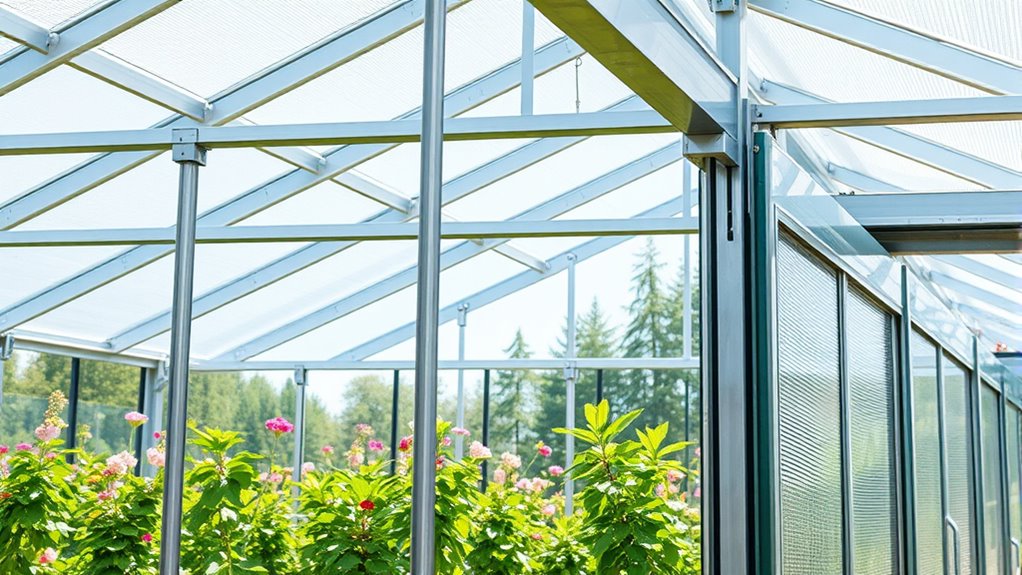

To make your greenhouse modular for expansion, start by designing a core structure with flexible connection points, allowing you to add new sections easily. Incorporate individual climate control and watering systems in each module to maintain ideal conditions as you grow. Plan for future needs by including extra capacity for power and water lines, and guarantee pathways and access points are easy to modify. Keep these strategies in mind to create a sustainable, adaptable space that evolves smoothly with your gardening goals.
Key Takeaways
- Design the initial structure with standardized connection points for easy addition of new modules.
- Install scalable climate control and watering systems to accommodate future expansions seamlessly.
- Plan pathways, doors, and access points to facilitate maintenance and module integration.
- Include extra capacity for power, ventilation, and water lines to support future growth.
- Customize each module for specific plant needs, enabling flexible and sustainable expansion over time.
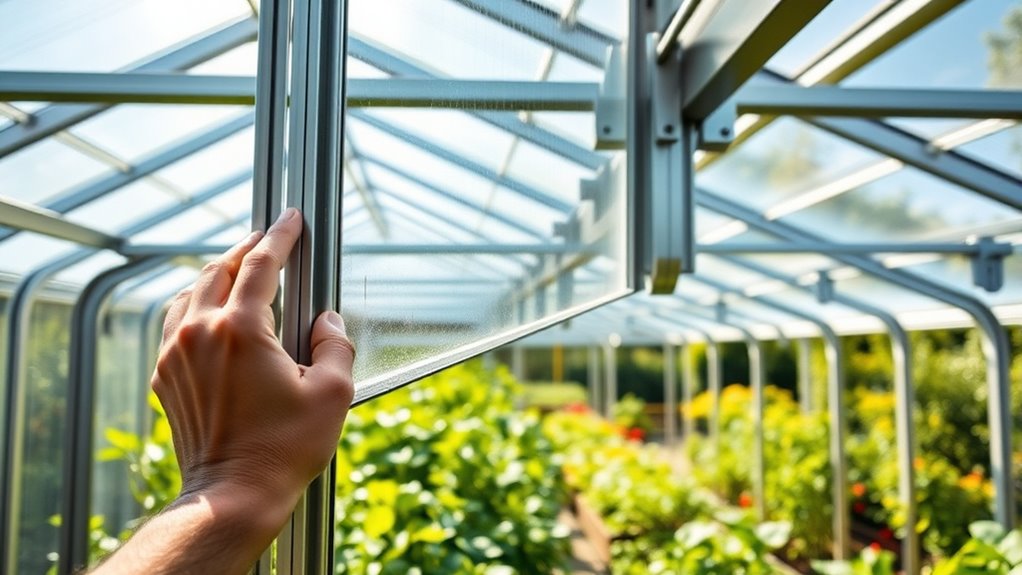
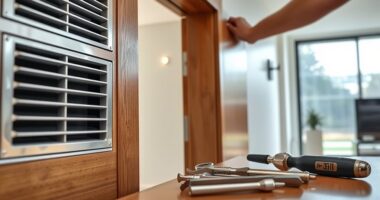
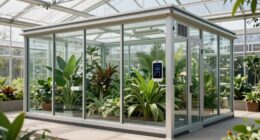
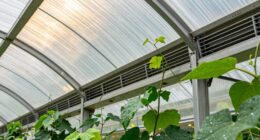
If you want your greenhouse to grow along with your gardening needs, designing it to be modular is essential. A modular greenhouse allows you to add sections or features as your plant collection and space requirements expand. This flexibility guarantees you don’t have to rebuild entirely whenever your gardening ambitions outgrow your current setup. When planning a modular design, one of the most important considerations is climate control. Each module should have its own climate management system to maintain ideal conditions for your plants, regardless of external weather changes. Proper climate control isn’t just about temperature; it also involves humidity regulation, ventilation, and shading. By integrating climate control into each module, you can customize environments for different plant types, reducing stress and promoting healthy growth.
Design a modular greenhouse with dedicated climate control for adaptable, healthy plant growth.
Another critical aspect of a modular greenhouse is the watering systems. You want to make sure that each section has an efficient watering setup that can be easily maintained and expanded. Automated watering systems, such as drip irrigation or misting setups, are perfect because they can be scaled up as you add new modules. You won’t have to manually water each plant, saving you time and ensuring your plants receive consistent moisture. When designing these systems, think about how they will connect between modules. Using flexible tubing and quick-connect fittings makes it easy to extend watering lines as your greenhouse grows. This foresight prevents you from having to overhaul your entire irrigation setup every time you add a new section.
The beauty of a modular greenhouse is that it encourages a strategic approach to expansion. Start with a core structure that includes essential climate control and watering systems, then plan for future additions. Consider how each new module will connect to existing systems, both physically and functionally. This means installing power supplies, ventilation, and water lines with extra capacity to handle future growth. Also, think about the accessibility of each module; pathways, doors, and controls should be designed for easy maintenance and expansion. Incorporating juice cleansing practices into your routine can also promote overall plant health and boost your energy levels, supporting your gardening efforts.
Incorporating modularity into your greenhouse isn’t just about physical construction; it’s about creating a smart, adaptable environment. By planning for climate control and watering systems that can easily be expanded or modified, you set yourself up for continuous growth and success. A well-designed modular greenhouse makes it simple to experiment with new plant varieties, increase production, or simply enjoy gardening without the hassle of constant redesign. With thoughtful planning, your greenhouse can evolve alongside your gardening goals, providing a sustainable, efficient space for years to come.
Frequently Asked Questions
What Materials Are Best for Modular Greenhouse Components?
You should choose materials like aluminum or galvanized steel for your modular greenhouse components because of their durability and resistance to weather. Polycarbonate panels offer excellent design flexibility, as they’re lightweight and easy to customize. These materials guarantee your greenhouse remains sturdy over time while allowing you to adapt and expand your structure as needed. By selecting durable, flexible materials, you’ll create a resilient, adaptable space perfect for your gardening needs.
How Does Modular Design Impact Greenhouse Climate Control?
You might wonder how modular design affects climate control, and the answer is essential. It enhances climate regulation by allowing you to customize airflow management, ensuring ideal conditions. As you expand, proper ventilation becomes critical, preventing overheating or humidity buildup. With a modular system, you gain flexibility to fine-tune airflow and temperature, creating a stable environment that promotes healthy plant growth. This design keeps your greenhouse efficient and adaptable, no matter how much you grow.
Can Existing Greenhouses Be Retrofitted for Modular Expansion?
Yes, you can retrofit existing greenhouses for modular expansion using specific retrofitting techniques. Start by evaluating your current structure and planning for seamless integration of modular units. You’ll want to reinforce frames if needed, add or upgrade foundations, and guarantee proper climate control compatibility. Expansion planning involves designing flexible connections and ventilation systems. This approach minimizes disruptions and allows you to grow your greenhouse efficiently over time.
What Are the Cost Differences Between Modular and Traditional Greenhouses?
The cost comparison between modular and traditional greenhouses shows that modular setups often require a higher initial investment but save money long-term through easier expansion and customization. You should conduct an investment analysis to weigh upfront costs against future flexibility and scalability. While traditional greenhouses may seem cheaper initially, modular designs can reduce renovation expenses and adapt as your needs grow, making them a cost-effective choice over time.
How Long Does It Take to Expand a Modular Greenhouse?
You can typically expand a modular greenhouse in just a few days to a week, depending on your expansion planning and the complexity of the project. The construction timeline for adding new modules is quick because these structures are designed for easy assembly and disassembly. With proper planning, you can seamlessly integrate additional sections, allowing your greenhouse to grow as your needs change without significant downtime.
Conclusion
By making your greenhouse modular, you’re planting seeds for a future that can grow and flourish with you. Think of it as building a living puzzle—each piece fitting perfectly to expand your garden’s potential. As your plants thrive and your needs evolve, your greenhouse will stretch and bloom like a resilient vine reaching for the sun. Embrace this flexible design, and watch your gardening dreams blossom brighter with every new addition.