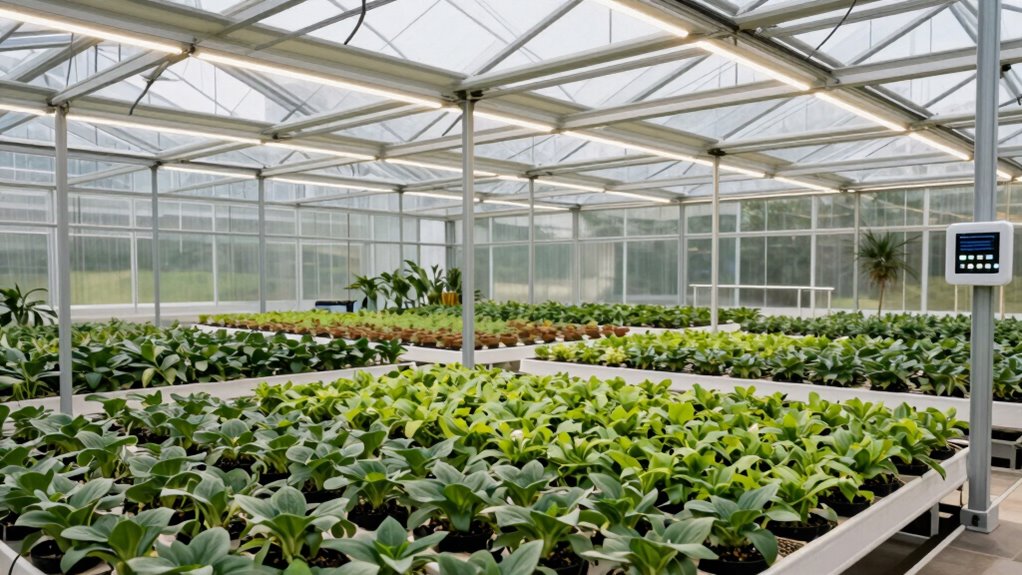

An organized greenhouse helps you get the most from every upgrade by ensuring equipment, tools, and systems work seamlessly together. When everything is well-placed and easy to find, you can respond quickly to pests and climate changes, improving plant health. Proper layout reduces effort, saves time, and prevents issues like hot spots or pest hiding spots. By maintaining a tidy space, you’ll maximize your investment’s impact and create a more productive, healthier environment—there’s more to discover if you keep exploring how organization makes a difference.

Get garden gear delivered free with Prime
- Fast, free delivery on millions of items
- Prime Video, Amazon Music and more included
- Member-only deals all year
Key Takeaways
- Organized layouts enable efficient placement and operation of upgrades, maximizing their functionality and benefits.
- Clear organization facilitates quick access and maintenance, ensuring upgrades perform optimally over time.
- Properly arranged systems improve climate control and pest management, leading to healthier crops and better yields.
- Streamlined routines save time and reduce errors, amplifying the effectiveness of every upgrade implemented.
- An organized greenhouse enhances data collection and monitoring, supporting smarter adjustments and higher investment returns.
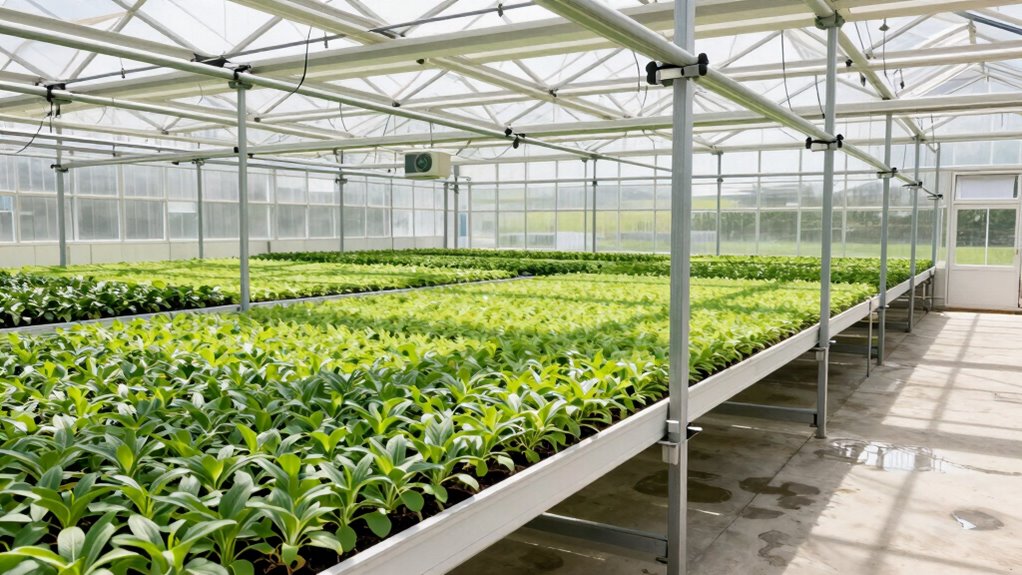
A well-structured greenhouse maximizes the benefits of every upgrade, ensuring you get the most out of your investments. When your space is efficiently arranged, upgrades like advanced pest management systems and climate control become far more effective and easier to maintain. Without a clear layout, even the best equipment can fall short because it’s not integrated seamlessly into your workflow or environment. Organization helps you identify where to place new tools, sensors, or systems for ideal performance, reducing wasted effort and ensuring your plants thrive.
Pest management is one critical area that benefits considerably from an organized greenhouse. When everything has a designated spot, you can quickly implement integrated pest management strategies. You’ll know exactly where to find beneficial insects, traps, or organic treatments, so you don’t waste time searching or misapplying solutions. An organized layout also minimizes clutter, which can harbor pests or make it harder to spot early signs of infestation. Regular inspections become easier, so you catch problems before they escalate, saving you time and resources later on. Additionally, a clear layout enhances your ability to monitor pest activity effectively. Properly organizing your workspace also supports early detection and swift response to pest issues. Incorporating pest management best practices into your organization helps maintain a healthier environment for your crops.
Climate control systems are equally impacted by how well your greenhouse is organized. Proper placement of fans, heaters, or misting systems depends on a clear understanding of your space. When everything is logically arranged, you can calibrate these systems for even temperature and humidity distribution, avoiding hot spots or cold drafts. An organized greenhouse allows sensors to be positioned ideally, providing accurate data that helps you fine-tune climate settings. This precise control leads to healthier plants, higher yields, and less energy waste, as you avoid overcompensating or running systems unnecessarily.
Beyond equipment placement, organization also streamlines daily routines. When your workspace is tidy and logically set up, you spend less time hunting for supplies and more time tending to your plants. This efficiency means you can quickly respond to pest outbreaks or adjust climate controls as needed, maintaining a stable environment. Over time, this leads to healthier crops and more predictable harvests, since you’re consistently managing conditions well.
In essence, an organized greenhouse creates a foundation where upgrades are not just added but are integrated thoughtfully. It allows you to maximize the capabilities of pest management and climate control systems, making them work harder and smarter for you. When your space is streamlined, every investment enhances your overall productivity, giving you better results with less effort and fewer setbacks. In the end, staying organized isn’t just about tidiness; it’s about unlocking the full potential of your greenhouse to produce healthy, abundant plants.
As an affiliate, we earn on qualifying purchases.
Frequently Asked Questions
How Do Upgrades Impact Greenhouse Climate Control Systems?
Upgrades greatly improve your greenhouse climate control systems by enhancing automation integration and sensor technology. You’ll find that sensors provide real-time data on temperature, humidity, and light, allowing precise adjustments. Automation systems then respond instantly, maintaining ideal conditions and reducing manual effort. This synergy results in healthier plants, increased yields, and energy savings, making every upgrade more valuable. With better climate control, your greenhouse operates efficiently and adapts quickly to changing environmental factors.
What Are the Best Upgrades for Pest Management?
The best upgrades for pest management include introducing biological controls, like predatory insects, to naturally reduce pest populations. You should also consider installing insect screens on vents and doors to prevent pests from entering. Regular monitoring tools, such as sticky traps, help you identify issues early. Combining biological controls with physical barriers and consistent monitoring guarantees an effective, eco-friendly pest management system, maximizing your greenhouse’s productivity and health.
How Do Upgrades Affect Energy Efficiency?
You’ll find upgrades dramatically boost energy efficiency, saving you money and time. By integrating renewable energy sources like solar panels and making insulation improvements, your greenhouse retains heat better and reduces reliance on external power. It’s like hitting two birds with one stone—cutting costs and supporting sustainability. These upgrades help your greenhouse stay cozy during winter and cool in summer, making your operation more resilient and eco-friendly.
Can Upgrades Improve Crop Yield Quality?
Upgrades can definitely improve your crop yield quality by enhancing environmental control and resource management. With better climate regulation and automation, you can optimize conditions for crop diversity, leading to healthier, more uniform produce. Additionally, upgrades support precise harvest scheduling, reducing waste and ensuring peak freshness. These improvements help you produce higher-quality crops consistently, increasing your greenhouse’s overall productivity and profitability.
What Maintenance Is Required After Upgrades?
After upgrades, you’ll need to master water management and structural reinforcement to keep your greenhouse in top shape. Regularly check and calibrate watering systems to prevent over or under-watering—an essential task that can’t be overlooked. Additionally, inspect and reinforce structural components periodically to guarantee stability against weather or wear. These maintenance measures may seem simple, but neglecting them can lead to catastrophic crop losses, making your vigilance absolutely vital.
Conclusion
Just like a well-tuned orchestra produces a harmonious symphony, an organized greenhouse amplifies every upgrade you make. When your space is streamlined and efficient, each improvement resonates more profoundly, turning small changes into significant gains. Remember the tale of the tortoise and the hare—steadfast organization and patience deliver lasting results. Keep your greenhouse orderly, and watch as each upgrade transforms your space into a flourishing haven, where growth and productivity thrive in perfect harmony.
Halloween Picks
halloween
As an affiliate, we earn on qualifying purchases.