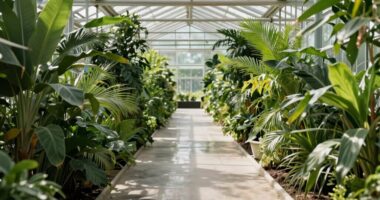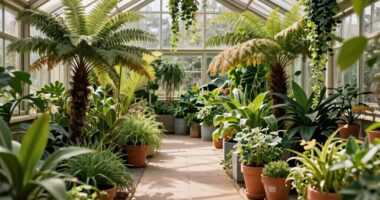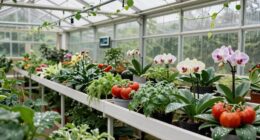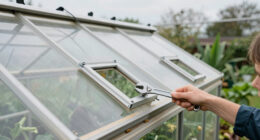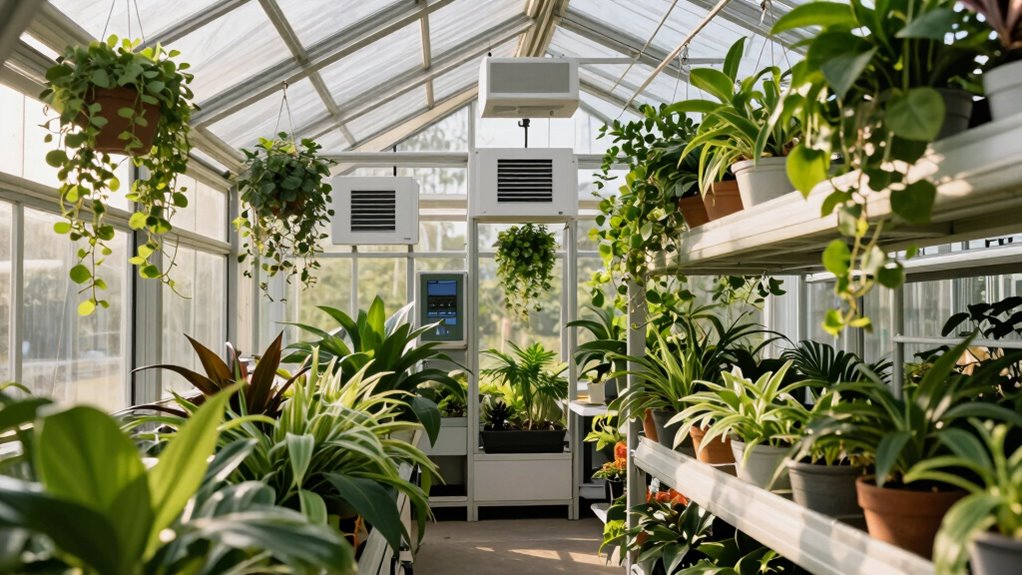

Implementing a greenhouse zone strategy helps your equipment perform better by customizing environmental conditions for different plant needs. When you segment your greenhouse into zones, you reduce unnecessary strain on climate control systems, saving energy and extending equipment lifespan. By controlling humidity, temperature, and pest management locally, you prevent over-conditioning and equipment wear. This targeted approach creates a more resilient, efficient environment. Keep exploring to discover how to optimize your greenhouse zones for maximum equipment efficiency.

Get garden gear delivered free with Prime
- Fast, free delivery on millions of items
- Prime Video, Amazon Music and more included
- Member-only deals all year
Key Takeaways
- Segmentation of the greenhouse into zones allows targeted climate control, reducing strain on equipment.
- Matching environmental conditions to plant needs minimizes unnecessary energy use and equipment wear.
- Isolating pest-prone zones prevents pest spread, reducing the need for equipment-intensive treatments.
- Customizing humidity and temperature per zone enhances equipment efficiency and lifespan.
- Zone-specific automation optimizes equipment operation, improving overall greenhouse performance.
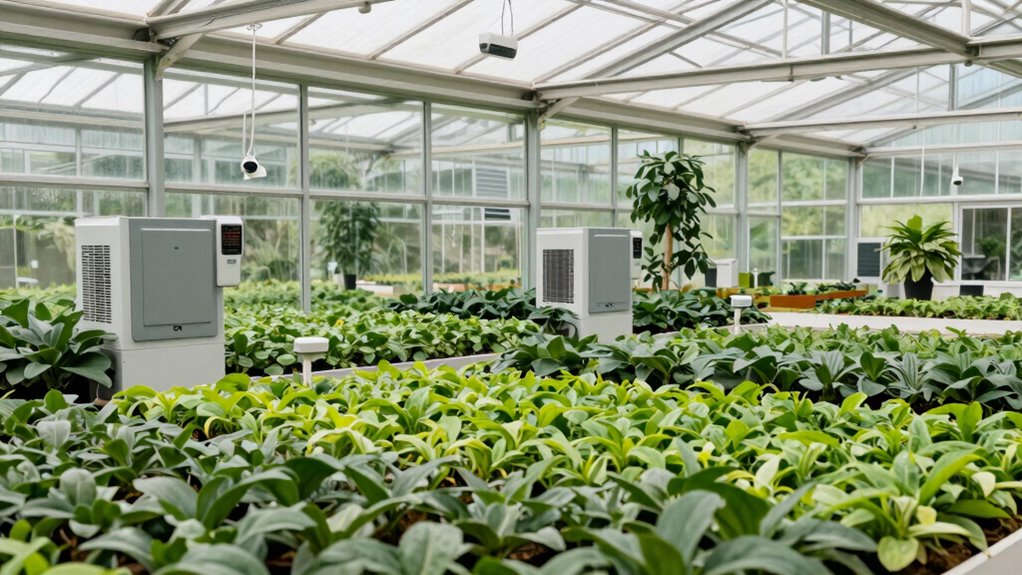
A well-planned greenhouse zone strategy can considerably boost your gardening success by optimizing conditions for different plant types. When you organize your greenhouse into specific zones, you create tailored environments that support healthy growth and reduce stress on your equipment. One key factor to contemplate is plant humidity. Different plants thrive at varying humidity levels, so establishing zones with controlled humidity can prevent issues like mold, mildew, and dehydration. For instance, tropical plants require higher humidity, which you can maintain with misting systems or humidifiers, while succulents need drier conditions, achieved through proper ventilation and dehumidifiers. By matching humidity levels to plant needs within each zone, you not only improve plant health but also reduce the workload on your climate control equipment, making it more efficient and longer-lasting. Additionally, understanding biodiversity and how diverse plant species interact can help you create more resilient and thriving greenhouse environments. Incorporating microclimates within your zones further enhances your ability to meet specific plant needs precisely.
Pest management is another crucial aspect of an effective greenhouse zone strategy. When you segment your greenhouse into zones, you can isolate pest-prone areas from healthier sections, limiting the spread of infestations. For example, keeping plants vulnerable to certain pests in a designated zone allows you to apply targeted treatments without exposing the entire greenhouse. Additionally, maintaining strict hygiene and monitoring within each zone makes it easier to detect early signs of pests, reducing the need for heavy chemical interventions later. A well-organized zone setup also helps you implement crop rotation and companion planting more effectively, further minimizing pest problems. When pests are managed locally within specific zones, your overall pest control efforts become more manageable and environmentally friendly. Moreover, thoughtful zoning can facilitate resource allocation, ensuring that water, nutrients, and pest controls are directed precisely where needed, enhancing overall efficiency. Implementing monitoring systems within each zone can also help detect pest issues sooner and respond proactively.
Your equipment performs better when you tailor your greenhouse zones to the needs of your plants and pest management strategies. Proper zoning reduces unnecessary strain on climate control systems, as you avoid over-conditioning areas that don’t require it. For example, a zone with high humidity for tropical plants won’t need to be cooled excessively, saving energy and prolonging the lifespan of your cooling systems. Similarly, targeted pest management within zones prevents the overuse of pesticides, which can harm equipment and beneficial insects. Additionally, implementing automation systems based on zone-specific conditions can further optimize your greenhouse operations, reducing manual effort and increasing precision. By keeping zones well-defined and conditions consistent, your heating, cooling, and ventilation systems operate more efficiently, reducing wear and tear and lowering energy costs.
In short, a thoughtful greenhouse zone strategy aligns your equipment performance with your plants’ needs. By controlling plant humidity and implementing effective pest management within designated zones, you create a more resilient and productive environment. This approach not only enhances plant health but also extends the life of your equipment, saving you time, money, and effort in the long run. When you optimize your greenhouse zones, you’re setting the stage for a healthier, more manageable, and more successful gardening experience.
greenhouse climate control systems
As an affiliate, we earn on qualifying purchases.
As an affiliate, we earn on qualifying purchases.
Frequently Asked Questions
How Does the Zone Strategy Impact Energy Consumption?
The zone strategy boosts your energy efficiency by focusing heating, cooling, and ventilation only where needed, reducing unnecessary energy use. By dividing your greenhouse into distinct zones, you optimize resource utilization, ensuring equipment runs efficiently without waste. This targeted approach minimizes overall energy consumption, lowers operational costs, and promotes sustainable practices. Ultimately, the zone strategy helps you better manage resources, saving money while maintaining ideal conditions for your plants.
Can the Strategy Be Applied to Existing Greenhouses?
Yes, you can apply greenhouse zoning to existing structures. Implementing greenhouse zoning improves crop management by creating tailored environments within your greenhouse, optimizing temperature, humidity, and light for different plant needs. Start by dividing your greenhouse into zones based on crop requirements. Adjust ventilation, heating, and shading accordingly. This strategic approach enhances equipment efficiency, conserves energy, and boosts crop yields, making your existing greenhouse more effective without major renovations.
What Are the Initial Setup Costs Involved?
Your initial setup costs might feel like building a spaceship—expensive and overwhelming. The cost analysis shows startup expenses include climate control systems, zone-specific insulation, sensors, and automation tools. Expect to invest considerably upfront, but these costs create a high-performing environment that boosts plant growth and reduces long-term energy bills. While intimidating at first, this strategy’s benefits outweigh the initial investment, making your greenhouse a powerhouse of efficiency.
How Does It Affect Plant Growth Rates?
Implementing the greenhouse zone strategy boosts plant growth rates by optimizing environmental conditions, which enhances plant health. You’ll notice faster growth and stronger plants because the strategy guarantees consistent temperature, humidity, and light levels. This targeted growth optimization minimizes stress on plants, leading to healthier development. As a result, your plants thrive more efficiently, and yield quality improves, making the strategy a valuable tool for maximizing your greenhouse productivity.
Is Specialized Training Required for Implementation?
Yes, specialized training is often required for implementing the Greenhouse Zone Strategy effectively. You’ll need to focus on skill development to understand zone-specific conditions and equipment adjustments. Training requirements vary depending on your existing knowledge and the complexity of your greenhouse setup. By investing in targeted training, you guarantee your team can optimize equipment performance, improve climate control, and maximize plant growth, ultimately leading to better yields and efficiency.
Conclusion
By embracing the greenhouse zone strategy, you set yourself up for equipment that performs better and lasts longer. This approach helps you stay ahead of potential issues and keeps your operations running smoothly. Remember, a stitch in time saves nine, so don’t wait until problems arise. Keep your zones well-managed and your equipment in top shape—this way, you’ll reap the benefits of a thriving, efficient greenhouse. Stay proactive, and success will follow.
Halloween Picks
halloween
As an affiliate, we earn on qualifying purchases.