The smartest time to add rainwater catchment to your greenhouse is during its initial construction or renovation. Doing this allows you to seamlessly integrate components like gutters, downspouts, and storage tanks, improving water flow and reducing future maintenance issues. It also helps you choose the best filtration and storage options tailored to your climate. Installing early saves time and money, while enhancing your system’s efficiency. Keep exploring to discover how planning now can benefit your greenhouse long-term.

Get garden gear delivered free with Prime
- Fast, free delivery on millions of items
- Prime Video, Amazon Music and more included
- Member-only deals all year
Key Takeaways
- During initial construction or renovation to ensure seamless integration and avoid future disruptions.
- When designing the layout to optimize gutter placement, water flow, and storage solutions.
- Early planning allows selection of appropriate filtration and large storage options for sustainability.
- Retrofitting later can be costly, disruptive, and less efficient, missing design integration benefits.
- Incorporate rainwater catchment early to enhance climate responsiveness and long-term water management.
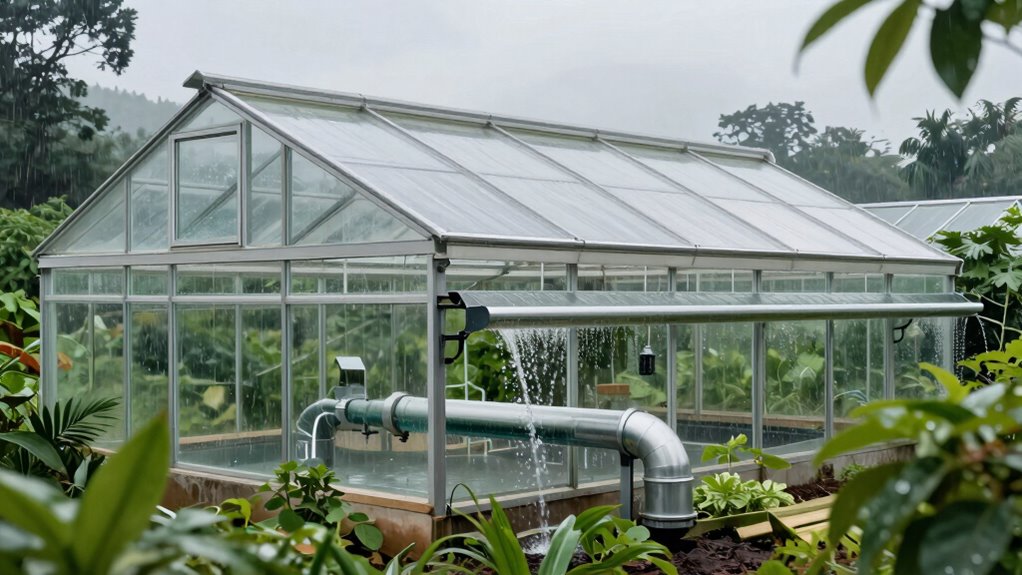
Have you ever contemplated how rainwater catchment can transform your greenhouse’s watering system? If you’re planning a build or upgrade, timing is everything. The smartest time to add rainwater catchment is during the initial construction or renovation phase. This way, you can seamlessly integrate rainwater filtration systems and water storage solutions without disrupting your greenhouse’s operations later on. Installing these components from the start ensures they’re properly designed and positioned to maximize efficiency, saving you time and money down the line.
Adding rainwater catchment during construction ensures seamless integration and maximum efficiency from the start.
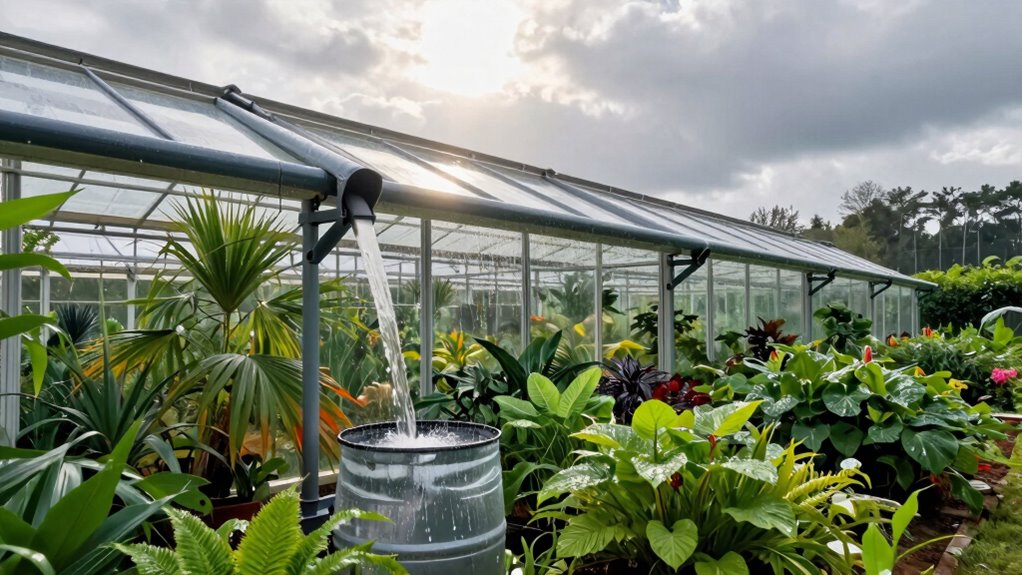
When you incorporate rainwater catchment early, you gain the advantage of designing your gutters, downspouts, and storage tanks to align with your greenhouse’s layout. This integration allows for better water flow management and reduces the chances of leaks or drainage issues. Plus, it makes maintenance easier because everything is set up in a coordinated way from the beginning. You can choose high-quality rainwater filtration systems that remove debris, pests, and contaminants, ensuring your plants receive clean, safe water. Planning for filtration early also means you can select appropriate storage solutions—such as large tanks or underground reservoirs—that suit your water needs and available space. Additionally, early planning facilitates rainwater management strategies that optimize collection during heavy rainfall. Incorporating climate-responsive design strategies early on can further enhance your system’s efficiency and sustainability.
Waiting until later to add rainwater catchment can lead to complications. Retrofitting existing structures often involves costly modifications and can disrupt your greenhouse’s productivity. By installing the system during your build, you avoid these inconveniences and ensure your catchment setup is fully integrated, more reliable, and easier to maintain. Additionally, early planning allows you to think about the environmental benefits—such as reducing reliance on municipal water and decreasing your overall water footprint—making your greenhouse more sustainable.
Timing your rainwater catchment installation during initial construction also opens opportunities for optimizing water collection based on your local climate. You can design your gutter angles, spout placements, and overflow management to capture the maximum amount of rainwater possible. This proactive approach ensures your water storage solutions are sufficient to meet your needs during dry spells, reducing your dependence on external sources. Plus, integrating rainwater harvesting from the start encourages a holistic approach to biodiversity and conservation, which can be a significant advantage for eco-conscious growers. Additionally, early integration allows you to incorporate water conservation strategies, further boosting your greenhouse’s overall sustainability.
rainwater catchment system for greenhouse
As an affiliate, we earn on qualifying purchases.
As an affiliate, we earn on qualifying purchases.
Frequently Asked Questions
How Much Rainwater Can a Typical Catchment System Collect Annually?
A typical catchment system can collect between 20,000 and 50,000 gallons of rainwater annually, depending on your location and rainfall patterns. You should prioritize rainwater quality by using clean, food-grade storage materials to prevent contamination. Properly sized gutters and filters help maximize collection, ensuring you capture as much rain as possible while maintaining water safety for your greenhouse needs.
What Are the Initial Costs of Setting up a Rainwater Catchment System?
Did you know that initial costs for a rainwater catchment system can range from $300 to $2,500? You should plan for expenses like gutters, storage tanks, and filtration. Investing early helps with stormwater management and guarantees better water quality testing down the line. While costs vary, proper setup saves money long-term and promotes sustainable watering practices. Starting now means you’ll avoid costly repairs later and optimize your greenhouse’s water use.
Are There Legal Restrictions on Rainwater Harvesting in Certain Areas?
You should check local laws before setting up rainwater harvesting, as legal restrictions vary by area. Some regions have water rights laws that limit or regulate rainwater collection to protect existing water sources. In certain locations, permits are required, or harvesting might be restricted altogether. To avoid fines or legal issues, research your area’s regulations and guarantee your system complies with any restrictions on water rights and collection rules.
How Often Should the Catchment System Be Maintained and Cleaned?
You should clean and maintain your catchment system regularly—ideally, every few months—to guarantee water filtration stays effective and system durability remains high. Check for debris, sediment, and algae that can clog filters or damage components. Regular inspections help identify leaks early and keep the system running smoothly. Consistent maintenance not only prolongs your system’s lifespan but also guarantees clean, safe water for your greenhouse needs.
Can Rainwater Catchment Systems Be Integrated With Existing Greenhouse Setups?
Yes, you can integrate rainwater catchment systems with existing greenhouses. You’ll want to incorporate efficient rainwater filtration to guarantee clean water for your plants. Using greenhouse automation, you can automatically direct collected rainwater into your watering system, optimizing water use and reducing manual effort. Proper planning ensures seamless integration, enabling you to maximize rainwater benefits and improve your greenhouse’s sustainability without needing a complete overhaul.
Conclusion
Adding a rainwater catchment system to your greenhouse isn’t just eco-friendly; it can cut your water bills by up to 50%. The smartest time to install it is during the initial build, ensuring seamless integration and cost savings. Imagine harvesting enough rainwater to water your plants year-round—reducing dependency on municipal supplies. Incorporate this system early on, and you’ll enjoy a sustainable, efficient greenhouse that thrives regardless of drought or water restrictions.
Halloween Picks
halloween
As an affiliate, we earn on qualifying purchases.