TL;DR

Get garden gear delivered free with Prime
- Fast, free delivery on millions of items
- Prime Video, Amazon Music and more included
- Member-only deals all year
Gardening Know How recommends seven evergreen trees, shrubs and vines as ways to add privacy and year-round greenery to gardens. The available report details three plants—Skyrocket juniper, star jasmine and fragrant tea olive—but the supplied source excerpt does not identify the other four.
Gardening Know How has published a guide to seven plants that can create privacy with year-round foliage, including narrow-growing juniper, a flowering climbing vine and a fragrant evergreen shrub. The supplied report excerpt describes three of the seven selections, while the remaining four are not included in the source material provided.
The guide recommends combining evergreen hedges, screens and specimen plants to make a garden feel more secluded, including evergreens that thrive on neglect. It says living screens can obscure views, soften property boundaries and provide shelter and food for birds. Layering taller plants behind medium shrubs and groundcovers is another approach described for visual screening and noise reduction.
Skyrocket juniper is presented as an option for tight spaces, while other drought-tolerant plants can help gardens through dry spells. The report says the cultivar can grow 15 to 20 feet tall with a spread of 2 to 3 feet and is hardy in USDA zones 3 to 9. It prefers full or partial sun and well-drained soil; the article warns against overwatering and soggy conditions.
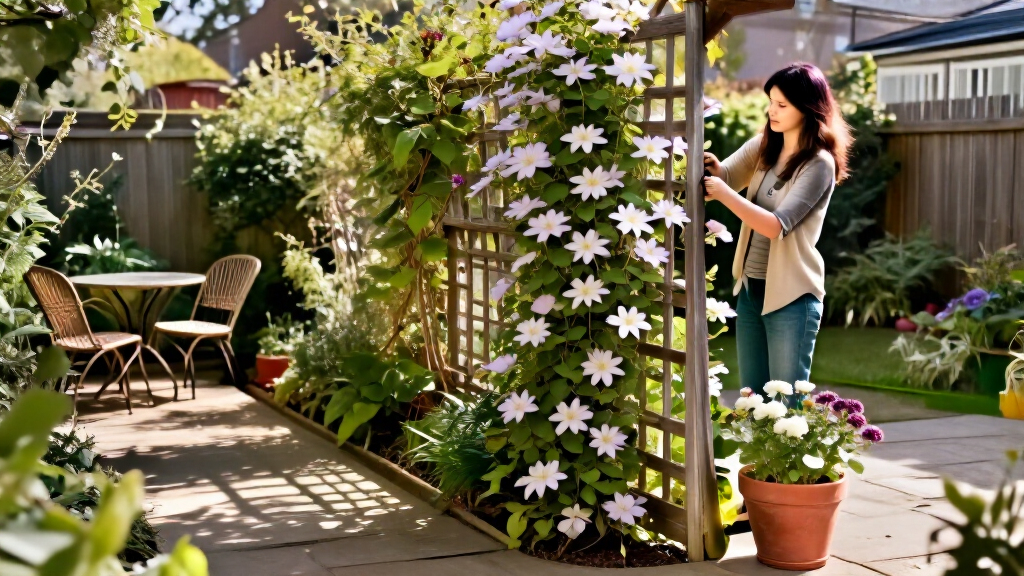
Star jasmine, suited to zones 8 to 10 according to the guide, can climb a fence or trellis and produces fragrant white flowers in late spring and early summer, adding to a garden’s evening fragrance. Fragrant tea olive, listed for zones 8 to 11, is described as a dense shrub reaching 10 to 15 feet, with small, scented flowers in fall and early spring. These growing details are the report’s descriptions, not guarantees for every site; local climate and growing conditions affect plant performance.
Choosing a Screen for Your Yard
Privacy planting can serve more than one purpose: a living boundary may block an unwanted view while adding foliage, flowers or fragrance. The guide’s examples also show why matching a plant to the site matters. A narrow juniper suits a confined boundary, while a vine needs a support structure and the two flowering evergreens are recommended for warmer zones.
For readers planning a screen, the practical takeaway is to check mature size, hardiness zone, sunlight and drainage before planting. A plant that grows too wide can crowd a small yard, and a species outside its suitable climate range may not provide reliable year-round cover.
As an affiliate, we earn on qualifying purchases.
Planting Advice in the Guide
The report presents October as a favorable planting period for evergreen screens, shrubs, trees and woody vines. Its explanation is that cooling air and soil that remains warm after summer can support root establishment. It advises gardeners in USDA zones 3 to 6 to finish planting by late October, while those in zones 7 to 10 may be able to plant through November.
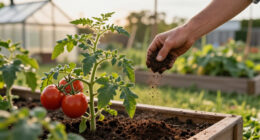
For site preparation, the article suggests making planting holes about twice as wide as the nursery container, improving soil with organic matter where appropriate and finishing with a roughly 3-inch layer of organic mulch. Timing and soil conditions vary locally, so gardeners should check regional guidance and plant-specific requirements. For climbing plants, the guide advises providing a trellis or other sturdy support; it also cautions readers to choose well-behaved vines and avoid invasive runners such as English ivy.
Four Plant Choices Not Supplied
The source excerpt ends during its description of fragrant tea olive. It does not name or describe the article’s other four plants, so this report cannot identify all seven selections or compare their growing requirements. The supplied material also gives no publication date, named expert comments or independent testing to establish how quickly the plants will provide effective screening in particular gardens.
Claims about noise reduction and screening are presented as general benefits in the gardening guide; the excerpt provides no measurements or site-specific results. Gardeners should treat those benefits as dependent on planting layout, plant maturity and local conditions.
Check the Full Plant List
Readers seeking the complete list can consult the original Gardening Know How report. Before buying or planting, confirm the plant’s hardiness range and mature dimensions, check whether it suits the local climate, and consider how much space and support it will need. The source material provides no additional follow-up or scheduled update.
Key Questions
Which plants does the supplied report excerpt identify?
It describes Skyrocket juniper, star jasmine and fragrant tea olive. The other four plants in the article are not identified in the supplied excerpt.
Which of the listed plants suits a narrow garden boundary?
The guide presents Skyrocket juniper as a narrow option, describing it as 15 to 20 feet tall and 2 to 3 feet wide at maturity. Actual growth depends on local conditions.
Can star jasmine provide winter screening?
The report describes star jasmine as an evergreen vine with foliage that remains through the year in suitable conditions. It lists the plant for zones 8 to 10 and says it needs sturdy support.
When does the guide recommend planting privacy plants?
It describes October as a favorable time for planting and gives different suggested deadlines by hardiness zone. Local weather, soil conditions and plant needs can affect the right timing.
Source: rss
Halloween Picks
halloween
As an affiliate, we earn on qualifying purchases.