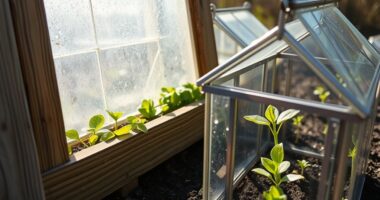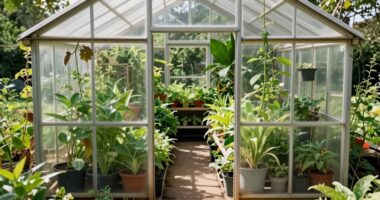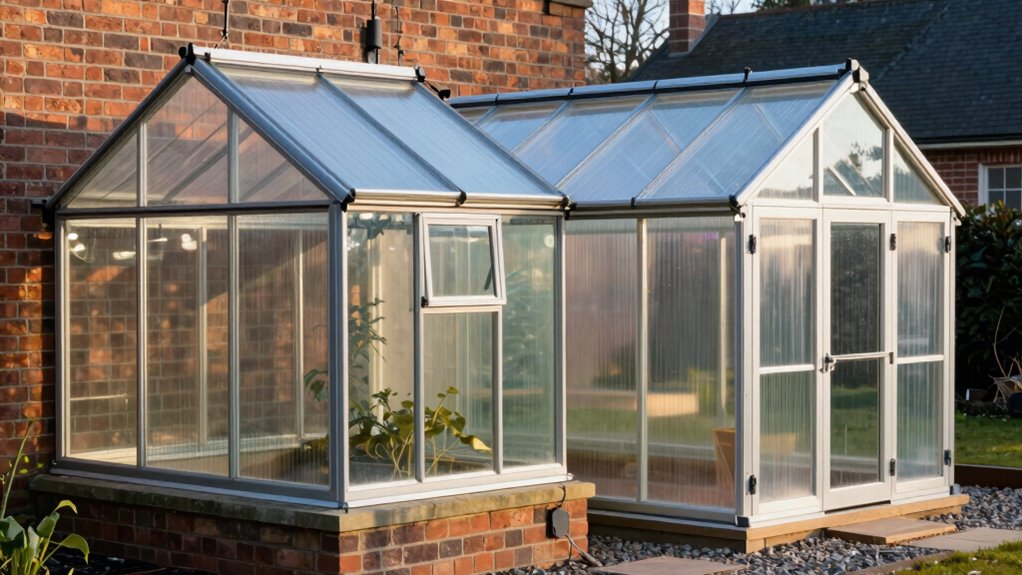

You’ll find that attached greenhouses stay warmer longer because they use the existing structure’s insulation and thermal mass, making heating more efficient. Freestanding greenhouses lose heat faster, so they need stronger active heating systems. Their design influences how you plan a heating approach, with passive methods working well for attached models and solar integration being easier for both. To guarantee ideal growth conditions, you’ll want to tailor your heating strategies accordingly—keep exploring to get the full picture.

Get garden gear delivered free — and shop member deals
- Fast, free delivery on millions of items
- Access to Prime Big Deal Days deals on October 6–7
- Prime Video, Amazon Music and more included
Key Takeaways
- Attached greenhouses benefit from existing insulation and thermal mass, reducing the need for active heating systems.
- Freestanding greenhouses lose heat more quickly, requiring more robust, active heating solutions.
- Solar panel integration is easier on attached structures, influencing energy strategies and system design.
- Climate control automation differs, with attached models leveraging existing infrastructure and freestanding needing proactive environmental management.
- Insulation strategies vary, with each type needing tailored approaches to minimize heat loss and optimize efficiency.
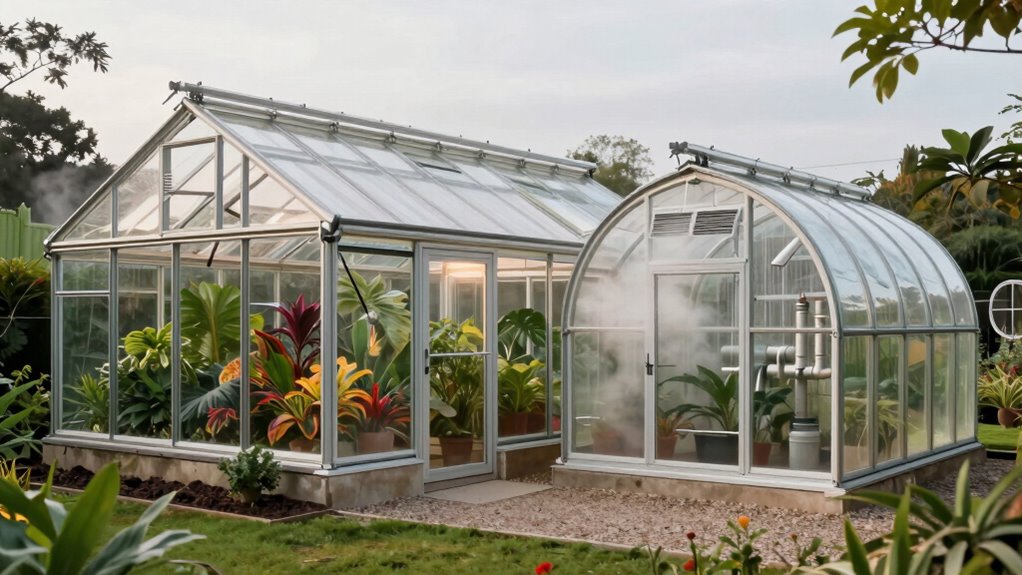
When choosing a heating system for your greenhouse, understanding the differences between various options is essential to maintaining ideal growing conditions. Whether your greenhouse is attached or freestanding influences how you approach heating because each setup has unique needs for efficiency and temperature control. Attached greenhouses often benefit from the existing structure’s insulation and heat retention, but they still require a tailored heating solution to prevent cold spots and ensure consistent warmth. For instance, integrating passive heating methods can further enhance temperature stability in attached structures.
For freestanding greenhouses, on the other hand, they tend to lose heat more quickly and need a more robust or carefully managed heating system to keep temperatures stable, especially during colder months. One key factor to consider is solar panel integration. With an attached greenhouse, you might find it easier to incorporate solar panels into the existing roof or nearby structures, harnessing renewable energy to power heating systems. This setup can significantly reduce energy costs over time and promote eco-friendly operation. For freestanding greenhouses, solar panel integration might require additional planning, such as installing dedicated solar arrays on nearby land or structures. However, the advantage is that these greenhouses can be designed specifically around solar access, maximizing energy collection and reducing reliance on grid power. Additionally, proper insulation strategies can help minimize heat loss and improve overall efficiency in both setups. Implementing energy-efficient heating appliances can further support sustainable operation by reducing energy consumption.
Automated climate control systems are also crucial for both types of greenhouses but need to be tailored to their specific characteristics. In an attached greenhouse, automated climate control can leverage the existing building’s thermal mass and insulation, adjusting heating based on internal sensors to maintain a consistent environment. It can also coordinate with ventilation and shading to optimize conditions. For freestanding models, automation becomes even more vital because they generally lack the thermal buffering of attached structures. Here, automated climate control systems can monitor external weather conditions and adjust heating proactively, preventing temperature swings and ensuring your plants stay healthy. Incorporating automation technology can further enhance these benefits by providing real-time adjustments for optimal conditions. Moreover, energy-efficient heating appliances can significantly reduce operational costs and environmental impact.
The key difference lies in how these systems are designed and implemented. Attached greenhouses might rely more on passive heating and existing infrastructure, with automation fine-tuning the environment. Freestanding greenhouses require more active heating solutions, possibly with supplemental insulation and dedicated energy sources. Both benefit from automation, but the approach and complexity vary. Ultimately, understanding these distinctions helps you select the right heating strategy, ensuring your plants thrive regardless of your greenhouse’s design. Proper planning around solar panel integration and climate control not only enhances efficiency but also creates a more sustainable, reliable environment for your gardening success.
As an affiliate, we earn on qualifying purchases.
Frequently Asked Questions
How Does Greenhouse Size Affect Heating Requirements?
Greenhouse size directly impacts your heating needs by influencing thermal insulation and ventilation efficiency. Larger greenhouses require more heating because they lose heat faster, so proper insulation is essential to retain warmth. Additionally, ventilation efficiency becomes critical to prevent overheating or cold spots, ensuring even temperature distribution. By understanding these factors, you can optimize your heating system, saving energy and creating a stable environment for your plants.
What Are the Cost Differences Between Attached and Freestanding Greenhouse Heating?
Imagine two greenhouses as siblings, one always in the sun, the other shaded; their heating costs differ. Attached greenhouses often have lower climate control costs because they share walls, reducing heat loss. Freestanding ones require more energy to maintain consistent temperatures, increasing expenses. A detailed cost analysis shows attached models save you up to 20% on heating, making them more economical long-term, especially in colder climates.
Which Heating Systems Are Most Energy-Efficient for Each Type?
For maximum energy efficiency, you should consider solar panels paired with radiant heating systems for both attached and freestanding greenhouses. Solar panels harness renewable energy, reducing operating costs, while radiant heating provides even warmth directly to plants and soil, minimizing heat loss. Attached greenhouses benefit from natural heat transfer, so solar panels with radiant heating optimize energy use. Freestanding models can also efficiently use these systems, especially with supplemental insulation.
How Does Insulation Impact Heating Needs in Different Greenhouse Types?
Insulation is the backbone of efficient heating, helping you keep your greenhouse warm without breaking the bank. The right insulation material improves temperature regulation, reducing heat loss. In attached greenhouses, insulation impacts shared walls, so choosing materials that minimize thermal transfer is key. For freestanding types, you can focus on insulating walls and roof to better control internal temperatures, making your heating system more effective and saving energy in the long run.
Are There Specific Safety Considerations for Each Greenhouse Heating Style?
You need to prioritize ventilation safety and electrical safety for both greenhouse types. Guarantee proper ventilation to prevent heat buildup and maintain airflow, reducing fire risks. Use waterproof, certified electrical components, and keep wiring away from moisture to avoid electrical hazards. Regularly inspect all systems, and install safety switches. Proper safety measures protect you and your plants, especially since different heating setups may have unique risks depending on whether your greenhouse is attached or freestanding.
Conclusion
So, next time you’re setting up a greenhouse, remember that whether it’s attached or freestanding, your heating needs will align with its unique setup. It’s almost a coincidence how small differences in design lead to big changes in comfort and efficiency. Paying attention to these details can make or break your growing season. Ultimately, understanding these nuances guarantees your plants stay cozy, and your greenhouse thrives—talk about perfect timing!
Evergreen bestsellers Picks
bestsellers
As an affiliate, we earn on qualifying purchases.