Your backyard wind patterns directly affect your greenhouse’s ventilation, temperature control, and structural integrity. Understanding how wind funnels through narrow spaces or creates turbulence near buildings helps you position vents and openings effectively. It also guides you to add windbreaks or barriers to protect plants and prevent damage. By adjusting your plan to match your local wind behavior, you’ll create a healthier environment and extend your greenhouse’s lifespan—discover how to optimize your setup for better results.

Get garden gear delivered free with Prime
- Fast, free delivery on millions of items
- Prime Video, Amazon Music and more included
- Member-only deals all year
Key Takeaways
- Understanding local wind patterns helps optimize greenhouse placement for better natural ventilation and temperature regulation.
- Recognizing wind funneling and turbulence prevents structural damage and plant stress.
- Adapting your plan to wind behavior improves airflow, reducing overheating or damp conditions.
- Incorporating windbreaks and barriers enhances airflow control and protects plants from gusts.
- Aligning your greenhouse design with wind patterns increases energy efficiency and plant health.
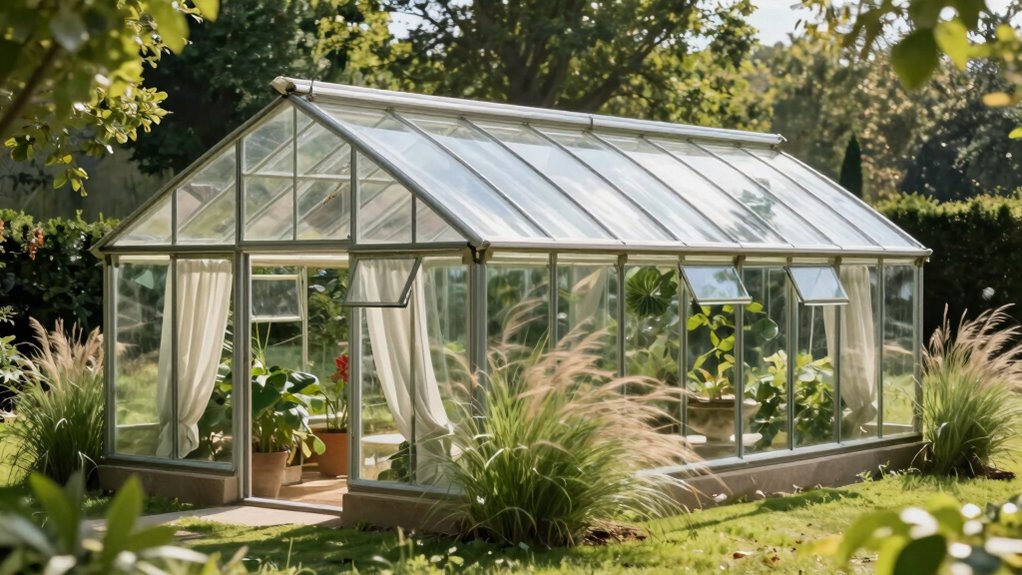
Understanding your backyard wind patterns is essential when planning a greenhouse, as it influences ventilation, temperature control, and overall plant health. Wind doesn’t just blow randomly; it creates specific patterns that can impact how your greenhouse functions. If you’re not paying attention to these patterns, you might end up with poor airflow, temperature fluctuations, or even structural damage over time. Recognizing how wind interacts with your space helps you design a more efficient and resilient greenhouse.
Understanding wind patterns helps optimize greenhouse design for better airflow, temperature control, and plant health.
One key factor to contemplate is the wind tunnel effects that can happen in narrow or enclosed spaces. When wind funnels through tight areas, it speeds up considerably, creating strong gusts that can stress your plants or damage your greenhouse structure. If your backyard has fences, walls, or dense shrubbery, these features can channel wind in predictable ways. Instead of fighting these effects, you can take advantage of them by positioning vents or openings to enhance airflow or by designing barriers that diffuse wind, reducing its force. This way, you maintain a steady, gentle breeze inside the greenhouse, which benefits your plants without risking wind damage. Additionally, understanding wind behavior can help you select the right materials and layout to withstand these natural forces.
Urban wind interference adds another layer of complexity. If your backyard is close to buildings, streets, or other man-made structures, the wind pattern becomes more unpredictable. Tall buildings or closely packed houses can cause turbulence, creating eddies and gusts that swirl unpredictably. These disruptions can cause uneven temperature distribution and make it more challenging to maintain consistent conditions. When planning your greenhouse, you need to think about these urban effects. Choosing a location that’s shielded from direct wind exposure or installing windbreaks can help reduce turbulence. Proper placement ensures that your greenhouse receives a more stable airflow, making it easier to regulate temperature and humidity. A properly positioned structure can significantly improve the microclimate inside your greenhouse.
Understanding these wind dynamics allows you to design a greenhouse that works with nature rather than against it. You might opt for a structure with adjustable vents to accommodate gusts or position it in a spot where natural wind patterns promote gentle air exchange. Recognizing wind tunnel effects and urban wind interference helps you prevent issues like overheating, excessive cooling, or structural stress. It also guides you in selecting the best orientation, materials, and protective features for your setup. By paying attention to how wind moves around your yard, you can create a healthier environment for your plants, improve energy efficiency, and extend the lifespan of your greenhouse. In the end, adapting your plans to local wind patterns ensures your gardening efforts thrive all year round. Understanding wind behavior is crucial for a successful greenhouse design.
greenhouse windbreaks for plants
As an affiliate, we earn on qualifying purchases.
As an affiliate, we earn on qualifying purchases.
Frequently Asked Questions
How Do Wind Patterns Affect Greenhouse Temperature Regulation?
Wind patterns profoundly impact your greenhouse temperature regulation. They influence airflow, which affects heat retention and cooling. By using wind tunnel testing, you can understand how wind moves around your structure. Applying aerodynamic design principles helps optimize airflow, reducing temperature fluctuations. This way, you can enhance your greenhouse’s efficiency, maintain stable temperatures, and protect your plants from harsh weather conditions, ultimately creating a more controlled and productive environment.
Can Changing Wind Patterns Improve Greenhouse Pest Control?
Changing wind patterns can remarkably improve pest control in your greenhouse. Imagine wind as a gardener’s net, guiding pest migration away from your plants. By adjusting wind direction, you can create a natural barrier, reducing pest entry and spread. Data shows that strategic airflow shifts decrease pest populations, making your greenhouse less reliant on chemicals. So, tweaking wind patterns helps keep pests at bay, protecting your crops naturally.
What Tools Are Best for Monitoring Backyard Wind Changes?
You should use wind sensors and carefully consider anemometer placement to monitor backyard wind changes effectively. Place anemometers at various heights and locations around your greenhouse to get accurate readings of wind speed and direction. Regularly check the sensors, and keep them unobstructed. These tools help you understand wind patterns, so you can adjust your greenhouse setup for better pest control, ventilation, and overall plant health.
Do Wind Patterns Influence Greenhouse Humidity Levels?
Think of your greenhouse as a cozy cabin battling outside wind chill. When wind patterns shift, they influence air circulation inside, directly affecting humidity. Strong gusts can pull moisture out, lowering humidity, while gentle breezes promote even air flow. By understanding these patterns, you can optimize your ventilation and guarantee your plants stay in the perfect humidity zone, regardless of outside wind fluctuations.
How Often Should I Reassess Wind Impact on My Greenhouse Design?
You should reassess the wind impact on your greenhouse design at least once a year, especially after seasonal changes or extreme weather events. Keep an eye on wind erosion and how it affects your site. Consider planting a windbreak to reduce wind speed and protect your greenhouse. Regular checks help you adjust your windbreak planting and other protective measures, ensuring your greenhouse remains resilient against shifting wind patterns.
Conclusion
By paying attention to your backyard’s wind patterns, you can truly optimize your greenhouse setup. Think of it like tuning a musical instrument—you might need to adjust your position or design to hit the right notes. When I noticed my plants thrived after repositioning my greenhouse into a breezier corner, I realized small changes can make a big difference. Don’t overlook the wind; it’s the unseen force that can turn your gardening dreams into a flourishing reality.
Halloween Picks
halloween
As an affiliate, we earn on qualifying purchases.