
TL;DR
The idea that any leaves left on the lawn will smother and kill grass is contradicted by university research: Michigan State University trials found up to six inches of mulched oak and maple leaves produced no adverse effects on established Kentucky bluegrass. Particle size, not leaf presence, determines the outcome.
The long-standing garden rule that leaves left on the lawn will always smother and kill grass is contradicted by university turf research, according to a Gardening Know How report. Trials at Michigan State University found that up to six inches (15cm) of oak and maple leaves could be mulched into established Kentucky bluegrass with no adverse effects on turf health or density — a volume the report describes as far more than most suburban lawns ever see at once.
The report draws a sharp line between two scenarios. A thick, wet carpet of whole leaves sitting on dormant grass will block sunlight and trap moisture around plant crowns, and extension specialists such as the University of Maryland Extension do advise clearing heavy leaf mats. Prolonged dark, wet conditions can also encourage cool-season fungal diseases, including gray snow mold (Typhula incarnata) and pink snow mold (Microchrochium nivale), which damage turf at temperatures just above freezing.
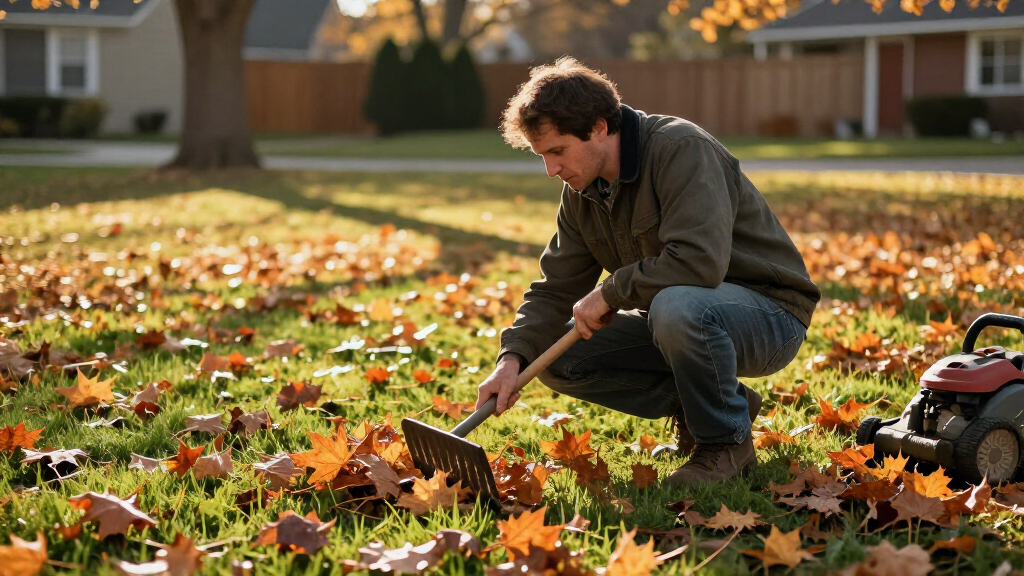
But the risk comes from how leaves are left, not whether they are present. The report states that particle size matters far more than leaf presence: a whole oak leaf acts like a shingle that seals out air and traps water, while chopped fragments drop between grass blades and decompose. Mulch-mowing — running a sharp mower over dry leaves for a couple of passes — produces fragments that earthworms and soil microbes break down over winter, releasing stored nitrogen and potassium into the lawn by spring.
The MSU research originated in the 1990s, when Michigan banned yard waste from municipal landfills and turf scientists tested how much leaf debris established grass could tolerate. A related finding from MSU soil testing in 1998 showed that decades of mulching oak leaves into turf caused no discernible shift in soil pH, countering the belief that oak leaves sour soil, while increasing beneficial organic matter.
Free Fertilizer Homeowners Throw Away
The practical stakes are both financial and environmental. Research from the University of Connecticut Extension, cited in the report, indicates that mulching a 2-inch (5cm) layer of fall leaves returns approximately 3.4 pounds (1.5kg) of nitrogen per 1,000 square feet (93sqm) over a season, along with plant-available potassium. Homeowners who rake and bag everything, the report argues, pay to haul natural fertility away and then pay again for fertilizer to replace it. Mulching also keeps leaves out of plastic sacks destined for landfill.
The report cautions that leaf residue contains lower nitrogen levels than grass clippings and should complement, not replace, a full lawn fertility program. Gardeners unsure about their soil can verify conditions with a soil test kit, such as the Luster Leaf Rapitest kits sold at The Home Depot, before relying on mulched leaves alone.
How the Rake-Everything Rule Took Hold
The report traces the myth’s persistence to visibility: lawn damage is obvious, while soil improvement is invisible. A pile of wet leaves left through winter often leaves a yellow patch in April — a stark image that persuades on its own. A properly mulch-mowed lawn, by contrast, shows nothing by spring, because the fine fragments have disappeared into the soil.
The warning itself has a factual kernel, which is why it spread. Wet leaf mats genuinely do harm dormant turf, and extension guidance to clear them is legitimate. According to the report, the rule overreaches only in the word “always” — treating every fallen leaf as a threat regardless of quantity, condition, or particle size. Standard lawn care advice, the report states, moved past the blanket rule decades ago in favor of mulch-mowing with a regular mower fitted with a sharp blade.
“Claiming every fallen leaf must be raked or your lawn will die asks far more of the evidence than is strictly needed.”
— Gardening Know How report
Where the Research Stops Short
The findings apply to established turf in university field trials; the report does not claim identical results for newly seeded lawns, thin or stressed turf, or grass species other than the Kentucky bluegrass tested. The MSU trials focused on oak and maple leaves, so the effects of other leaf types — such as larger, tougher, or slower-decomposing species — are not addressed. The exact threshold beyond six inches of mulched material also remains untested in the material summarized.
Disease risk is likewise condition-dependent: the report confirms snow mold can occur under wet, matted leaves, but does not quantify how often mulched leaves contribute to disease in practice. Homeowners dealing with an unusually heavy leaf drop, prolonged wet weather, or existing lawn problems may still need to remove some material.
Practical Steps Before Leaf Season
As fall leaf drop begins, homeowners can act on the findings by sharpening mower blades and planning to mulch-mow dry leaves in steady passes as they accumulate, rather than waiting for a single deep blanket. Heavy, wet mats should still be cleared — using yard waste bags such as Durasack Heavy Duty Yard Bags where needed — and composted or mulched rather than landfilled where local rules allow. Gardeners concerned about soil chemistry can run a preliminary soil pH test before the season starts. Further guidance is available from University of Maryland Extension and Michigan State University turf resources, and local extension offices can advise on snow mold risk in colder regions.
Key Questions
Will leaves left on my lawn always kill the grass?
No. According to MSU research cited by Gardening Know How, up to six inches of mulched oak and maple leaves caused no adverse effects on established Kentucky bluegrass. Damage occurs mainly when thick, wet mats of whole leaves block sunlight and trap moisture.
What is mulch-mowing, and do I need special equipment?
Mulch-mowing means running a regular lawn mower over dry fallen leaves to chop them into small fragments. The report says a couple of passes with a sharp blade is enough; no specialized mulching kit is required.
Do oak leaves make soil too acidic?
No shift in soil pH was found in MSU soil testing in 1998 after decades of mulching oak leaves into turf, though beneficial organic matter increased. Gardeners can confirm with a soil test kit if unsure.
When should I still rake leaves off the lawn?
Clear heavy, wet leaf mats, especially in cold months, since they block light and can foster gray and pink snow mold. Extension specialists including the University of Maryland Extension recommend removing these mats.
Does mulching leaves replace lawn fertilizer?
Not entirely. University of Connecticut Extension research found a 2-inch mulched layer returns roughly 3.4 pounds of nitrogen per 1,000 square feet per season, but the report notes leaves contain less nitrogen than grass clippings and should supplement a full fertility program.
Source: rss