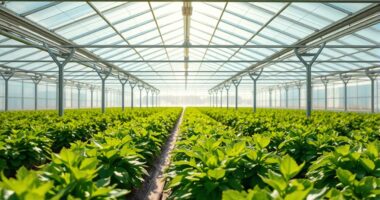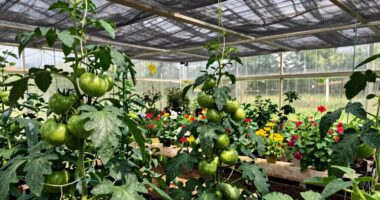

To keep your greenhouse climate just right, you need to balance temperature and humidity carefully. Too warm or cold can stress your plants, while improper humidity levels lead to mold or dehydration. Use heaters, fans, humidifiers, or dehumidifiers to fine-tune conditions. Monitoring tools help you make quick adjustments, ensuring your plants stay healthy and productive. Mastering these basics sets the stage for lush, vigorous growth—if you want to know more, keep exploring how to optimize your environment.

Get garden gear delivered free with Prime
- Fast, free delivery on millions of items
- Prime Video, Amazon Music and more included
- Member-only deals all year
Key Takeaways
- Monitor temperature and humidity regularly with reliable instruments to maintain accurate climate data.
- Use heaters, fans, humidifiers, or dehumidifiers to adjust environmental conditions as needed.
- Balance temperature and humidity to prevent plant stress, disease, and growth issues.
- Ensure proper ventilation to regulate air flow and prevent excess humidity buildup.
- Observe plant responses and seasonal changes to fine-tune climate controls for optimal growth.
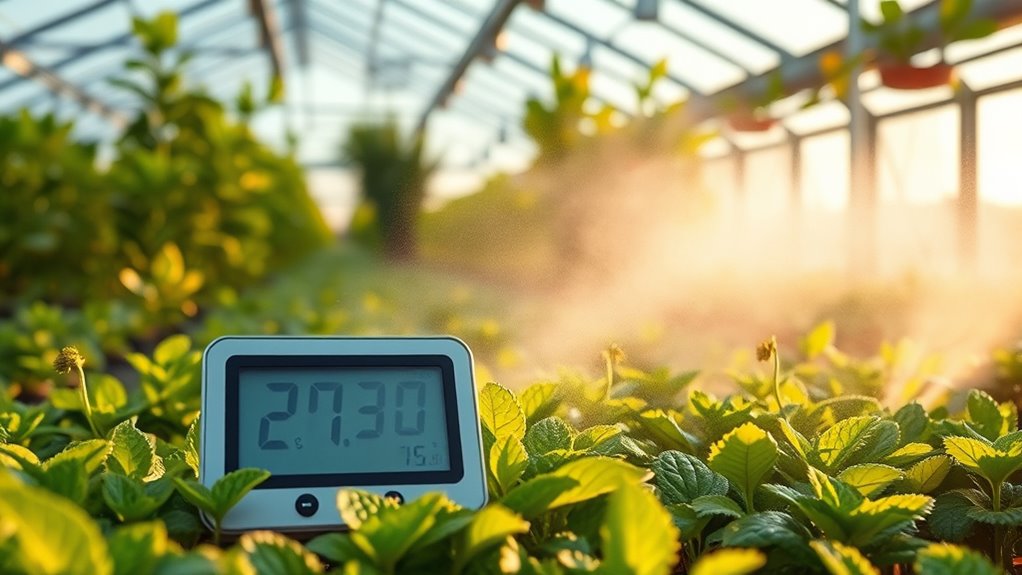
Understanding temperature and humidity is essential because they directly affect your comfort, health, and the environment around you. When managing a greenhouse, maintaining ideal conditions hinges on effective humidity control and temperature regulation. If these factors aren’t properly managed, your plants could suffer from stress, disease, or stunted growth, which impacts your success as a gardener or grower.
Humidity control involves regulating the moisture level in the air to keep it within the perfect range for your specific plants. Too much humidity can lead to mold, mildew, and fungal diseases, while too little causes plants to lose water faster than they can absorb it, leading to wilting or stunted growth. You must monitor humidity levels carefully and adjust them as needed using tools like humidifiers, dehumidifiers, or ventilation systems. Proper humidity control ensures your plants remain healthy, resilient, and productive.
Regulate humidity carefully with humidifiers or dehumidifiers to keep plants healthy and prevent disease.
Temperature regulation is equally critical because it influences how your plants grow and how efficiently your greenhouse operates. If the temperature is too high, it can cause heat stress, dehydration, and even damage delicate plant tissues. Conversely, if it’s too low, growth slows down, and plants become vulnerable to cold stress and diseases. To keep the temperature just right, you might rely on heaters, shade cloths, or automated ventilation systems that respond to changes in outdoor conditions. Precise temperature regulation creates a stable environment that supports consistent growth and minimizes stress.
Effective management of both humidity and temperature involves understanding how they interact. For instance, increasing temperature often causes humidity to drop unless you add moisture. Conversely, high humidity can make it feel warmer than it actually is, which could lead to overheating if not properly monitored. That’s why integrated climate control systems are valuable—they help balance both factors simultaneously, creating an ideal environment for your plants.
You should also keep a close eye on your greenhouse’s microclimate. Regularly check your instruments, observe plant responses, and adjust your climate control methods accordingly. Small changes can make a big difference, especially during seasonal shifts or unexpected weather events. Remember, the goal isn’t just to reach a specific temperature or humidity level but to maintain a stable, healthy environment that promotes vigorous plant growth. Additionally, understanding how projector technology impacts image quality can be helpful if you are creating a dedicated space for your gardening projects or presentations.
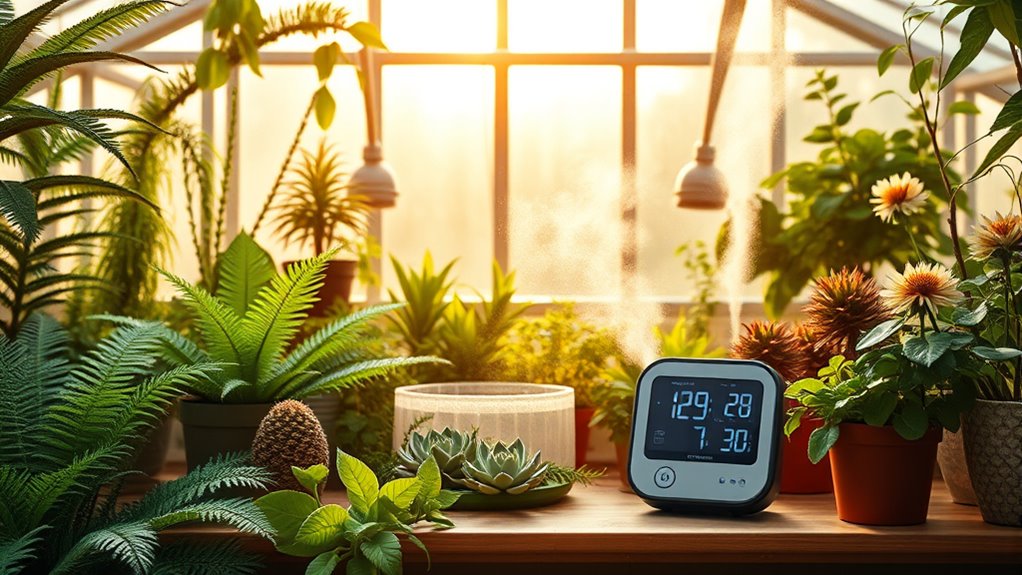
digital greenhouse temperature and humidity monitor
As an affiliate, we earn on qualifying purchases.
As an affiliate, we earn on qualifying purchases.
Frequently Asked Questions
How Do I Measure Temperature and Humidity Accurately in My Greenhouse?
To measure temperature and humidity accurately, you need reliable sensors. Calibrate your sensors regularly to guarantee precision, following the manufacturer’s instructions. Use quality devices designed for greenhouse environments. Implement data logging to track changes over time, helping you make informed adjustments. By maintaining calibrated sensors and consistent data logging, you’ll keep your greenhouse climate just right, promoting healthy plant growth and ideal conditions.
What Are Common Signs of Incorrect Temperature or Humidity Levels?
Think of your greenhouse as a delicate dance floor—if the temperature or humidity is off, your plants show signs of stress. You might notice wilting, browning leaves, or slowed growth, signaling incorrect levels. Too much humidity invites mold growth, while too little causes dehydration. Keep an eye out for these signs, and you’ll catch problems early, ensuring your plants stay healthy and vibrant, dancing happily in the perfect climate.
How Often Should I Adjust Climate Controls for Optimal Growth?
You should adjust your climate controls based on your plants’ growth response and changing conditions. Typically, check daily and make adjustments as needed to maintain ideal temperature and humidity levels. During rapid growth or extreme weather, you might need to adjust more frequently, even multiple times a day. Consistent monitoring helps you determine the right adjustment frequency, ensuring your plants thrive without stress or setbacks.
Can External Weather Affect My Greenhouse Climate Management?
External weather can turn your greenhouse into a roller coaster ride, impacting climate influence more than you think. Changes in temperature, humidity, and sunlight outside directly affect your internal climate, making it necessary to adjust controls more frequently. You’ll need to stay vigilant because Mother Nature doesn’t always play fair. By monitoring weather forecasts and responding promptly, you can keep your greenhouse environment stable and your plants thriving, regardless of outside conditions.
What Are the Best Tools for Monitoring Greenhouse Temperature and Humidity?
You should use reliable tools like digital sensors and data loggers to monitor your greenhouse temperature and humidity. Look for sensors with easy calibration options to guarantee accurate readings. Data loggers help you track changes over time, so you can adjust your climate controls accordingly. Regularly calibrate sensors and review logged data to maintain ideal conditions, making sure your plants thrive regardless of external weather influences.
Conclusion
Think of your greenhouse as a delicate sailboat steering the vast ocean. When the wind (temperature) and currents (humidity) are just right, your boat glides smoothly toward a thriving harvest. But if either shifts too suddenly, the journey becomes turbulent. By mastering these climate basics, you become the steady captain steering your garden’s ship with confidence. Keep a watchful eye, adjust with care, and enjoy the calm waters of healthy, flourishing plants.
Evergreen bestsellers Picks
bestsellers
As an affiliate, we earn on qualifying purchases.