To keep your backyard greenhouse resilient during high winds, focus on sturdy construction, strong anchoring, and wind-resistant materials like impact-rated panels and galvanized steel framing. Reinforce joints, secure vents, and add support braces at key points. Properly maintain your structure by inspecting for damage and trimming nearby trees. Budget-friendly upgrades like straps and braces can make a difference. Stay prepared by monitoring weather forecasts—if you want solid tips to protect your greenhouse, keep exploring.
Key Takeaways
- Use durable, impact-resistant materials like galvanized steel frames and polycarbonate panels for wind resilience.
- Ensure a strong foundation with deep anchors, concrete footings, and secure anchoring techniques.
- Incorporate aerodynamic design features such as sloped roofs and low profiles to reduce wind load.
- Reinforce joints, seams, doors, and vents with braces, locks, and storm shutters for added protection.
- Regularly inspect, maintain, and trim surrounding vegetation to prevent debris damage during high winds.
Why a Wind-Resistant Greenhouse Matters for Backyard Gardens
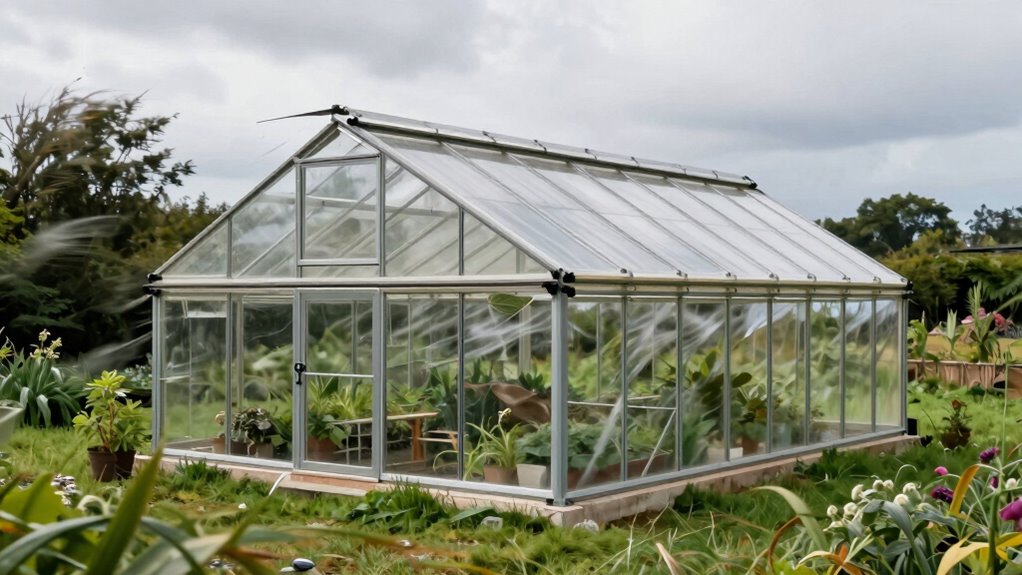
When strong winds sweep through your backyard, a wind-resistant greenhouse becomes essential to protect your plants and investment. High wind speeds can cause significant damage, especially when gust impact hits suddenly and forcefully. Without proper resistance, your greenhouse might shake, crack, or even collapse under the pressure. This can lead to broken plants, lost time, and costly repairs. A wind-resistant structure helps absorb and deflect gust impact, reducing the risk of damage. By choosing a greenhouse built to withstand high wind speeds, you guarantee your garden stays safe and productive, no matter how fierce the weather gets. Protecting your plants from wind not only preserves your efforts but also makes your backyard gardening more reliable and enjoyable.
How to Build a Greenhouse That Withstands High Winds

To build a greenhouse that withstands high winds, you need to prioritize a sturdy foundation and secure framing. Start with accurate wind load calculations to determine the necessary strength of your structure. Incorporate wind tunnel testing data to identify potential weak points and optimize design.
Here’s what to focus on:
- Foundation stability: Use deep anchors or concrete footings to prevent shifting during storms. Properly securing the foundation is crucial for overall stability.
- Frame reinforcement: Opt for reinforced steel or aluminum, ensuring joints are securely fastened. Reinforcing connections helps maintain structural integrity under stress.
- Design considerations: Use aerodynamic shapes to reduce wind resistance and avoid flat surfaces that catch gusts. Additionally, considering wind load calculations during planning can significantly improve the greenhouse’s resilience. Properly assessing structural integrity can help prevent damage during severe weather events, especially by understanding how material strength influences overall durability. Being aware of shelter design principles can further enhance wind resistance and protect your plants effectively. Incorporating wind-resistant materials into your design is essential for long-term durability in high-wind conditions.
Choosing Storm-Resistant Materials for Your Greenhouse
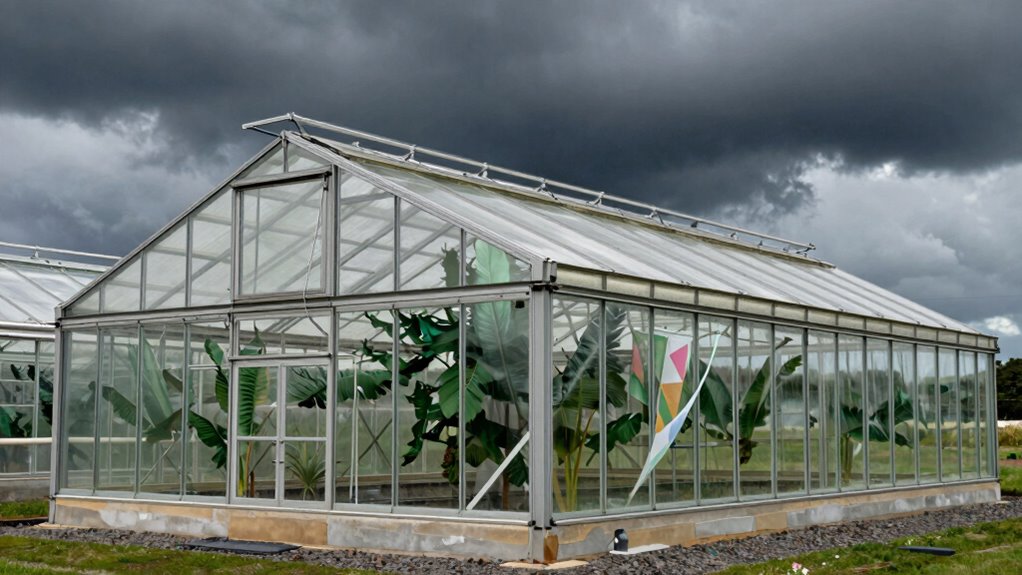
When selecting materials for your greenhouse, focus on durable frame options like galvanized steel or reinforced aluminum that can withstand storm forces. You should also choose impact-resistant cover materials, such as polycarbonate or tempered glass, to protect against hail and flying debris. Making these smart choices helps guarantee your greenhouse stays secure during severe weather. Additionally, implementing heat buffering techniques can help protect plants from temperature fluctuations caused by storm conditions. Using storm-resistant materials is essential for ensuring your greenhouse remains resilient in extreme weather events. Incorporating proper anchoring systems can further enhance stability and prevent damage during strong winds. To ensure your greenhouse maintains structural integrity, consider air quality benefits that contribute to overall plant health and resilience. For added security, consider wind load ratings when selecting your materials to ensure they meet the necessary standards for your area.
Durable Frame Options
Choosing storm-resistant materials for your greenhouse frame is essential to guarantee durability and safety during harsh weather conditions. When evaluating options, focus on material durability and frame strength to make sure your greenhouse withstands high winds. Here are three durable frame options to think about:
- Galvanized Steel – Offers exceptional frame strength and corrosion resistance, ideal for high-wind areas.
- Aluminum – Lightweight yet strong, with excellent resistance to rust and weathering.
- Pressure-Treated Wood – Provides good durability and strength when properly sealed, but requires regular maintenance.
Selecting the right material to ensure your greenhouse remains stable and lasts over time, protecting your plants and investment from the elements.
Impact-Resistant Cover Materials
Selecting impact-resistant cover materials is essential for ensuring your greenhouse can withstand stormy conditions. Materials like polycarbonate panels or laminated glass offer durability and flexibility, protecting your plants from high winds and hail. These options also help maintain ideal solar lighting, vital for healthy growth, even during storms. Impact-resistant covers reduce the risk of damage that could allow pests to enter, enhancing pest control efforts. Additionally, they’re easier to clean and maintain, preserving transparency and effectiveness over time. Incorporating storm-resistant materials can significantly extend the lifespan of your greenhouse and ensure your plants are protected year-round. Properly designed covers can also facilitate seasonal adjustments to optimize light exposure throughout the year. Investing in impact-resistant materials is a smart choice for long-term durability and resilience, especially in areas prone to severe weather. Using impact-resistant cover options can also help minimize maintenance costs and efforts associated with storm damage repairs. With the right cover, you’ll enjoy peace of mind and a resilient setup that keeps your gardening thriving, rain or shine.
Foundation and Anchoring Tips for Windproof Greenhouses

A solid foundation is essential to keep your greenhouse stable and withstand strong winds. Proper anchoring guarantees your structure remains secure during storms. First, conduct soil testing to determine its load-bearing capacity and stability, adjusting your foundation if needed. Second, embed heavy anchors or ground screws into the soil to prevent shifting. Third, integrate pest control measures around the base to avoid damage from burrowing pests that could weaken your structure’s stability. You might also consider adding weight to the base or using concrete footings for extra stability. Always check local wind codes and adapt your foundation accordingly. A well-prepared foundation minimizes movement, safeguarding your greenhouse and ensuring your plants stay protected, no matter the weather. Incorporating proper foundation techniques can significantly enhance your greenhouse’s wind resistance and longevity.
Design Features That Make Greenhouses More Wind-Resistant
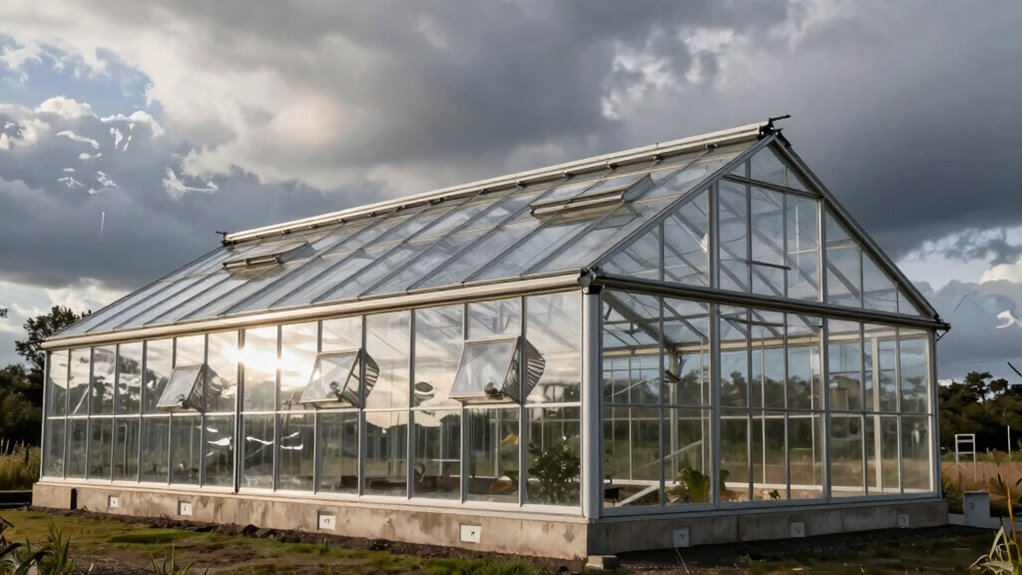
Design features play an essential role in enhancing your greenhouse’s wind resistance. To handle wind load effectively, opt for a sturdy frame made from durable materials like galvanized steel or reinforced aluminum, which boosts structural integrity. Incorporate a low-profile design with a sloped roof to reduce wind resistance and allow wind to pass over more smoothly. Reinforcing joints and connections guarantees the structure remains stable during high winds. Using bracing or cross supports adds extra strength, preventing deformation. Additionally, choosing a lightweight yet strong covering material minimizes wind load stress. A well-designed greenhouse can also benefit from existential themes, encouraging deeper reflection on resilience and adaptability. These design choices work together to make your greenhouse more resilient, reducing the risk of damage during storms and ensuring your plants stay protected, no matter how strong the wind blows. Incorporating structural reinforcement techniques can further improve stability and withstand extreme weather conditions. Considering personal experiences with weather can help tailor the design to your specific environment, enhancing overall durability. Paying attention to climatic factors can inform your choices for optimal wind resistance. Moreover, understanding local wind patterns can guide you in selecting the most effective structural features for your area.
Protective Measures to Shield Your Greenhouse During Storms
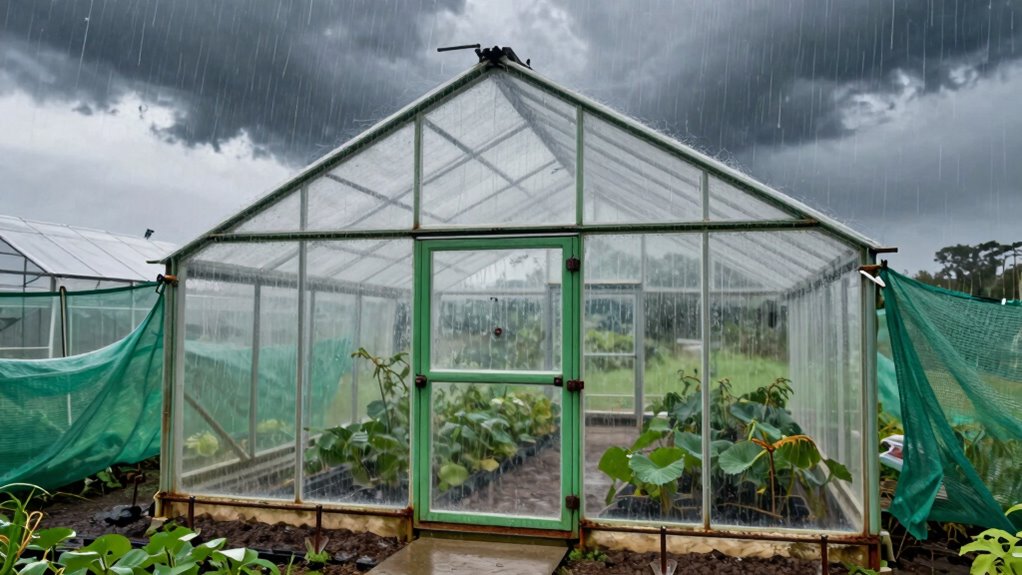
To protect your greenhouse during storms, start by reinforcing its structural support to withstand strong winds. Make sure to secure all ventilation openings tightly to prevent damage or loss. Using wind-resistant materials for panels and joints can also help your greenhouse stand up to harsh weather conditions. Incorporating consistent feedback from inspections can ensure ongoing stability and identify potential vulnerabilities. Additionally, selecting storm-resistant construction materials can significantly enhance your greenhouse’s durability against high winds. Regular maintenance and checks aligned with industry standards can further prolong the lifespan of your structure and improve its resilience. Staying informed about DIY tools and safety tips can help you perform these upgrades safely and effectively. Paying attention to proper anchoring techniques is essential for maintaining stability during severe weather events.
Reinforce Structural Support
Ever wondered how to guarantee your greenhouse withstands fierce storms? Reinforcing structural support is key. Ensuring the structural integrity of your greenhouse prevents damage and keeps your plants safe. Start by adding support braces at critical points to bolster weak spots. Securely anchoring the frame to the ground further stabilizes the structure. Consider the following steps:
- Install support braces along the roof and walls for added strength.
- Use heavy-duty anchors to fasten the frame securely to the ground.
- Regularly inspect joints and seams, reinforcing them with appropriate fasteners or braces.
Taking these measures creates a resilient structure capable of withstanding high winds, giving you peace of mind during stormy weather. Reinforced support keeps your greenhouse standing tall, protecting your garden investments.
Secure Ventilation Openings
When storms roll in, unsecured ventilation openings can become vulnerabilities that threaten the integrity of your greenhouse. Guaranteeing ventilation safety means securing all vents and windows to prevent damage or wind entry. Proper airflow management is vital, but open vents during storms can cause destruction. Use latches or locks to keep openings closed. Consider installing storm shutters or covers that can quickly seal vents when needed. Regularly inspect hinges, seals, and latches for durability. Here’s a quick overview:
| Ventilation Type | Security Method | Best Practice |
|---|---|---|
| Roof Vents | Lockable Latches | Close and lock before storms |
| Side Panels | Storm Covers | Install quick-release covers |
| Exhaust Fans | Manual Shutoff | Turn off and secure |
This guarantees your greenhouse stays protected without compromising airflow management during storms.
Use Wind-Resistant Materials
Using wind-resistant materials is a smart way to bolster your greenhouse’s defenses against storm damage. When selecting materials, focus on durability to withstand high wind loads. Strong, flexible options help prevent breakage and maintain structural integrity during storms. Consider these key materials:
- Polycarbonate panels – Known for their impact resistance and high material durability, they can endure strong wind loads without cracking.
- Steel framing – Provides a sturdy structure that resists bending or collapsing under high wind pressure.
- Reinforced door and window frames – Using metal or heavy-duty plastic reduces the risk of wind-driven damage.
Choosing these wind-resistant materials ensures your greenhouse can better withstand storms, protecting your plants and investment.
Maintenance Tips to Keep Your Greenhouse Wind-Ready
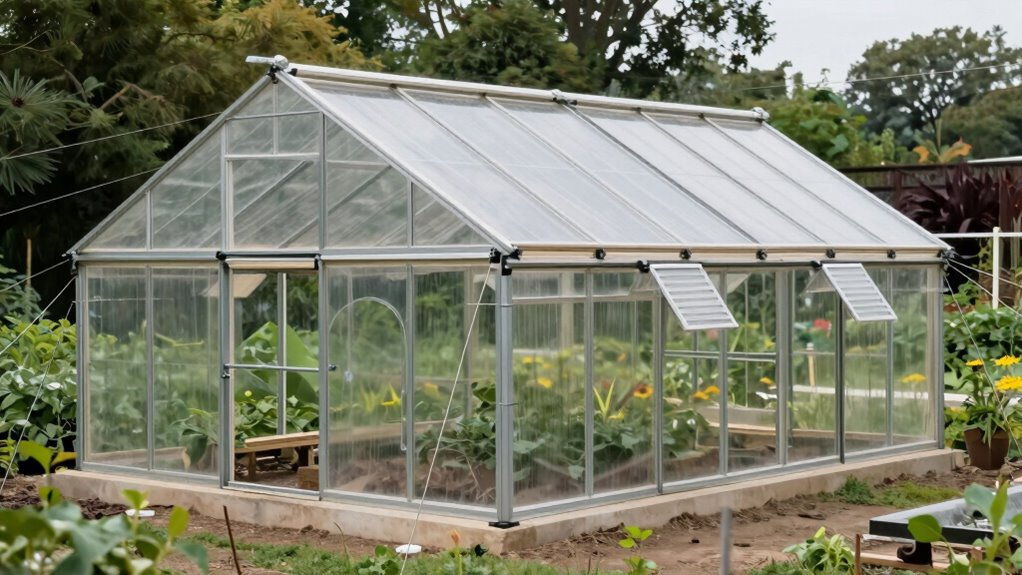
Strong winds can threaten the stability of your greenhouse, so it’s essential to stay proactive with maintenance. Regularly check your structure for loose bolts or damaged panels, as these can weaken wind resistance. Keep your greenhouse ventilation systems clear and functioning properly; good airflow helps reduce wind pressure on the walls. Monitor the wind speed forecast and consider installing an anemometer to get real-time updates. Reinforce or secure any vulnerable areas, especially doors and vents, which are common weak points during storms. Trim nearby trees or branches that could fall onto your greenhouse. Staying vigilant with routine inspections and maintenance guarantees your greenhouse remains wind-ready, protecting your plants and investment when high winds hit.
Budget-Friendly Upgrades for Better Wind Resistance
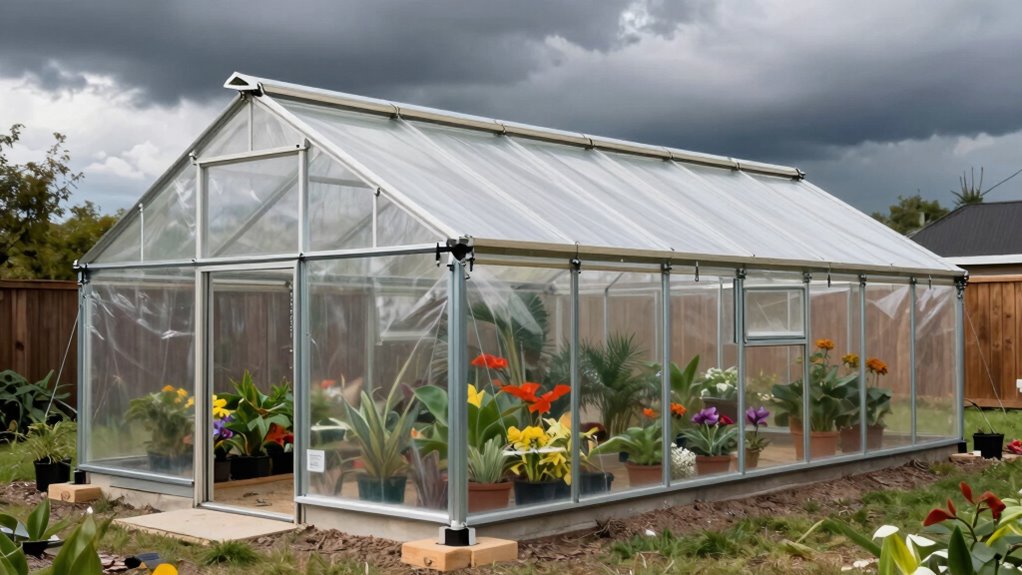
Enhancing your greenhouse’s wind resistance doesn’t have to mean expensive repairs or upgrades. Small, budget-friendly changes can make a big difference.
- Install solar-powered fans to improve airflow and reduce internal pressure during strong winds. They’re inexpensive and energy-efficient.
- Use decorative plant supports to anchor tall or heavy plants, preventing them from catching wind and causing damage.
- Secure panels and loose fittings with affordable braces or straps, reinforcing the structure’s stability against gusts.
These upgrades help your greenhouse withstand high winds without breaking the bank. They’re quick to implement and don’t require professional help, making them perfect for backyard growers looking for effective, cost-conscious solutions.
Preparing for Storms: Long-Term Resilience for Your Greenhouse
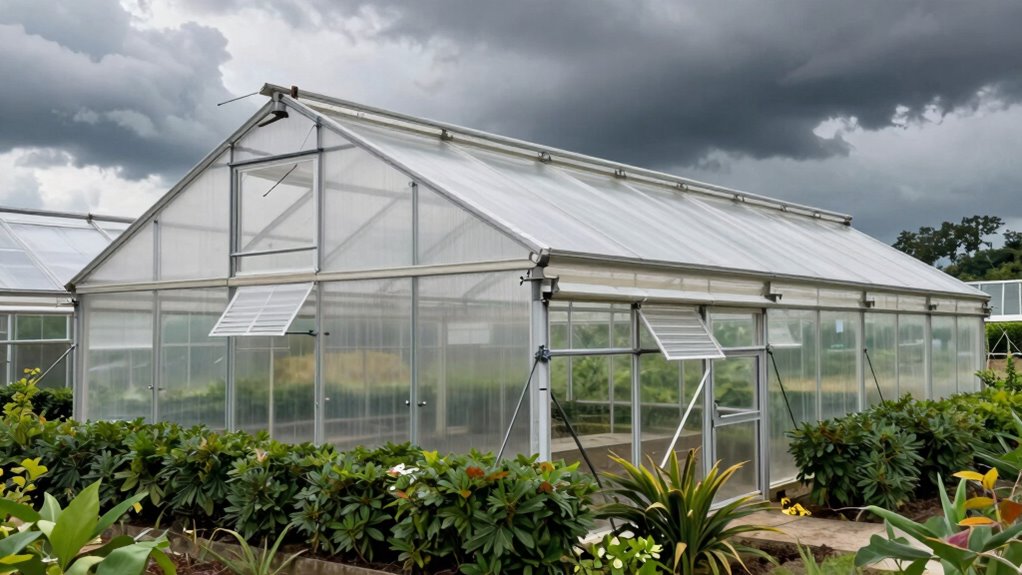
Are you prepared to protect your greenhouse from severe storms that could cause extensive damage? Long-term resilience starts with solid storm preparedness. Assess your greenhouse’s structure regularly, checking for weak spots that wind impact could exploit. Reinforce joints and connections, and consider anchoring your greenhouse securely to the ground. Installing windbreaks or protective barriers around your structure can also reduce wind impact. Keep an emergency kit on hand, including materials for quick repairs. Maintain clear drainage to prevent flooding during heavy rains. Planning ahead ensures your greenhouse withstands high winds and storms, minimizing damage and downtime. Being proactive with storm preparedness not only safeguards your plants but also preserves your investment over the long term.
Frequently Asked Questions
How Often Should I Inspect My Greenhouse for Wind Damage?
You should inspect your greenhouse for wind damage after every significant wind event or when wind speeds exceed your area’s typical levels. Regularly monitor wind speed using a weather station or anemometer to stay alert. Use structural reinforcement techniques like bracing and anchoring to minimize damage. Additionally, perform visual checks weekly during storm seasons to catch early signs of wear or damage, ensuring your greenhouse remains secure and protected.
What Are the Signs That My Greenhouse Needs Reinforcement?
When your greenhouse starts to wobble like a fragile ship in a storm, it signals reinforcement is needed. Look for signs like bent or loose framing, tears in the covering, or shifting panels—these indicate your structure isn’t wind resistant enough. Use wind resistant materials and structural reinforcement techniques, such as braces or anchored foundations, to strengthen your greenhouse’s resilience, ensuring it stands firm against future gusts.
Can Solar Panels Be Added Without Compromising Wind Resistance?
Yes, you can add solar panels without compromising wind resistance by choosing lightweight, secure solar panel installation options designed for windy conditions. Make certain you properly anchor the panels and use wind-resistant mounting systems to enhance wind resistance. Consulting a professional can help you integrate solar panels effectively, so they don’t weaken your greenhouse’s structure. With careful planning, you’ll boost energy efficiency without sacrificing your greenhouse’s ability to withstand high winds.
How Do I Prevent Wind From Damaging Greenhouse Door Seals?
You might think wind won’t damage your greenhouse door seals, but it can if you’re not careful. To prevent this, regularly check and tighten door latch adjustments to guarantee a snug fit. If seals are worn or damaged, replace them promptly to maintain a tight seal. Proper door latch adjustments and seal replacement keep your greenhouse protected from strong winds, preventing damage and preserving your plants’ environment.
Are There Specific Plants Better Suited for Windy Greenhouses?
You should choose wind-tolerant species with sturdy plant structures, as they handle high winds better. Plants like succulents, hardy herbs, and certain shrubs tend to be more resilient in windy greenhouses. These species have better plant sturdiness, making them less likely to suffer damage. Choosing wind-tolerant varieties guarantees your greenhouse remains lush and healthy, even in challenging windy conditions.
Conclusion
By implementing these wind-resistant tips, you can protect your backyard greenhouse from harsh storms and enjoy a thriving garden year-round. For example, imagine installing sturdy anchoring systems that keep your plants safe during a strong gust, like a homeowner in Kansas did before a tornado warning. With proper planning and maintenance, your greenhouse can withstand even the fiercest winds, ensuring your garden’s success no matter the weather. Stay proactive and keep your green haven secure!