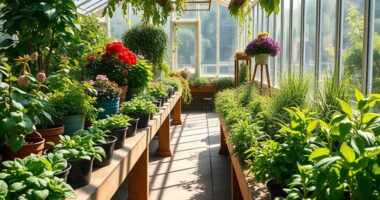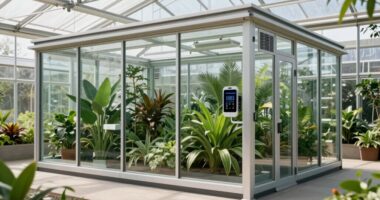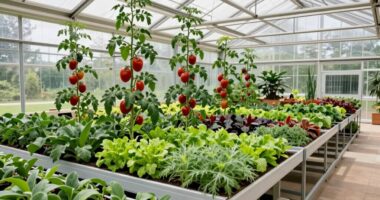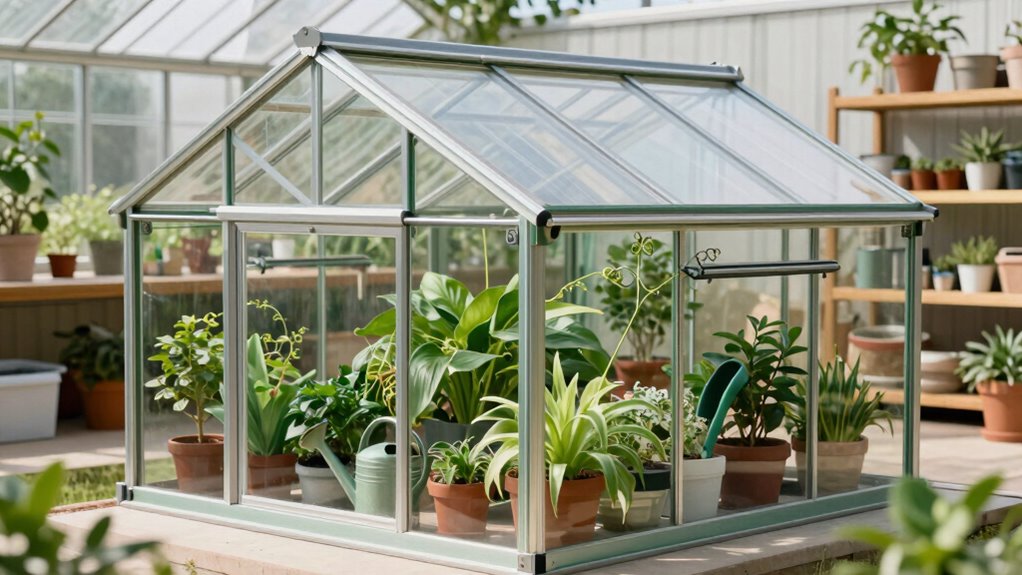
A greenhouse kit is worth upgrading when it offers durable materials like galvanized steel and impact-resistant panels that withstand weather and pests. Flexible, modular designs make future adjustments easier, while smart climate controls, ventilation, and insulation help keep conditions ideal for your plants. Easy assembly, accessibility, and room for expansion also add value. With the right features, you’ll enjoy a more reliable, efficient gardening space. Keep exploring to discover how these enhancements can transform your greenhouse experience.
Key Takeaways
- Modular and upgradable design allows for easy customization and future expansion to meet evolving gardening needs.
- Durable materials like galvanized steel and polycarbonate ensure longevity against weather, pests, and daily wear.
- Advanced climate control systems enable precise temperature and humidity regulation for optimal plant growth.
- Weather-resistant coverings and structural reinforcements protect plants and infrastructure over seasons.
- Accessibility features and automated systems simplify maintenance, reducing effort and ensuring efficient operation.
As an affiliate, we earn on qualifying purchases.
What Features Make a Greenhouse Kit Easily Upgradable?
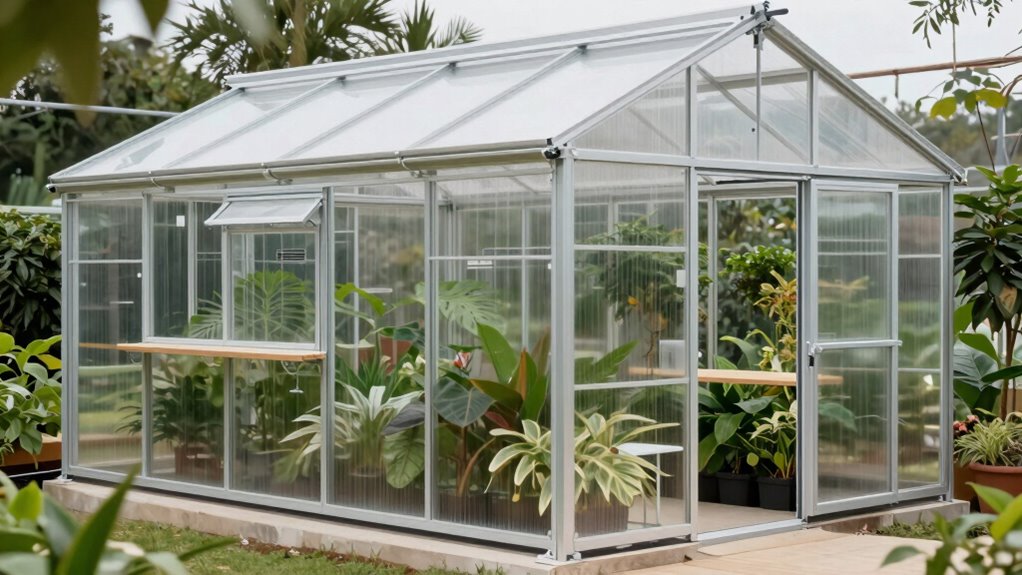
To make a greenhouse kit easily upgradable, it should be designed with modularity in mind. This allows you to add or replace sections as your needs grow, making plant propagation more efficient. Modules dedicated to specific functions—like propagation benches or growing shelves—help streamline your setup. Look for features that support pest prevention, such as removable panels or integrated screening options, so you can adapt to new pests or control methods easily. Modular designs also simplify maintenance and upgrades, saving you time and money. When components are standardized, upgrading becomes straightforward, letting you customize your greenhouse without starting from scratch. Additionally, a long-term structure that accommodates evolving technologies and gardening practices ensures your investment remains relevant and functional over time. Incorporating gardening innovations that align with current trends can further enhance your greenhouse’s upgradability. Understanding affiliate relationships and choosing compatible, flexible components can also help ensure your greenhouse remains adaptable as your gardening needs change. Overall, a modular, flexible design ensures your greenhouse can evolve with your gardening goals, making it a smart investment.
How Does Durability Impact Your Greenhouse Investment?

Durability plays a crucial role in determining the long-term value of your greenhouse investment because a sturdy structure withstands weather, pests, and daily wear. When your greenhouse is resilient, it better protects your plants and preserves your garden layout over time. Strong materials like galvanized steel or reinforced polycarbonate panels resist corrosion and breakage, ensuring your greenhouse remains secure through storms and seasonal changes. Good pest protection is also linked to durability; a well-built structure prevents pests from entering and damaging your crops. Investing in a durable greenhouse means fewer repairs, less maintenance, and a more reliable environment for your plants. Additionally, choosing durable building materials can enhance the overall lifespan of your greenhouse, making it a smarter investment. Proper maintenance practices further extend the durability and performance of your greenhouse over the years. Incorporating weather-resistant features can also help your greenhouse withstand extreme conditions, ensuring longevity and continuous productivity. Regular inspection and timely repairs are essential to maintain its structural integrity and overall durability. Being aware of material quality helps you select components that will last longer and perform better over time. Ultimately, durability safeguards your initial investment and ensures your greenhouse continues to support your gardening goals year after year.
Why Is Easy Assembly Important When Choosing a Greenhouse Kit?

A greenhouse kit that’s easy to assemble can save you time, effort, and frustration. When your setup process is straightforward, you can focus on perfecting your garden design instead of struggling with complicated instructions. An easy assembly also means you’re more likely to correctly position components that support pest prevention, like sealing gaps or adding screens. Additionally, quick setup helps you get your plants growing sooner, reducing exposure to pests and harsh weather. Look for kits with clear instructions, pre-drilled holes, and minimal tools required. This way, you avoid mistakes that could compromise your greenhouse’s structure or pest defenses. Ultimately, an easy-to-assemble kit makes your gardening experience smoother and more enjoyable, giving you peace of mind and more time for nurturing your plants.
What Environmental Controls Should Your Greenhouse Have?

To keep your greenhouse thriving, you need effective temperature regulation and humidity control. These features help create the ideal environment for your plants to grow strong. Understanding which systems work best for your setup guarantees healthier plants and easier maintenance. Incorporating proper indoor air quality measures can also prevent issues caused by excess humidity and stale air. Regular ventilation and monitoring can also help prevent disease prevention issues and promote overall plant health.
Temperature Regulation Systems
Have you considered how precise temperature control can make or break your greenhouse’s success? A reliable temperature regulation system ensures your plants thrive, whether it’s hot or cold outside. It also plays a role in supporting ethical consumer choices by reducing energy waste and promoting sustainable practices. Properly installed and maintained systems can also minimize fire hazards, ensuring safety for your space. It helps maintain ideal growth conditions and prevents pests, which thrive in fluctuating environments. To maximize efficiency, look for systems that include:
- Automated heaters and fans for consistent climate control
- Sensors to monitor temperature and adjust in real-time
- Integration with plant lighting systems for seamless operation
- Ventilation options to prevent overheating and humidity buildup
Additionally, incorporating smart thermostat protocols can enhance your greenhouse’s climate management by allowing remote monitoring and more precise adjustments. Understanding climate control technology can help you select the most effective and energy-efficient setup for your needs. Good temperature regulation supports healthy plant development, reduces energy waste, and simplifies pest control. With the right system, you’ll create a stable environment that promotes lush growth and minimizes stress factors, making your greenhouse a true year-round growth space.
Humidity Control Features
Maintaining proper humidity levels is key to creating an ideal environment for your plants. Too much humidity can promote mold and pests, while too little can cause stress and slow growth. Look for greenhouse kits with adjustable humidity control features, such as vents or misting systems. Hydroponic systems often include humidity sensors to maintain best moisture, enhancing plant health and yields. Proper humidity management also supports pest management by reducing conditions that attract pests or foster fungal growth. Automated systems allow you to fine-tune humidity levels effortlessly, ensuring a stable environment. Incorporating smart environmental controls can further optimize humidity and temperature settings automatically. Additionally, monitoring humidity levels with reliable sensors ensures consistent conditions that promote healthy plant development. Understanding environmental factors that influence humidity can help you better manage your greenhouse’s climate. For example, air circulation plays a crucial role in maintaining uniform humidity throughout the space. Upgrading your greenhouse to include these climate control features can significantly improve plant health and reduce maintenance efforts, leading to more successful cultivation.
How Do Ventilation and Heating Improve Plant Growth?

Ever wondered how proper ventilation and heating can boost your plants’ growth? These features help regulate temperature and humidity, creating perfect conditions for plant development. When your greenhouse maintains stable temperatures, plants can better absorb nutrients, guaranteeing healthy growth. Good airflow also prevents excess moisture, which reduces the risk of pests and diseases, aiding pest control. Proper ventilation promotes household safety by reducing mold and mildew buildup that can compromise both plant and human health. Additionally, the right contrast ratio in your greenhouse lighting can enhance photosynthesis efficiency, further supporting healthy plant development. Incorporating air exchange systems can further optimize air quality and humidity levels, ensuring optimal growth conditions. Monitoring environmental conditions is essential for maintaining a balanced environment with these systems, which also supports the health of your plants by reducing stress caused by environmental fluctuations.
Which Materials Ensure Your Greenhouse Lasts Through Weather Changes?
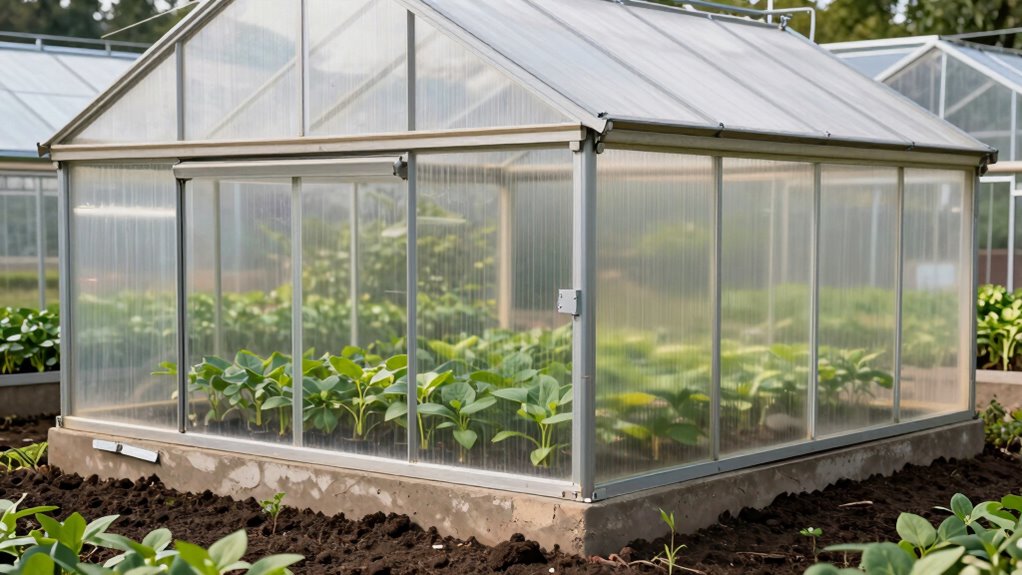
Choosing the right materials for your greenhouse is key to guaranteeing it withstands changing weather conditions. Durable framing options like powder-coated aluminum or galvanized steel resist rust and provide stability during storms or heavy snow. For glazing, polycarbonate panels are excellent—they’re impact-resistant and insulate well against temperature swings. When setting up your greenhouse, focus on soil preparation to create a healthy environment that resists pests and diseases, reducing the risk of damage during extreme weather. Proper pest control measures, like insect screens and sealed openings, help protect your plants and the structure itself from infestations that can weaken materials. Additionally, understanding cable safety principles such as managing heat buildup and preventing toxic fumes can inform safer installation of electrical systems in your greenhouse. By selecting weather-resistant materials and maintaining ideal soil health, you ensure your greenhouse remains resilient through all seasons.
Can You Expand Your Greenhouse in the Future? Here’s What to Know
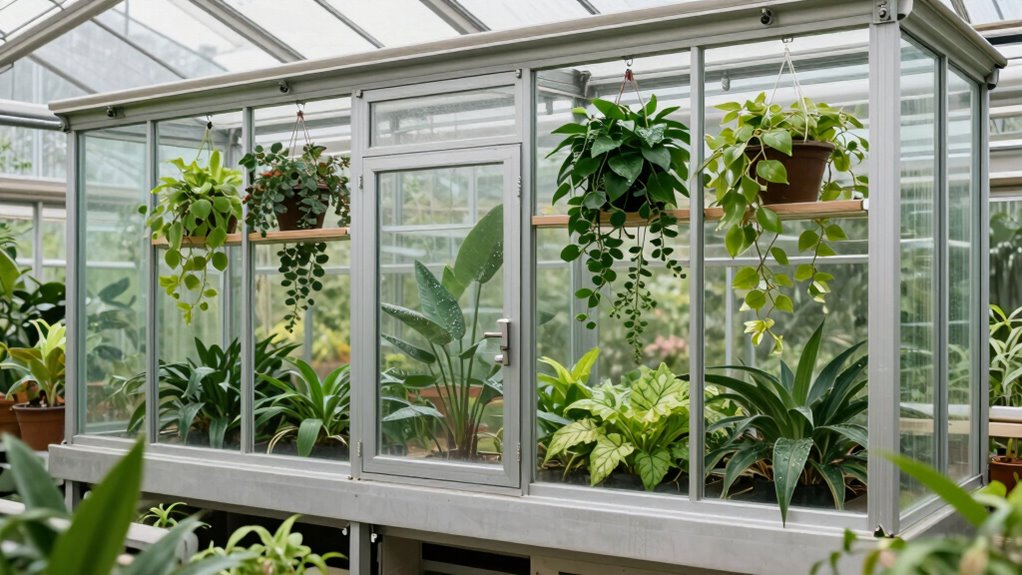
Expanding your greenhouse in the future is entirely possible, but it requires careful planning from the start. You should consider the foundation, available space, and structural design to guarantee smooth expansion later on. Planning for utilities like smart irrigation systems makes scaling easier and more efficient. Additionally, think about pest control measures that can be extended to larger areas without hassle. Keep these points in mind:
- Adequate space for new sections
- Reinforced structural supports
- Compatibility with existing systems
- Easy integration of automation tools
What Covering Materials Make Your Greenhouse Durable and Weatherproof?
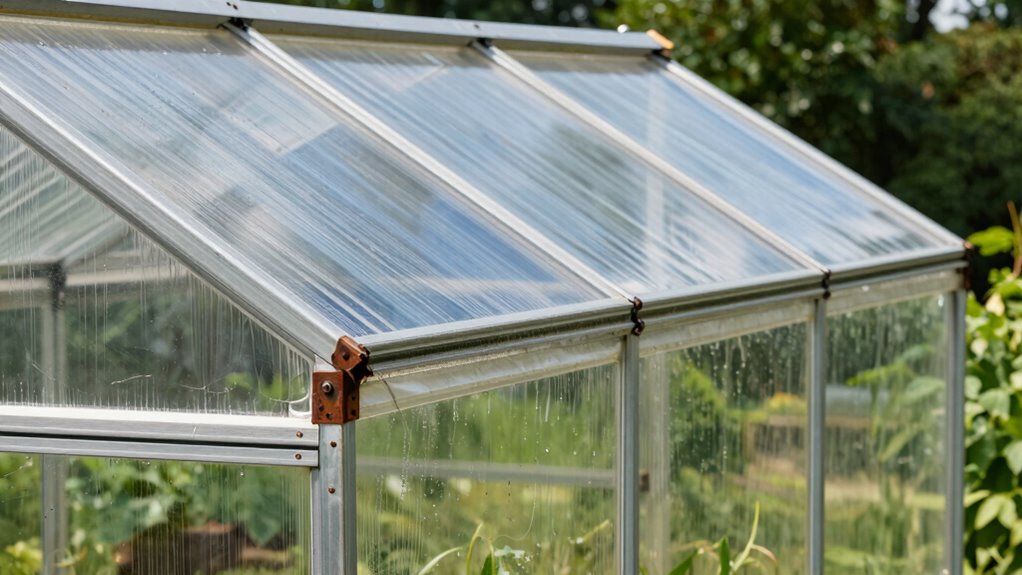
What materials you use to cover your greenhouse can make all the difference in how well it withstands weather conditions and lasts over time. Durable, weatherproof coverings protect your plants and improve energy efficiency. Polycarbonate panels are popular—they’re impact-resistant, allow for solar heating, and provide insulation. Polyethylene film is affordable but less durable; it’s great for temporary setups. Glass offers durability, excellent light transmission, and pest barriers, but is heavier and more fragile. For added protection, consider UV-treated materials that resist fading and weathering. The right covering enhances solar heating, keeps pests out, and prolongs your greenhouse’s lifespan.
| Material | Durability | Key Features |
|---|---|---|
| Polycarbonate | High | Impact-resistant, solar heating |
| Polyethylene | Moderate | Cost-effective, lightweight |
| Glass | Very high | Pest barriers, weatherproof |
How Do Accessibility Features Make Maintenance Simpler?
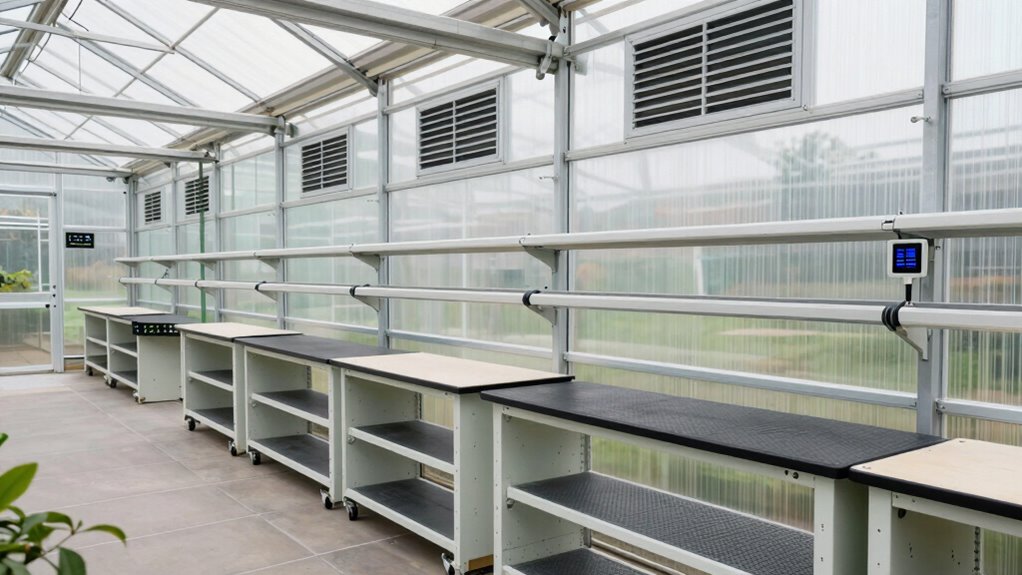
Accessible features in your greenhouse design can considerably simplify maintenance tasks, saving you time and effort. Accessibility enhancements guarantee that routine chores like cleaning, watering, and repairs are less cumbersome. For example, wider doorways make it easier to move equipment or access hard-to-reach areas, while adjustable shelves reduce strain during plant care. Electric or automated systems can handle watering and ventilation, minimizing manual work. Additionally, well-placed lighting improves visibility, making inspections safer and quicker.
- Wide entrances for easy access
- Adjustable, ergonomic work surfaces
- Automated watering and ventilation systems
- Proper lighting for clear visibility
These features promote maintenance simplification by making every task more straightforward, efficient, and less physically demanding.
What Extra Features Can Enhance Your Gardening Experience?
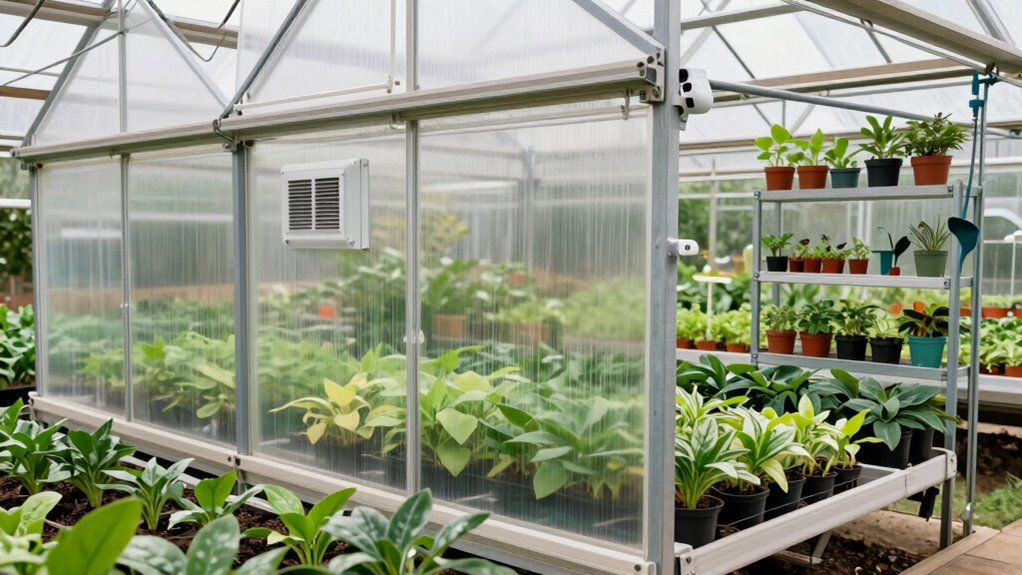
Adding extra features to your greenhouse can substantially elevate your gardening experience by making it more enjoyable, efficient, and tailored to your needs. Enhanced plant selection options, like adjustable shelving or grow lights, give you control over what you grow and how you nurture it. Integrated pest prevention systems, such as screens or automatic vents, help keep pests out without extra effort. Automated watering systems can save time and ensure your plants stay healthy. Climate control features like thermostats and humidity regulators create ideal growing conditions year-round. These extras not only streamline maintenance but also boost your confidence in managing your garden. By investing in these features, you create a more productive and enjoyable gardening environment suited perfectly to your goals.
Frequently Asked Questions
What Is the Typical Lifespan of a High-Quality Greenhouse Kit?
A high-quality greenhouse kit typically lasts 10 to 20 years with proper care. You’ll find it offers excellent plant compatibility, supporting diverse plant types over time. Material durability plays a key role, as sturdy frames and weather-resistant panels resist wear and tear. Regular maintenance, like cleaning and checking for damage, extends its lifespan, ensuring your plants thrive and your greenhouse remains a worthwhile investment for years to come.
How Energy-Efficient Are Different Greenhouse Heating Options?
Different greenhouse heating options vary in energy efficiency, affecting your energy consumption. Electric heaters are convenient but may use more energy, while gas heaters can be more efficient but produce emissions. Solar-powered options are highly energy-efficient, reducing your overall energy consumption. To maximize heating efficiency, consider insulation and proper ventilation. Choosing the right heating system depends on your climate, budget, and sustainability goals, ensuring your plants stay warm without excessive energy use.
Can a Greenhouse Kit Be Customized for Specific Plant Types?
Like a tailor fitting a suit, your greenhouse kit can be customized for your plant types. With plant-specific design and customizable components, you guarantee ideal growing conditions, whether you’re cultivating delicate orchids or hearty tomatoes. You can adjust ventilation, lighting, or shelving to meet unique needs. This tailored approach boosts plant health and yield, making your greenhouse a personalized haven that adapts perfectly to your gardening goals.
What Safety Features Should I Look for in a Greenhouse Kit?
You should look for safety features like secure locking mechanisms on doors and windows to prevent unauthorized access. Good ventilation systems are essential, as they help regulate temperature and humidity, reducing the risk of mold and pests. Additionally, consider security features like reinforced frames and tamper-proof locks. These elements guarantee your plants stay safe and your greenhouse remains secure, making your investment more worthwhile.
How Much Does Professional Installation Typically Cost?
Professional installation can skyrocket your costs, often ranging from $500 to over $2,000, depending on the greenhouse size and complexity. If you’re handy and love DIY assembly, you might save a fortune by putting it together yourself, which is perfect for budget considerations. While hiring pros offers convenience and expert setup, doing it yourself can turn into a rewarding project that saves you big bucks in the long run.
Conclusion
Choosing the right greenhouse kit means considering future upgrades, durability, and features that make gardening easier and more productive. When you prioritize easy assembly, environmental controls, and weatherproof coverings, you’re investing in a space that grows with your needs. Do you want a greenhouse that adapts to your gardening journey and keeps your plants thriving through every season? With the right features, your greenhouse can become your most valuable gardening partner.