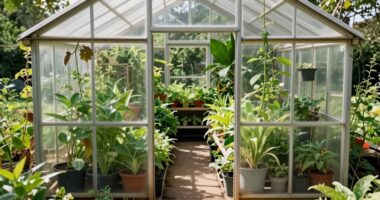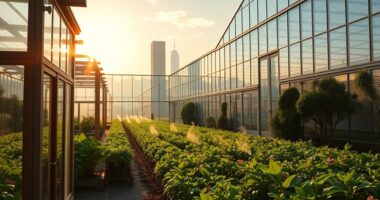
Choosing the wrong greenhouse shape can quietly drain your budget by increasing energy costs, reducing sunlight access, and risking structural damage. Ill-suited designs often need more artificial lighting and heating, easily raising expenses over time. Poorly shaped greenhouses are also more vulnerable to weather damage, leading to costly repairs. Failing to pick the right shape might save money upfront but can harm your investment long-term. Keep going to discover how to avoid these costly mistakes.

Get garden gear delivered free with Prime
- Fast, free delivery on millions of items
- Prime Video, Amazon Music and more included
- Member-only deals all year
Key Takeaways
- Poorly chosen shapes limit sunlight exposure, increasing reliance on artificial lighting and raising energy costs.
- Inadequate designs can lead to structural failures, resulting in costly repairs and replacements.
- Inefficient shapes cause higher heating and cooling expenses, reducing overall profitability.
- Limited flexibility in expansion or modifications increases long-term investment costs.
- Hidden inefficiencies diminish the greenhouse’s lifespan and overall return on investment.
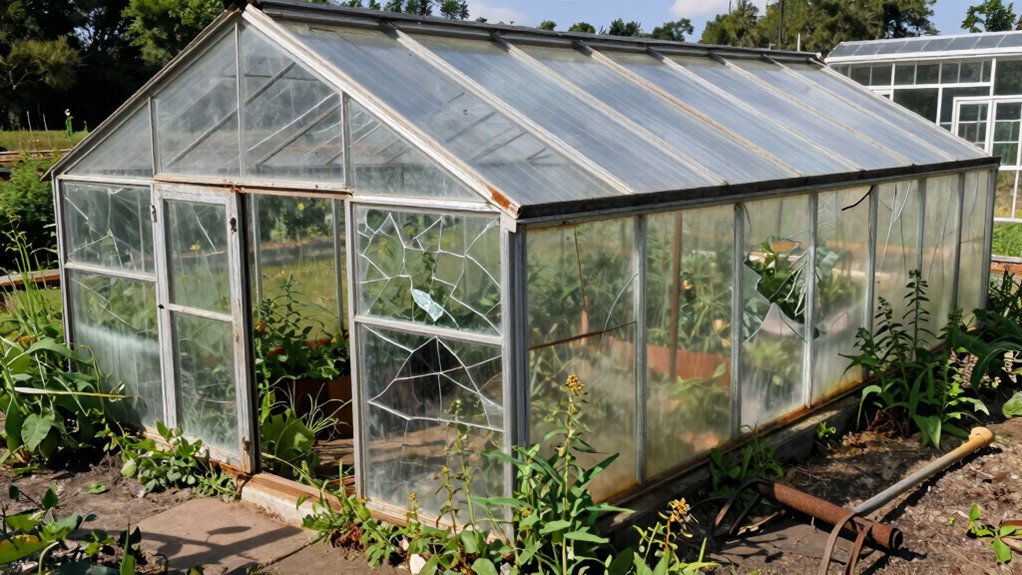
Choosing the right greenhouse shape is more than just an aesthetic decision; it can substantially impact your growing success and long-term costs. When you select a shape, you’re influencing how effectively your greenhouse captures sunlight, which directly affects plant growth. For instance, a dome or geodesic design often maximizes solar efficiency because of its curved surfaces, allowing sunlight to reach plants from multiple angles throughout the day. Conversely, a rectangular or lean-to structure might restrict sunlight exposure during certain times, reducing overall efficiency. This means you could spend more on supplemental lighting or heating to compensate for less ideal solar capture, increasing operational costs unnecessarily.
Choosing a greenhouse shape affects sunlight capture, plant growth, and long-term costs through efficiency and structural stability.
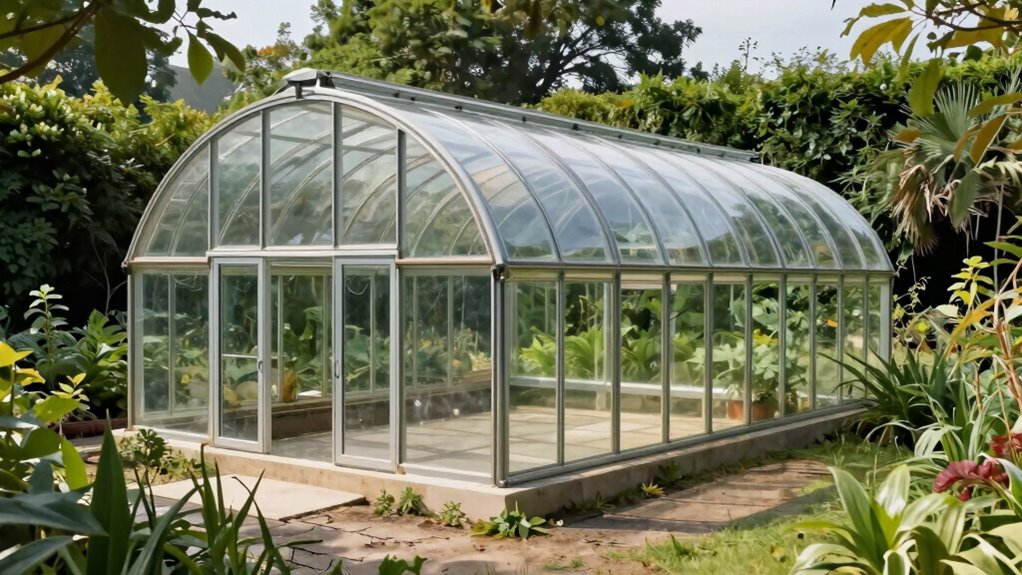
Beyond solar efficiency, the shape you choose also plays a key role in the structural integrity of your greenhouse. Some shapes, like arches or domes, naturally distribute weight and withstand environmental stresses better than flat-sided structures. If you opt for a poorly suited design, you risk structural weaknesses that could lead to costly repairs or even complete failure during storms or heavy snowfalls. The right shape ensures your greenhouse maintains its stability over time, saving you money and effort in maintenance. It’s a fundamental factor because a compromised structure not only jeopardizes your plants but also your investment.
When you ignore these considerations, the hidden costs add up. An inefficient shape might force you to run heating systems longer or increase artificial lighting, raising your energy bills. A structurally weak design could result in damage that requires expensive repairs or replacements sooner than expected. Over time, these overlooked costs can surpass the initial savings you thought you’d get from a cheaper or more traditional design. Additionally, an improperly chosen shape can limit your ability to expand or modify your greenhouse later, locking you into a less flexible setup and further increasing future costs. Selecting the right shape can significantly influence your overall investment and operational expenses.
In essence, picking the wrong greenhouse shape isn’t just about appearance; it’s about maximizing your investment. Prioritize solar efficiency to maximize natural light and reduce energy expenses. Consider structural integrity to ensure durability and safety, especially in adverse weather. By making informed choices now, you avoid hidden costs down the line, ensuring that your greenhouse remains a productive, cost-effective space for years to come.
As an affiliate, we earn on qualifying purchases.
Frequently Asked Questions
How Do Greenhouse Shapes Affect Climate Control Efficiency?
Greenhouse shapes greatly influence climate control efficiency by optimizing natural ventilation and ensuring structural stability. For instance, a Gothic arch allows hot air to rise naturally, improving airflow, while a Quonset offers strength against weather. You’ll find that selecting the right shape helps regulate temperature and humidity more effectively, reducing energy costs. By prioritizing natural ventilation and structural stability, you create a more consistent environment, boosting plant health and overall productivity.
What Are the Long-Term Maintenance Costs of Different Greenhouse Shapes?
Think of your greenhouse as a sturdy ship sailing long-term. The shape you choose impacts structural durability and material costs, influencing maintenance expenses. A complex design may look impressive but could need costly repairs and reinforcement over time, while a simpler shape offers resilience with fewer repairs. To keep your investment afloat, select a shape that balances durability and cost-efficiency, reducing long-term maintenance surprises.
Can Shape Influence Pest and Disease Management?
Yes, your greenhouse shape can influence pest and disease management. Certain shapes, like tunnels or domes, create fewer pest barriers, reducing pest buildup. Conversely, complex shapes might develop disease hotspots where humidity and airflow are less ideal, promoting mold or fungal growth. By choosing a shape that guarantees good airflow and minimizes stagnant areas, you can better prevent pest infestations and disease spread, ultimately saving on maintenance costs.
How Does Greenhouse Shape Impact Crop Yield Diversity?
Greenhouse shape acts like a garden’s blueprint, shaping your crop yield diversity. A curved design might offer better light distribution, encouraging varied crop varieties, while a rectangular shape allows for higher planting density, maximizing space. Both features impact your ability to diversify crops effectively, influencing overall yield. Choosing the right shape helps you optimize crop variety and planting density, ultimately boosting your farm’s productivity and resilience.
Are Certain Shapes Better Suited for Specific Climates?
Yes, certain shapes thrive better in specific climates due to their aesthetic appeal and construction complexity. For hot, sunny climates, a dome or geodesic shape helps with heat dissipation and wind resistance, while simpler rectangular designs are easier to construct and maintain in cooler, wetter areas. You’ll find that choosing the right shape balances aesthetic appeal with construction complexity, optimizing climate adaptation and overall greenhouse performance.
Conclusion
Choosing the wrong greenhouse shape is like building on shaky ground—you might get some crops, but the hidden costs can undermine your entire effort. From increased energy bills to poor climate control, the wrong design drains your resources and stifles your garden’s potential. Make your decision wisely, for a well-shaped greenhouse isn’t just a structure; it’s the backbone of your success. Think of it as planting the seed for a thriving, fruitful future.
Halloween Picks
halloween
As an affiliate, we earn on qualifying purchases.